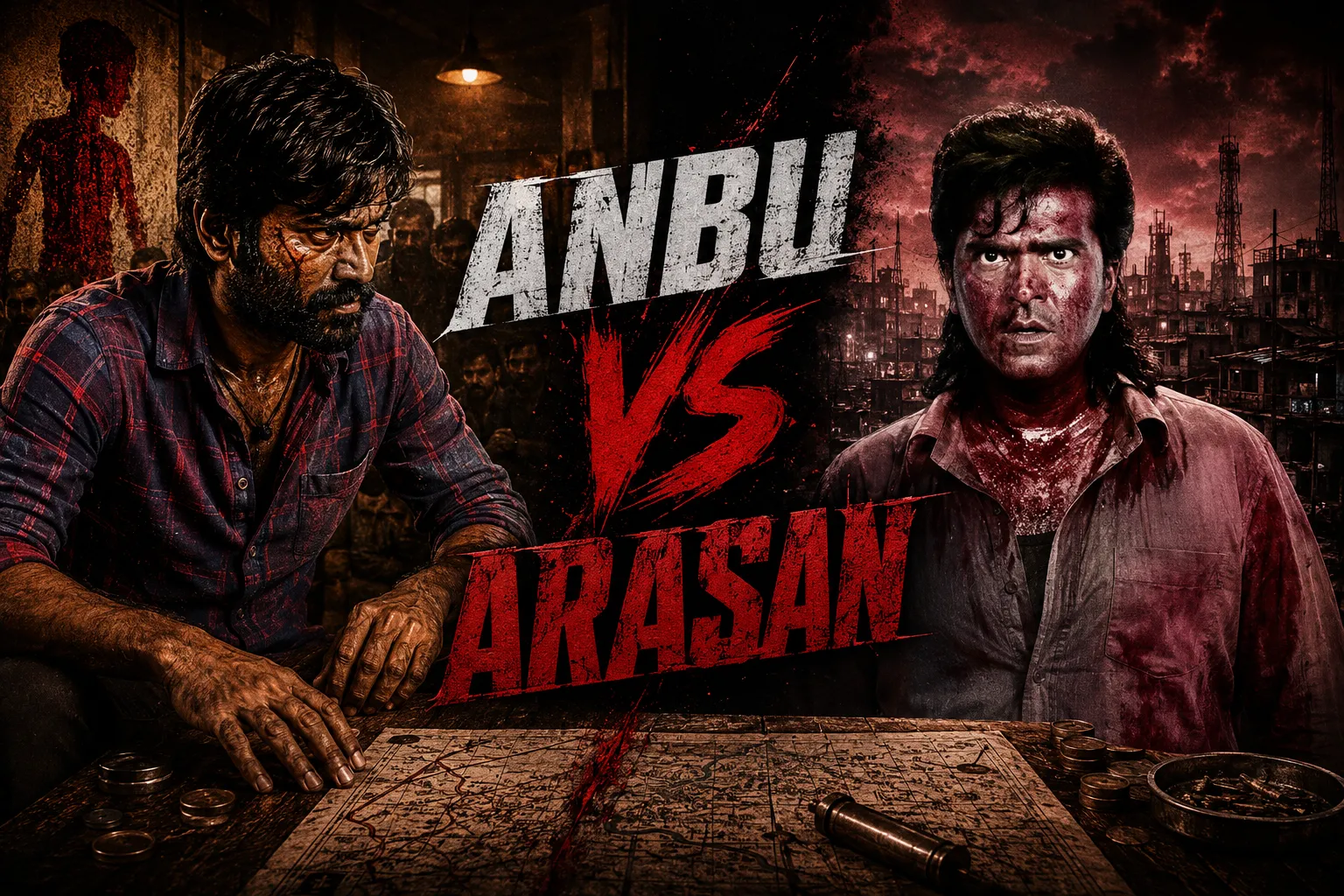
The Star Wars of North Madras: How Vetrimaaran Is Planning to Turn the Vada Chennai Universe Into Tamil Cinema’s First Billion‑Rupee Franchise—And Why Silambarasan’s Entry Changes Everything
CHENNAI — May 30, 2026 — Sometime in the spring of 2025, a conversation took place in a production office on the outskirts of Chennai that, in retrospect, will be remembered as the moment the Tamil film industry’s most ambitious intellectual‑property project pivoted from a trilogy into a cinematic universe. The subject was the casting of a single role—the antagonist who would drive the second and third instalments of the trilogy, the rival gang leader whose decades‑long conflict with Dhanush’s Anbu would be the engine of the franchise’s narrative arc. The name they discussed, according to two people familiar with the meeting, was Silambarasan T. R.—Simbu, the actor whose career had been transformed by the success of Maanaadu (2021) and Vendhu Thanindhathu Kaadu (2022), and whose star power, combined with Dhanush’s, would create a two‑hero dynamic that the Tamil film industry had not seen since the era of Rajinikanth and Kamal Haasan.
The conversation was not merely about casting. It was about economics. The Vada Chennai trilogy, which had been conceived in 2018 as a single‑hero vehicle built around Dhanush’s Anbu, was being reimagined as a two‑hero franchise—a Heat‑style saga of two men on opposite sides of the law, each with their own moral code, their own loyalties, and their own claim to the audience’s sympathy. The addition of Simbu to the franchise was not a creative indulgence. It was a business decision, driven by the same calculus that had led the major Hollywood studios to build their most valuable franchises around ensembles rather than individual stars. The single‑hero franchise is limited by the star’s availability, the star’s fee, and the star’s box‑office draw. The two‑hero franchise diversifies those risks, expands the addressable market, and creates a competitive dynamic—on screen and at the box office—that no single star can replicate. The Vada Chennai universe was no longer merely a trilogy. It was a platform, and the platform was about to get significantly more valuable.
The Two‑Hero Economics
The most important commercial decision in the history of the Vada Chennai franchise was not the decision to make a sequel. It was the decision to introduce a second lead—a character whose box‑office draw, whose fan base, and whose star persona would complement and compete with Dhanush’s. Silambarasan, whose career resurgence has been one of the most remarkable stories in the Tamil film industry over the past five years, was the obvious candidate. His transformation from a romantic hero of the 2000s into a critically respected, commercially potent actor of the 2020s has created a fan base that is distinct from Dhanush’s—younger, more urban, more digitally engaged—and that represents an audience segment that the Vada Chennai franchise, with its gritty, working‑class aesthetic, had not yet fully captured. The addition of Simbu to the cast is not merely a creative expansion. It is a market‑expansion strategy, designed to bring a new audience into the franchise without alienating the existing one.
The two‑hero model changes the economics of the franchise in three specific ways. First, it increases the theatrical revenue ceiling. The opening weekend of a Dhanush‑Simbu faceoff, marketed as a generational event—two of Tamil cinema’s most charismatic stars, playing opposite each other for the first time in a major franchise—will be significantly larger than the opening weekend of a Dhanush solo vehicle. The box‑office projections that has been developing for Vada Chennai 2 reportedly assume a worldwide opening of ₹80 to ₹100 crore, driven by the combined star power of the two leads and the accumulated audience anticipation of the franchise. The single‑hero version of the same film, by those projections, would have opened at approximately ₹50 to ₹60 crore. The difference—₹20 to ₹40 crore in the opening weekend alone—is the value that the second star brings to the franchise.
Second, the two‑hero model increases the streaming pre‑sale value. The streaming platforms that are bidding for the digital rights to the Vada Chennai sequels are not merely acquiring a film. They are acquiring an event—a film that will drive subscriber acquisition, that will generate social‑media engagement, and that will serve as a tentpole for the platform’s Tamil‑language content strategy. The Dhanush‑Simbu combination is significantly more valuable to the platforms than Dhanush alone, because it combines two distinct fan bases and two distinct content brands into a single acquisition. The streaming pre‑sale for Vada Chennai 2, which was reportedly being negotiated at approximately ₹150 crore for the pair of sequels under the single‑hero model, could rise to ₹200 crore or more under the two‑hero model, according to industry estimates. The difference—₹50 crore or more, guaranteed before a single frame is shot—is the premium that the market places on the second star.
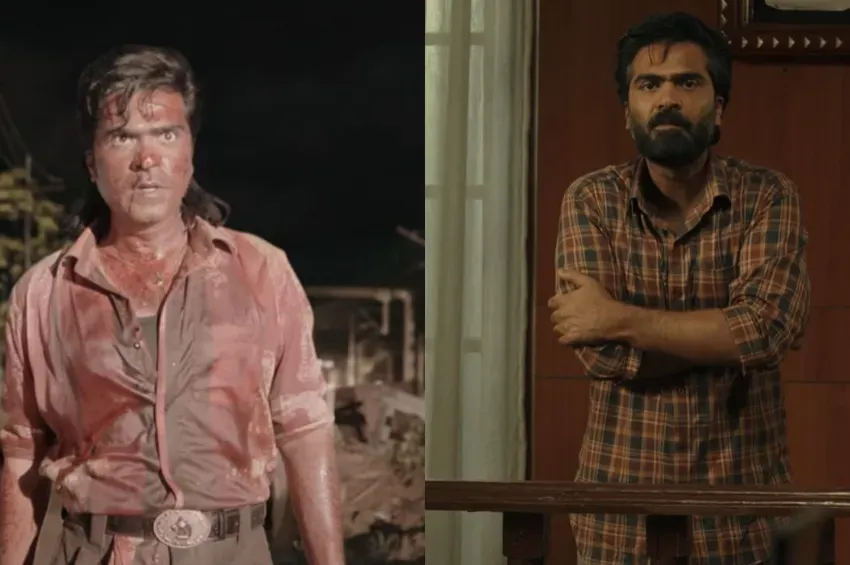
Third, the two‑hero model creates a franchise architecture that can sustain multiple spin‑offs, prequels, and ensemble entries. The single‑hero franchise is dependent on the continued availability, the continued health, and the continued commercial appeal of a single actor. The two‑hero franchise, like the multi‑star ensembles that have powered the Marvel Cinematic Universe, is more resilient—able to survive the departure or decline of any single star because the franchise’s value is distributed across multiple characters and multiple performers. Vetrimaran's long‑term vision for the Vada Chennai universe, as described by a person familiar with the studio’s strategy, involves not merely the completion of the trilogy, but the development of a series of standalone films and limited series set in the same world, featuring different characters, different timelines, and different stars—a North Madras Narcos, a Tamil Godfather saga that extends across decades and across platforms. The introduction of Simbu’s character is the first step in that expansion—the moment the Vada Chennai project ceased to be a Dhanush vehicle and became a shared universe.
The Simbu Factor
Silambarasan’s involvement in the Vada Chennai franchise is not yet officially confirmed. The actor, who is currently in production on STR 49 (tentatively titled Aathi Thalam), directed by Ram Kumar, and who has committed to a slate of projects that extends into 2028, has been approached by Vetrimaaran, according to the two people familiar with the discussions. The conversations are at an advanced stage, but no agreement has been signed. The character that Simbu would play—a rival gang leader who emerges from the same North Madras underworld as Anbu, but whose ambitions extend beyond the slums into the global drug trade and the construction‑industry corruption that is reshaping the city—has been written into the script for Vada Chennai 2, which Vetrimaaran and co‑writer B. Jeyamohan have been developing for several years. The character is, by design, a mirror image of Anbu—a man who made different choices, who serves different masters, and who represents a different future for the community they both claim to love.
The Simbu factor is complicated by the actor’s own career trajectory. Simbu is, at 43, at the peak of his commercial and critical powers—a position that gives him significant leverage in negotiations with producers. His fee for a major franchise film, structured as a combination of upfront payment and profit‑sharing, would reportedly be in the range of ₹25 to ₹35 crore—roughly comparable to Dhanush’s fee for the same project, and substantially more than the fee that Dhanu had budgeted for a supporting antagonist under the original single‑hero model. The economics of the franchise, under the two‑hero model, require both stars to accept a compensation structure that aligns their interests with the film’s commercial performance—reduced upfront fees, larger back‑end participation, and a share of the franchise’s long‑term IP value. The negotiation is delicate, and the outcome is uncertain, but the fact that it is happening at all is a measure of how far the Vada Chennai franchise has evolved from its origins as a gritty indie drama into the most ambitious commercial project in the history of Tamil cinema.
The Simbu factor also has a creative dimension that is as important as the commercial one. Vetrimaaran’s films are built on moral complexity—the refusal to divide the world into heroes and villains, the insistence that every character is the product of their circumstances, their choices, and their capacity for both loyalty and betrayal. The introduction of a second lead—a rival gang leader with his own moral code, his own community ties, and his own claim to the audience’s sympathy—would transform the Vada Chennai franchise from a single‑protagonist saga into a two‑handed drama, a Heat‑style confrontation between two men who understand each other because they come from the same world. The casting of Simbu, an actor whose screen persona has always balanced charisma and danger, charm and menace, would give Vetrimaaran the kind of antagonist that the single‑hero model could not provide. The sequel, under this structure, would not merely be a continuation of Anbu’s story. It would be a collision between two stories, two perspectives, and two futures for North Madras.
The Producer Dhanu Calculus
WUNDERBAR Productions, which owns the Vada Chennai franchise outright, is approaching the sequels with the discipline of a Hollywood studio that understands that the most valuable content in the world is the content that audiences are already waiting for. The studio, which was founded by Subaskaran Allirajah and which has financed some of the most expensive films in Tamil cinema history, has been managing the Vada Chennai asset with the patience of an investor who understands that the returns on a successful franchise compound over time. The first Vada Chennai was not, in commercial terms, a blockbuster—its worldwide gross of approximately ₹80 crore on a budget of approximately ₹45 crore was respectable but not spectacular. But the film’s cultural impact—the intensity of its fan base, the critical acclaim, the years of audience anticipation for the sequel—has created an asset that is worth significantly more than the first film’s box‑office returns would suggest. Producer’s strategy has been to preserve that asset—to resist the temptation to rush a sequel that would disappoint the audience, to wait for the right creative and commercial conditions, and to position the franchise for a release that would maximise its long‑term value.
The two‑hero model is the logical endpoint of that strategy. The franchise that was built on Dhanush’s Anbu alone was a valuable asset. The franchise that expands to include Simbu, and that is positioned as a multi‑star, multi‑film, multi‑platform universe, is an asset of a fundamentally different order—an asset that could generate revenue not just from the theatrical box office and the streaming pre‑sale, but from spin‑offs, merchandise, format adaptations, and the kind of global brand recognition that Tamil cinema has rarely achieved. Producer’s investment in the Vada Chennai universe is not merely a bet on a trilogy. It is a bet on a content platform—a shared world that can sustain multiple stories, multiple stars, and multiple decades of revenue. The Vada Chennai franchise is being built not as a regional Tamil property, but as a global content brand—a South Indian Narcos, a North Madras Godfather—that happens to be rooted in a specific geography, a specific language, and a specific cultural tradition.
The Competitive Landscape
The Vada Chennai franchise is not developing in a vacuum. It is competing for audience attention, for star availability, and for streaming‑platform investment with a growing number of Tamil cinematic universes, each of which is pursuing the same franchise‑driven, IP‑centric strategy that Dhanu is pursuing with Vada Chennai. The most significant competitor is Lokesh Kanagaraj’s Lokesh Cinematic Universe (LCU), which spans Kaithi (2019), Vikram (2022), and Leo (2023), and which has already demonstrated the commercial power of a multi‑star, multi‑film shared universe. The LCU, which is produced by Kamal Haasan’s Raaj Kamal Films International and distributed by several major studios, has grossed over ₹1,500 crore across its three instalments, and its fourth entry—reportedly titled Kaithi 2—is expected to be one of the largest Tamil releases of 2027. The LCU’s success has established a template for the Tamil franchise model—a template that Producer is adapting and expanding with Vada Chennai. The LCU is, in this sense, both a competitor and a proof of concept. It has demonstrated that the audience is willing to invest in a shared universe, that the streaming platforms are willing to pay for access to that universe, and that the economics of the franchise model work in the Tamil market. The Producer’s bet is that Vada Chennai, with its deeper character development, its longer time horizon, and its more grounded, realistic aesthetic, can capture a different segment of the audience than the LCU’s more action‑driven, spectacle‑oriented approach. The two universes can coexist, but they are competing for the same finite pool of stars, the same finite pool of production capital, and the same finite pool of audience attention. The competition between them will shape the Tamil film industry for the next decade.
The Vada Chennai franchise also competes with the growing number of standalone event films—the star vehicles that are mounted on massive budgets, released during festival windows, and designed to capture a disproportionate share of the box office. The Dhurandhar franchise from the Hindi industry, the Pushpa franchise from the Telugu industry, and the K.G.F and Kantara franchises from the Kannada industry are all competing for the same pan‑Indian audience that the Vada Chennai sequels will target. The two‑hero model, with its broader demographic appeal and its larger opening‑weekend potential, is designed to compete effectively in that pan‑Indian marketplace—to position Vada Chennai not as a regional Tamil film with subtitles, but as a national event, a film that audiences across India will turn out to see because the combination of Dhanush and Simbu is compelling regardless of the language they speak.
The streaming landscape, too, is becoming more competitive. Netflix, Amazon Prime Video, and JioHotstar are all investing heavily in Tamil‑language content, and the competition among them for the most valuable properties has driven up the prices that they are willing to pay. The Vada Chennai sequel, with its two‑star combination and its accumulated audience anticipation, is one of the most desirable Tamil‑language properties on the market—and the bidding war that Vetri is reportedly orchestrating among the three platforms is designed to maximise the pre‑sale value of the franchise. The outcome of that bidding war will determine not just the financing of the sequels, but the valuation of the Vada Chennai IP itself—the price that the market is willing to place on a shared universe that has not yet been fully realised.
The Waiting Game
The most important variable in the Vada Chennai franchise remains Vetrimaaran. The director, who has been developing the sequels for years, is the irreplaceable creative engine of the franchise—the person whose vision, whose commitment, and whose ability to execute at the highest level of narrative ambition are the foundation on which the entire commercial structure rests. Vetrimaaran’s availability has been constrained by his competing commitments—Viduthalai Part 1 and Part 2, the Vaadivaasal project with Suriya, and a growing slate of production and writing commitments that have made him one of the busiest filmmakers in India. The Vada Chennai sequels will require a commitment of time—two to three years of writing, pre‑production, shooting, and post‑production for each film—that no other project in Vetrimaaran’s slate can command. The director has said publicly that he remains committed to the trilogy, and that the scripts for the second and third parts are substantially complete. The commitment is necessary, but it is not sufficient. The franchise will not exist until Vetrimaaran is on set, behind the camera, directing the two stars whose face‑off has been the subject of industry speculation for the better part of a decade.
The waiting game is, in a sense, the franchise’s greatest asset and its greatest vulnerability. The audience that has been waiting for Vada Chennai 2 since 2018 is larger, more invested, and more culturally significant than the audience that saw the first film. But the audience that waits too long risks losing interest, or being cannibalised by the competing franchises that are not waiting—the LCU, the Pushpa franchise, the K.G.F franchise—and that are releasing instalments on a regular schedule. The waiting has, so far, increased the franchise’s value. But the waiting cannot continue indefinitely, and the pressure on Kalaippuli S Dhanu on Vetrimaaran, and on the two stars who are being courted to lead the sequel is intensifying. The audience has been patient. The market has been patient. The moment is approaching when the waiting must end—and when the Vada Chennai franchise must deliver on the promise that was made, in a carrom parlour in North Madras, nearly a decade ago.


