The Sneaker War: How Hrithik Roshan, Tiger Shroff, and Virat Kohli Turned Indian Athleisure Into a ₹500 Crore Battleground—And Why the Real Winner Isn't a Bollywood Star
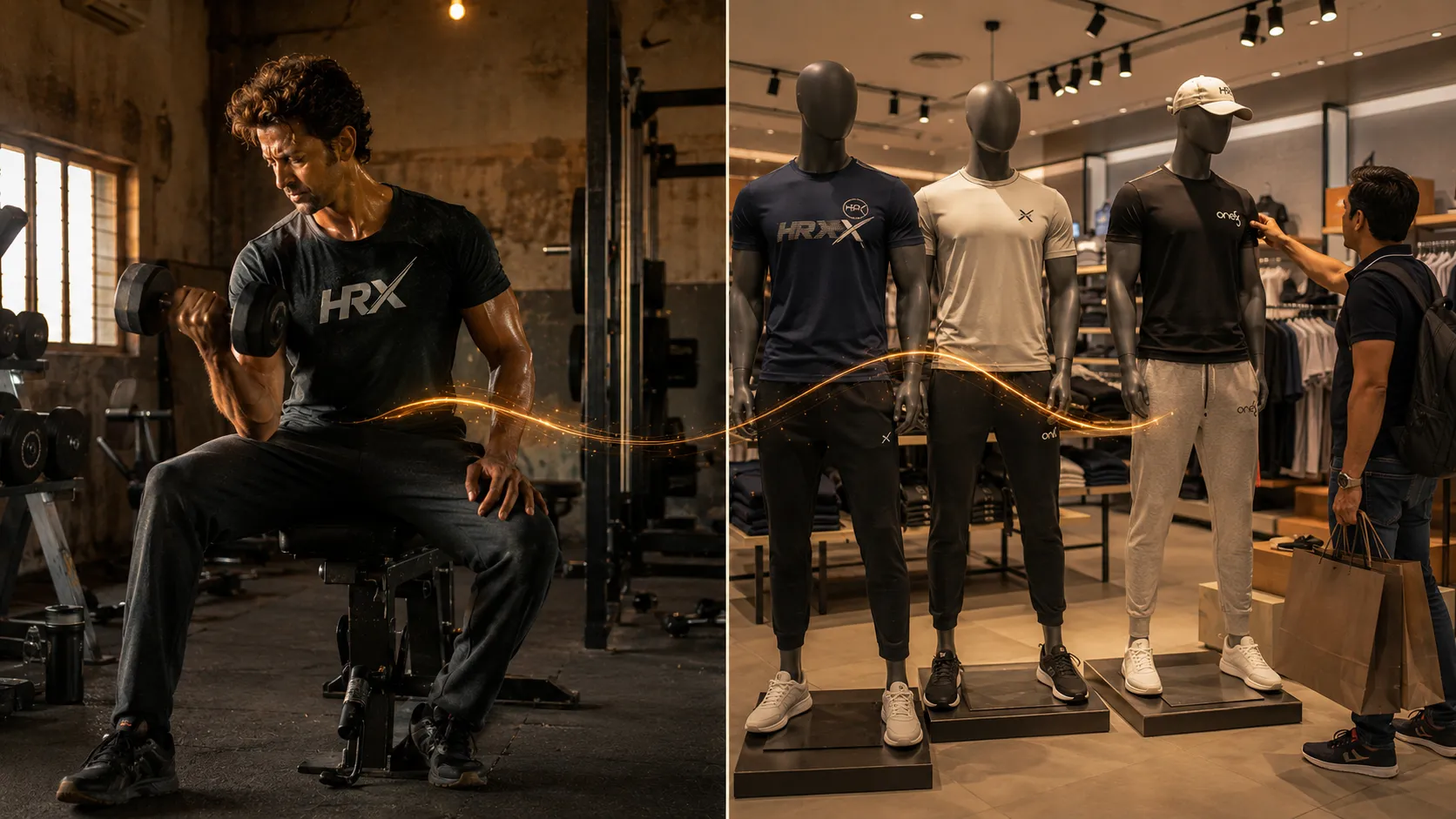
MUMBAI — May 29, 2026 — In 2013, a Bollywood star launched an athleisure brand with a simple proposition: Indian men who went to the gym deserved clothes that looked as good as they felt. The star was Hrithik Roshan. The brand was HRX. And the launch, which consisted of a modest collection of T‑shirts, track pants, and training shoes sold through a single e‑commerce partnership, was so low‑key that most of the fashion industry barely noticed it. Thirteen years later, HRX is a ₹300 crore brand sold through more than 200 exclusive outlets and every major e‑commerce platform in the country. It has expanded into footwear, accessories, and a growing range of fitness equipment. It has spawned a half‑dozen competitors, each launched by a celebrity who saw what Hrithik had built and decided they wanted a piece of it. And it has become the anchor of a celebrity‑athleisure market that is now conservatively estimated at over ₹500 crore—a market that barely existed a decade ago, and that is now one of the most competitive segments in the Indian consumer economy.
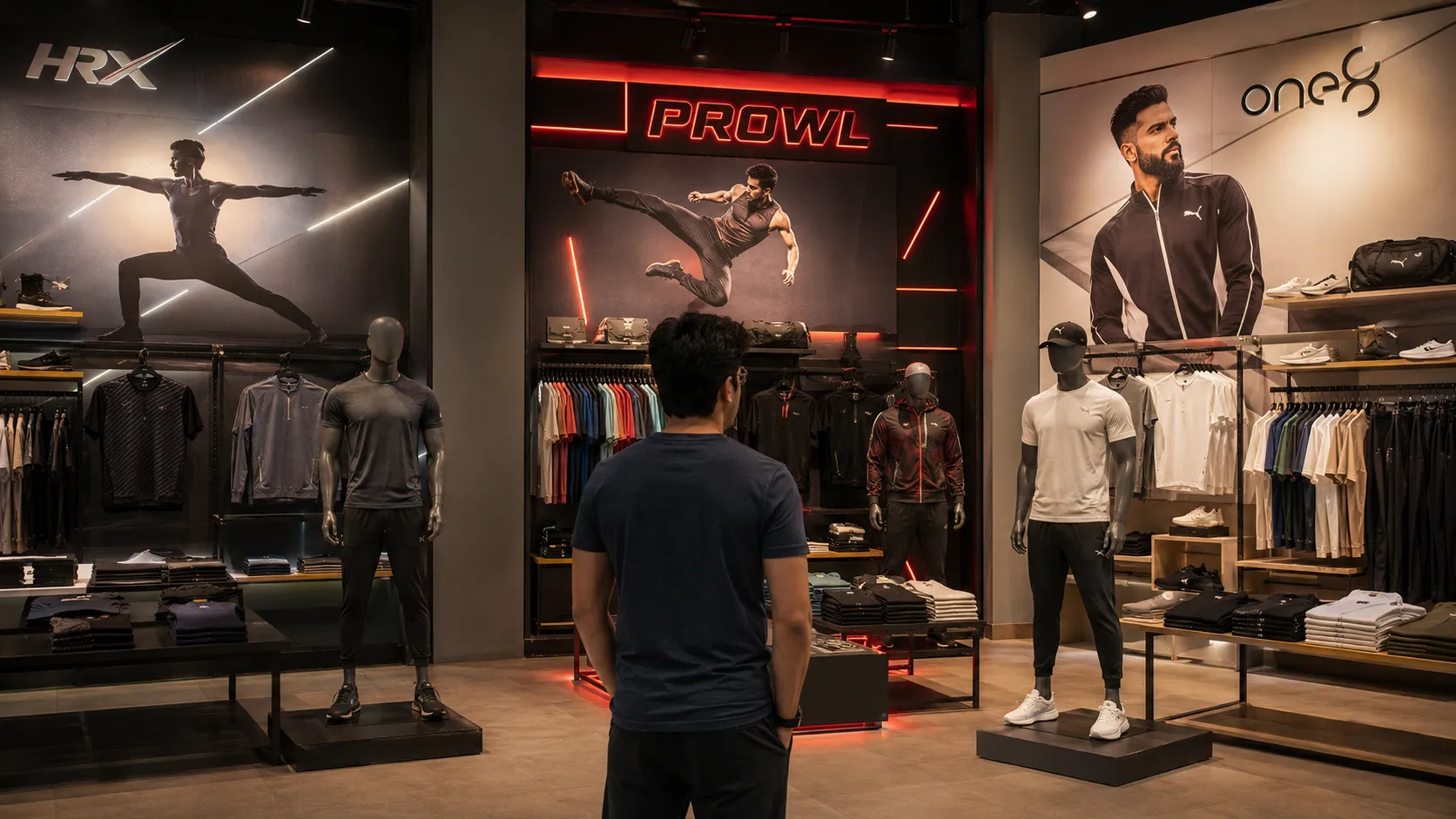
The three brands at the centre of that market—HRX, Tiger Shroff's PROWL, and Virat Kohli's One8—represent three fundamentally different approaches to building a celebrity‑backed consumer brand. HRX is the pioneer: the first‑mover that built its business slowly, on the back of Hrithik's personal brand, without ever raising external capital or seeking a venture‑backed exit. PROWL is the disruptor: the challenger brand that launched with a splash, backed by venture funding and built around Tiger Shroff's identity as India's fittest action star. One8 is the outsider: the brand built by a cricketer, not an actor, and backed by the same consumer‑product logic that has made Virat Kohli one of the most successful athlete‑entrepreneurs in the world. The competition between the three is not merely a battle for market share. It is a laboratory for every model of celebrity entrepreneurship that the Indian consumer economy has produced—and the lessons that are emerging from it will shape the next generation of celebrity‑backed brands.
"HRX proved that a Bollywood star could build an athleisure brand. PROWL proved that a second‑mover with venture backing could challenge the incumbent. One8 proved that a cricketer could do it better than either of them. The sneaker war is not about shoes. It's about which model of celebrity entrepreneurship actually works—and the answer, so far, is not the one Bollywood expected." — Consumer‑brands analyst, speaking anonymously to TIGI
The HRX Blueprint
Hrithik Roshan did not set out to build India's largest celebrity‑backed athleisure brand. He set out to solve a problem that he had encountered himself. The actor, who has maintained one of the most disciplined fitness regimens in Bollywood for over two decades, had spent years searching for gym clothes that were functional, comfortable, and aesthetically appealing—and had found almost nothing in the Indian market. The international brands were expensive. The domestic brands were designed for function, not form. The gap between what Hrithik wanted to wear and what the market was offering was a gap that he believed he could fill.
The HRX brand was launched in 2013 in partnership with Myntra, the Flipkart‑owned fashion e‑commerce platform that was then building its private‑label business. The partnership structure was unusual for its time: Hrithik did not merely license his name to Myntra. He was an equity partner in the brand, with a share of the revenue and a voice in the creative direction. The model was not the Casamigos blueprint—Hrithik did not build the company himself, and Myntra controlled the supply chain, the manufacturing, and the distribution—but it was closer to genuine co‑creation than the endorsement deals that most Bollywood stars were signing at the time. The brand's proposition was simple: high‑quality, design‑forward gym wear at a price that the mass‑affluent Indian consumer could afford. The proposition worked. HRX grew steadily, expanding from T‑shirts and track pants into footwear, accessories, and fitness equipment. By 2020, it was generating over ₹150 crore in annual revenue. By 2026, it had crossed ₹300 crore.
The HRX model is built on a principle that is as old as consumer marketing itself: authenticity. Hrithik Roshan is not merely the face of the brand. He is the brand's reason for being—the living embodiment of the fitness philosophy that the brand's products are designed to serve. The consumer who buys an HRX T‑shirt is not merely buying a piece of clothing. They are buying a connection to the star whose body, whose discipline, and whose identity the brand represents. The connection is not rational, but it is real, and it is the foundation of the brand's loyalty. The HRX consumer who switches to a competitor is not merely switching brands. They are switching identities—abandoning the Hrithik identity for the Tiger identity, or the Kohli identity, or the identity of whichever star launches the next athleisure brand. The switching cost is psychological, not financial, and it is the reason that HRX has retained its market leadership despite a decade of intensifying competition.
The HRX model's greatest strength is also its greatest vulnerability. The brand is entirely dependent on Hrithik Roshan's continued relevance, credibility, and physical condition. The star who is injured, or who ages out of the fitness identity that the brand represents, or who is embroiled in a controversy that damages his personal brand—that star is a risk to the business that bears his name. The single‑star dependency is the structural flaw at the heart of every celebrity‑backed consumer brand, and HRX has not yet solved it. The brand has attempted to diversify its identity beyond Hrithik—sponsoring athletes, launching campaigns that feature multiple fitness influencers, expanding its product range into categories that are less directly tied to Hrithik's personal brand—but the diversification is incomplete. HRX is Hrithik, and Hrithik is HRX. The day that equation changes is the day the brand's foundation cracks.
The PROWL Disruption
Tiger Shroff's PROWL brand, launched in 2021, represents a fundamentally different approach to celebrity athleisure. Where HRX was built slowly, on the back of a single star's personal brand and without external capital, PROWL was built fast, with venture backing, and with a brand identity that was designed to appeal to a younger, more aggressive, more fashion‑forward consumer. The brand's proposition—"Unleash the Beast"—is a deliberate contrast to HRX's more restrained, more aspirational positioning. The Tiger Shroff consumer is not merely someone who goes to the gym. They are someone who attacks the gym—who treats fitness as a form of self‑expression, who wants their clothes to reflect their intensity, and who is willing to pay a premium for the privilege.
PROWL's venture‑backed model has allowed it to scale faster than HRX did at the same stage. The brand raised a significant seed round from a consortium of investors, including several who had previously backed consumer‑technology startups, and it used the capital to invest aggressively in marketing, distribution, and product development. The brand's launch campaign, which featured Tiger Shroff performing a series of gravity‑defying stunts in PROWL gear, generated millions of views on social media and established the brand's identity with an efficiency that no amount of organic growth could match. The venture‑backed model also allowed PROWL to expand into footwear faster than HRX had—a category that requires significant capital investment in design, manufacturing, and inventory, and that is essential to the long‑term viability of any athleisure brand.
The PROWL model's greatest vulnerability is the same vulnerability that has brought down dozens of venture‑backed consumer brands: the pressure to grow. The venture capitalist who invests in a consumer brand expects a return—typically within five to seven years—and the brand that cannot deliver that return faces a reckoning. The brand that expands too fast, or spends too aggressively on marketing, or overinvests in inventory that it cannot sell—that brand can destroy itself, regardless of the star whose name is on the label. The venture‑backed celebrity brand is a race against time: can the brand achieve the scale and the profitability that its investors demand before the capital runs out? The question has not yet been answered for PROWL, which is still in its growth phase. But the answer, when it comes, will determine whether the venture‑backed model is viable for celebrity athleisure—or whether the HRX bootstrap model is the only sustainable path.
The Kohli Advantage
Virat Kohli's One8 brand is the most instructive case study in the celebrity‑athleisure market, because it is not a Bollywood brand. It is a cricketer's brand—and the cricketer in question is the most commercially potent athlete in the history of Indian sport. Kohli's personal brand, which spans cricket, fitness, fashion, and lifestyle, is larger and more globally recognised than that of any Bollywood star. His social‑media following exceeds 300 million across platforms—roughly three times Hrithik Roshan's and five times Tiger Shroff's. His endorsement portfolio, which includes Puma, Audi, and MRF, is among the most valuable in the world. And his entrepreneurial instincts—he has invested in over a dozen startups, including the health‑tech platform StepSetGo and the sports‑tech company Sportido—are sharper than those of most Bollywood stars.
The One8 brand was launched in partnership with Puma, the German sportswear giant that has been Kohli's primary footwear and apparel sponsor for over a decade. The partnership gives One8 an advantage that neither HRX nor PROWL can match: access to Puma's global supply chain, its design expertise, and its distribution network. The One8 sneaker that is designed in collaboration with Puma's product team is manufactured in the same factories that produce Puma's own footwear, using the same materials, the same quality‑control standards, and the same technical expertise. The brand that is backed by a global sportswear company has a quality floor that no standalone celebrity brand can match—and the consumer who buys a One8 product knows that the product will perform, regardless of whether they care about Virat Kohli. The celebrity is the marketing. The multinational is the manufacturing. The combination is more powerful than either element alone.
The One8 model also benefits from Kohli's unique position as a crossover figure—a cricketer who is as comfortable in the world of fashion as he is in the world of sport, and whose brand transcends the boundaries that usually separate the two. The consumer who buys a One8 T‑shirt is not merely buying a connection to Kohli the cricketer. They are buying a connection to Kohli the style icon, the fitness obsessive, the global Indian who moves effortlessly between the worlds of sport, fashion, and entrepreneurship. The multiplicity of Kohli's brand identity is a structural advantage that no Bollywood star can match—because the Bollywood star, however famous, is ultimately limited by the roles they play and the films they release. The cricketer's brand is more durable, more versatile, and more globally resonant than any film star's can ever be. The sneaker war is not merely a competition between three brands. It is a competition between two different categories of celebrity—and the cricketer is winning.
The Economics of a Sneaker
The most important variable in the celebrity‑athleisure market is not the star. It is the shoe. The sneaker is the anchor product of any athleisure brand—the item that drives the highest revenue per unit, the highest margin, and the highest brand loyalty. The consumer who buys a pair of HRX training shoes and likes them will return to buy HRX T‑shirts, track pants, and accessories. The consumer who buys a pair of PROWL sneakers and is disappointed will never buy PROWL again. The shoe is the gateway, and the gateway determines the brand's trajectory.
The economics of a celebrity‑backed sneaker are fundamentally different from the economics of a traditional sports‑footwear product. The traditional sneaker—a Nike, an Adidas, a Puma—is designed by a professional product team, manufactured in a global supply chain, and marketed through a combination of athlete endorsements, brand advertising, and retail distribution. The celebrity‑backed sneaker is designed by a much smaller team, manufactured in a much shorter supply chain, and marketed almost entirely through the celebrity's social‑media channels and personal appearances. The cost structure of the two models is different, and the consumer's expectations are different. The consumer who buys a Nike sneaker expects a certain level of technical performance—cushioning, support, durability—that has been developed over decades of research and development. The consumer who buys a celebrity‑backed sneaker expects a certain level of style, identity, and cultural connection—and is often willing to forgive technical deficiencies if the style and the identity are compelling enough.
The celebrity‑athleisure brands that are winning the sneaker war are the ones that have invested most heavily in product quality. HRX, after a rocky start in footwear, has built a dedicated design team and partnered with contract manufacturers who specialise in athletic footwear. PROWL has used its venture capital to invest in product development, hiring designers from Nike and Adidas and building a supply chain that can deliver premium‑quality sneakers at a mid‑market price. One8, through its Puma partnership, has access to a level of technical expertise that its competitors cannot match. The product is the differentiator, and the stars who understand this—who treat their brands as product companies rather than marketing exercises—are the ones whose brands will survive the inevitable consolidation of the market.
The Next Wave
The celebrity‑athleisure market is still in its early stages, and the brands that are competing today—HRX, PROWL, One8—are the first generation. The second generation is already in development. Ranveer Singh, whose personal style is among the most distinctive in Bollywood, has been exploring an athleisure line that would combine his love of bold fashion with the fitness identity he has cultivated for his action roles. Allu Arjun, whose Pushpa franchise has made him a pan‑Indian style icon, has been in discussions with several international sportswear brands about a co‑branded line. The next wave of celebrity‑athleisure brands will be more global, more fashion‑forward, and more capital‑intensive than the first wave—and the incumbents that survive will be the ones that have built the supply chains, the design capabilities, and the brand loyalty to compete with the newcomers.
The international dimension of the market is also developing. Puma's partnership with One8 is the most visible example of a global sportswear company using an Indian celebrity to access the Indian market, but it is not the only one. Adidas has been exploring a similar partnership with a major Bollywood star. Nike has been expanding its influencer‑marketing programme in India, signing a growing roster of athletes, actors, and musicians. The international brands are recognising that the Indian consumer is increasingly willing to pay for premium athleisure, and that the most effective way to reach that consumer is through the celebrities they already trust. The celebrity‑athleisure market of 2036 will be populated not just by Indian brands, but by global brands that have partnered with Indian stars—a market that is larger, more competitive, and more sophisticated than the one that exists today.
The sneaker war is just beginning. The first generation of brands has established the market. The second generation will expand it. The third generation will consolidate it. The stars who are building their brands today—the Hrithiks, the Tigers, the Kohlis—are not merely selling shoes. They are building a new category of consumer enterprise, and the lessons they are learning will be studied by every celebrity who launches a brand in the years to come. The gym is the laboratory. The sneaker is the experiment. The market is the judge.


