The Scrap Dealer's Billion-Rupee Bet: How a Mumbai Recycler Is Mining Dead Batteries for EV Gold—and Planning an IPO
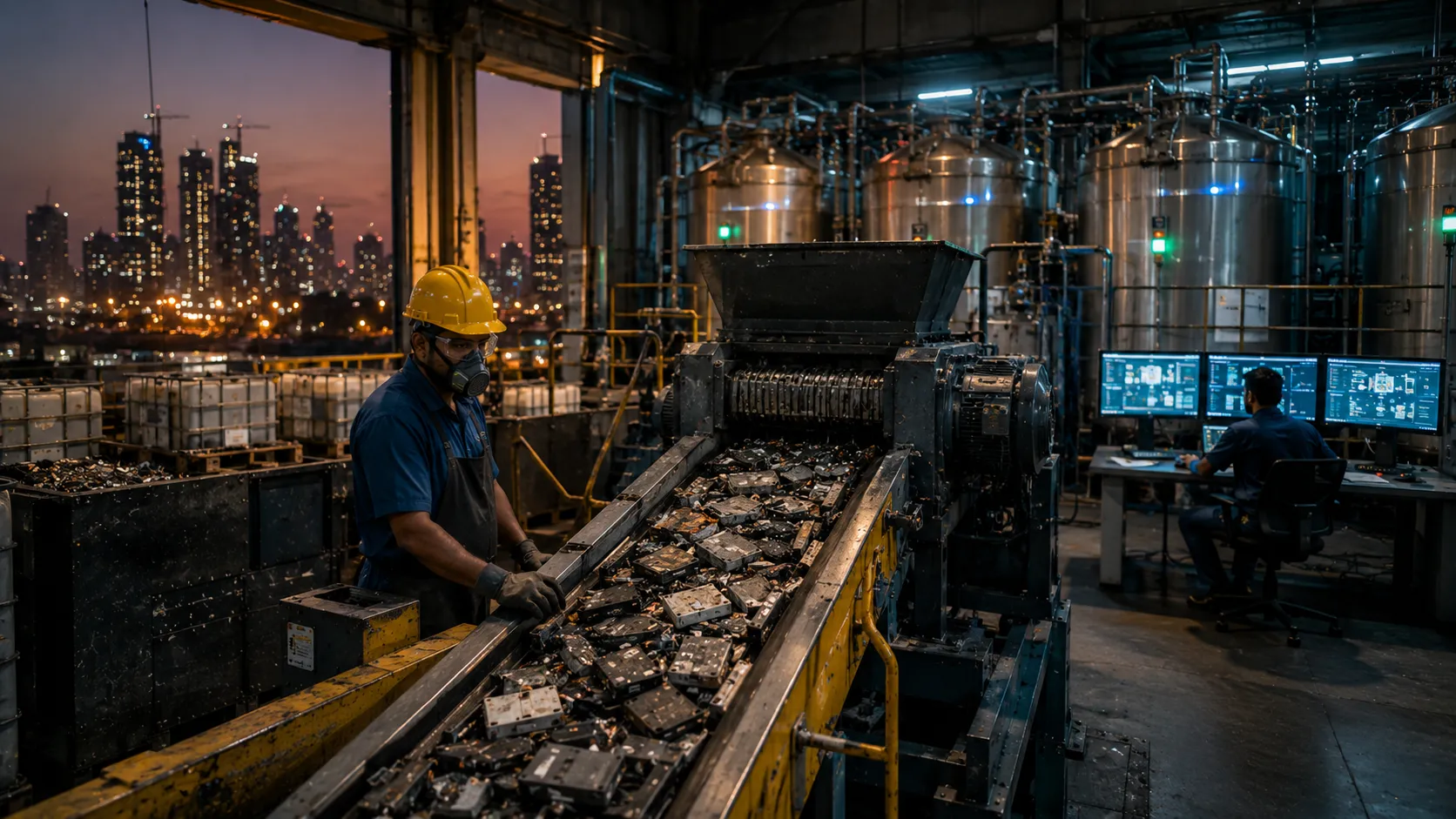
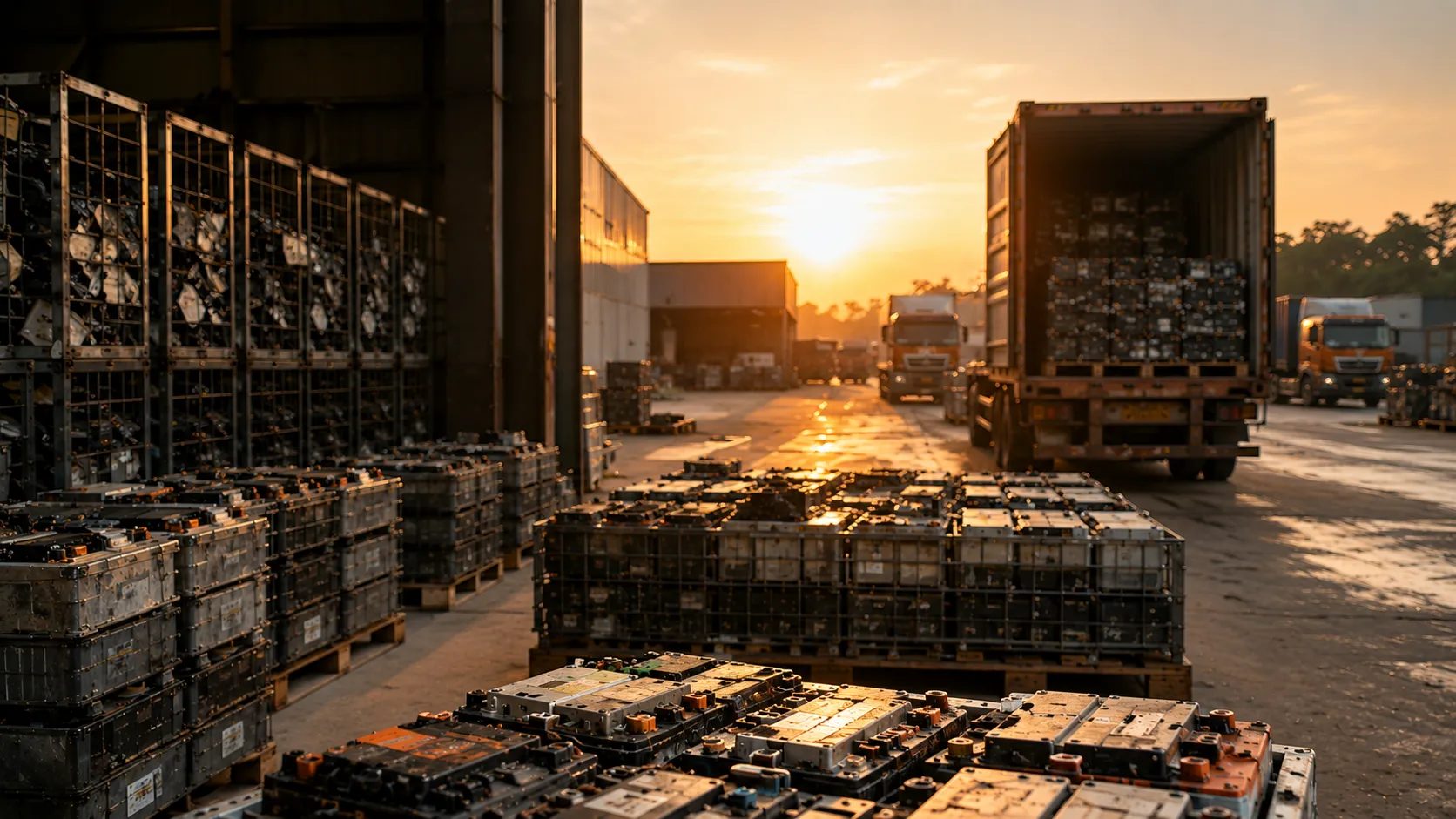
MUMBAI — May 21, 2026 — On the outskirts of Mumbai, inside a facility that smells faintly of metal and burnt wires, Rajesh Gupta sees treasure where most of India sees garbage. Every morning, trucks unload mountains of discarded laptop batteries, spent electric-vehicle cells, dead mobile phones, and industrial scrap—the detritus of a nation racing to digitize and decarbonize simultaneously. What arrives as waste leaves as cobalt sulfate, lithium carbonate, and nickel powder, metals so valuable that they have become the subject of geopolitical competition between the world's most powerful nations.
Gupta, the founder of Recyclekaro India Limited, did not begin his career in a cleanroom or a venture-backed startup incubator. He began as a scrap trader, working the same unglamorous supply chains that have fueled Mumbai's informal recycling economy for generations. Two decades later, he runs one of India's largest formal battery recycling operations, a company that processed 4,200 metric tonnes of lithium-ion batteries last year, has already expanded to 10,000 tonnes, and will shortly add another 16,000 tonnes of annual capacity. He extracts cobalt, lithium, nickel, and manganese from dead batteries at recovery rates exceeding 95 percent—performance that rivals the best recycling facilities in Europe and North America. And he is about to take his company to the public markets.
In April 2026, Recyclekaro confirmed plans to raise ₹240 crore in fresh equity—roughly $29 million—and is evaluating an initial public offering as it accelerates expansion. The fundraise follows a recent ₹93 crore capital infusion and will be used to build new extraction facilities, add advanced hydrometallurgical capabilities, and scale capacity across multiple business verticals. "We are in expansion mode right now," said CEO Prassann Daphal. "Lithium-ion battery recycling capacity last year was 4,200 metric tonnes, which we have renewed to 10,000 metric tonnes per year. And shortly, we will add 16,000 metric tonnes for extracting critical minerals such as lithium, cobalt, nickel and manganese—key inputs for batteries and clean energy technologies."
The Scrap Trader Who Saw the Future
Gupta's journey from the informal scrap trade to the cusp of a public listing is not a typical startup story. It contains no prestigious university degree, no Silicon Valley mentorship, no seed round from a marquee venture fund. It began in the early 2000s, when Gupta was running a small paper-recycling operation in Mumbai and noticed something that most of his competitors ignored: the piles of electronic waste accumulating across the city contained metals that were worth far more than the paper and plastic they were embedded in.
The insight was not complex. It was obvious, in retrospect. But at the time, India had no formal infrastructure for recycling electronic waste. The government was not prepared. Regulations did not exist. And the informal operators who dominated the sector—burning circuit boards in open pits, soaking batteries in acid baths—were extracting a fraction of the value while poisoning themselves and their surroundings. "The government wasn't prepared, infrastructure didn't exist, and most people weren't even aware that used batteries were toxic," Gupta recalled.
He began experimenting. With a handful of engineers and modest machinery, he tried to extract cobalt, nickel, and lithium from spent batteries—not through crude smelting, but through hydrometallurgical processes that use chemical solutions to dissolve metals and selectively precipitate them in pure form. The learning curve was steep. The capital was scarce. The informal operators undercut him on price because they did not pay for compliance, worker safety, or environmental controls. "People told me it was impossible," Gupta said. "Why spend on compliance and technology when others dump or burn waste cheaply?"
He spent on compliance and technology anyway. And over the course of fifteen years, his small workshop became one of India's few operational facilities capable of handling end-to-end battery recycling at industrial scale.
The Urban Mining Thesis
The strategic logic underpinning Recyclekaro's expansion is built on a concept that has become known in policy circles as "urban mining"—extracting metals not from ore in the ground, but from the products that have already been mined, refined, and discarded. The thesis is simple: a dead lithium-ion battery contains higher concentrations of cobalt and lithium than the richest natural ore bodies. The mine is already dug. The ore is already processed. It is sitting in a landfill, or a warehouse, or the back of an electronics repair shop, waiting for someone to recover it.
The economics are compelling. India imports virtually all of its lithium, cobalt, and nickel—the three most critical minerals in lithium-ion batteries—from a global supply chain dominated by China. The country's EV fleet has surged past 2 million vehicles, with another 2 million expected to be added this financial year. Every one of those vehicles contains a battery that will, within five to eight years, reach the end of its useful life. The battery waste that India will generate by 2030 is measured in the hundreds of thousands of tonnes. Without domestic recycling capacity, all of that material will either be exported for processing or dumped informally—a loss of strategic resources that the country cannot afford.
Recyclekaro's hydrometallurgical processes can recover more than 95 percent of the cobalt and significant percentages of lithium, nickel, and manganese from end-of-life batteries. The recovered materials are currently sold to domestic chemical and industrial users, but the company is working toward producing battery-grade outputs for direct supply to cell manufacturers. That transition—from industrial-grade to battery-grade—is the holy grail of the recycling industry. It would allow a cell manufacturer like Tata's Agratas or Reliance's gigafactory to source cobalt and lithium not from a mine in the Congo or a refinery in China, but from a recycling facility in Mumbai.
The Informal Sector Problem
For all its technological sophistication, Recyclekaro operates in a market that remains dominated by the informal sector. India generates an estimated 6.2 million metric tonnes of e-waste annually, a figure projected to reach 14 million tonnes by 2030. The annual economic value of the e-waste market is roughly ₹51,000 crore. Yet formal recovery systems capture only 18 percent of that potential. The informal sector—a vast network of scrap collectors, small-scale dismantlers, and backyard smelters—still processes approximately 78 percent of India's e-waste, recovering perhaps 10 to 20 percent of the material value while generating significant environmental and health damage.
The gap between formal and informal recovery is stark. Formal recycling delivers up to 95 to 97 percent material recovery. Informal methods recover a small fraction. The difference—hundreds of thousands of tonnes of cobalt, lithium, nickel, and copper that could be recovered but are instead lost to landfills or crude extraction—represents both an environmental catastrophe and an economic opportunity that Gupta has spent his career trying to close.
"The world talks about a circular economy," Gupta said. "For us, it's not jargon. It's survival." The company partners with corporates, research institutes, and housing societies. It trains waste collectors. It runs awareness drives. It collaborates with IIT Bombay to refine extraction methods that are both eco-friendly and scalable. The approach is systematic: expand the supply of formal recycling infrastructure until the economics make informal processing uncompetitive, not by regulation alone, but by superior recovery rates and the ability to pay higher prices for waste feedstock.
The Road to the Public Markets
Recyclekaro's planned ₹240 crore fundraise and potential IPO mark a significant moment for India's recycling industry. The company is positioning itself to move up the value chain—from basic recycling to high-purity material recovery that can supply battery manufacturers directly. It has expanded its e-waste recycling capacity more than threefold, from 7,500 metric tonnes per annum to 24,500 metric tonnes. Beyond e-waste and batteries, the group has entered catalytic converter recycling through a joint venture, Evergreen Mahan Recycling Private Limited, which focuses on recovering precious metals such as platinum, palladium, and rhodium from automotive scrap.
"Our goal is not just recycling, but extracting materials and adding value before selling them," Daphal said. That distinction—between a recycler that shreds and ships, and a materials company that produces battery-grade chemicals—is the difference between a commodity business and a strategic asset. The former is vulnerable to price cycles and competition. The latter is essential to the supply chain of an industry—EV manufacturing—that the Indian government has identified as a national priority.
The company's expansion comes at a moment when global attention is focused on critical mineral supply chains. The U.S. Inflation Reduction Act has tied EV subsidies to domestic battery production. Europe's Critical Raw Materials Act mandates that a growing share of battery minerals come from recycled sources. China, which dominates the global battery supply chain from mining to cell manufacturing, has tightened export controls on key materials. For India—a country with limited domestic mineral reserves but a fast-growing EV market and a massive e-waste stream—recycling is not merely an environmental virtue. It is a strategic necessity.
Recyclekaro's recovery rates—above 95 percent for cobalt, with similarly impressive numbers for nickel and manganese—place it among the most efficient recyclers in the world. The challenge now is scale. The 16,000-tonne lithium-ion battery recycling expansion will make it one of the largest facilities of its kind in Asia. The planned IPO will provide the capital to build it. And the market—driven by an EV industry that needs critical minerals and a government that does not want to depend on China for them—is waiting.
The scrap dealer who started with paper waste and saw treasure where others saw garbage now stands at the center of India's green industrial transition. The trucks keep arriving every morning, loaded with dead batteries. The reactors keep extracting cobalt, lithium, and nickel. And the company that began in a Mumbai workshop is about to ask the public markets to value what it has built—not as a recycler, but as a miner of the urban landscape, extracting strategic resources from the products that India has already used and discarded.


