The Sachet-Model Battery Revolution: How a Former NASA Engineer Is Making EV Batteries Pay-As-You-Go
PUNE — May 21, 2026 — Ashwin Shankar has worked at Schlumberger, the oilfield services giant. He has worked at NASA. He holds a degree in electrical engineering from Stanford. He could have spent his career in any number of comfortable, well-compensated roles designing complex systems for organizations with deep pockets and long time horizons. Instead, he is running a startup in Pune that manages a fleet of 2,000 electric vehicle batteries across six Indian cities—and he just raised ₹8 crore to expand that fleet tenfold over the next eighteen months.
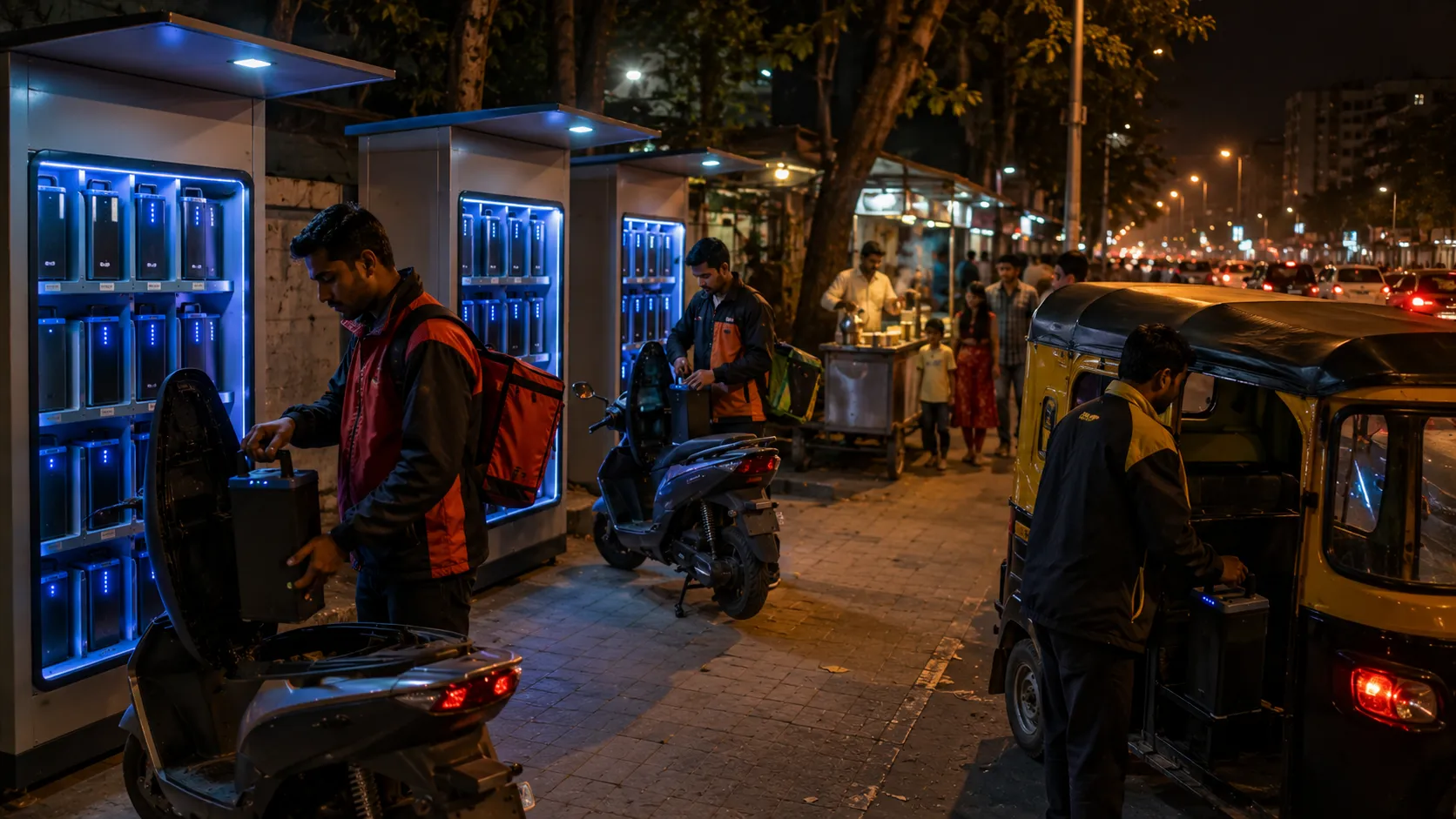
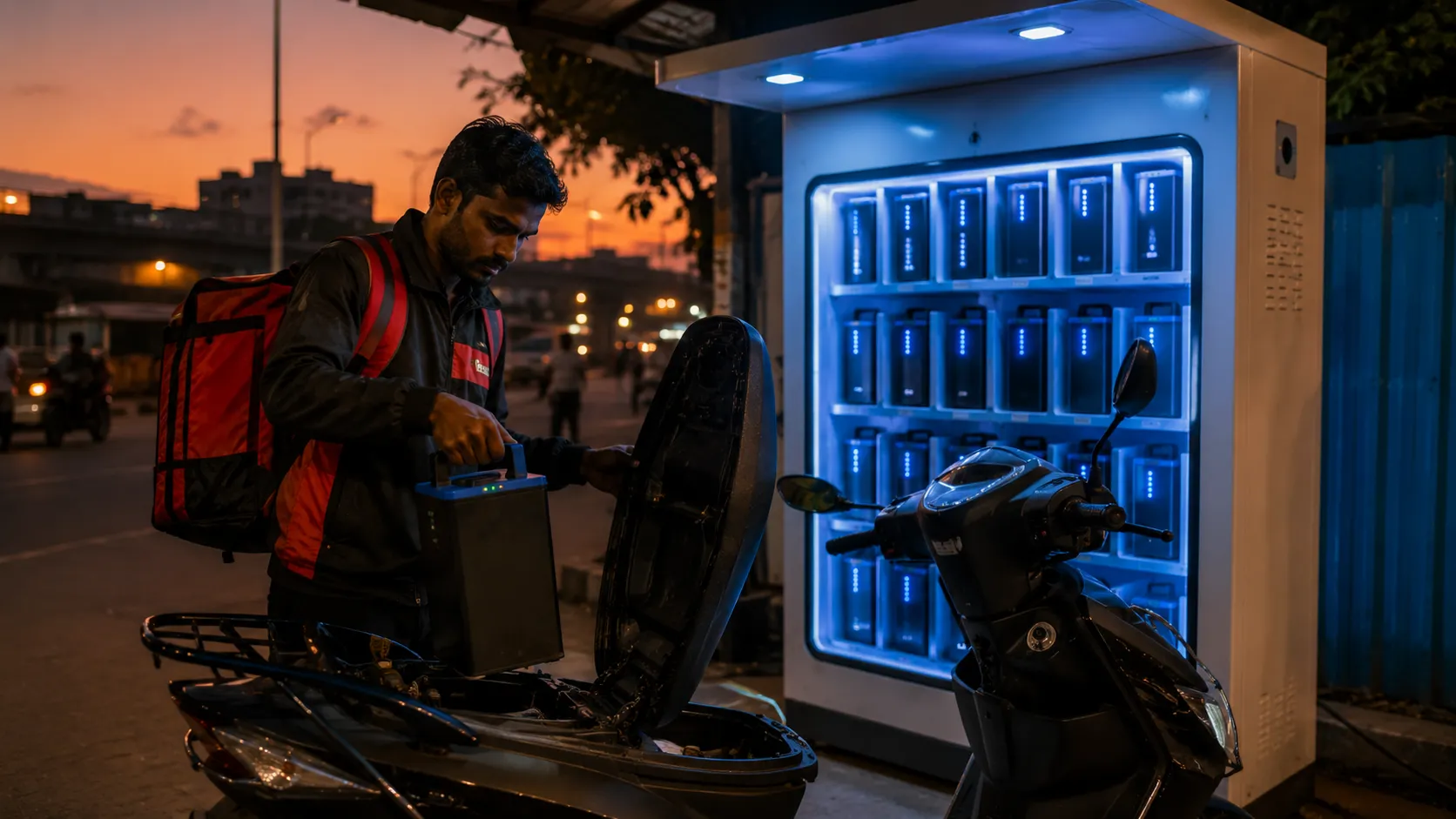
BatteryPool, the company Shankar founded in 2020, is not a battery manufacturer. It is a battery monetization platform—a pay-as-you-go service that lets electric two- and three-wheeler riders swap depleted batteries for charged ones at a network of stations, paying in small daily, weekly, or monthly amounts rather than buying the battery outright. The model has a name in India: sachet. It is the same innovation that transformed mobile data when Reliance Jio offered cheap, small-denomination data packs; the same psychology that sells shampoo in single-use pouches to consumers who cannot afford a full bottle. Shankar's insight was that EV batteries could work the same way.
"The sachet model revolutionized how Indians consumed mobile data and daily essentials," Shankar said. "Electric mobility is next. By enabling pay-as-you-go battery access, we are making EVs affordable and building a stronger ecosystem for riders." BatteryPool's proprietary hardware and IoT-connected battery management system powers India's first flexible, pay-as-you-go energy platform for EVs. The company currently manages over 2,000 batteries, and the ₹8 crore Pre-Series A round—led by Inflection Point Ventures, with participation from Indian Angel Network, Chennai Angels, Keiretsu Forum, and prominent high-net-worth individuals—will fund a tenfold expansion.
The Single Biggest Barrier to EV Adoption
The single biggest barrier to electric vehicle adoption in India is not range anxiety, charging infrastructure, or vehicle cost. It is the battery. In a typical electric two-wheeler, the battery accounts for 40 to 50 percent of the vehicle's upfront cost—a figure that puts EVs out of reach for many of the riders who would benefit most from switching. Delivery drivers, auto-rickshaw operators, and gig-economy workers who use their vehicles to earn a living cannot afford to pay ₹80,000 or more for an EV when a petrol equivalent costs half as much.
BatteryPool's model eliminates the upfront cost of the battery. Riders buy the vehicle without the battery—or lease both—and pay for battery access on a per-use basis. The economics shift from a capital expense to an operating expense, which aligns with the cash-flow patterns of gig workers who earn money daily and cannot wait months to recoup an upfront investment. "We have made electric mobility affordable," Shankar said. The platform also extends the useful life of each battery by managing charging cycles, monitoring battery health through IoT sensors, and rotating batteries through the fleet to ensure even wear.
The model is already gaining traction. India has over 2 million electric two- and three-wheelers on its roads, and another 2 million are expected to be added in the current financial year. The demand for reliable, flexible battery solutions is growing in lockstep with the EV fleet. BatteryPool's expansion to six cities—and its plan to deepen its presence in those markets before expanding to new ones—reflects a deliberate strategy of density over sprawl. Each new station in an existing city increases the convenience for riders already using the service, which increases utilization, which improves the unit economics.
The NASA-to-Pune Pipeline
Shankar's path from NASA to Pune is unusual but not inexplicable. At Stanford, he studied electrical engineering with a focus on energy systems. At Schlumberger, he learned how to deploy complex hardware in harsh environments—oil fields are not kind to sensitive electronics. At NASA, he worked on systems engineering for space missions, where reliability is non-negotiable and failure is measured in millions of dollars per incident.
The thread connecting those experiences is systems-level thinking—the ability to design a complex network of hardware, software, and human behavior that works reliably at scale. BatteryPool's platform is, at its core, a systems problem. The batteries must be charged, stored, and distributed across a network of stations. The IoT sensors must report battery health, charge level, and location in real time. The pricing algorithms must balance supply and demand so that stations are neither empty nor overstocked. The riders must trust that a charged battery will be waiting for them when they arrive.
Building that system in India—with its unreliable power grids, chaotic traffic, and price-sensitive consumers—is harder than building it in a controlled laboratory environment. But it is also more impactful. The riders who use BatteryPool's service are not early adopters testing a lifestyle product. They are working people who need reliable, affordable transportation to earn a living. Every minute they spend waiting for a battery is a minute they are not earning. Every rupee they save on fuel is a rupee they can spend on food, rent, or their children's education.
The Road to Ten Thousand Batteries
BatteryPool's tenfold expansion target is ambitious but achievable. The company is focusing on deepening its presence in its existing six cities before expanding to new ones, a strategy that prioritizes network density over geographic sprawl. Each additional station in an existing city increases the convenience for riders, which increases utilization, which improves unit economics. The approach is capital-efficient—a virtue in a sector where hardware startups have historically burned through funding with little to show for it.
The competitive landscape is intensifying. Sun Mobility, the battery-swapping venture backed by Indian oil giant BP, operates a larger network of swap stations. RACEnergy, a Hyderabad-based startup, offers battery-swapping for auto-rickshaws. The government has signaled support for battery-swapping as a complement to fixed-battery charging, and the NITI Aayog has published a draft battery-swapping policy that could standardize connectors and interoperability across operators.
For BatteryPool, the opportunity is not to dominate the entire battery-swapping market. It is to build a profitable, capital-efficient platform that solves a specific problem for a specific customer: the gig-economy rider who cannot afford to buy a battery upfront, who needs to swap in under a minute, and who wants to pay in small daily amounts that match their cash flow. The sachet model that transformed mobile data and consumer goods in India is now being applied to energy storage. The former NASA engineer who saw the connection before anyone else is betting that the model will work for batteries, too.


