The Rocket Printed in 72 Hours: Inside Agnikul's $75 Million Bet to Build India's Second Space Unicorn — and Put AI Data Centers in Orbit
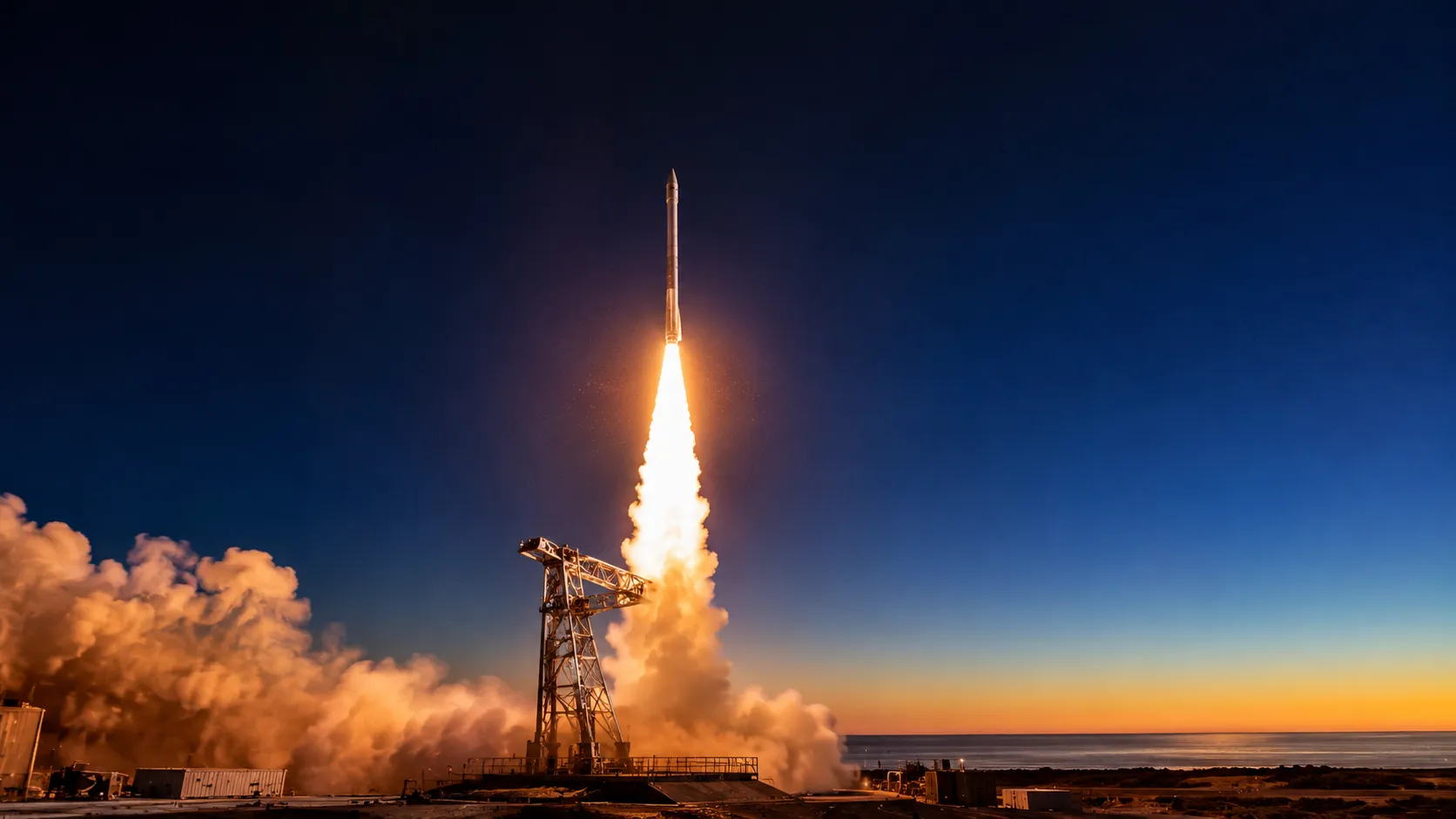
CHENNAI — May 18, 2026 — On May 30, 2024, a rocket lifted off from India's Satish Dhawan Space Centre that did not look like any rocket India had launched before. It was just 6.2 meters tall — modest by orbital standards, almost delicate — and it rode a column of flame produced by an engine that had been printed in a single piece. Not assembled from hundreds of components. Not welded, bolted, or fastened. Printed. In Inconel alloy. In roughly 72 hours.
The Agnibaan SOrTeD — Sub-Orbital Test Demonstrator — was the world's first rocket powered by a single-piece 3D-printed semi-cryogenic engine. It was India's first semi-cryogenic rocket launch. It was India's first launch from a private pad. And it was the moment the global space industry began to take Agnikul Cosmos seriously.
Two years later, Agnikul is in the thick of a fundraising round that will define its trajectory into the commercial market. In May 2026, the company confirmed it is in talks to raise $50–75 million at a valuation of approximately $500 million. The round, an extension of its Series C, has involved preliminary discussions with growth-stage investor Avataar Ventures — a backer of publicly listed companies Amagi and RateGain — as well as several existing shareholders. The funding arrives on the heels of Skyroot Aerospace's landmark $1.1 billion unicorn round, and together the two announcements signal that India's private space sector is accelerating from technology development toward commercial deployment at a pace that has surprised even optimistic investors.
The Engine That Shouldn't Have Been Possible
Agnikul's founding story is inseparable from IIT Madras. The company was established in 2017 by Srinath Ravichandran and Moin SPM, incubated at the university's Research Park, and built with the guidance of more than 45 former ISRO scientists. From the beginning, the founders shared a conviction that rocket manufacturing could be fundamentally reimagined — that the slow, expensive, assembly-intensive process of building engines could be compressed into something that looked more like software iteration than traditional aerospace.
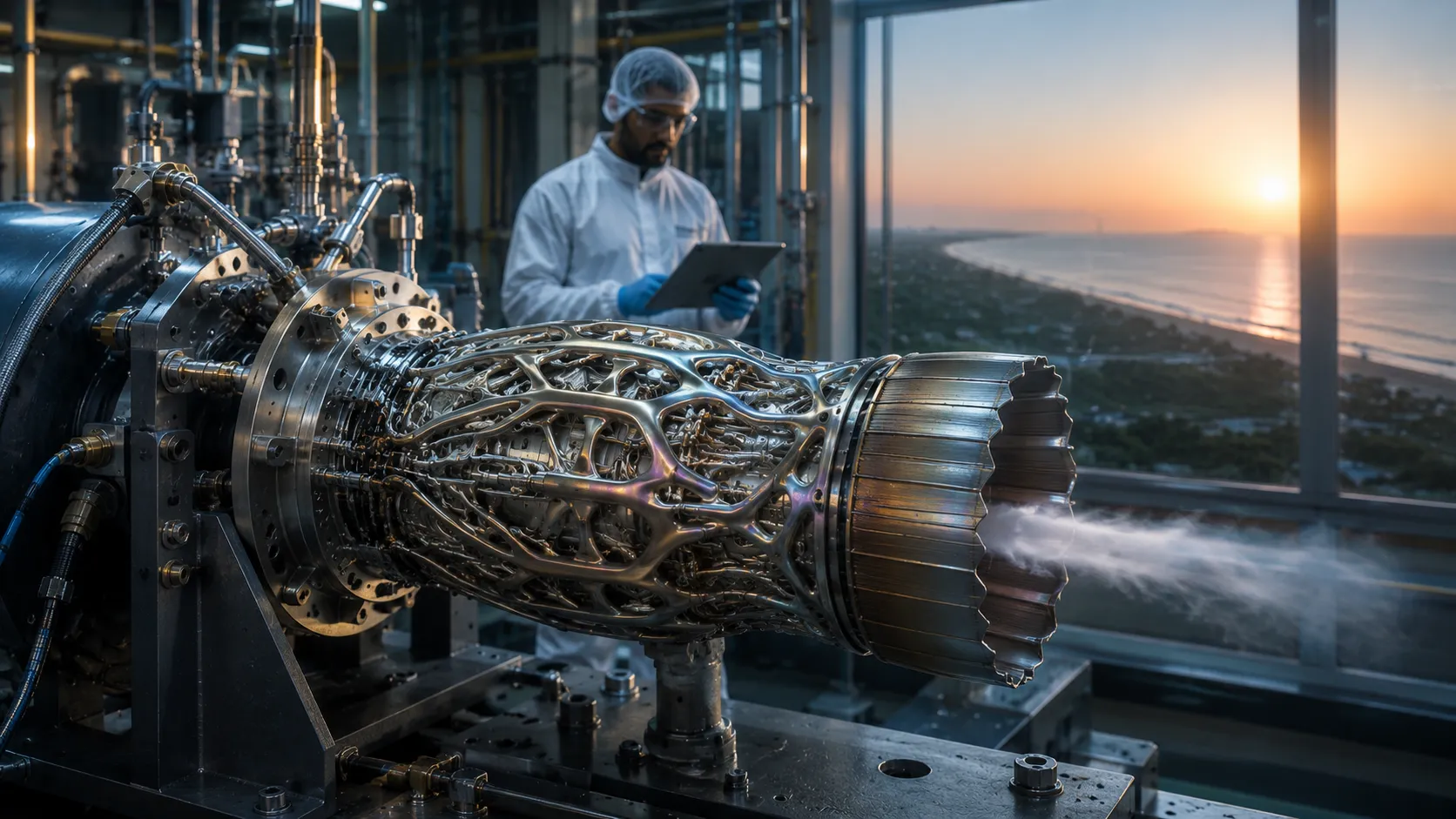
The result was the Agnilet — the world's first single-piece, fully 3D-printed semi-cryogenic rocket engine. Fabricated from Inconel alloy using an EOS metal printer, the engine eliminated hundreds of traditionally assembled components. Where a conventional engine requires months of machining, welding, and quality control across a supply chain of specialized vendors, the Agnilet was printed in approximately 72 hours. No joints. No welds. No assembly tolerances to drift. A single piece of metal, performing as an engine.
The implications extend beyond cost reduction — though the cost reduction is significant. A single-piece engine is inherently more reliable because it has no joints to fail, no seals to leak, and no assembly errors to introduce. It is also dramatically faster to iterate. When a traditional engine fails a test, engineers must diagnose the failure, redesign the affected components, re-machine them, and reassemble the engine — a cycle that can consume months. When an Agnilet needs modification, engineers adjust the digital design file and print a new version in days.
In early 2026, Agnikul successfully test-fired a cluster of three semi-cryogenic engines simultaneously — a critical milestone because orbital launches require multiple engines firing in coordination. The test validated that the 3D-printed architecture scales from a single engine to a cluster, and that the manufacturing philosophy underpinning the company's approach is not limited to suborbital demonstrations.
Private funding to India's spacetech sector more than doubled in 2025, reaching $196 million across 55 deals, according to Tracxn. In 2026, companies have already crossed the $100 million mark, with Skyroot becoming the first Indian private space unicorn. Agnikul's $50–75 million raise would represent the second major private space funding event of the year, and the total capital formation in the sector is accelerating toward levels that, five years ago, no serious analyst would have predicted.
The 35-Launch Manifest and the Flat Valuation
One of the most telling details in Agnikul's current fundraising conversation is the valuation: approximately $500 million, roughly flat to the company's November 2025 round when it raised $17 million from HDFC Bank, 100X.VC, Advenza Global, Atharva Green Ecotech, and multiple family offices.
Flat rounds are often interpreted as a sign of distress. In Agnikul's case, the story is more complicated. The company is pre-revenue, like Skyroot, and its value is tied to technical milestones rather than commercial contracts. A flat valuation at $500 million, coming roughly eighteen months after the historic Agnibaan SOrTeD launch and on the cusp of the first orbital mission, represents something closer to consolidation than decline — a market acknowledgment that the company has made significant technical progress while still needing to demonstrate orbital capability before commanding a higher price.
The funds are earmarked for expanding production capabilities as the company progresses toward commercial deployment. Agnikul is developing a 350-acre integrated space manufacturing and testing campus in Tamil Nadu, near the coastal launch corridor at Kulasekharapatnam. In March 2026, the Tamil Nadu government, through its industrial development arm TIDCO, invested ₹25 crore (approximately $2.65 million) in the company — one of the first direct equity investments by an Indian state government into a private space startup.
Agnikul's commercial pipeline now includes a launch manifest with 35 planned missions between 2026 and 2028, over 20 customers onboarded, and more than $200 million in soft revenue commitments. The company's Agnibaan vehicle is designed to carry payloads of up to 300 kilograms to low-Earth orbit, targeting the rapidly growing small-satellite market with dedicated launches that allow customers to choose their own orbital parameters — a significant advantage over traditional rideshare missions where satellites are secondary cargo on a larger rocket.
The Orbital Data Center Play
The most audacious piece of Agnikul's future, however, is not a rocket at all. In February 2026, the company signed a memorandum of understanding with NeevCloud, a Bengaluru-based AI cloud provider, to launch India's first orbital AI data center.
The concept is as elegant as it is ambitious. Under the agreement, Agnikul will provide the launch vehicle and orbital hosting platform using its extendable upper-stage architecture. After the satellite payload is released, the rocket's upper stage — which on most missions would become space debris — remains in low-Earth orbit and is repurposed into a functional data center, hosting NeevCloud's AI inference chips. The technology, patented by Agnikul under the name Sooraj, transforms the spent upper stage into a stable, power-generating satellite bus, eliminating the need for a separate, costly satellite launch.
The advantages of orbital computing are increasingly well understood. In space, solar power is continuous and free. The vacuum provides passive radiative cooling with zero water consumption. AI chips can run at peak performance without drawing a single watt from terrestrial power grids or a single liter of cooling water. The pilot mission is scheduled for late 2026, with commercial operations targeted for 2027. Should it succeed, Agnikul and NeevCloud aim to deploy more than 600 orbital edge data centers over the following three years, creating a distributed constellation of AI compute nodes in low-Earth orbit.
The orbital data center play places Agnikul in direct competition with far larger entities. In January 2026, SpaceX filed a request with the U.S. Federal Communications Commission to launch up to one million compute-capable satellites, aiming to create a global mesh of orbital AI infrastructure powered by Starlink V3 hardware and integrated with Musk's xAI models. Lumen Orbit, a Silicon Valley startup, raised $175 million in April 2026 to build space-based data centers. The race to put AI in orbit is not a niche curiosity. It is becoming one of the defining infrastructure competitions of the late 2020s.
What This Signals
Agnikul's trajectory is best understood in the context of India's broader space transformation. In 2014, India had a single space startup. By early 2026, that number exceeded 300. The Indian government, through the creation of IN-SPACe — the Indian National Space Promotion and Authorization Centre — has actively opened ISRO's testing facilities, launch ranges, and technical expertise to private players. The regulatory framework that once made private space activity effectively impossible has been rebuilt to accommodate commercial speed.
The result is a sector that is attracting capital, talent, and attention at a rate that no Indian deep-tech industry has ever achieved. Skyroot's unicorn round, Agnikul's $50–75 million raise, and the pipeline of smaller deals across the sector suggest that investors are pricing in a future where Indian rockets are a meaningful part of the global launch supply chain. The country aims to capture 8% of the global space market by 2035.
Agnikul's specific bet — 3D-printed engines, modular launch vehicles, and orbital data center infrastructure — is a bet on manufacturing speed, capital efficiency, and the convergence of space and AI. The Agnilet engine can be printed in days. The Agnibaan rocket can be configured for specific payloads. The Sooraj platform turns a launch vehicle into a permanent orbital asset. Each of these elements reduces cost and compresses time in an industry where both are measured in years and billions.
The flat valuation will not remain flat forever. The orbital launch — the moment that transforms Agnikul from a company that has demonstrated suborbital capability into a company that delivers payloads to orbit — is the threshold that will define its next chapter. The $50–75 million currently being discussed will fund the path to that threshold. The 35-launch manifest, the 20+ customers, and the 600-satellite AI constellation are the destination. The company that began in an IIT Madras lab, with an engine printed in a single piece, is now within striking distance of orbit — and of becoming India's second space unicorn.


