The Reel Estate: How Shah Rukh Khan, Salman Khan, and Bollywood's Quietest Tycoons Built Property Empires That Out‑Earn Their Film Careers
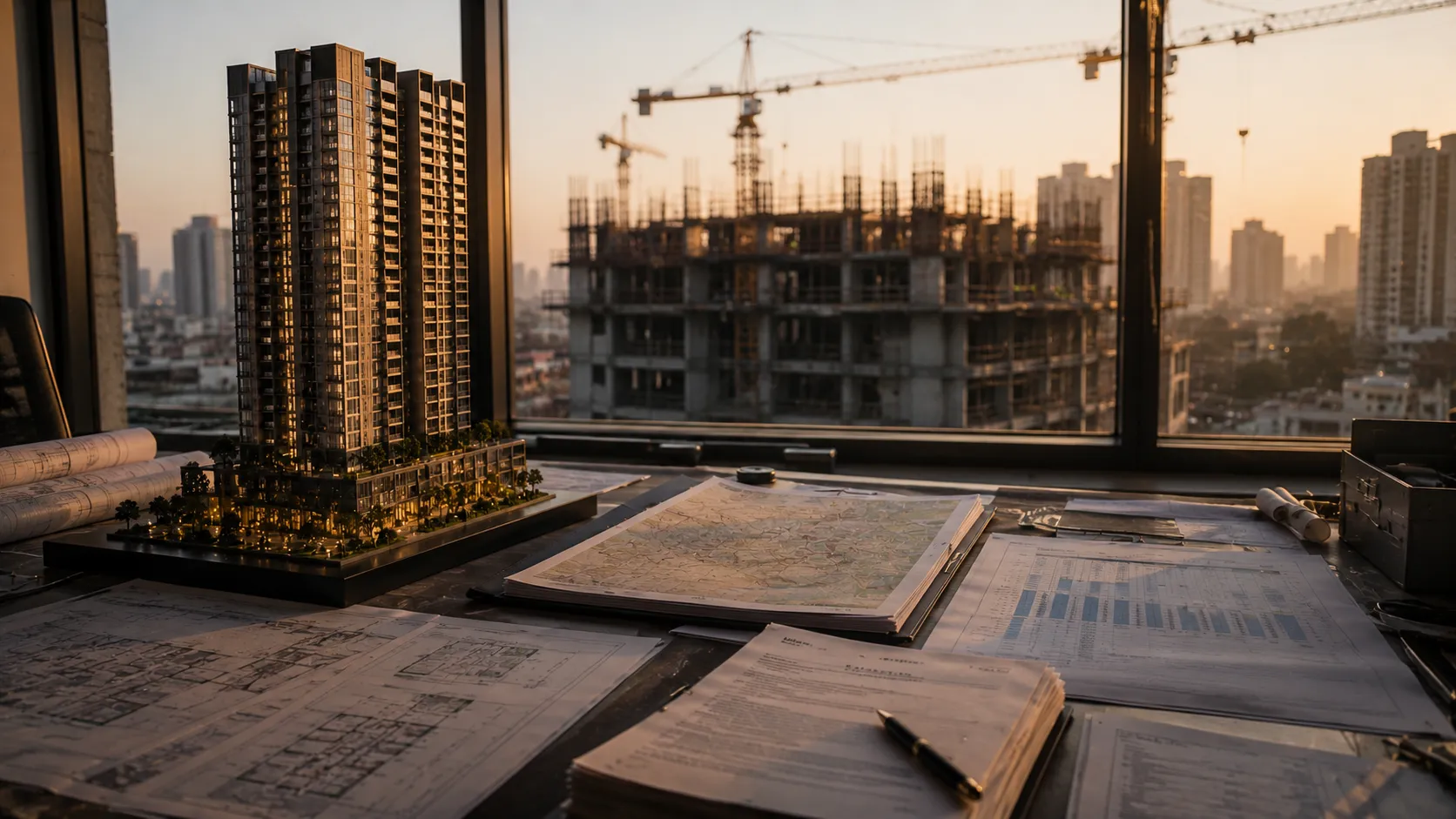
MUMBAI — May 29, 2026 — Sometime in 2019, a company called Aryan Realty—registered in Mumbai, directors drawn from a famous family, its name a tribute to a star's eldest son—quietly purchased a 99‑year lease on a plot of land in Dubai's exclusive Palm Jumeirah district. The transaction was not announced to the press. There was no filmi launch event, no celebrity photo‑op, no red‑carpet spectacle. It was a property deal, conducted with the same discretion that the world's wealthiest families have always brought to their most significant investments. The company paid approximately ₹120 crore for the land. It is now developing a luxury residential tower on the site, with units expected to sell for between ₹15 crore and ₹60 crore each. When completed, the project's total sale value will comfortably exceed ₹500 crore—a return that is larger than the global box‑office gross of most Bollywood blockbusters.
The company's most famous director is Shah Rukh Khan.
The transaction is not an outlier. It is one piece of a vast, deliberately understated property empire that SRK has assembled over three decades, spanning Mumbai, Delhi, Dubai, and London—a portfolio whose total value is conservatively estimated at over ₹1,500 crore and that generates rental and capital‑appreciation returns that, in most years, exceed the star's film income. And SRK is not alone. Salman Khan's real‑estate holdings—his Panvel farmhouse, his Bandra apartment, his Galaxy Apartments duplex, his investments in the proposed ₹10,000 crore Telangana township—are valued at over ₹800 crore. Amitabh Bachchan's portfolio of bungalows, commercial properties, and land parcels, assembled over half a century, is worth over ₹1,200 crore. The combined property wealth of the top ten Bollywood stars comfortably exceeds ₹6,000 crore—a figure that rivals the market capitalisation of some of the largest listed entertainment companies in India.
The quietest business in Bollywood is not film production, or brand endorsements, or the celebrity‑startup economy. It is bricks and mortar. The star who smiles from the poster is also the landlord who collects the rent, the developer who flips the land, and the investor who understands, earlier than most, that fame is fleeting but property is permanent.
AI Image Prompt 1 (16:9):A cinematic split‑frame photograph. On the left, a Bollywood soundstage—bright lights, cameras, a superstar in costume, the glamour and ephemerality of the film industry, the scene one of temporary spectacle. On the right, a quiet, sunlit real‑estate office—a polished wooden desk, architectural blueprints, a scale model of a luxury residential tower, a framed land‑lease document on the wall. A thin golden thread connects the two frames—the journey from the reel to the real, from the poster to the property deed. No text, no identifiable faces.
The SRK Portfolio
Shah Rukh Khan's real‑estate empire is the most instructive case study in the Bollywood property phenomenon, not because it is the largest—though it may be—but because it is the most deliberately constructed. SRK, who studied economics at Hansraj College and who has often described himself as "a businessman who happens to act," has been acquiring property since the early years of his career, and his portfolio reflects a strategic patience that is unusual in an industry defined by short‑term thinking.
The anchor of SRK's property holdings is Mannat, the heritage bungalow on Bandra's Bandstand that has become, over two decades, one of the most famous private residences in the world. The property, which SRK purchased in 2001 for approximately ₹13 crore, has been renovated and expanded multiple times and is now valued at over ₹250 crore—a twenty‑fold increase in a little over two decades. The appreciation is not accidental. Bandra's waterfront real estate has been among the best‑performing asset classes in Mumbai, and Mannat's iconic status—the crowds that gather outside its gates every Sunday, the selfies, the pilgrims—adds a celebrity premium that no valuation model can capture.
But Mannat is the public face of a much larger, much quieter portfolio. SRK owns a 44,000‑square‑foot apartment at The Address Downtown in Dubai, purchased for approximately ₹180 crore, with views of the Burj Khalifa. He owns a luxury apartment in London's Park Lane, valued at over ₹100 crore. He owns a 99‑year lease on a land parcel in Palm Jumeirah, where Aryan Realty is developing a luxury tower. He owns a commercial property in Delhi's Connaught Place. He owns a beachfront villa in Alibaug. He owns a production studio in Mumbai's Andheri district. His company, Red Chillies Entertainment, operates from a purpose‑built office complex that he owns. Each of these properties generates income—rental income, capital appreciation, development profits—that is independent of his film career, and that will continue to generate returns long after he has stopped appearing on screen.
The SRK model is built on a principle that is as old as wealth itself: diversification. The star whose income is dependent entirely on the box office is exposed to the volatility of the film industry—the hits and the flops, the cycles and the disruptions. The star whose income is diversified across property, production, endorsements, and equity investments is insulated from that volatility. SRK's property portfolio is, in this sense, not merely an investment strategy. It is a risk‑management strategy—a hedge against the fundamental uncertainty of a career in film. The hedge has worked. SRK's property income, by most estimates, now comfortably exceeds his film income in most years. The star who once said that he would "die acting" has built a financial foundation that will ensure that his family never has to depend on his acting for their security.
The Salman Model
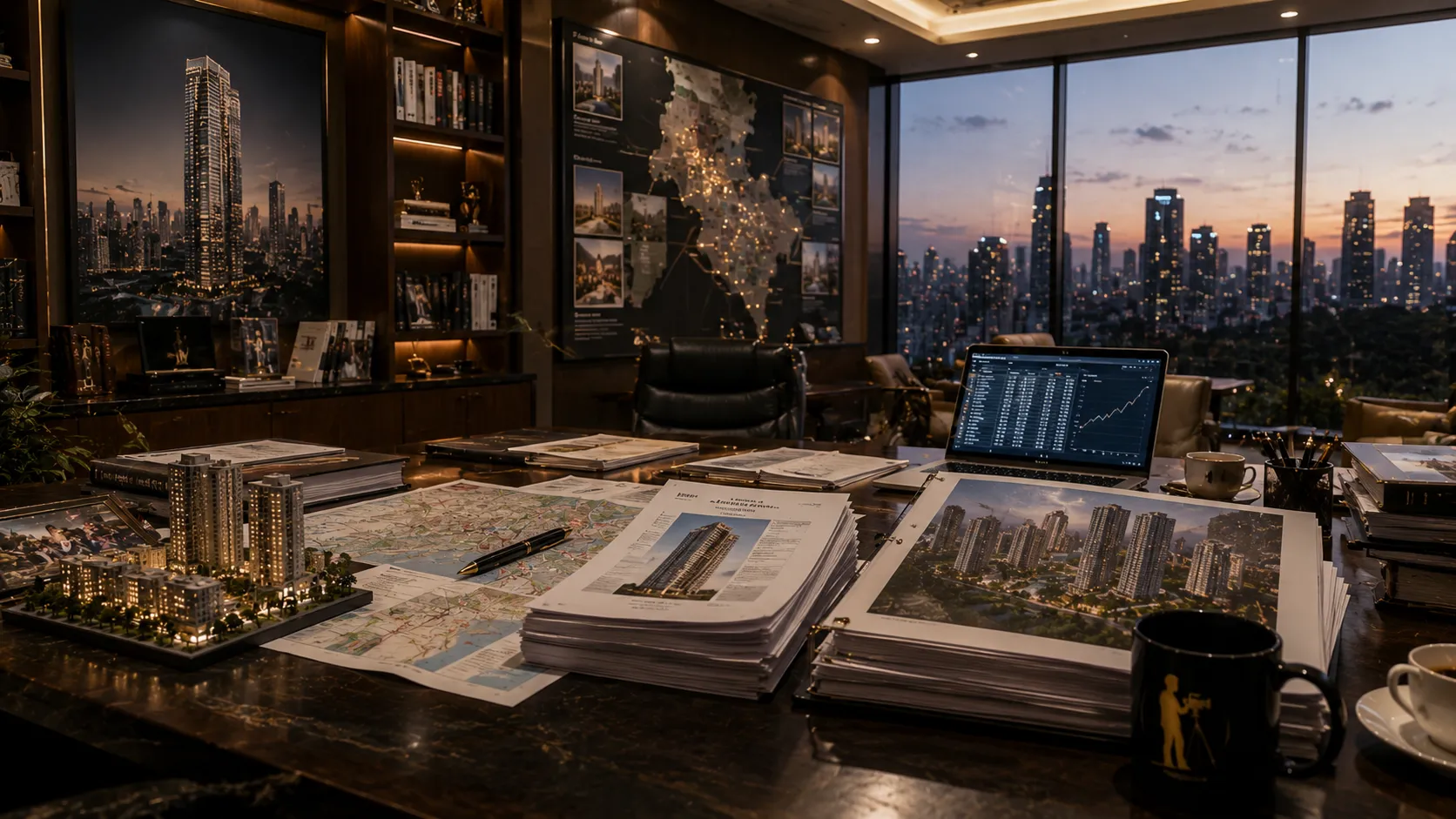
Salman Khan's approach to real estate is different from SRK's in both style and substance, and the differences are instructive. Where SRK is the patient accumulator—buying, holding, developing—Salman is the opportunistic acquirer, the celebrity whose personal brand is so powerful that it can transform the value of a property simply by being associated with it.
The most visible example is Galaxy Apartments, the modest Bandra building where Salman has lived for decades and where his family still occupies a first‑floor duplex that has become one of the most photographed private residences in India. The building itself is unremarkable—a 1970s construction with a cramped lobby and a small parking area—but its association with Salman has made it a landmark, and the value of the apartments in the building has appreciated far beyond what the physical structure would justify.
Salman's Panvel farmhouse, Arpita, is a more deliberate investment. The property, spread across approximately 150 acres in the Raigad district outside Mumbai, has been developed over two decades into a private resort—a sprawling estate with multiple bungalows, a swimming pool, a gym, a private theatre, and extensive landscaped gardens. The farmhouse, which Salman uses as a weekend retreat and a venue for family celebrations, is valued at over ₹200 crore and is, by most estimates, among the most valuable private residences in India.
The Telangana township MoU—the ₹10,000 crore proposal that Salman Khan Ventures signed with the state government at the Rising Global Summit in December 2025—represents a different order of ambition. The project, which would involve developing a 500‑acre integrated township and film studio on the outskirts of Hyderabad, was subsequently clarified by Chief Minister Revanth Reddy as "only an expression of interest," and its future remains uncertain. But the MoU itself—the willingness of a state government to associate Salman's name with a project of this scale—is a measure of the brand value that the star brings to any real‑estate venture. The township may or may not be built. The signal has already been sent: Salman Khan is not merely a property owner. He is a developer, and the scale of his ambitions is growing.
The Bachchan Legacy
Amitabh Bachchan's real‑estate portfolio is the oldest and, in some ways, the most instructive of the Bollywood property empires, because it spans the longest period and reflects the evolution of the Indian property market over half a century.
The Bachchan family's holdings include Prateeksha, the first bungalow that Amitabh purchased in Mumbai's Juhu neighbourhood in the 1970s, which is now valued at over ₹100 crore; Jalsa, the neighbouring bungalow that has become the family's primary residence and that is valued at over ₹120 crore; Janak, a third bungalow used as an office and guest house; and a portfolio of commercial properties, land parcels, and agricultural holdings that have been accumulated over five decades. The Bachchan portfolio's total value, by conservative estimates, exceeds ₹1,200 crore.
The Bachchan model is distinguished from the SRK and Salman models by its longevity and its intergenerational structure. The Bachchan family's property holdings have been assembled over fifty years, across multiple market cycles, and they have been structured to pass from one generation to the next without the fragmentation that often accompanies inheritance in Indian families. Abhishek Bachchan, Amitabh's son, has continued the family's property tradition, acquiring his own investments and managing the existing portfolio. Aaradhya Bachchan, the third generation, is already a beneficiary of a trust structure that will ensure the portfolio's continuity. The Bachchan property empire is not merely an investment. It is an institution, and its survival across multiple generations is the truest measure of its value.
The Celebrity Premium
The most distinctive feature of Bollywood's property empires is the celebrity premium—the additional value that a star's name adds to a property, both in terms of its market price and its cultural significance. The premium is not unique to Bollywood, but it is unusually powerful in India, where film stars occupy a cultural position that has no equivalent in most other countries. The star who buys an apartment in a building does not merely acquire a residence. They confer status on the building itself—a status that translates into higher prices for every other apartment, higher footfall for the commercial tenants, and a brand value that can be leveraged by the developer in marketing and sales.
The celebrity premium is most visible in the Bandra‑Juhu corridor of Mumbai, where the concentration of star residences—Mannat, Galaxy Apartments, Jalsa, Prateeksha—has created a micro‑market in which property prices are substantially higher than they would be in the absence of the celebrity association. The apartment that is located "next to Shah Rukh Khan's bungalow" commands a premium that no comparable apartment in a different neighbourhood can match. The premium is not rational in the strict financial sense—the apartment's physical characteristics are unchanged by its proximity to a star—but it is real, and it is reflected in the transaction prices that the market records.
The celebrity premium also extends to commercial real estate. The office building that houses a star's production company, the mall that features a star‑endorsed brand, the hotel that a star is known to frequent—all of these benefit from the association, and the benefit is measurable. The celebrity who understands this dynamic can use their brand as a form of currency—negotiating better terms, attracting better tenants, and commanding higher prices than any non‑celebrity investor could achieve. The property empire of a Bollywood star is not merely a collection of assets. It is a platform for monetising fame in a form that is more durable than any endorsement contract or film fee.
The Family Office
The most significant structural development in the Bollywood property economy over the past decade has been the emergence of the family office—the professionalised investment vehicle that manages the star's wealth across asset classes, including real estate. The family office represents a maturation of the Bollywood wealth‑management model, from the informal, relationship‑based arrangements of the past to the institutional, process‑driven structures that are standard among the world's wealthiest families.
Shah Rukh Khan's family office, which operates through a combination of private companies and trust structures, is the most sophisticated of the Bollywood family offices. The office manages SRK's investments across property, production, technology startups, and financial assets, and it is staffed by professionals who have been recruited from the wealth‑management divisions of major banks and financial institutions. The office's property division handles the acquisition, development, management, and disposal of SRK's real‑estate assets, and its decisions are driven by financial analysis rather than personal preference. The star who once bought a home because he liked the view now buys a development site because the internal rate of return exceeds his hurdle rate. The transition from amateur to professional is the defining characteristic of the family‑office model, and it is the reason that SRK's property portfolio has outperformed those of his less institutionalised peers.
The family‑office model is spreading. Akshay Kumar, whose property holdings are estimated at over ₹500 crore, has been building a professionalised investment operation. The Bachchan family's property interests are managed through a combination of family trusts and corporate entities that ensure continuity and minimise tax exposure. The trend is toward institutionalisation, and the stars who are embracing it are the ones whose property empires will survive—and grow—across multiple generations.
What This Signals
The Bollywood property empire is not merely a collection of homes. It is a structural shift in how the most successful figures in the Indian film industry think about wealth—a shift from the ephemeral to the permanent, from the income that stops when the audience stops buying tickets to the assets that continue to generate returns long after the star has left the screen.
The stars who are building property empires today—the SRKs, the Salmans, the Bachchans—are not merely buying real estate. They are constructing a parallel economy, one that is insulated from the volatility of the box office and that will sustain their families for generations. The production company that owns its own studio, the actor who owns the apartment building where the production company's employees live, the developer who builds the township that bears his name—these are the expressions of a wealth‑building strategy that treats fame not as an end in itself, but as a means to acquire assets that will outlast it.
The quietest business in Bollywood is also the most enduring. The poster fades. The film leaves the theatres. The star retires, or ages, or simply stops being the audience's favourite. But the land remains. The buildings rise. The rents are collected. The property empire, built over decades, sustained by professional management, and diversified across geographies and asset classes, is the legacy that outlasts the fame that made it possible. The reel is temporary. The estate is forever.


