The Radiologist in Your Pocket: How a Bengaluru AI Startup Got FDA Clearance to Read X‑Rays in 3 Seconds—And Is Taking on the Global Radiology Crisis
BENGALURU — May 31, 2026 — In a modest office in Bengaluru's Koramangala district, a young radiologist sits at a workstation that would be unremarkable in any hospital in the world—a high‑resolution monitor, a keyboard, a mouse. What is remarkable is what is happening on the screen. The monitor is displaying a chest X‑ray, and the image is being analysed in real time by an artificial‑intelligence model that can detect 14 different pathologies—pneumonia, tuberculosis, lung cancer, rib fractures, pleural effusion, and nine others—with an accuracy that, in clinical trials, exceeded the performance of a panel of board‑certified radiologists. The AI takes approximately 3 seconds to read the image. It highlights the areas of concern, generates a draft report, and assigns a confidence score to each of its findings. The radiologist reviews the report, makes any necessary corrections, and signs off. The entire process, from the moment the X‑ray is captured to the moment the final report is delivered to the referring physician, takes less than 5 minutes. In a conventional hospital, the same process would take between 4 and 24 hours, depending on the workload of the radiology department.
The AI model was developed by a Bengaluru‑based startup called Qure.ai, which has become, over the past five years, one of the most significant health‑technology companies in the world. The company's chest‑X‑ray AI, which it calls qXR, received clearance from the U.S. Food and Drug Administration in February 2026—the first Indian health‑tech startup to achieve FDA clearance for a diagnostic‑radiology AI. The clearance allows qXR to be marketed and sold in the United States, the world's largest and most demanding healthcare market, and it has opened the door to a global expansion that the company has been preparing for years. Qure.ai's products are now deployed in over 2,500 hospitals and diagnostic centres across 80 countries, and the company has raised approximately $200 million from investors including Sequoia Capital India, the IFC, and the global health‑technology fund HealthQuad. It is not yet profitable—the investment required to achieve FDA clearance and to build a global sales and distribution network is substantial—but its revenue is growing at a compound annual rate of approximately 120 percent, and its leadership believes that the company will achieve breakeven within the next 18 months.
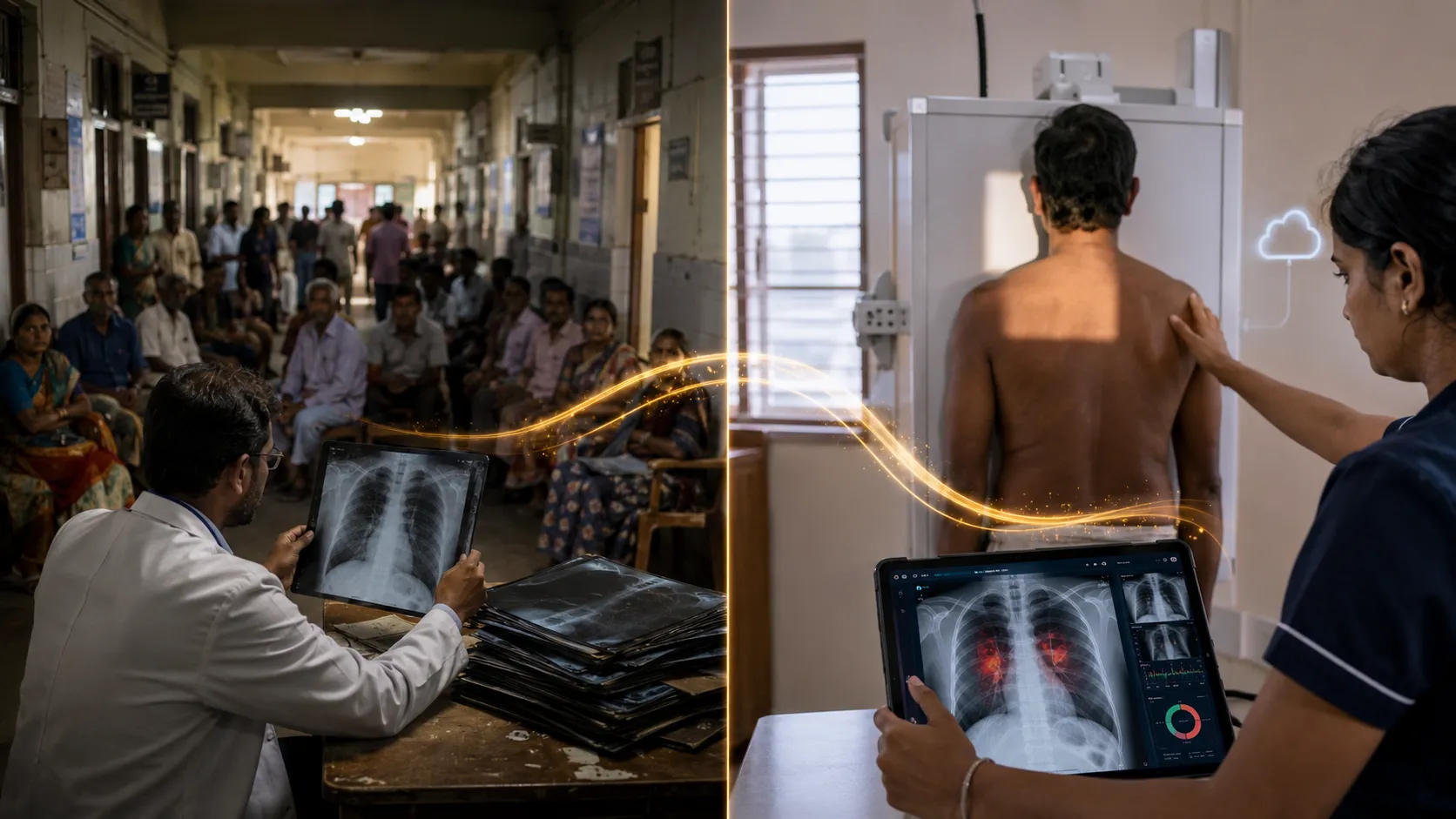
"The global radiology crisis is not a shortage of radiologists. It is a distribution problem. The radiologists are in the cities, and the patients are everywhere else. The AI can read an X‑ray anywhere, at any time, at a quality level that is comparable to a board‑certified radiologist. That is not a threat to the radiology profession. It is a solution to the access problem that the profession has never been able to solve." — Prashant Warier, Co‑founder and CEO, Qure.ai
The FDA Clearance Journey
The FDA clearance that Qure.ai achieved in February 2026 was the culmination of a process that took approximately three years and that cost the company approximately $15 million—an investment that is substantial for a startup, but that is a fraction of what a traditional medical‑device company would spend to bring a comparable product through the FDA's regulatory pathway. The clearance was granted under the FDA's 510(k) premarket notification process, which requires the applicant to demonstrate that its product is "substantially equivalent" to an existing, legally marketed device—in this case, the existing devices were the conventional X‑ray systems and the human radiologists whose performance the AI was designed to augment. The clinical evidence that Qure.ai submitted to the FDA included data from a multi‑reader, multi‑case study that compared the performance of the qXR AI against a panel of board‑certified radiologists, using a dataset of over 10,000 chest X‑rays that had been collected from hospitals across the United States, Europe, and India. The study demonstrated that the AI was non‑inferior to the radiologists on all 14 of the pathologies it was designed to detect, and that it was superior on several—including the detection of small lung nodules, which are among the most difficult abnormalities for a human radiologist to identify.
The FDA clearance is significant for several reasons. First, it represents an institutional validation of the technology—a signal to the global healthcare market that the qXR AI has met the most demanding regulatory standard in the world. Second, it opens the U.S. market, which is the largest healthcare market on Earth, with approximately $4.5 trillion in annual spending, and which has been largely inaccessible to Indian health‑tech startups because of the FDA's stringent requirements. Third, it creates a regulatory precedent that the company can use to pursue clearances in other markets—the European Union, Japan, Southeast Asia—that accept or recognise the FDA's determinations. The FDA clearance is, in effect, a passport to the global radiology market, and Qure.ai is now in the process of building the sales, marketing, and customer‑support infrastructure that will be required to compete in that market against the established players—the GE Healthcares, the Siemens Healthineers, the Philips—who are also developing their own AI‑powered radiology tools.
The FDA clearance also has a strategic dimension that extends beyond the commercial. The United States is experiencing a radiologist shortage that is projected to worsen over the next decade, as the population ages and the demand for diagnostic imaging increases. The American College of Radiology has estimated that the U.S. will face a shortage of approximately 20,000 radiologists by 2030—a gap that the AI tools are being designed to fill. The Qure.ai technology, which can read X‑rays at a quality level that is comparable to a human radiologist, is one of the tools that the American healthcare system is looking to deploy to address its capacity constraints—and the FDA clearance has made that deployment possible.
The Tuberculosis Mission
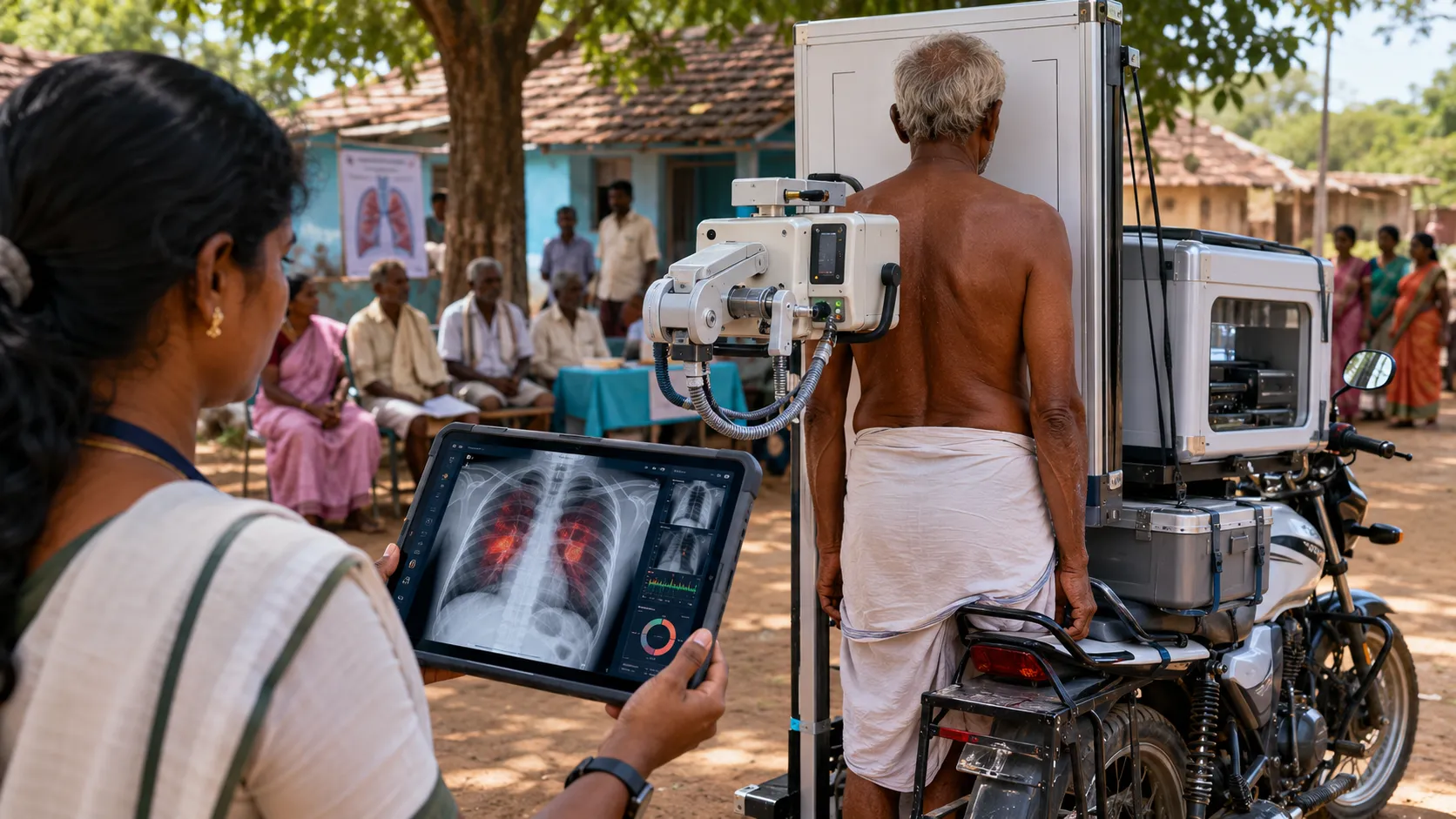
The most important application of the qXR technology is not in the United States. It is in the developing world, where the radiology access gap is widest and where the burden of undiagnosed disease is greatest. Qure.ai has been deploying its technology, since its earliest days, in the tuberculosis‑screening programmes of the Indian government and of several international health organisations, including the World Health Organization and the Stop TB Partnership. The company's TB‑screening AI, which is a specialised version of the qXR platform, can detect the signs of pulmonary tuberculosis on a chest X‑ray with a sensitivity and specificity that are comparable to the GeneXpert molecular test—the gold‑standard TB diagnostic, which is expensive, requires a laboratory infrastructure, and is inaccessible in many of the communities where TB is most prevalent. The AI, by contrast, can be deployed on a smartphone or a tablet, at a cost of less than $1 per screen, and it can provide a result within seconds. The company's TB‑screening programme has screened over 8 million people across India, Southeast Asia, and sub‑Saharan Africa, and it has identified over 400,000 cases of TB that would otherwise have gone undiagnosed.
The TB mission is, for Qure.ai, both a commercial opportunity and a social mission. The commercial opportunity is the global TB‑screening market, which is funded by governments and international donors and which is growing as the WHO's End TB Strategy—which aims to reduce TB deaths by 95 percent and to cut new cases by 90 percent by 2035—drives investment in screening and diagnostic infrastructure. The social mission is the elimination of a disease that kills approximately 1.3 million people every year, most of them in the poorest communities on Earth. The dual identity—commercial enterprise and public‑health mission—is embedded in the company's culture and its strategy, and it is one of the reasons that the company has been able to attract the talent, the investment, and the partnerships that have enabled its growth.
The TB mission also provides a strategic advantage that is unusual in the health‑tech industry. The data that the company has collected from its TB‑screening programmes—millions of chest X‑rays, labelled by expert radiologists and correlated with molecular‑test results—is one of the largest and most valuable radiology‑AI training datasets in the world. The dataset allows the company to train its AI models on a diversity of patient populations, disease presentations, and imaging equipment that no competitor can match—and it is the foundation of the accuracy, the generalisability, and the regulatory‑clearance capability that the company has demonstrated. The TB mission is not merely a social good. It is a competitive advantage, and the advantage is deepening with every X‑ray the AI reads.
The Business Model
The most important strategic decision that Qure.ai has made is its business model. The company does not sell its AI as a one‑time software licence, the way a traditional medical‑device company would. It sells it as a subscription—a per‑study, per‑month, or per‑year fee that is calibrated to the volume of X‑rays that the customer processes. The subscription model aligns the company's incentives with the customer's: the customer pays for the AI only when the AI is used, and the company's revenue grows only when the customer's usage grows. The model also creates a recurring‑revenue stream that is more predictable, more durable, and more highly valued by investors than the lumpy, one‑time sales of the traditional medical‑device industry. The subscription model is the same model that has powered the growth of the enterprise‑software industry, and Qure.ai is one of the first health‑tech companies to apply it at scale to the diagnostic‑radiology market.
The subscription model is also enabled by the cloud‑based architecture of the qXR platform. The AI does not reside on a server in the hospital. It resides in the cloud, and the hospital accesses it through an API—a standardised interface that allows the hospital's existing imaging systems to send X‑rays to the AI and to receive the AI‑generated reports, without requiring any change to the hospital's workflow or its IT infrastructure. The cloud‑based architecture reduces the cost of deployment, accelerates the sales cycle, and allows the company to update the AI continuously—to improve its accuracy, to add new capabilities, and to fix any issues—without requiring the customer to install a software update. The cloud is the infrastructure on which the AI‑radiology industry is being built, and Qure.ai is one of the companies that is building it.
The business model also has a significant network‑effect dynamic. Every X‑ray that the qXR platform reads is added to the company's training dataset, which improves the accuracy of the AI, which makes the product more attractive to new customers, whose X‑rays are added to the dataset, which further improves the accuracy. The network effect is not, in itself, a guarantee of market dominance—the radiology‑AI market is attracting multiple competitors, each of which is building its own dataset—but it is a powerful competitive advantage for the companies that have already achieved scale, and Qure.ai's dataset, with its global diversity and its TB‑screening depth, is among the largest and most valuable in the industry.
What This Signals
The Qure.ai story is not primarily about a single startup or a single technology. It is a story about the structural transformation of the global radiology industry—a shift from a model that was defined by the scarcity of human expertise to a model that is being augmented, and in some cases replaced, by the abundance of artificial intelligence, and from a diagnostic infrastructure that was concentrated in the wealthy urban centres to a diagnostic infrastructure that is being distributed, through the cloud and the smartphone, to every community on Earth. The FDA clearance that the company achieved in February 2026 is a milestone, but it is not the destination. The destination is a world in which every chest X‑ray, anywhere, is read by an AI that is as accurate as the best human radiologist, at a cost of pennies, within seconds—and that world is closer than most people realise.


