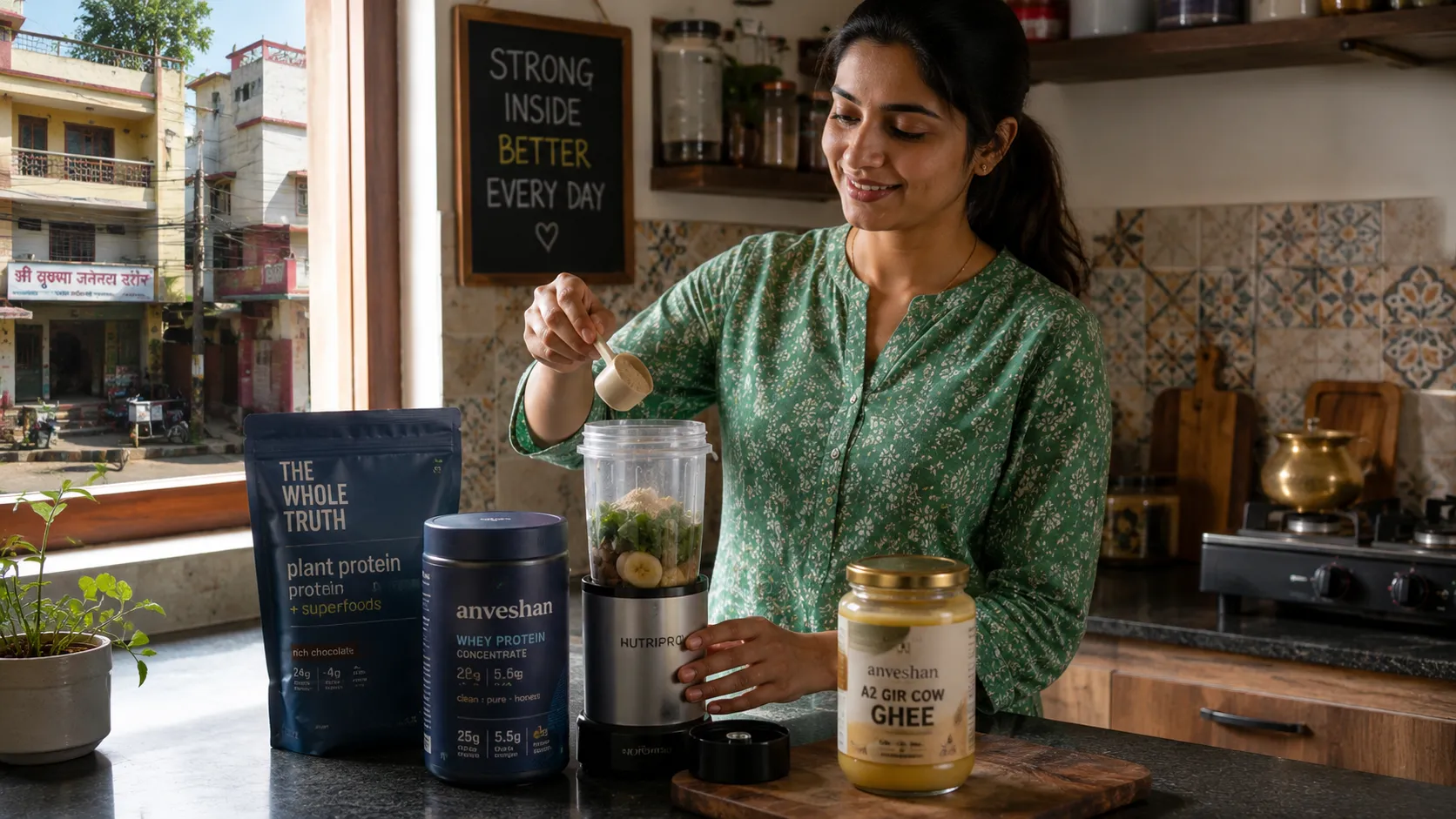
The Protein Revolution: How Indian D2C Brands Are Winning Over Meat-Eaters and Vegans Alike
The ₹1,583 Crore Bite: How D2C Protein Brands Conquered India (And Why FMCG Giants Are Paying Billions to Join the Table)
February 12, 2026. That was the day India's FMCG establishment woke up to a new reality.
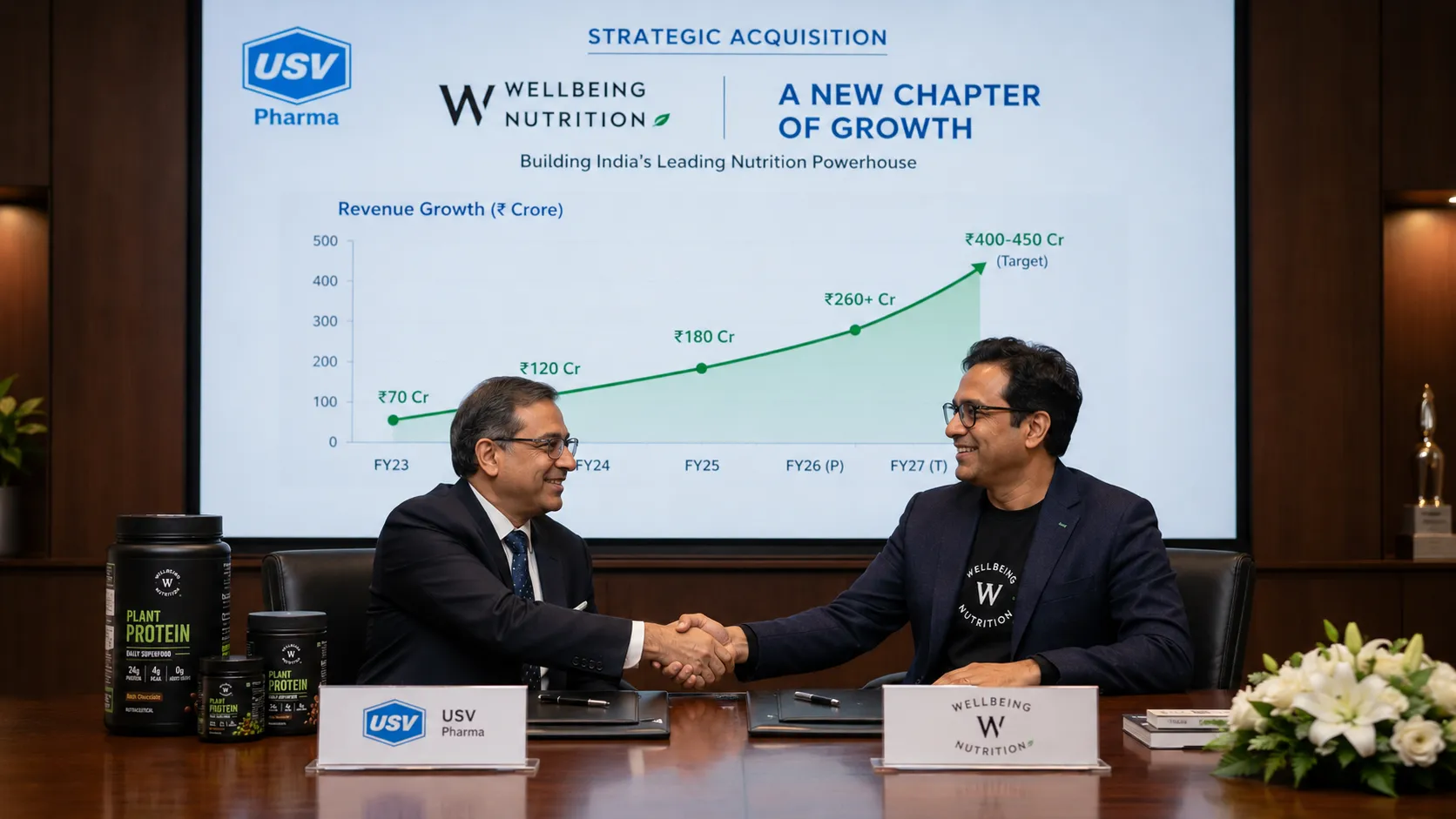
On that morning, USV Pharma—a 60-year-old pharmaceutical giant—announced it was acquiring a 79% stake in Wellbeing Nutrition for an eye-watering ₹1,583 crore ($190 million). The deal, an all-cash transaction, valued the six-year-old D2C nutrition brand at just under $200 million.
To put this in perspective: Wellbeing Nutrition was founded in 2019 by Avnish Chhabria with just ₹15 lakh from his own savings. In just six years, it had grown from a one-person operation to a brand on track to close FY26 with a net revenue of over ₹260 crore. By FY27, it is projected to cross ₹400–450 crore.
The acquisition was not an isolated event. It was the loudest signal yet of a profound shift in the Indian consumer landscape: the Protein Revolution had arrived.
The Market: A $913 Million (and Growing) Opportunity
Let's start with the numbers that matter.
According to the IMARC Group, India's protein supplements market reached approximately $912.9 million in 2025 and is projected to grow to $1,578.1 million by 2034, reflecting a compound annual growth rate of 6.27% during 2026–2034. The broader protein market in India—including plant-based proteins, functional foods, and sports nutrition—is estimated at $1.62 billion in 2026, with plant-based protein identified as the fastest-growing segment.
But the real story isn't the size—it's the shape of the growth.
The Players: Who Is Winning the Protein Race?
The protein revolution is not a one-brand story. It is a multi-front war being fought across bars, powders, plant-based meats, and clean-label snacks.
Wellbeing Nutrition: The $190 Million Exit
The USV acquisition was the crown jewel. Wellbeing Nutrition's growth trajectory is staggering: from ₹42 crore in FY23 to an expected ₹260+ crore in FY26. The brand, which started with plant-based supplements, has since expanded into protein bars, vegan omega-3s, and functional foods. Its secret sauce? A relentless focus on ingredient transparency—every product lists exactly what goes in and, crucially, what doesn't.
Fireside Ventures, which had invested approximately ₹25–30 crore for about a 20% stake in the brand, saw a multi-bagger exit.
The Whole Truth Foods: The $400 Million Centaur-in-Training
If Wellbeing Nutrition was the exit of the year, The Whole Truth Foods was the fundraising story.
In February 2026, the clean-label brand raised $51 million in a Series D round led by Sofina Ventures at a $400 million valuation. The company's total funding now stands at $83 million across five rounds.
The financials are equally impressive. Revenue for FY25 climbed 232% to ₹216 crore, up from ₹65 crore in FY24. The brand's philosophy is refreshingly simple: no hidden sugars, no artificial sweeteners, no misleading labels. Its protein bars, muesli, and peanut butters have become cult favorites among India's health-conscious urban youth.
Yoga Bar (ITC): The FMCG Consolidation Play
In May 2023, FMCG major ITC acquired a 39% stake in Yoga Bar for ₹175 crore. By FY25, the Bengaluru-based health-food brand reported a robust 83% jump in revenue to ₹201.66 crore. ITC has since increased its stake to 47.5% and plans to fully acquire the brand over three to four years, leveraging its distribution network of over 6 million retail outlets to take Yoga Bar national.
Anveshan: The Clean-Label Challenger
In June 2026, clean-label food brand Anveshan raised ₹150 crore ($15.8 million) in a Series B round led by Vertex Ventures Southeast Asia & India, with participation from the International Finance Corporation (IFC). Currently operating at an annualized revenue run rate of ₹280–300 crore, Anveshan is targeting ₹1,000 crore in revenue over the next 24–30 months.
The brand specializes in traditionally Indian products made with modern safety standards—cold-pressed oils, chemical-free ghee, and natural sweeteners. What's notable is that 50–55% of Anveshan's revenue now comes directly from Tier 2 and 3 cities, proving that the "Bharat" consumer is just as ingredient-conscious as their metro counterpart.
Plantaway: The Plant-Based Meat Pioneer
While supplement brands dominate headlines, the plant-based protein segment is quietly growing. Mumbai-based Plantaway Foods, founded in 2022, launched what it claims is India's first plant-based chicken fillet, made from pea protein and offering 19 grams of plant protein per serving. The brand has since expanded into plant-based dairy and gelato alternatives.
The Tier 2/3 Explosion: Where the Real Growth Lives
Perhaps the most significant shift in the protein revolution is geographic.
According to the PharmEasy Health Report 2025, Tier-2 and Tier-3 cities recorded faster growth across vitamins, sexual wellness, diagnostics, and fitness categories than metros. A May 2026 report by Storyboard18 noted that "categories once seen as metro-centric, from protein nutrition and premium skincare to wellness supplements, are now witnessing strong adoption across smaller cities".
This is not a trickle-down effect. It is a structural transformation driven by:
UPI-enabled trust: Even first-time online buyers in smaller towns now trust digital payments.
Vernacular content: Brands are marketing in Hindi, Tamil, Telugu, and Bengali, not just English.
Logistics maturity: Even remote pin codes now receive deliveries within 3–5 days.
The "second-wave" consumer: Someone who bought their first smartphone in 2019 is now ready for premium nutrition in 2026.
As one D2C founder put it: "The next 100 million protein consumers will not come from South Delhi. They will come from Udaipur."
The Investor Frenzy: $971 Million and Counting
Capital is following the consumer.
According to the same Storyboard18 report, health and wellness brands alone have attracted nearly $971 million in disclosed funding. Rainmatter, the investment arm of Zerodha, revealed that about 90% of its investments in protein firms took place only in the last two years.
Recent fundraises include:
Fullife Healthcare raised ₹300 crore in Series D from Elev8 Venture Partners in March 2026.
HyugaLife raised ₹100 crore in Series A from IvyCap Ventures in April 2026.
Plix saw its revenue rise nearly threefold to ₹418 crore in FY25 post-acquisition.
Oziva more than doubled its revenue to ₹257.8 crore.
The message to the market is unambiguous: protein is the new gold.
The Consumer Shift: From Gym Bro to Family Table
India's protein revolution is no longer confined to bodybuilders and gym-goers. It has gone mainstream.
The IMARC Group report highlights that rising consumer demand for clean-label, gut-friendly, and additive-free nutrition products is driving the sector's expansion. Non-herbal supplements, driven primarily by protein supplements and probiotics, remain the largest contributor to value sales.
This is the feminization and familification of protein. Women are buying protein bars for weight management. Parents are buying clean-label snacks for their children. Senior citizens are buying plant-based protein for heart health. The use case has expanded from "building muscle" to "living better."
The Global Indian Takeaway
For the Indian diaspora, the protein revolution represents a unique opportunity:
Invest directly: Platforms like Rainmatter and LetsVenture now offer access to early-stage nutrition brands.
Partner strategically: Many Indian protein brands lack US distribution. Diaspora professionals with retail or e-commerce networks can become channel partners.
Watch for IPOs: The Whole Truth Foods has publicly stated its intention to go public. Anveshan is targeting ₹1,000 crore revenue within two years—IPO territory.
The Final Word
The ₹1,583 crore acquisition of Wellbeing Nutrition was not an outlier. It was a preview.
As Indian consumers become more health-conscious, more ingredient-savvy, and more willing to pay a premium for quality, the protein market will continue its explosive growth. The winners will be those who combine scientific rigor (real results), transparent labeling (no hidden surprises), and cultural fluency (products that taste like India).
The protein revolution is here. And it is delicious.
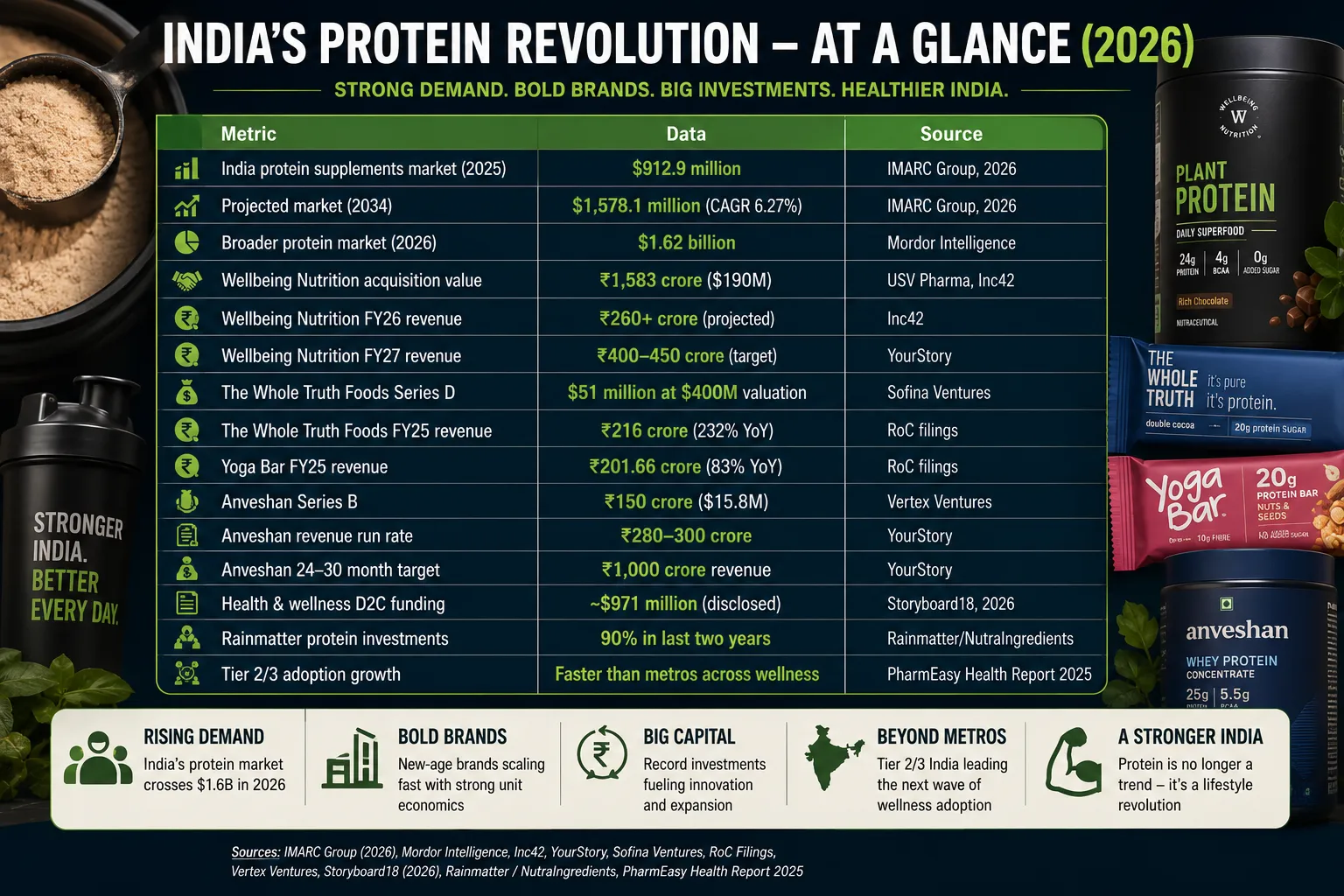
CHART: "India's Protein Revolution – At a Glance (2026)"
Metric | Data | Source |
|---|---|---|
India protein supplements market (2025) | $912.9 million | IMARC Group, 2026 |
Projected market (2034) | $1,578.1 million (CAGR 6.27%) | IMARC Group, 2026 |
Broader protein market (2026) | $1.62 billion | Mordor Intelligence |
Wellbeing Nutrition acquisition value | ₹1,583 crore ($190M) | USV Pharma, Inc42 |
Wellbeing Nutrition FY26 revenue | ₹260+ crore (projected) | Inc42 |
Wellbeing Nutrition FY27 revenue | ₹400–450 crore (target) | YourStory |
The Whole Truth Foods Series D | $51 million at $400M valuation | Sofina Ventures |
The Whole Truth Foods FY25 revenue | ₹216 crore (232% YoY) | RoC filings |
Yoga Bar FY25 revenue | ₹201.66 crore (83% YoY) | RoC filings |
Anveshan Series B | ₹150 crore ($15.8M) | Vertex Ventures |
Anveshan revenue run rate | ₹280–300 crore | YourStory |
Anveshan 24–30 month target | ₹1,000 crore revenue | YourStory |
Health & wellness D2C funding | ~$971 million (disclosed) | Storyboard18, 2026 |
Rainmatter protein investments | 90% in last two years | Rainmatter/NutraIngredients |
Tier 2/3 adoption growth | Faster than metros across wellness | PharmEasy Health Report 2025 |


