The Pivot That Saved India's First AI Unicorn: How Bhavish Aggarwal Stopped Chasing ChatGPT, Killed His Chip Dream, and Built a Profitable Cloud Fortress Instead
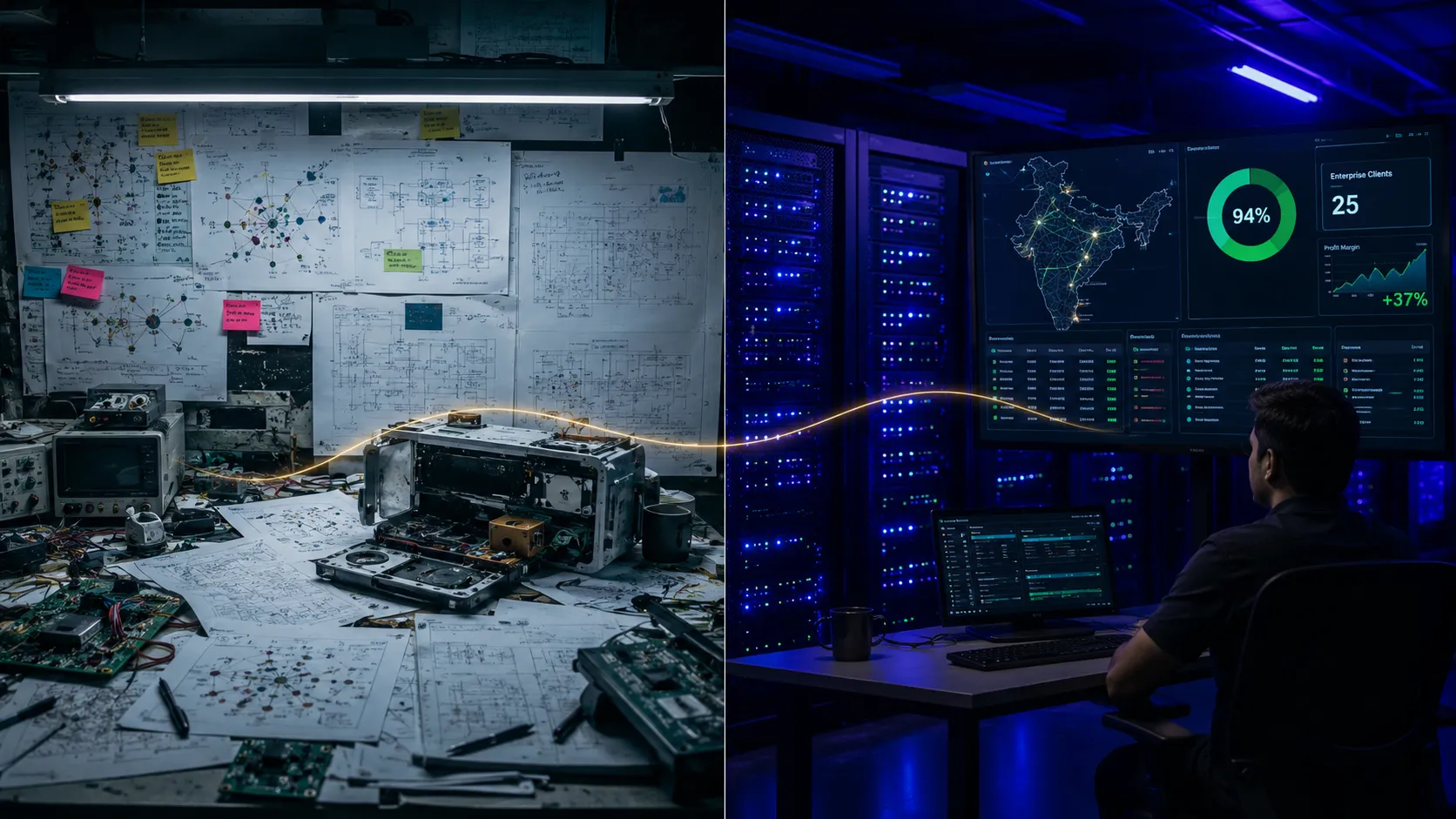
BENGALURU — May 22, 2026 — Sometime in late 2025, Bhavish Aggarwal sat in a conference room and made a decision that most founders of his stature never make. He decided to stop. Not the company. The plan. The grand, intoxicating, venture-funded plan to build India's own ChatGPT—a foundational language model trained on Indian languages, running on Indian-made chips, competing with the most advanced AI systems on Earth. The plan that had made Krutrim India's first AI unicorn. The plan that had attracted $50 million in funding at a $1 billion valuation. The plan that was, by late 2025, burning capital and talent on two separate moonshots—chip design and frontier model development—neither of which was anywhere near generating revenue.
Aggarwal did what founders of his profile almost never do. He paused the chip design program. He recalibrated the model ambitions. He redirected capital and talent toward a single, less glamorous, infinitely more sustainable goal: building a full-stack AI cloud services platform for Indian enterprises. "The repositioning follows a business realignment undertaken in late 2025, which involved a deliberate reallocation of capital and talent, including a pause on chip design initiatives to concentrate the company's resources on building and scaling its core AI cloud services stack," the company stated.
The pivot, disclosed in full on May 5, 2026, has produced a structurally different business. Krutrim reported revenue of approximately ₹300 crore in FY26—a threefold increase over FY25—and its first annual net profit, with a profit after tax margin exceeding 10 percent. The company is now financially self-sustaining, with no immediate requirement for external funding, including from its founder. It serves over 25 large enterprise clients spanning telecom, financial services, consumer internet, healthcare, logistics, and digital-first enterprises. Its GPU compute capacity is predominantly committed to external enterprise workloads, not internal model training. The AI startup that burst onto the scene in 2023 with a promise to build "India's own ChatGPT" has become something far more strategically significant: a profitable, self-sustaining infrastructure company that controls a full-stack AI cloud built entirely in India, by Indian engineers, for Indian enterprises.
The Moonshots That Almost Sank It
To understand what Krutrim was, one must understand what Krutrim almost became. The company was founded in 2023 by Aggarwal with a dual mandate that was as ambitious as it was contradictory. On one hand, the company was to build a foundational large language model trained on Indian languages—a direct competitor to OpenAI's GPT series, Anthropic's Claude, and Google's Gemini. On the other, it was to build the silicon that would power that model—an indigenous AI chip designed to reduce India's dependence on Nvidia GPUs.
The vision was compelling enough to attract funding at a unicorn valuation, making Krutrim India's first AI startup to cross the billion-dollar threshold. But the execution collided with the brutal realities of frontier AI development. Building a foundational language model that competes with GPT-5 or Claude 4 requires capital measured in the billions of dollars—not the tens of millions available to Indian startups. Training runs that cost OpenAI and Anthropic hundreds of millions of dollars per iteration were simply not within Krutrim's reach. The chip design initiative, meanwhile, required a timeline measured in years and a talent pool that is among the scarcest resources on Earth.
In late 2025, the leadership team made the decision to stop. The chip design initiative was paused. The foundational model ambitions were recalibrated. Capital and talent were reallocated toward a single core competency: building and scaling a full-stack AI cloud services platform. The decision was not a retreat. It was a refocus. Krutrim had spent two years building infrastructure—GPU clusters, data center capacity, networking fabric, software orchestration layers—to support its model-training ambitions. That infrastructure, the company realized, was the real asset. The models were a commodity. The cloud platform that ran them was not.
The numbers vindicate the pivot. Revenue of ₹300 crore in FY26—triple the previous year. First annual net profit. Over 25 large enterprise clients. GPU capacity predominantly committed to external workloads. A full-stack cloud service built entirely in-house, without external dependencies. "Krutrim is among the limited players in India operating a full-stack, domestically built AI cloud services at production scale, supporting complex, real-time workloads across sectors such as mobility, manufacturing, and customer operations," the company stated.
The Sovereign Cloud Thesis
Krutrim's pivot is best understood not as a business decision but as a geopolitical one. The global AI cloud market is dominated by three American companies—Amazon, Microsoft, and Google. These companies control the infrastructure on which the world's AI applications are built. They are, simultaneously, the suppliers of AI compute and the competitors of the companies that use it.
For Indian enterprises, this concentration of power creates a structural vulnerability. Data sovereignty regulations are tightening across the world, and India—with its Digital Personal Data Protection Act—is no exception. Enterprises that handle sensitive financial data, healthcare records, or government information are increasingly required to ensure that their data remains within Indian borders, governed by Indian law, and managed by Indian operators.
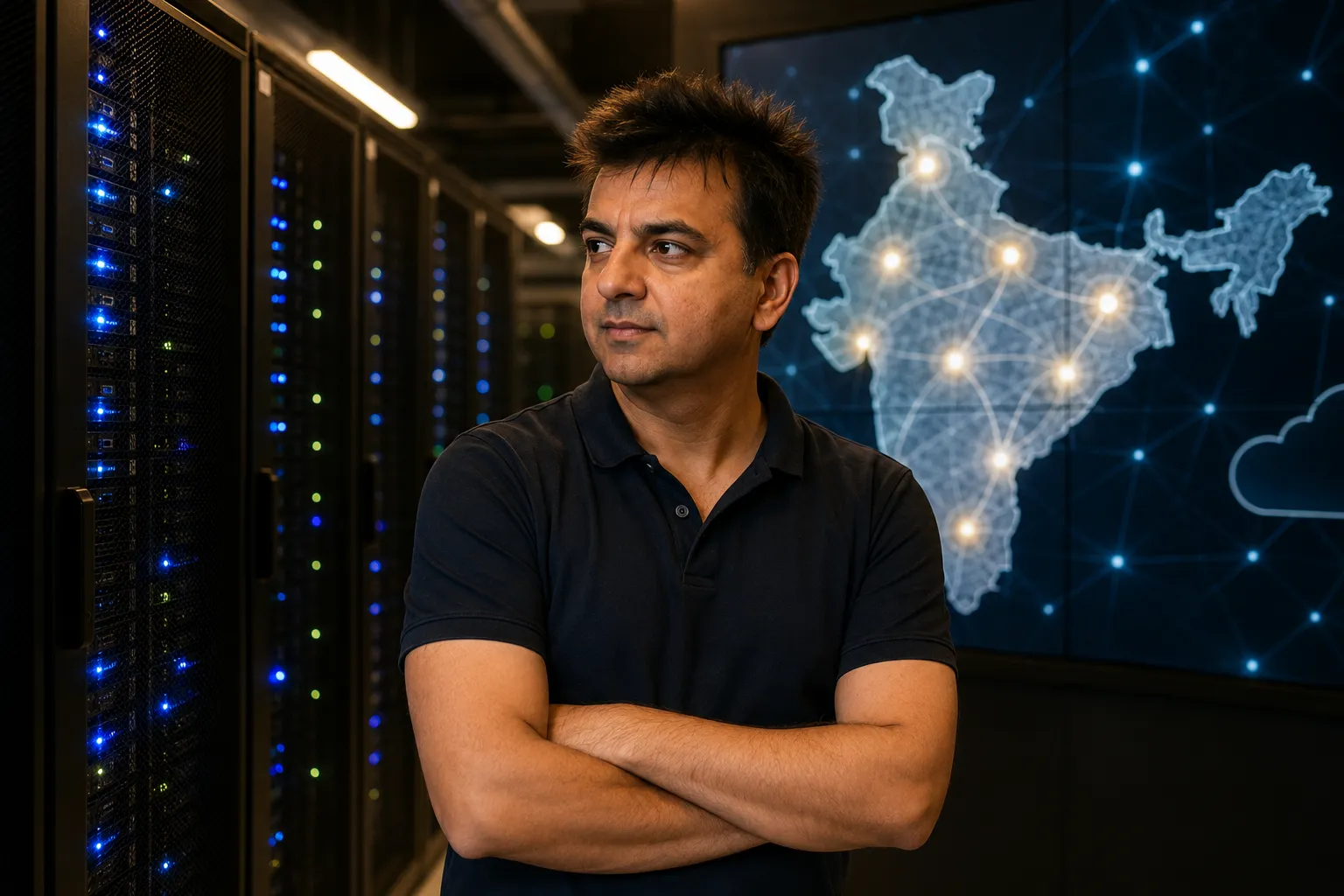
Krutrim's full-stack, domestically built AI cloud is a direct response to that requirement. It is not merely a competitor to the hyperscalers. It is a sovereign alternative—a platform that enables Indian enterprises to deploy AI workloads on infrastructure that is physically located in India, built by Indian engineers, and operated under Indian regulatory jurisdiction. The company is among a limited number of players globally—and the only one of significant scale in India—that can make that claim.
The geopolitical dimension extends to the supply chain. Krutrim's platform is built without external dependencies on the technology stacks that underpin the hyperscaler platforms. It does not rely on Amazon's Graviton processors, Google's TPUs, or Microsoft's Azure infrastructure. It is, in the fullest sense of the term, a domestic platform—and that domesticity, in the geopolitical environment of 2026, is a moat that no amount of venture capital can replicate.
What This Signals
Krutrim's pivot is a case study in the difference between ambition and discipline. The ambition was to build India's answer to OpenAI—a foundational model company that could compete with the most advanced AI labs on Earth. The discipline was to recognize that the ambition was outpacing the capital, the talent, and the market, and to pivot toward something that was, in the near term, less glamorous and more sustainable.
The result is a company that is profitable, self-sustaining, and strategically positioned at the center of India's AI infrastructure buildout. Krutrim is not competing with OpenAI on model performance. It is competing with Amazon Web Services on cloud infrastructure—and it is doing so with a sovereign advantage that no American hyperscaler can replicate. The pivot has yielded a structurally different business. The ₹300 crore revenue, the 10 percent profit margin, and the 25 enterprise clients are the early evidence that the business works.
Bhavish Aggarwal is not the founder he was supposed to be. He was supposed to build India's ChatGPT. He built India's sovereign AI cloud instead. The pivot was painful. The discipline was hard-won. The result is a company that no longer needs to chase valuation rounds or burn capital on moonshots. It funds itself. It serves Indian enterprises. It controls its own stack. The AI unicorn that almost died has been reborn—not as a model company, but as infrastructure. And infrastructure, in the AI economy, is where the durable value lives.


