The Package Deal: How India's Sustainable Packaging Startups Are Making D2C Carbon‑Neutral
The Hook: The 30‑Second Unboxing That Costs the Planet 300 Years
You know the feeling. A package arrives. You tear open the plastic mailer, pop the bubble wrap, pull out the branded box, peel the plastic film, and finally — finally — hold your product. The whole ritual takes 30 seconds. The packaging takes 300 years to decompose.
India's D2C boom has been a marvel of entrepreneurship, creating thousands of brands and millions of jobs. But it has also created a mountain of waste. The Indian packaging market was valued at approximately $85.2 billion in 2025 and is projected to reach $202.5 billion by 2034, growing at a CAGR of 10.1%. E‑commerce and D2C are the fastest‑growing segments, accounting for an estimated 25‑30% of flexible packaging demand. Most of that packaging ends up in landfills or oceans.
But a new generation of startups is rewriting that story. They are replacing plastic with bamboo, bubble wrap with compostable starch, and virgin cardboard with recycled fibres. And in 2026, they are attracting serious capital.
Bambrew: The ₹90 Crore Bamboo Champion
The most significant funding in India's sustainable packaging space this year belongs to Bambrew. In February 2026, the Bengaluru‑based startup raised ₹90 crore (approximately $10.3 million) in its Series A round led by BLinC Invest, with participation from existing investors Rukam Capital, Mumbai Angels, and Singapore's Amas Capital. The round also saw the entry of new investors, including the Pidilite Family Office.
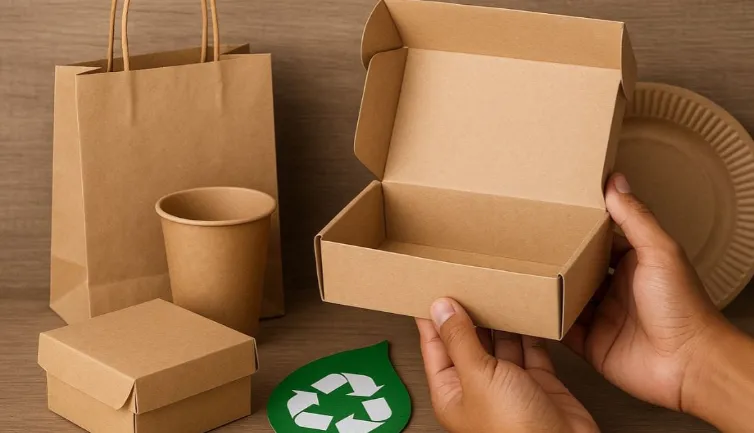
Bambrew does exactly what its name suggests: it makes packaging from bamboo. The company has developed proprietary technology to convert bamboo pulp into fully biodegradable, plastic‑free, and water‑resistant packaging materials — everything from mailers to boxes to void fill. Bamboo is an ideal raw material for India: it grows rapidly, requires no fertilisers, and sequesters carbon at rates far higher than trees.
With the fresh capital, Bambrew plans to:
Expand manufacturing capacity from its current 3,000 tonnes per month to over 10,000 tonnes per month
Set up new production facilities in Maharashtra and Karnataka
Develop new product lines, including bamboo‑based thermocol alternatives for insulation packaging
Scale exports to Europe and the Middle East, where single‑use plastic regulations are tightening
Bambrew already serves over 250 D2C brands, including several in the beauty, fashion and electronics verticals. Its revenue has grown 6x in the past two years, and it expects to cross ₹200 crore in annual revenue by FY27.
Ukhi and DCGpac: The Compostable Mailer Revolution
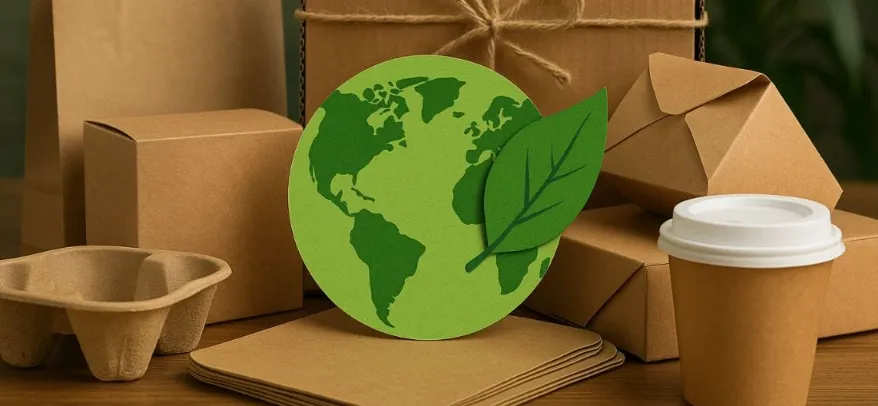
While Bambrew dominates the bamboo segment, Ukhi and DCGpac are taking a different approach: 100% biodegradable and compostable packaging made from plant‑based starches and recycled fibres.
In March 2026, Ukhi announced the launch of a new line of low‑impact, affordable packaging specifically designed for fashion brands and e‑commerce companies. The new products include:
Compostable mailers that break down in 180 days in home compost
Recycled cardboard boxes with no plastic tape or labels
Starch‑based void fill that dissolves in water
At the same time, Ukhi partnered with DCGpac to open a smart manufacturing plant in Noida dedicated to producing 100% biodegradable and compostable packaging for D2C brands. The plant has an initial capacity of 5,000 tonnes per year and is designed to scale to 20,000 tonnes within 24 months. Crucially, the plant serves not only the Indian market but also exports to the UK, Germany, Australia and West Asia.
The Ukhi‑DCGpac partnership is notable because it combines Ukhi's material science expertise with DCGpac's manufacturing scale. The Noida plant uses automated AI‑based quality control to ensure that every batch meets international compostability standards (EN13432 for Europe, ASTM D6400 for the US).
Aviral Bhalerao, Co‑founder of Ukhi, captured the urgency: “The Indian D2C boom is generating millions of packages every day. If we don't fix the packaging, we are just swapping one environmental problem for another. Our goal is to make sustainable packaging the default, not the premium option.”
Zepto: The Quick Commerce Giant Goes Compostable
Sustainable packaging is not just a startup play. The incumbents are joining too.
In May 2026, Zepto — one of India's largest quick commerce platforms — announced that it would replace its plastic delivery bags with compostable alternatives across all its dark stores. The new bags are made from a combination of recycled paper and plant‑based starches, and are certified home‑compostable.
Zepto processes over 10 million orders per month across its 2,000+ dark stores. The switch to compostable bags is expected to reduce the company's plastic waste by over 500 tonnes per month — a significant reduction for a single player.
The move is not purely altruistic. Zepto's analysis found that customers were increasingly factoring sustainability into their platform choices, and that a green delivery option improved retention by 12% in test markets. In a hyper‑competitive quick‑commerce market where customer acquisition costs are high, retention is gold.
The Structural Shift: From Greenwashing to Real Impact
The sustainable packaging sector has historically been plagued by greenwashing — brands claiming "biodegradable" or "compostable" without third‑party certification. But 2026 is different. Several structural changes are forcing accountability.
First, regulatory pressure. The Plastic Waste Management Rules (amended 2024) mandate that all e‑commerce platforms must phase out single‑use plastic by December 2027. The penalty for non‑compliance is steep: up to ₹1 lakh per day per warehouse. This has created a genuine, urgent demand for alternatives.
Second, consumer awareness. A 2025 survey by LocalCircles found that 78% of Indian online shoppers said they would switch to a brand that uses sustainable packaging, even at a slightly higher price point. The same survey found that 63% of consumers had refused a delivery due to excessive plastic packaging — a statistic that woke up every D2C founder.
Third, cost parity. Sustainable packaging is finally approaching cost parity with plastic. Bambrew's bamboo mailers are now only 15‑20% more expensive than plastic mailers, down from 50‑60% two years ago. Ukhi's compostable mailers are now priced at ₹12‑15 per unit, compared to ₹8‑10 for plastic. As volume scales, that gap will shrink further.
The Investment Thesis: Why Capital Is Flowing
The numbers explain the investor enthusiasm. The Indian sustainable packaging market is projected to grow from $8.5 billion in 2025 to $22.3 billion by 2030, at a CAGR of 21.3%. The compostable packaging segment is growing even faster, at a CAGR of 27% over the same period.
Key drivers include:
D2C growth: The Indian D2C market is projected to reach $300 billion by 2030, each order requiring packaging.
Export demand: European and Middle Eastern markets are tightening plastic regulations, creating export opportunities for Indian manufacturers.
Government incentives: The PLI scheme for packaging has been extended to include sustainable materials, offering subsidies of up to 15% on capital expenditure.
The Challenges: Scalability, Certification and Cost
Despite the momentum, sustainable packaging faces three significant hurdles.
First, scalability. Bambrew's current capacity of 3,000 tonnes per month is a drop in the ocean compared to India's total packaging demand of over 15 million tonnes per year. Scaling to 10,000 tonnes will require significant capital and supply chain coordination.
Second, certification. International compostability standards (EN13432, ASTM D6400) require rigorous testing that can take 6‑12 months. Many Indian startups lack the resources to certify their products, limiting their export potential.
Third, cost. While the gap is narrowing, sustainable packaging still costs 15‑30% more than plastic. For thin‑margin D2C brands (e.g., grocery, staples), that premium is often prohibitive. Government subsidies or carbon credits may be needed to bridge the gap.
The Global Indian Takeaway
For the diaspora, the sustainable packaging boom offers three clear opportunities.
First, invest directly. Bambrew's Series A, Ukhi's upcoming Series B, and DCGpac's expansion round are all accessible to accredited investors via platforms like LetsVenture and AngelList India. The sustainable packaging sector is still early — the unicorns are yet to emerge.
Second, build cross‑border supply chains. Indian sustainable packaging manufacturers need distribution in the US and Europe. Diaspora professionals with logistics or retail networks can become exclusive distributors, earning margins while accelerating the green transition.
Third, partner as a buyer. If you run a D2C brand in the US or Europe, switching to Indian sustainable packaging can reduce your carbon footprint while saving costs. A container of Bambrew mailers landed in Los Angeles costs 30‑40% less than comparable US‑made products.
The Final Word
The Indian D2C boom created a packaging crisis. The same entrepreneurial energy is now creating the solution. Bambrew's bamboo, Ukhi's compostable mailers, DCGpac's smart manufacturing, Zepto's green delivery bags — these are not isolated experiments. They are evidence of a structural shift.
The package is getting a green makeover. And for the first time, sustainable packaging is not a niche — it is the future of Indian e‑commerce. The ₹90 crore bet on Bambrew is just the beginning. The next decade will see the rise of sustainable packaging unicorns, built in India, exported to the world.
The unboxing experience of the future will still take 30 seconds. But the planet will only need 30 days to forget it ever existed.
CHART: "India's Sustainable Packaging Revolution – At a Glance (2026)"
Company | Latest Funding | Round | Key Investor(s) | Focus |
|---|---|---|---|---|
Bambrew | ₹90 crore ($10.3M) | Series A | BLinC Invest, Rukam Capital, Mumbai Angels | Bamboo‑based packaging |
Ukhi | (undisclosed, in progress) | Seed / growth | — | Low‑impact, compostable mailers |
DCGpac | (partnership with Ukhi) | Manufacturing expansion | — | 100% biodegradable packaging plant |
Other Key Metrics:
Metric | Value | Source |
|---|---|---|
Indian packaging market (2025 → 2034) | $85.2B → $202.5B (10.1% CAGR) | IMARC Group |
Indian sustainable packaging market (2025 → 2030) | $8.5B → $22.3B (21.3% CAGR) | Industry estimates |
Compostable packaging CAGR (2025‑2030) | 27% | Industry estimates |
Bambrew current capacity | 3,000 tonnes/month | Company data |
Bambrew target capacity (post‑Series A) | 10,000+ tonnes/month | Company statement |
Bambrew customer brands | 250+ | BLinC Invest statement |
Bambrew revenue growth | 6x in 2 years | Inc42 |
Bambrew FY27 revenue target | ₹200 crore | Industry estimates |
Ukhi‑DCGpac Noida plant capacity | 5,000 tonnes/year (scaling to 20,000 tonnes) | Company announcement |
Zepto monthly orders | 10 million+ | Industry reports |
Zepto plastic waste reduction (compostable switch) | 500+ tonnes/month | Zepto statement |
Zepto customer retention improvement (green packaging) | 12% in test markets | Zepto internal data |
Indian online shoppers preferring sustainable packaging | 78% | LocalCircles survey, 2025 |
Consumers who refused delivery due to excess plastic | 63% | LocalCircles survey, 2025 |
Plastic Waste Management Rules single‑use plastic phase‑out deadline | December 2027 | Government notification |


