AVGC labs in 15,000 schools. Animation hubs in every state. A ₹10,000 crore creative industries fund. The government just bet big on the one sector where India can beat China — without a single factory.
`
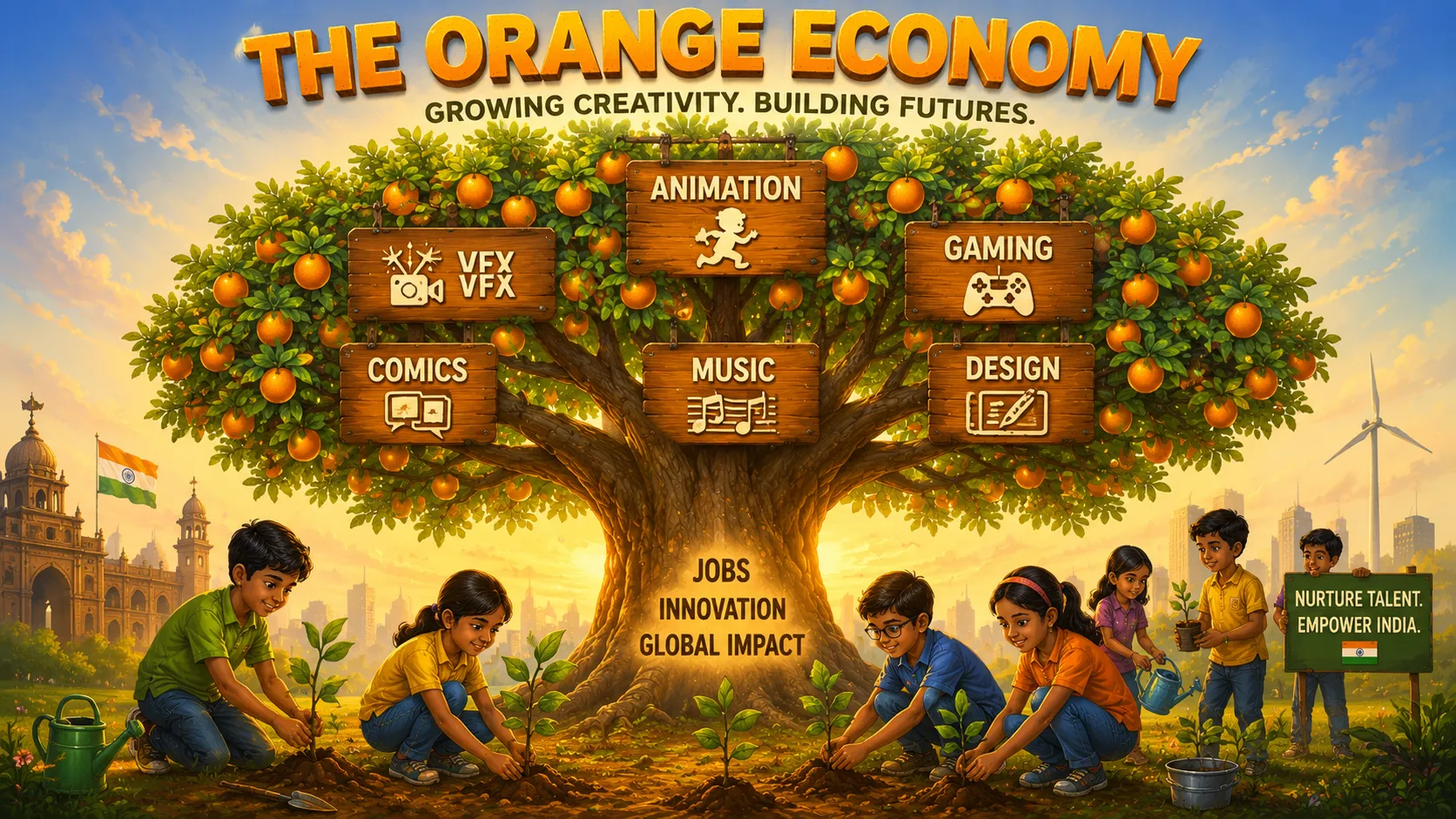
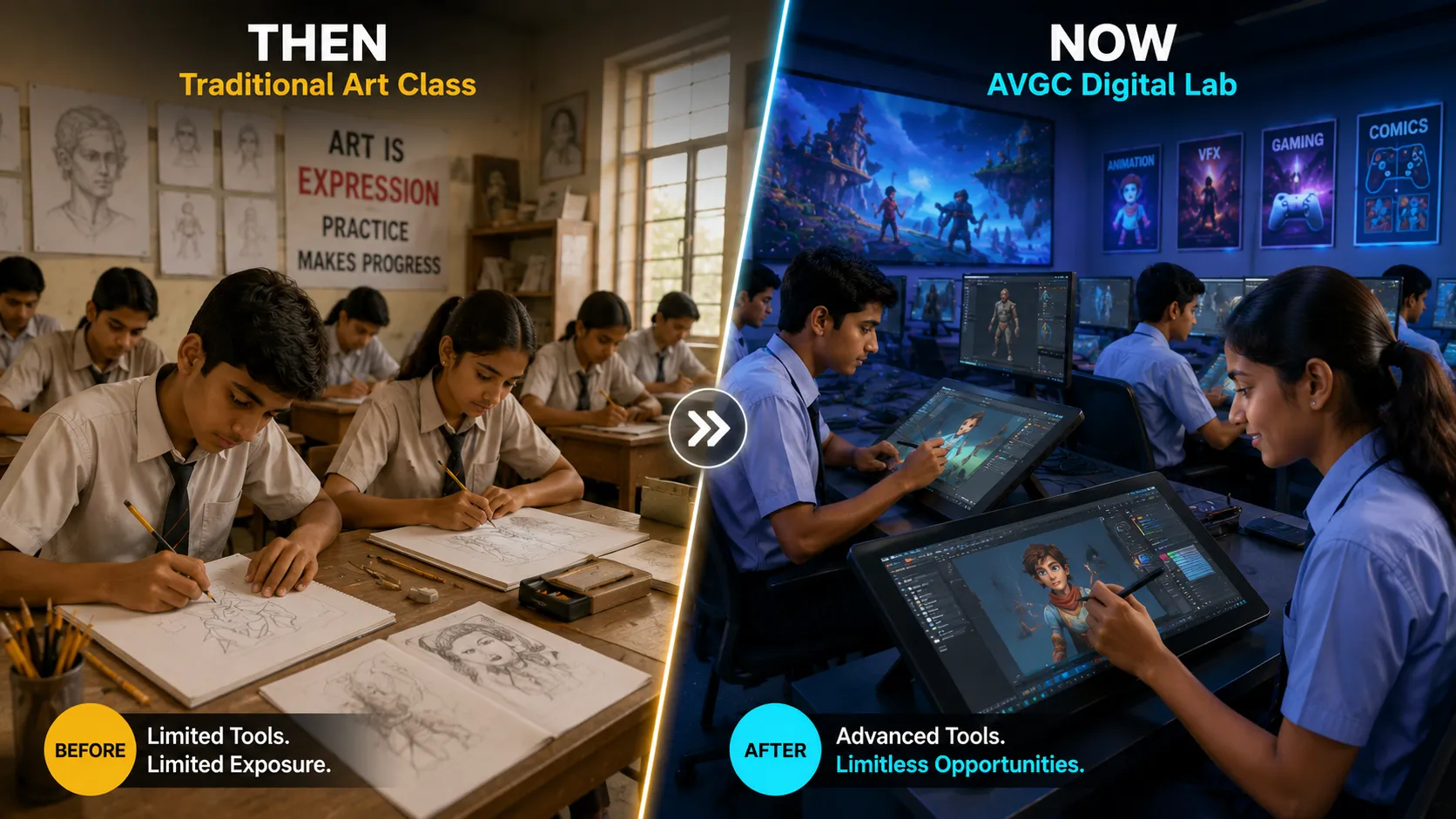
The classroom in a government school in Bhopal looks like any other, until you notice the drawing tablets, the animation software, and the 14‑year‑old girl sketching a superhero that will soon come to life on her screen. She is part of a quiet revolution that the government calls the "Orange Economy" — creative industries that include animation, visual effects, gaming, comics, film production, music, and design. On June 10, the Union Ministry of Education announced that AVGC (Animation, Visual Effects, Gaming, Comics) Content Creator Labs would be established in 15,000 secondary schools and 500 colleges across India. The goal: train 10 million students in creative digital skills by 2030. The subtext: India wants to become the world's creative services factory.
The term "Orange Economy" was coined in Colombia a decade ago to describe the economic value of creative industries. In India, it has taken on a new urgency. The creative sector already employs over 7 million people directly and contributes an estimated ₹4.5 lakh crore (about $54 billion) to GDP annually. But the government believes that with the right investments, that figure could triple by 2030. The AVGC labs are just one piece of a larger push that includes tax incentives for animation studios, a ₹10,000 crore Creative Industries Fund, and a streamlined visa process for foreign creative professionals.
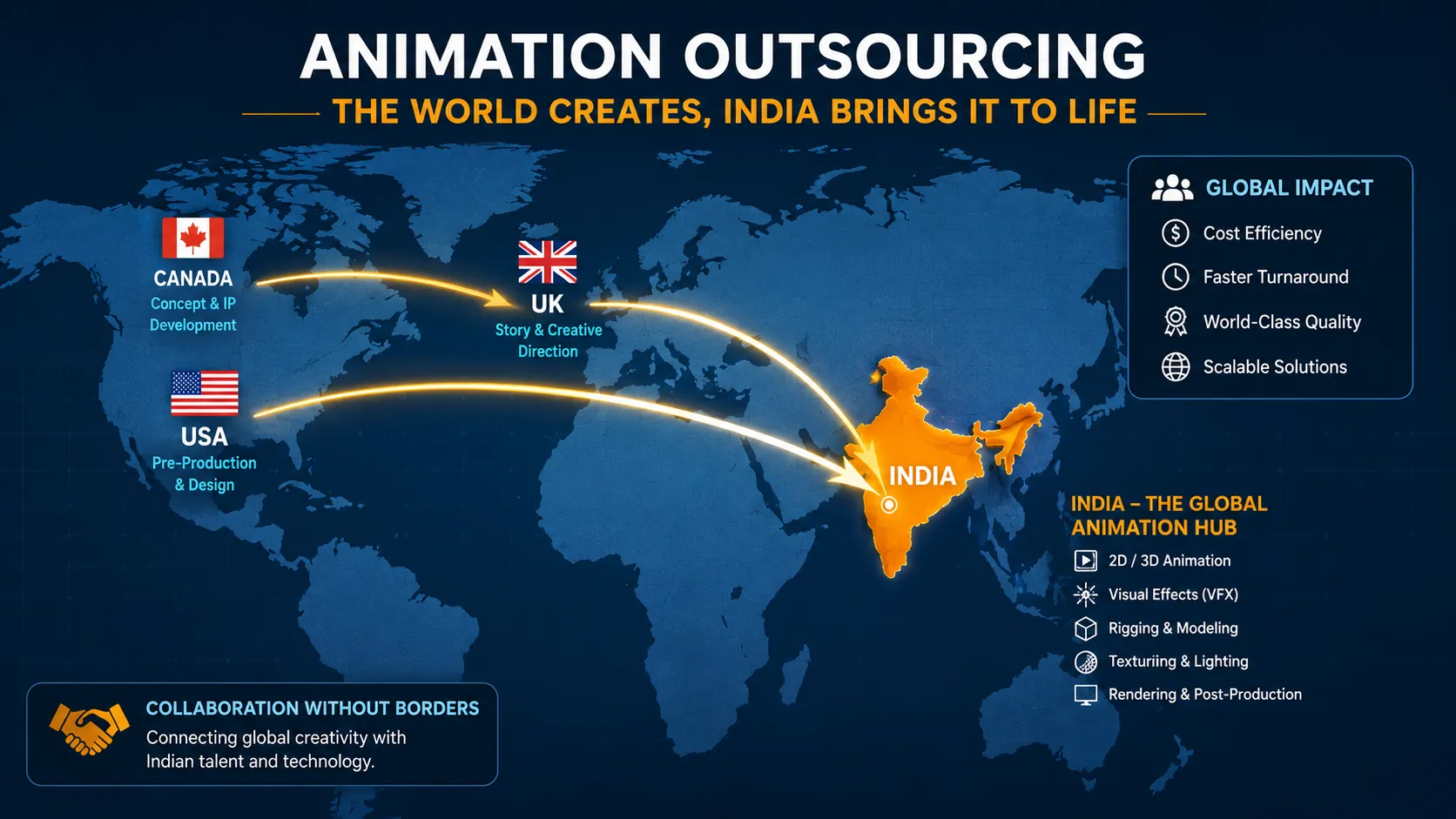
Why now? The answer is global. China has dominated manufacturing for decades. India cannot beat China at its own game — not in labour costs, not in infrastructure, not in scale. But creative services are different. They require English fluency (India's advantage), a deep pool of artistic talent (India's traditional strength), and a cost structure that undercuts the West (India's enduring edge). The global animation and VFX market is projected to reach $100 billion by 2030. India currently has a 5% share. The government wants to take it to 20%.
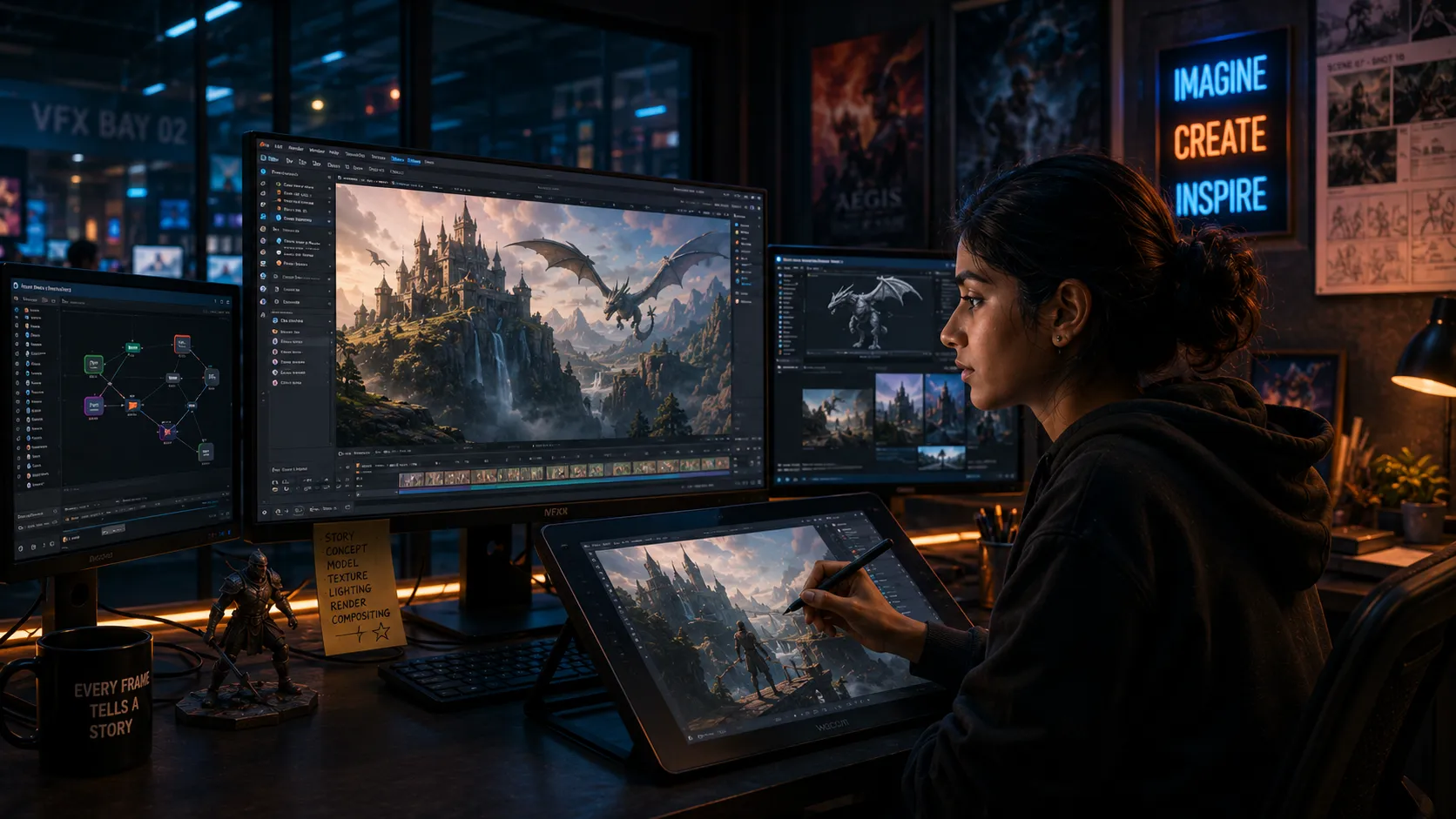
The AVGC labs are the foundational layer. Fifteen thousand schools — a mix of government and government‑aided — will receive computer labs equipped with professional creative software (Adobe Creative Cloud, Autodesk Maya, Blender), drawing tablets, and high‑speed internet. Teachers will be trained by industry partners including Technicolor, DNEG, and Framestore. The curriculum, developed by the National Council of Educational Research and Training (NCERT), covers 2D and 3D animation, game design, visual effects, comics illustration, and digital storytelling.
"The idea is not to turn every child into a professional animator," said a senior official in the Ministry of Education. "The idea is to expose them to the creative digital arts at an age when they are most receptive. Some will go on to careers in the industry. Others will use these skills in marketing, architecture, engineering, or medicine — fields that increasingly require visual communication. Everyone benefits."
The colleges are the next layer. Five hundred higher education institutions — including engineering colleges, art schools, and private design institutes — will receive advanced AVGC labs and funding to develop degree and diploma programmes. The government has signed memoranda of understanding with international universities (Sheridan College in Canada, Gobelins in France, DigiPen in Singapore) to provide curriculum support and faculty exchange.
The industry response has been enthusiastic. Indian animation and VFX studios — Red Chillies VFX, PhantomFX, Technicolor India, DNEG India, Framestore India — have been struggling to find trained talent. The AVGC labs will create a pipeline that currently does not exist. "We have to train most of our junior artists from scratch," said the head of a Mumbai‑based VFX studio. "If schools start teaching the basics, we can focus on advanced skills. That will cut our training costs by half and expand our talent pool tenfold."
The Orange Economy push extends beyond education. The Ministry of Commerce has announced a Creative Industries Export Promotion Scheme, offering subsidies to animation studios that export services (a growing market, as Western studios outsource VFX and animation to India). The Ministry of Finance has provided tax benefits for gaming startups and has designated "AVGC parks" in special economic zones. The Ministry of Culture has launched a National Film Heritage Mission that includes digitising India's film archives — creating a digital library that can be used for research, education, and commercial licensing.
The challenges are significant. India's creative industries are fragmented, with thousands of small studios and freelancers operating in informal markets. Piracy remains a problem, particularly for digital content. And the global competition — from China, South Korea, Canada, and Eastern Europe — is fierce.
But the opportunity is larger. The global demand for animation and VFX content is exploding, driven by streaming services (Netflix, Amazon, Disney+) that need endless hours of content, and by the gaming industry (mobile and console) that is growing faster than any other entertainment segment. India, with its English‑speaking workforce, its animators who can match Western quality at Indian prices, and its government that is finally paying attention, is perfectly positioned to capture a significant share of that demand.
The Orange Economy is not just about exports. It is about jobs, and particularly about jobs for women. The creative industries have a higher proportion of female workers than manufacturing or IT services. Animation, design, and digital art are fields where talent matters more than credentials, and where remote work is already standard. For a government that is struggling to create formal employment for millions of young people, the Orange Economy is a lifeline.
Back in the Bhopal classroom, the 14‑year‑old girl with the drawing tablet does not know about government policies or global markets. She knows that she loves to draw, that her teacher says she has a gift, and that her superhero — a masked vigilante who fights pollution — might one day become a webcomic, or a game, or even a film. She is the Orange Economy's first harvest. And if the government's bet pays off, she will not be the last.