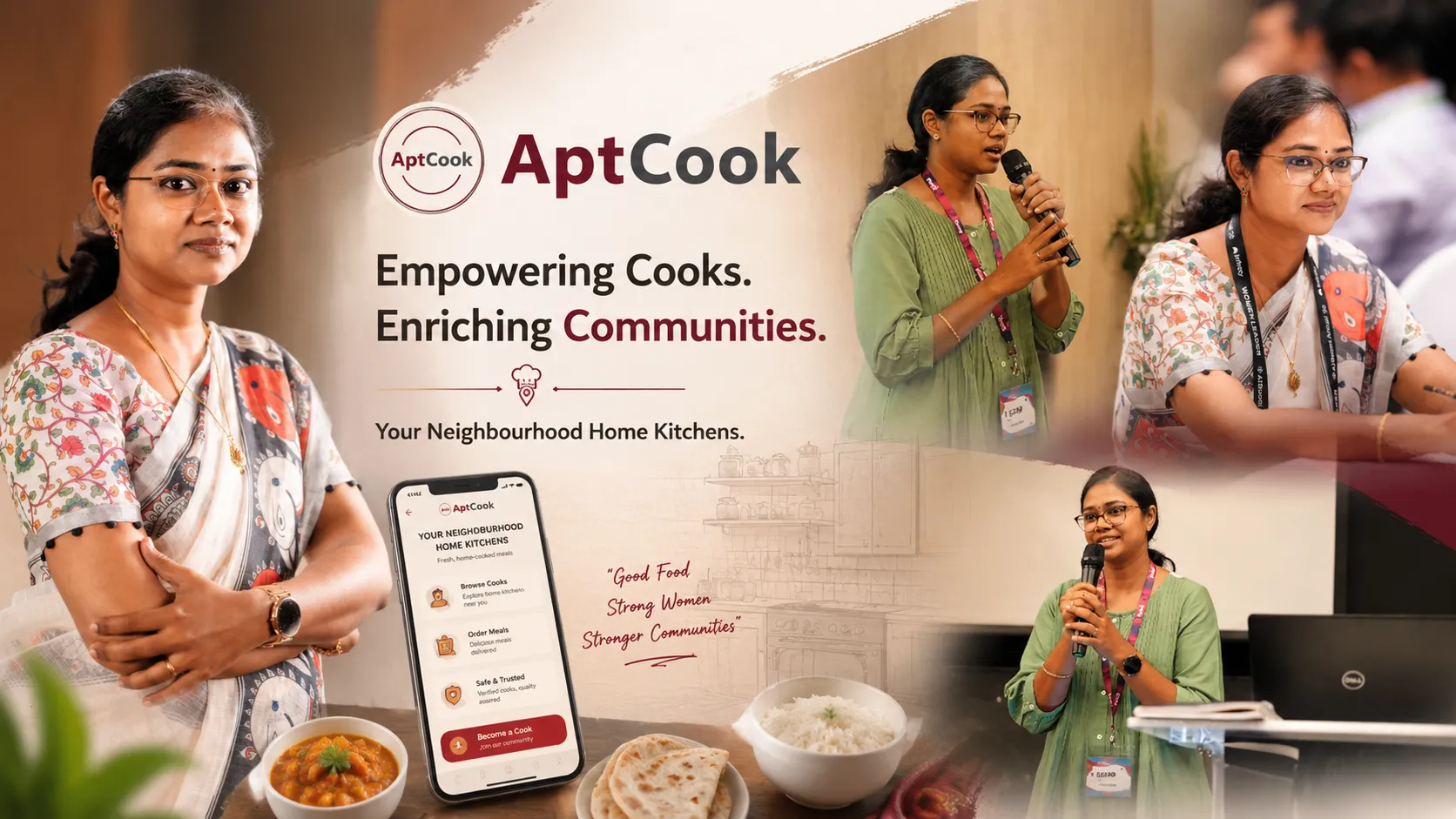
In an exclusive conversation with TIGI, Arulmozhi Vajjiravelu leans forward, her eyes lighting up as she speaks about the moment everything changed. It wasn't a grand epiphany or a dramatic life event. It was something far more ordinary—and far more relatable.
The city is relentless. The traffic, the deadlines, the endless cacophony of modern life. And in the midst of it all, there's a quiet desperation that every working professional knows too well—the sinking feeling of opening yet another food delivery app, scrolling through restaurant options, and surrendering to the inevitable.
It's not that the food is bad. It's that it's not home.
For Arulmozhi, that feeling became unbearable. Not for herself, but for her children. And in that moment of maternal guilt, a business was born.
"Being a software professional, you work every day and night," she reflects, her voice carrying the weight of lived experience. "You really don't find time to take care of the family. When you're off from cooking, you finally end up with restaurant foods. Once you eat it, you start feeling guilty. It's okay with adults, but when you introduce this for your kids, you really feel guilty."
That guilt, she realized, was universal. And the solution was simpler than anyone imagined: connect people who love to cook with people who desperately need home-cooked food—right within their own apartment complexes.
Today, her platform, AptCook, is revolutionizing the way urban Indians access home food. It's a closed ecosystem designed for communities—high-rise apartments with thousands of residents who are tired of restaurant food, tired of delivery fees, and tired of compromising their health for convenience.
But AptCook is more than just a food delivery app. It's a movement. A community. A lifeline for working parents, elderly residents, and women entrepreneurs who finally have a platform to showcase their culinary skills.
The Problem No One Was Solving
Before AptCook, Arulmozhi was a successful software engineer with over a decade of experience. She had worked with various companies and startups, climbing the corporate ladder. But like so many professionals in India's tech hubs, she was caught in a relentless cycle that left little room for the simple pleasures of life—like feeding her family nutritious, home-cooked food.
"When you're off from cooking, you end up with restaurant foods," she says. "And you feel guilty. But if there is someone who is going to provide you with home-cooked food—orders that come to your home—you tend to take it happily."
That was the seed of an idea. What if there was a platform that connected home cooks with hungry neighbors—people who were literally living in the same apartment complex? No delivery fees. No long waits. No questionable ingredients. Just good, honest, home-cooked food from someone you could actually trust.
The response from friends and family was initially skeptical. Yet another food delivery app, they said. But Arulmozhi knew she was building something different.
"The food is not going to come from a faraway location. It's going to come right from your apartment," she explains. "There is no delivery involved. The home cooks either deliver to you or you go collect it. Within an apartment, you know each other. It's more or less like getting food from your auntie's home or a relative's home."
When she explained it that way, people understood. And they wanted in.
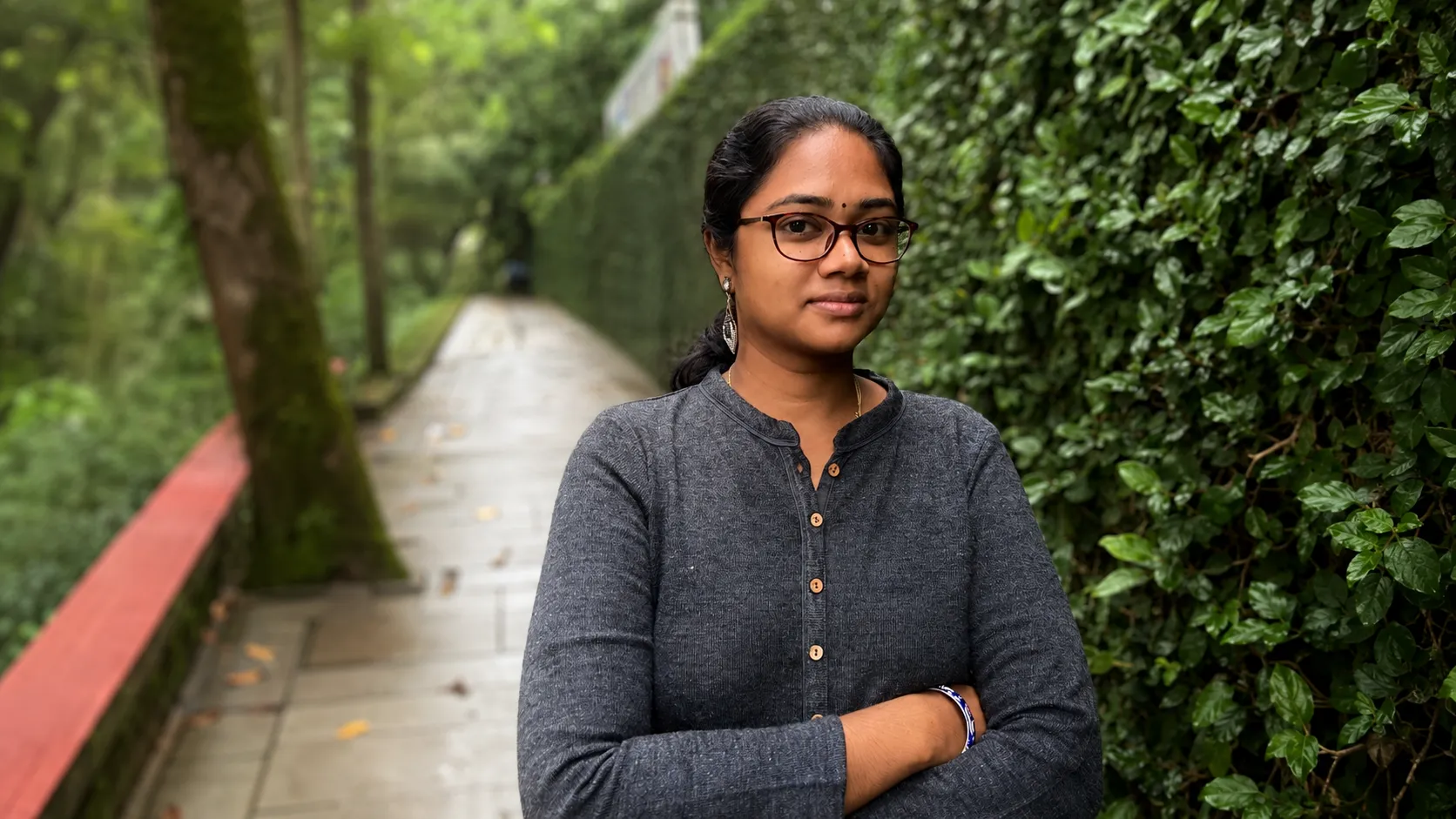
How AptCook Works: A Closed Ecosystem of Trust
The beauty of AptCook lies in its simplicity. It's not trying to compete with giants like Swiggy or Zomato—it doesn't have to. Instead, it operates within the boundaries of apartment complexes, creating a micro-economy of home cooks and hungry residents.
"We wanted to create an environment wherein the food delivery can happen within the apartment," Arulmozhi explains. "The cooking, ordering, and all those things are built into the system."
Here's how it works: Residents enroll as users. Home cooks enroll as vendors. The platform handles everything—menu creation, ordering, payment, and feedback. Food is delivered directly or picked up by the resident. The cost is significantly lower than restaurant delivery because there's no delivery fee, no restaurant markup, just honest food made with love.
And the impact has been profound.
"Old age people—they may be just one person, so they're not ready to hire a cook," Arulmozhi says. "They want home foods because they're old enough, but they don't find any place where they can go and get it every day."
Then there are the families. "When parents are working and they want some lunch box to be prepared, it's a tedious process. If you order it through AptCook, you are getting home food on time."
The platform has also introduced a subscription model for even greater convenience. Residents can subscribe to a cook for a month or a year, ensuring their daily meals are taken care of—stress-free, healthy, and always home-cooked.
"It's not just about serving food. We wanted to create an environment where home-cooked meals reach the people who desperately need them."
The Human Impact: Stories That Matter
Arulmozhi has collected countless stories that remind her why she started this journey. But one, in particular, stands out—an encounter with an elderly home cook who represented both the promise and the challenge of her vision.
"There was one cook I was trying to convince, saying please come to our environment. You will definitely get a lot of scale," she recalls. "But she was like, no, no, no, I don't know how to use it. I'm not ready to use it. I want my husband to do this. I want my son to do it."
The woman's lack of confidence—her inability to see herself as an independent entrepreneur—struck a chord with Arulmozhi. It wasn't about the food; it was about the mindset.
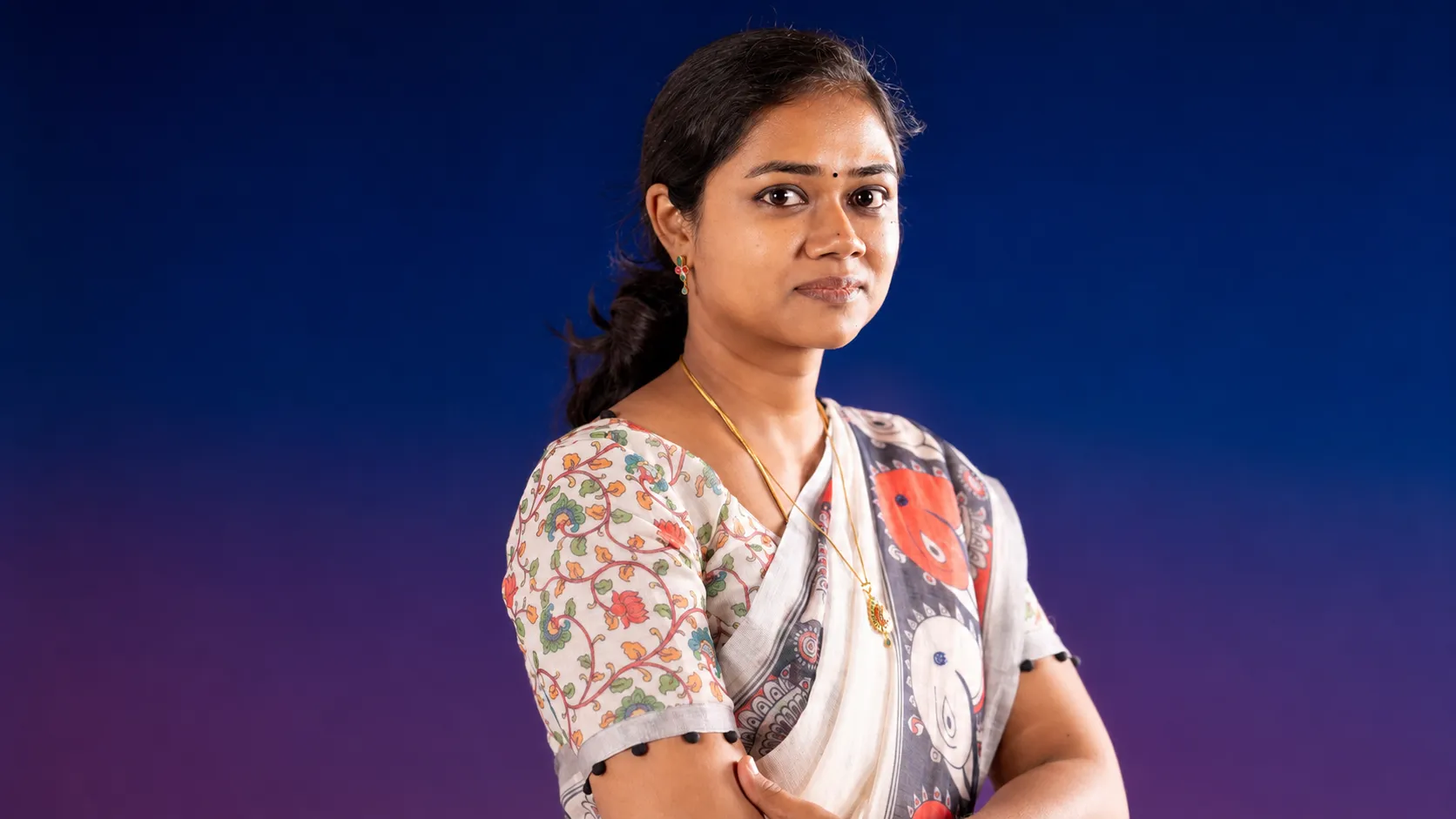
"We shouldn't be dependent on people," she says firmly. "You are a home cook. That means you are doing entrepreneurship. You are doing a business. Then you have to be someone who is independent."
This cook, Arulmozhi reflects, "created a very much impact on me, just because they are naive. They are really not ready to take up something that's different for them."
But not every story is one of hesitation. Many home cooks have embraced the platform with enthusiasm, finding not just income, but purpose.
Most of them are women—housewives who simply wanted to support their families. "They started this as a passion," Arulmozhi says. "But because of the food that they cook, people start buying it."
The platform has given these women a new identity—not just homemakers, but entrepreneurs. Not just cooks, but business owners.
The Value That Must Never Be Compromised
In a world obsessed with scaling fast and maximizing profits, Arulmozhi is refreshingly clear about her non-negotiables.
"The emotion that we are connected to food—that's our main goal," she says. "Home food is related to health and quality. This quality and health-consciousness should never be compromised."
To ensure this, AptCook is working with home cooks to get proper accreditations like FSSAI. "That gives them the tag saying, yes, this is trusted. This is good."
It's a commitment that sets AptCook apart in an industry where corners are often cut in the name of efficiency. For Arulmozhi, there's no compromise when it comes to the well-being of her users.
The Founder's Journey: From Software to Social Impact
Arulmozhi's own journey has been one of transformation. A software engineer by training, she found herself stepping far outside her comfort zone.
"Entrepreneurship has given me the ability to take up anything new," she says. "When you're doing something entrepreneurial, you can't say, 'I won't be able to do it.' That should never be in your dictionary."
For her, coding was easy. Building applications came naturally. But sales, marketing, social media—these were nightmares. Yet she adapted.
"So now, I slowly started adjusting," she says. "Being an entrepreneur gave me the ability to take up whatever comes in front of you without any hesitation."
The Women Entrepreneur's Journey: Fighting for Recognition
As a woman founder, Arulmozhi has experienced the subtle—and not-so-subtle—ways in which society treats female entrepreneurs differently.
"See, when men are doing stuff, people think it's very serious," she observes. "But when women do it, they think it's just for fun. They really don't take the value of what women are actually contributing to this society."
She's experienced it firsthand. When she discusses her vision—creating an environment for housewives to enroll as cooks—many dismiss it. "They think it's yet another thing," she says. "They really don't take it seriously."
She's not sure why there's such a differentiation. But she's determined to prove them wrong.
"If you're doing something with housewives, people think it's just for fun. They don't take it as seriously as they would if a man were doing it. But I know what we're building matters."
The Pillar of Support: Family as Foundation
One of the most striking aspects of Arulmozhi's story is the role her family has played in her success.
"I think the struggle comes when you think it's going to be a problem," she says. "But when you have a family that's very supportive, I think it's easy."
Her husband is her pillar of strength. "He takes care of the kids. Not just the kids, he's my complete support. He supports me with the app and all those things."
Her parents, in-laws, and extended family all play their roles. "If they trust you, if they really think what you're doing is going to make some difference, I think you will definitely get family support."
Not all women are so fortunate. And that, Arulmozhi believes, is one of the biggest barriers to women's entrepreneurship in India.
The Advice That Could Change Everything
When asked what advice she would give to women looking to build businesses from home, Arulmozhi doesn't hesitate.
"I don't think there is any right time," she says. "Every now and then, when we think of doing something, something else comes and blocks us. Especially for women who are housewives, who have had a long career, they often feel very low in confidence."
She's seen it too many times. Women who put themselves down. Women who believe their families won't support them. Women who have given up before they've even started.
"We have to remove this. We have to come out of it," she insists. "There is no starting point or no ending point. It's what we do for our happiness. When you think of it like that, everyone will be able to do something or the other."
Her advice is practical: start with something simple. You're good at cooking? Start a small kitchen. Good at crafts? Sell them online. Good at writing? Become a content creator.
"Start with something very simple," she says. "It's better than nothing."
And then there's the mindset shift: "We must have a mindset that whatever people think of us, we shouldn't care about. We should be what we are. We should prove ourselves. We are capable of doing it and we have to do it."
"There is no starting point or ending point. It's what we do for our happiness. When you think of it like that, everyone will be able to do something or the other."
The Bigger Picture: Revolutionizing India's Food Industry
Arulmozhi has strong opinions about what's missing in India's food industry. And it's not more restaurants or faster delivery.
"It's the fresh food," she says. "Nowadays, we see a lot of packed food available in supermarkets. Everything is loaded with preservatives, and they're not good for health."
She believes there needs to be a revolution—a shift toward fresh, preservative-free food that doesn't cost a fortune. "That gap is always there. There are a few companies trying to solve this problem, but they're not able to give it at cheap rates. That matters."
The home-cooked food movement, she believes, is part of that revolution.
The Vision: Five Years from Now
Looking ahead, Arulmozhi has ambitious plans for AptCook.
"We wanted to map AptCook to something like 'CookCook,'" she says. "If you want a comfortable, healthy food, then order AptCook. That should be the motto, that should be the mindset of people."
She wants to break the mindset that ordering food means ordering from restaurants. "We order from Swiggy, Zomato, all those big apps just because we wanted food without cooking it. It doesn't mean it has to always come from restaurants. If you get home food, then why do you want to go for a restaurant?"
She sees AptCook expanding beyond metropolitan cities to tier-2 cities as well. "Metropolitan cities generally have demand, but for tier-2 cities, there are families, there are still people who are working from home, who are really in need of this."
Her vision is simple but powerful: make home food accessible to everyone, everywhere.
"I want people to say, 'If you want a comfortable, healthy food, then order AptCook.' That should be the mindset—home food, not restaurant food."
The Entrepreneur's Journey: A Complex Path
When asked to sum up her entrepreneurial journey in one sentence, Arulmozhi is characteristically honest.
"It's always not a straight line," she says. "It goes up and down. It's a very complex situation."
But she doesn't say this with regret. She says it with the wisdom of someone who has embraced the complexity and learned to thrive in it.
"It's not easy for someone to come out of the family setup, to come out of the regular 9-to-5 job, to start a startup, to run behind it every day and night, to hire people, make them work, do sales, revenues—all these things. It's very, very complex."
But she wouldn't have it any other way.
The Final Word: To Women Everywhere
Arulmozhi's final message is for the women who might be reading this and wondering if they have what it takes.
"Women are really capable of multitasking," she says. "We take care of the family. We do the household things. We take care of the parents, the environment, kids. We do the work at the office. We are capable."
The only thing holding women back, she believes, is confidence. And a willingness to take risks.
"The only thing we are lacking behind is the confidence and the ability to take something. Once we take it and start learning all those things, I think we will have a very good future."
Her message to women who make excuses is direct: "There are a lot of women who say, 'I cannot do this because I have a family. I cannot do this because I have a kid. I cannot do this because I have a baby.' That's really a lame excuse."
She speaks from experience. "I have a kid. I have a baby as well. But I am able to do it. It's your mindset. It's really not your family setup."
She urges women to start doing, not waiting. "Family will definitely accept you once you prove it. We shouldn't take an excuse saying my family won't allow me. You start doing it, people see the difference. Family agrees with you. Friends agree with you. Everybody agrees with you."
Her closing words are both a challenge and an invitation: "I think most women fall into this loop with their family. My advice is: come up. Do something different."
The Road Ahead
Arulmozhi Vajjiravelu's journey from software engineer to social entrepreneur is still unfolding. AptCook is in its early days, with pilots in Chennai and Coimbatore, and a launch in Bangalore on the horizon. But the vision is clear: make home food accessible to everyone who needs it, while empowering women to become independent entrepreneurs.
In a world obsessed with artificial intelligence and algorithm-driven solutions, Arulmozhi is proving that the most powerful technology is still human connection. Food brings people together. And when that food comes from the hands of a neighbor—someone you trust, someone who cares—it becomes something more than sustenance.
It becomes community.
And in a city that often feels lonely and disconnected, that might be the most valuable thing of all.
To connect with Arulmozhi Vajjiravelu and AptCook, follow their journey on Instagram or reach out through their professional network. For updates on the Bangalore launch and expansion plans, follow AptCook's social media channels @aptcook_official


