The Nostalgia Goldmine: How a 1995 Salman Khan Film Just Earned ₹85 Crore in a Re‑Release—And Why Old Blockbusters Are Suddenly Out‑Earning New Ones
MUMBAI — May 30, 2026 — On a Friday evening three weeks ago, a 31‑year‑old film opened in 1,200 theatres across India. It had no marketing campaign beyond a single Instagram post from its lead actor. It had no new visual effects, no remastered soundtrack, no added scenes. It was the same film that had released in 1995—the same grainy print, the same dated special effects, the same dialogue that a generation of Indians had memorised on VHS tapes and DVD players. The film was Karan Arjun. By Sunday night, it had earned ₹28 crore net at the domestic box office—a figure that exceeded the opening‑weekend collections of all but two new Hindi releases that month. By the end of its second week, it had crossed ₹85 crore, and the trade analysts who had once dismissed the re‑release trend as a pandemic‑era curiosity were scrambling to revise their models.
The re‑release economy—the systematic theatrical re‑release of classic Indian films, driven by nostalgia, social‑media fuelled fandom, and the simple, brutal fact that audiences would rather pay to watch a film they already love than gamble on a new one they might hate—has become, in the space of two years, one of the most significant revenue streams in the Indian film industry. In 2025, re‑released films collectively grossed over ₹600 crore at the domestic box office—a figure that exceeds the total domestic collections of the Hindi film industry in 2020 and 2021 combined. The studios that once treated their back catalogues as dormant assets—libraries of old films that generated modest television and streaming revenue but that were essentially retired from the balance sheet—are now treating them as IP mines, digging through the archives for the titles that can be dusted off, repackaged, and released to an audience that is hungrier for nostalgia than it is for novelty.
The Trust Deficit
The most important variable driving the re‑release economy is not nostalgia. It is trust. The Indian film industry has, over the past three years, burned through an extraordinary amount of audience goodwill. The star vehicles that were supposed to guarantee opening weekends have failed, repeatedly and expensively. The marketing campaigns that were designed to manufacture anticipation have produced, in too many cases, disappointment that spread faster than the campaigns themselves. The audience that once bought tickets on faith—trusting that a film with a particular star, or a particular director, or a particular studio would be worth their time and money—has lost that faith. The re‑release is, for that audience, a safe bet. The film has already been tested. It has already been loved. The audience knows, before they buy the ticket, that they will enjoy what they see. The certainty is the product, and the product is selling.
The trust deficit is measurable. A survey conducted by a leading market‑research firm in early 2026 found that 68 percent of regular filmgoers in Indian metros would rather watch a classic film they had already seen than a new release they had not. The figure rises to 74 percent among the 25‑to‑35 age cohort—the demographic that constitutes the core of the multiplex audience. The same survey found that the primary reason for this preference was not nostalgia, but "confidence in the quality of the experience." The audience has learned, through years of disappointment, that a known film is a known pleasure, and that an unknown film is a gamble they are increasingly unwilling to take. The studios that are responding to this preference—that are mining their back catalogues for the titles that can be re‑released to a hungry audience—are the studios that are capturing a share of a market that the new‑release pipeline is failing to serve.
The economics of the re‑release are compelling. The studio that re‑releases a classic film incurs almost no production cost—the film has already been made, the rights have already been acquired, the marketing campaign can be built around a single social‑media post and the organic amplification of a fan base that is already primed to celebrate the film's return. The distribution cost—the digital‑print fee, the exhibitor share—is the same as for any new release, but the revenue is almost entirely profit. The ₹85 crore that Karan Arjun earned in its re‑release generated a margin that no new release could match—because the new release has to recoup a production budget, a marketing budget, and a star fee that the re‑release simply does not carry. The re‑release is, in economic terms, the most efficient product in the film industry—a film that has already been paid for, already been loved, and now simply needs to be screened. The studios that control the largest back catalogues—YRF, Dharma, Red Chillies, the major South Indian production houses—are sitting on assets that, in the re‑release era, are significantly more valuable than anyone realised even three years ago.
The Social‑Media Amplifier
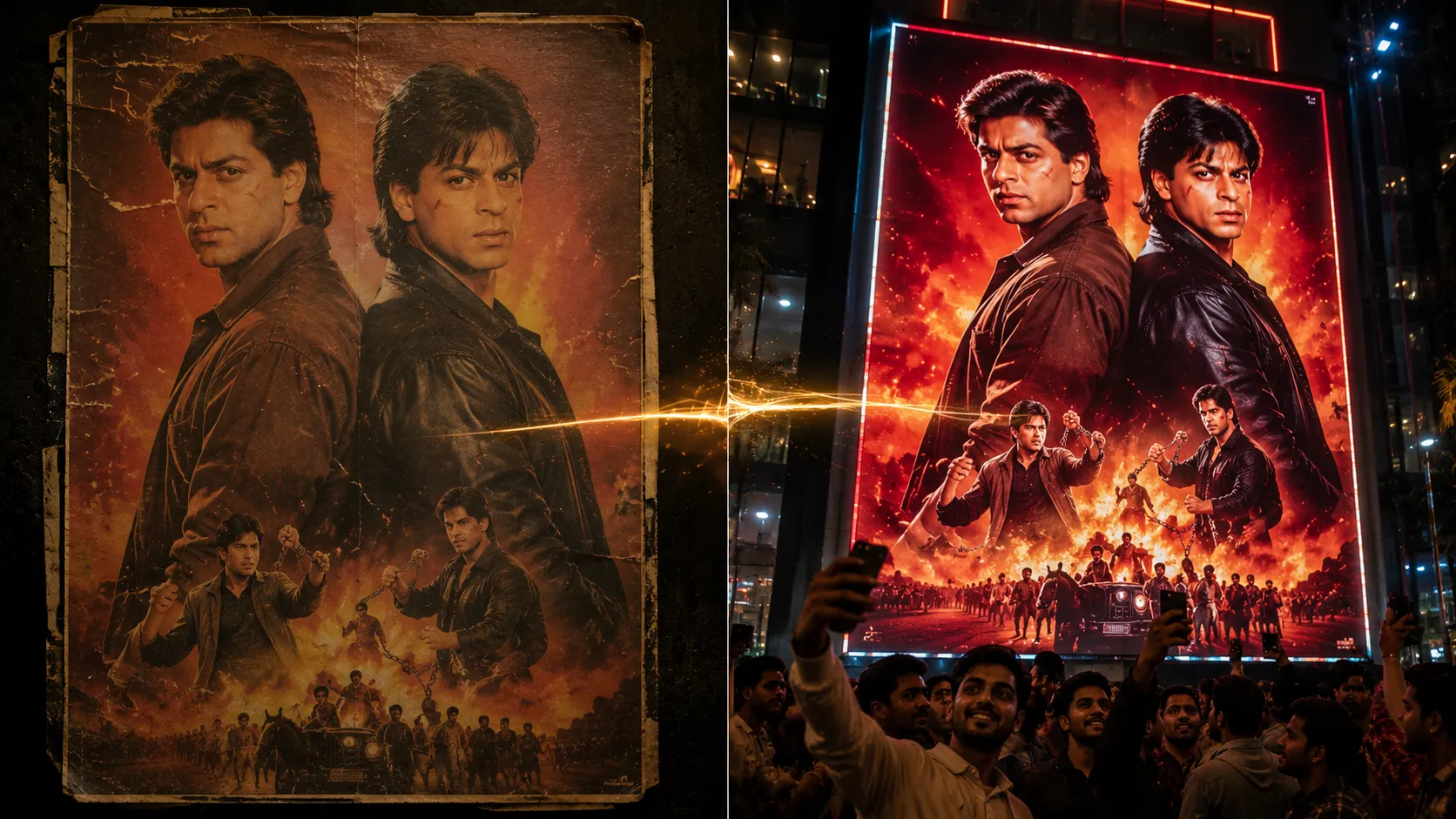
The second most important variable driving the re‑release economy is social media. The classic film that is re‑released in 2026 does not depend on a marketing campaign to find its audience. It depends on the audience's own enthusiasm—the Instagram posts, the Twitter threads, the YouTube reaction videos, the TikTok‑style short‑form content that spreads organically through the networks of fans who grew up with the film. The re‑release of Karan Arjun was promoted, primarily, by a generation of Indians who had watched the film as children, who had memorised its dialogue, who had imitated its stars, and who, in their thirties and forties, were eager to share the experience with their own children. The social‑media amplification of that experience—the selfies in front of the poster, the videos of the audience cheering the famous lines, the posts about crying at the ending—created a cycle of engagement that no paid campaign could replicate. The audience became the marketing department, and the marketing department worked for free.
The social‑media amplifier is particularly powerful for the films that occupy a specific cultural niche: the mass entertainers of the 1990s and 2000s, the Salman Khan and Shah Rukh Khan vehicles that defined a generation's understanding of what a Bollywood film was, the Rajinikanth and Kamal Haasan spectacles that are sacred texts for the Tamil diaspora, the Chiranjeevi and Balakrishna blockbusters that command devotional followings in the Telugu states. These films are not merely movies. They are cultural memories, and the re‑release is a communal ritual—a way of reliving the past, of sharing it with a new generation, of asserting, against the fragmentation of the digital era, a collective experience that everyone in the theatre remembers together. The social‑media amplifier is the mechanism that transforms that ritual from a private nostalgia into a public event—and the event, once it reaches a certain scale, becomes self‑sustaining. The re‑release that trends on social media attracts audiences who did not grow up with the film, who are curious about the phenomenon, who want to be part of the conversation. The nostalgia that launched the re‑release expands, through social media, into something larger than nostalgia—a cultural moment that is bigger than the film that created it.
The Streaming Paradox
The most counterintuitive dimension of the re‑release economy is its relationship with streaming. The classic film that is re‑released in theatres is, in almost every case, already available on at least one streaming platform—often for free, always on demand, accessible from the same smartphone that the audience member uses to book their theatre ticket. The rational consumer, confronted with the choice between watching Karan Arjun for free on JioHotstar and paying ₹300 to watch it in a multiplex, should choose the free option. The fact that millions of consumers are choosing the paid option instead suggests that the streaming‑versus‑theatrical calculus is more complex than the industry has assumed.
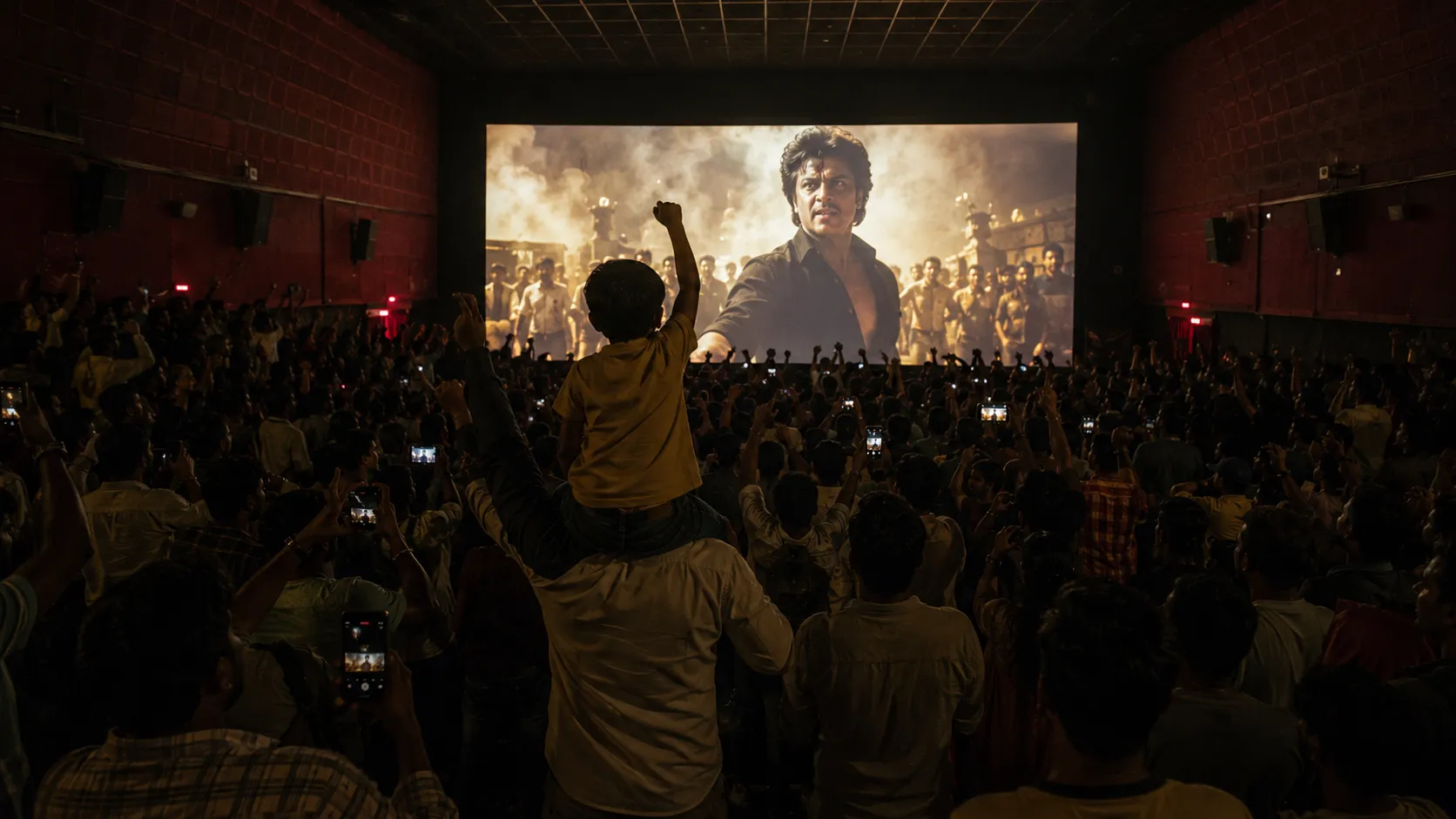
The streaming paradox is explained, in part, by the same trust deficit that is driving the re‑release economy more broadly. The consumer who watches a classic film on a streaming platform is watching it alone—on a laptop, on a phone, on a television in an empty room. The consumer who watches it in a theatre is participating in a collective experience—the laughter, the cheers, the shared recognition of a beloved moment. The theatre is not merely a screen. It is a community, and the community is what the streaming platform cannot provide. The re‑release is, in this sense, a rebuke to the streaming revolution—a reminder that the most powerful force in the entertainment economy is not convenience, but connection. The audience that could watch Karan Arjun at home, for free, is choosing to watch it in a theatre, for money, because the theatre offers something that the home cannot: other people, watching alongside them, remembering the same memories, feeling the same feelings. The streaming platform can deliver the film. It cannot deliver the crowd. The crowd is the product, and the product is selling.
The re‑release economy also benefits from a structural quirk of the streaming market. The classic film that is available on a streaming platform is, in many cases, buried in the platform's catalogue—one title among thousands, discoverable only by the consumers who are actively searching for it. The re‑release, by contrast, is an event—a limited‑time, in‑theatre‑only experience that creates urgency, that commands attention, that is promoted by the platform's own algorithms as a trending topic. The streaming availability of the film does not cannibalise the re‑release. It amplifies it—reminding the audience that the film exists, that it is loved, that it is worth leaving the house for. The streaming platform is not a competitor to the re‑release. It is a marketing tool, and the studios that are using it most effectively are the ones that are generating the highest returns from their back catalogues.
The Studio Response
The studios have responded to the re‑release boom with a mixture of opportunism and strategic planning. The major production houses—YRF, Dharma, Red Chillies, the South Indian studios—have established dedicated re‑release divisions, staffed by teams whose sole job is to identify the titles in the back catalogue that are most likely to attract audiences, to negotiate the distribution arrangements with exhibitors, and to manage the social‑media campaigns that amplify the re‑release events. The re‑release has become, for these studios, a regular part of the release calendar—a way of generating revenue in the gaps between new releases, a way of monetising assets that were previously dormant, and a way of maintaining audience engagement with the studio's brand between the tentpole events that drive the bulk of the revenue.
The most sophisticated studios are also using the re‑release as a marketing platform for their upcoming new releases. The re‑release of Karan Arjun was timed, not coincidentally, to precede the release of a new Salman Khan film by approximately six weeks—a strategic window that allowed the studio to remind the audience of the star's enduring appeal, to generate goodwill and nostalgia, and to prime the market for the new release that would follow. The re‑release of a Rajinikanth classic, similarly, is often timed to coincide with the announcement of a new Rajinikanth project, creating a virtuous circle of audience engagement that benefits both the old film and the new one. The re‑release is not merely a revenue stream. It is a marketing tool, and the studios that are using it most strategically are the ones that are extracting the maximum value from their back catalogues.
The re‑release economy has also created a new category of theatrical content: the curated film festival, in which a studio packages several of its classic films into a single, multi‑day event that is marketed as a cultural experience. YRF's "Golden Era" festival, which screens a selection of the studio's most beloved films over a single weekend, has become a regular fixture in the exhibition calendar, drawing audiences who are willing to pay a premium for the experience of watching multiple classics in a single sitting. The festival model extends the re‑release logic from a single film to an entire catalogue, creating a new format that is more immersive, more valuable, and more differentiated than the conventional theatrical experience. The studios that are experimenting with this format are the ones that are most aggressively monetising their IP assets—and the returns they are generating are being watched closely by the rest of the industry.
The Future of the Re‑Release
The re‑release economy is still in its early stages, and its full potential has not yet been realised. The studios that are currently re‑releasing films are focused primarily on the mass entertainers of the 1990s and 2000s—the films that have the largest built‑in audiences, the strongest nostalgia value, and the most reliable box‑office performance. But the logic of the re‑release extends to a much broader range of films: the critically acclaimed indies that were released before the streaming era and that never found their full audience, the regional classics that were never distributed outside their home states, the cult favourites that have passionate but niche followings. The studio that can identify, curate, and market these films to the specific audiences that are waiting for them will have a pipeline of re‑release revenue that extends well beyond the blockbuster classics.
The technology that enables the re‑release is also improving. The digital restoration of classic films, which was once an expensive and time‑consuming process, has become faster and cheaper—driven by the same AI‑powered tools that are transforming the VFX industry. The studio that can restore a classic film in weeks rather than months, and at a cost that is a fraction of what it was even five years ago, can re‑release a much larger portion of its back catalogue than was previously feasible. The technology that is making it possible is, like the social‑media amplifier that is driving the demand, accelerating the growth of the re‑release economy.
The audience, for its part, shows no sign of losing its appetite. The re‑release of Karan Arjun was not an anomaly. It was the latest in a series of re‑release successes that have established a new revenue stream for the Indian film industry—a stream that is growing faster than the new‑release box office, that is more profitable, and that is more resilient to the structural disruptions that are reshaping the rest of the industry. The nostalgia goldmine is real, and the studios that are digging it are the ones that are sitting on the richest veins. The films that were made thirty years ago are earning more today than they did when they were released—not because they are better, but because the audience that loves them is older, wealthier, and more willing to pay for the experience of reliving their youth. The re‑release is not merely a business. It is a time machine—and the ticket price, it turns out, is not nearly as high as the studios once assumed.


