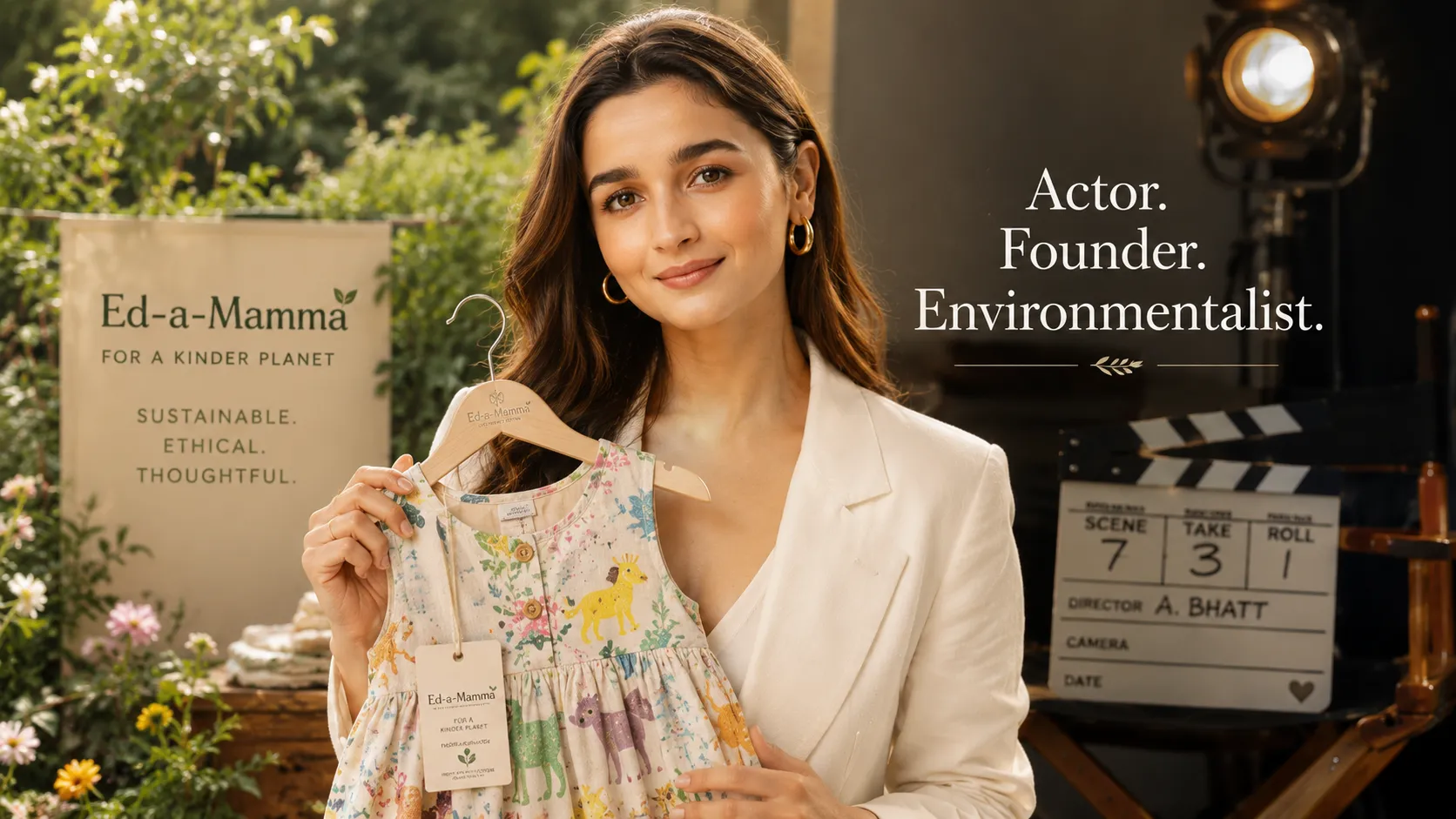
The New Empress: How Alia Bhatt Built a ₹400 Crore Empire Before Turning 35
With Ed-a-Mamma, a stake in Phool, and global luxury endorsements, Alia Bhatt is rewriting the rules for India's next generation of celebrity founders.
The ₹400 Crore Question
In April 2026, Forbes India released its annual "Celebrity 100" list. While the usual names — Virat Kohli, Shah Rukh Khan, Ranveer Singh — dominated the top spots by raw valuation, one name caught the attention of business editors: Alia Bhatt, ranked sixth, with a brand valuation of $96.8 million (approximately ₹800 crore) .
But the more interesting number is her estimated net worth: ₹400 crore ($48 million) at just 32 years old. That places her ahead of many Bollywood veterans and behind only Deepika Padukone among actresses. The difference? Padukone built her wealth over two decades; Bhatt has done it in barely ten years — and she is accelerating.
Her strategy has been different. While her contemporaries focused on endorsements and real estate, Bhatt placed an early, heavy bet on sustainability — a sector most celebrities ignored until recently. She co-founded Ed‑a‑Mamma, a children's clothing brand made entirely from organic and recycled fabrics. She took a strategic stake in Phool, the startup that turns temple flower waste into charcoal-free luxury incense and leather alternatives. She became the global face of Gucci and the first Indian brand ambassador for Hugo Boss.
And she did all of this while delivering back‑to‑back box office hits (Gangubai Kathiawadi, Brahmāstra, Rocky Aur Rani Ki Prem Kahani, Jigra) and managing the most-watched wedding of 2024 — her marriage to Ranbir Kapoor.
This is the rise of India's green empress.
Ed‑a‑Mamma: The Sustainable Children's Brand That Struck Gold
In 2020, when most celebrities were launching generic apparel lines, Bhatt launched Ed‑a‑Mamma — a children's clothing brand with an unusual pitch: every piece was made from organic cotton, recycled polyester, and plant‑based dyes. The brand also partnered with Yash Raj Films to produce character‑based collections featuring Bollywood's most beloved animated characters.
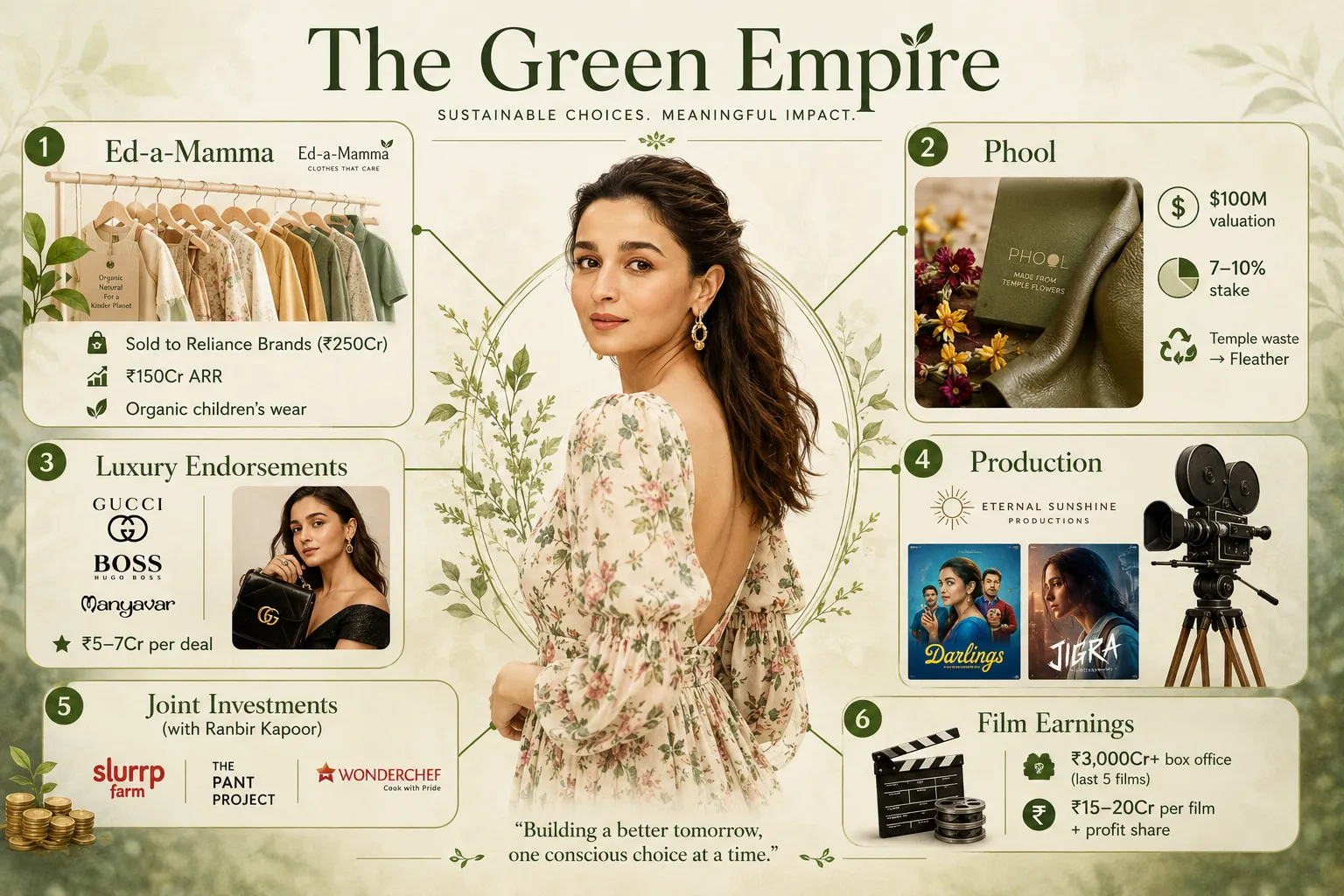
Skeptics said Indian parents would not pay a premium for organic kids' wear. They were wrong. By 2024, Ed‑a‑Mamma had achieved an annual recurring revenue of ₹150 crore, making it one of India's fastest‑growing D2C brands in the toddler category. In early 2025, Bhatt sold a majority stake to Reliance Brands Limited for an estimated ₹250 crore, retaining a minority share and creative control. Reliance plans to expand Ed‑a‑Mamma into physical retail across 50 cities.
"I wanted to prove that sustainability could be commercially viable in India," Bhatt said after the deal. "Not as a niche, not as a charity — as a real business."
Phool: From Temple Waste to Global Innovation
In 2021, Bhatt invested an undisclosed amount in Phool.co, a Kanpur‑based startup that collects floral waste from temples and converts it into two products: charcoal‑free luxury incense (marketed under the brand "Phool") and Fleather — a cruelty‑free, biodegradable leather alternative made from flower waste.
At the time, Phool was a niche social enterprise with a cult following. Bhatt's investment — and her active promotion on social media — catapulted it into the mainstream. Today, Phool has a valuation of over $100 million, exports to 22 countries, and counts L'Occitane and H&M among its corporate clients.
Bhatt does not merely lend her name. She appears in Phool's campaigns, visits their factory, and has spoken at the United Nations about sustainable alternatives to leather. Her stake, estimated at 7–10%, is now worth approximately $7–10 million — a return of over 10x on her initial investment.
The Luxury Endorsement Ladder
Bhatt's endorsement portfolio is a study in precision targeting. She does not sign 40 brands like Kohli or Ranveer. She signs a handful of global luxury houses:
Gucci (global brand ambassador) — only the second Indian after Deepika Padukone to hold this role.
Hugo Boss (first Indian brand ambassador, for the "Boss" line).
Manyavar (alongside Ranveer Singh).
Cadbury (mass‑market, strategic).
IIFL Finance (financial services).
Her per‑endorsement fee is estimated at ₹5–7 crore ($600,000–$840,000) , lower than Deepika's but higher than any other actress under 35. Crucially, she has avoided diluting her brand by saying no to dozens of offers — including several in the pan masala and gambling categories.
The Ranbir‑Alia Household
Bhatt's marriage to Ranbir Kapoor (net worth: ₹350 crore) in April 2024 created India's most powerful Bollywood couple after Deepika‑Ranveer. The two have since co‑invested in:
Slurrp Farm (healthy children's snacks) — a natural extension of Ed‑a‑Mamma.
The Pant Project (customised clothing).
Wonderchef (kitchen appliances, where Ranbir is also brand ambassador).
Their combined net worth — approximately ₹750 crore ($90 million) — is still behind the Padukone‑Singh combine (₹850 crore), but they are younger and have a longer runway. More importantly, their investment thesis is distinct: sustainability and health, not mass‑market FMCG.
"The Kapoor‑Bhatt household is betting on the premium consumer," says a venture capitalist who has pitched to them. "They are not chasing volume. They are chasing margin and mission."
The Environmental Advocate
Bhatt's business empire is inseparable from her public persona. She is a vocal advocate for climate action and has served as a WWF India ambassador since 2019. She has planted trees, spoken at COP summits, and incorporated sustainability messaging into her films (e.g., Brahmāstra's eco‑conscious marketing campaign).
This alignment between her values and her businesses is not accidental. It is a deliberate strategy to build trust and authenticity — two commodities that are increasingly scarce in celebrity endorsements. When Bhatt endorses a product, her audience knows she has vetted its environmental credentials.
The Film Backbone
None of this would be possible without the films. Bhatt is still, first and foremost, one of India's most bankable actors. Her last five theatrical releases have grossed over ₹3,000 crore collectively. She commands a fee of ₹15–20 crore per film plus profit share.
She also owns a significant stake in Eternal Sunshine Productions, her production house, which has backed critically acclaimed films like Darlings and Jigra. The production arm is small compared to Red Chillies, but it gives her creative control and an ownership stake in the content she creates — another example of her preference for equity over fees.
The Orange Economy Heiress
The Indian government's "Orange Economy" push — with its focus on creative IP ownership — finds a natural champion in Bhatt. She owns her films (through Eternal Sunshine), owns her brand (Ed‑a‑Mamma), and owns stakes in the startups she believes in.
"She is not waiting for the ecosystem to mature," says a media analyst. "She is building it herself — one sustainable onesie at a time."
The Bottom Line
Alia Bhatt's ₹400 crore empire is not the largest among her peers. But it may be the most forward‑looking. She has bet on sustainability at a time when climate consciousness is still nascent in India. She has bet on children (Ed‑a‑Mamma) when India's demographic dividend is at its peak. She has bet on equity (Phool, Slurrp Farm) over easy endorsement fees.
At 32, she has already achieved what most actors dream of by 50. And she is just getting started.


