The New D2C Gold Rush — How Content Creators Are Quietly Becoming India’s Most Savvy Entrepreneurs
The Creator Who Became a CEO
Kusha Kapila started as a comedy content creator on Instagram. Her quirky characters and relatable sketches earned her millions of followers. Brands lined up to sponsor her posts. But she felt something was missing. She was making others successful while building no asset of her own.
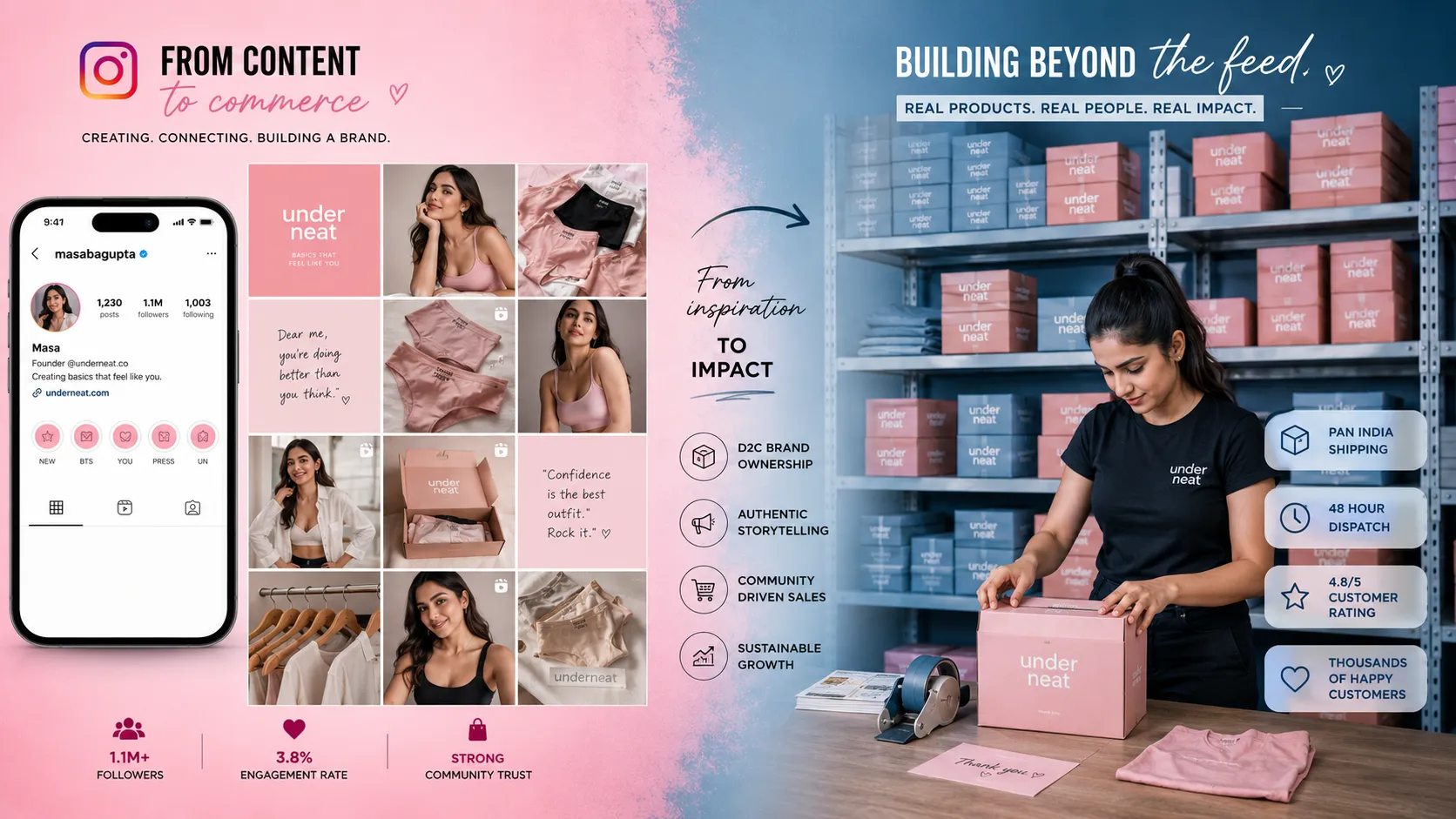
In late 2024, she noticed a gap in the shapewear market. Most brands were either too expensive or poorly designed for Indian body types. She decided to fill it. She launched Underneat with a small team, a modest production line, and a direct-to-consumer website. Her Instagram became the primary marketing channel.
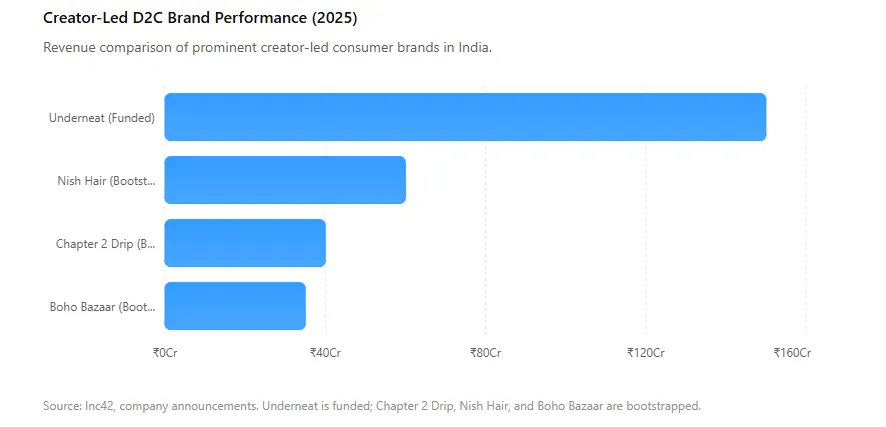
The launch was explosive. Her followers trusted her. They bought the product, shared photos, and spread the word. Within three months, Underneat had a waiting list. By the end of 2025, the brand had crossed ₹150 crore in annual recurring revenue and turned profitable. Investors noticed. Underneat raised $6 million in pre‑Series A funding at a valuation of over ₹500 crore.
Kusha’s story is not an outlier. It is part of a larger trend: content creators are becoming India’s most effective D2C founders.
The Economics of Creator-Led Brands
Traditional D2C brands spend 30–40% of their revenue on customer acquisition—Facebook ads, Google Ads, influencer marketing. Creator-led brands spend almost nothing. Their primary channel is their own social media following. Kusha Kapila’s Instagram has 6.8 million followers. When she posts about Underneat, she reaches millions at zero marginal cost.
This changes the unit economics dramatically. A typical D2C brand might have a customer acquisition cost (CAC) of ₹500–800. A creator-led brand’s CAC can be as low as ₹50–100. That difference means higher margins, lower burn, and faster profitability.
Moreover, creator-led brands have built-in trust. Followers feel like they know the creator personally. When the creator recommends a product, it feels like a friend’s advice, not an ad. Conversion rates are often 2–3x higher than traditional influencer campaigns.
Rhea Chakraborty: From Controversy to Commerce
Rhea Chakraborty’s journey is perhaps the most remarkable. After a highly publicized legal battle following the death of Sushant Singh Rajput, she was vilified on social media. She retreated from public life for two years.
But she came back—not as an actor, but as an entrepreneur. In 2023, she launched Chapter 2 Drip, a streetwear brand targeting Gen Z. The brand’s aesthetic was bold, unapologetic, and digital-first. She used her personal story as part of the brand narrative: “Chapter 2” symbolized her second act in life.
The brand resonated. Within two years, Chapter 2 Drip had crossed ₹40 crore in annual revenue and was profitable. Rhea now employs a team of 25 people and is planning an offline store in Mumbai. Her recovery from public disgrace to successful entrepreneur is a testament to the power of direct-to-consumer relationships.
Parul Gulati: From Hair Extensions to a Hospitality Empire
Parul Gulati started as an actor and content creator. She noticed that many young women wanted long, thick hair but couldn’t afford expensive extensions. So she launched Nish Hair, a brand selling high-quality, affordable hair extensions directly through Instagram.
The business boomed. Nish Hair is now one of India’s largest direct-to-consumer hair extension brands, with a loyal customer base and repeat purchase rates exceeding 60%. Parul didn’t stop there. She recently expanded into a hospitality venture: a hostel in Goa designed for digital nomads and content creators. Her portfolio now spans e-commerce, travel, and lifestyle.
Her strategy is to leverage her personal brand across multiple verticals, each reinforcing the others.
Why VCs Are Betting on Creators
Venture capitalists have traditionally funded MBAs and tech founders. Now they are actively scouting content creators. The reasoning is simple: creators have built-in distribution, low CAC, and high trust. Those are rare and valuable assets.
In 2025 alone, creator-led D2C brands raised over $200 million in seed and Series A funding. Notable deals include:
Underneat (Kusha Kapila) – $6M pre-Series A
SLF (Malvika Sitlani) – ₹15 Cr seed round
Boho Bazaar (Juhi Godambe) – $8M Series A
Investors are also backing creator-focused venture studios that help influencers launch brands. These studios provide product development, supply chain, and marketing support in exchange for equity.
Challenges: When Creator Brands Fail
Not every creator-led brand succeeds. Many fail because the creator treats it as a side project, not a real business. Others fail because the product is poor quality, and followers feel betrayed. A single bad review from a loyal fan can tank the brand.
Creators also face burnout. Running a D2C brand requires supply chain management, customer service, inventory planning, and financial forecasting—skills that most influencers don’t have. Some hire professional CEOs to run the business while they focus on content.
There is also the risk of overexposure. Followers may get tired of constant product promotion. Creators must balance selling with genuine content to maintain trust.
The Future: Creator-Led Brands as a Permanent Category
Industry analysts predict that creator-led brands will account for 15–20% of India’s D2C market by 2030. The model is replicable: a creator with 1 million+ followers in any niche—fashion, fitness, food, parenting—can launch a brand and achieve profitability within 12 months.
The most successful creators will become not just influencers but full-fledged entrepreneurs, building portfolios of brands. Some may even launch their own venture funds to invest in other creators.
India’s creator economy is maturing. The era of the “passive influencer” is ending. The era of the “active entrepreneur” has begun.