The Moon Is Now a Startup Market: How a Hyderabad-Based Robotics Company Just Won a $120 Million NASA Contract—And Is Building the Lunar Rovers of the Future
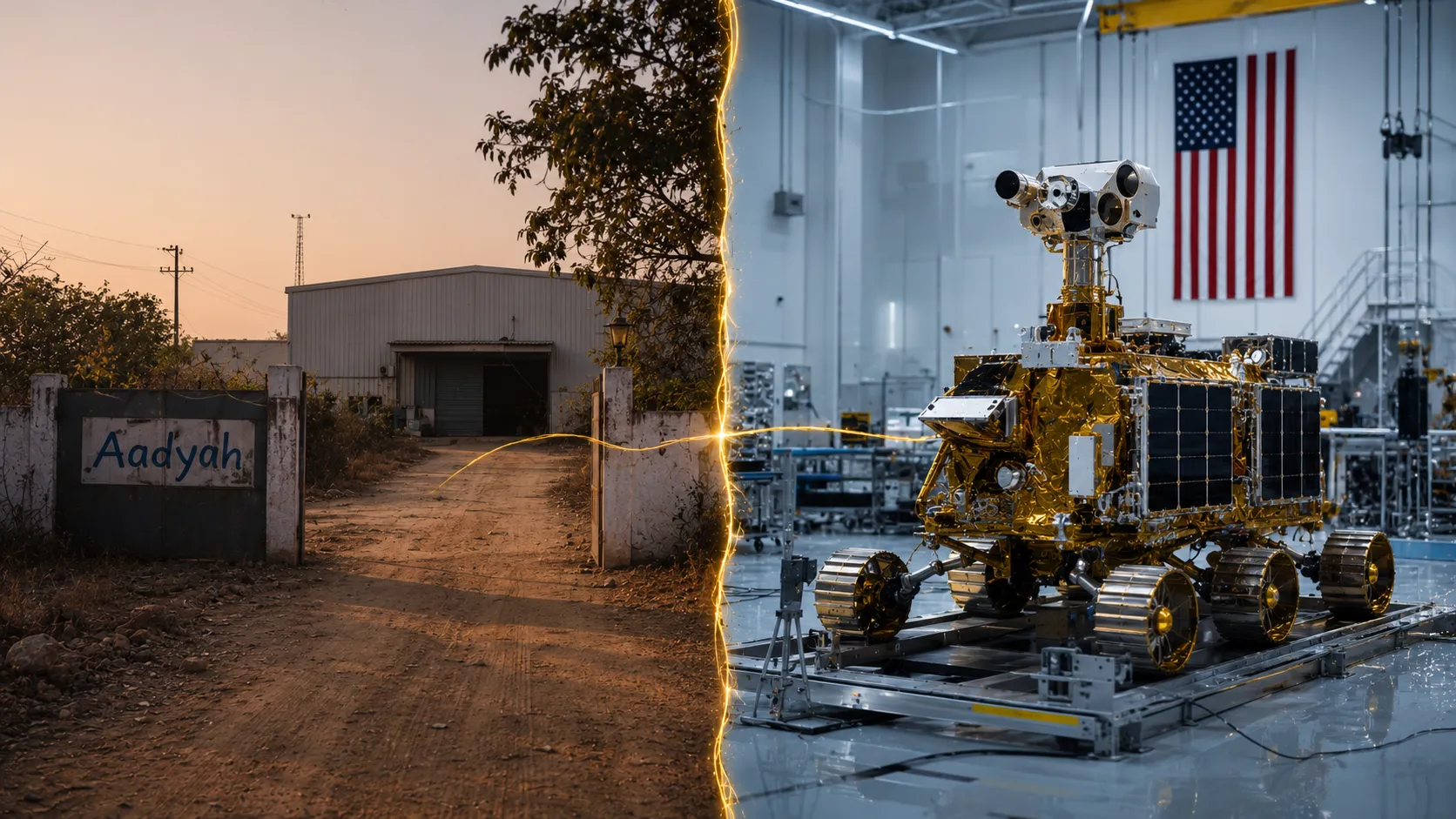
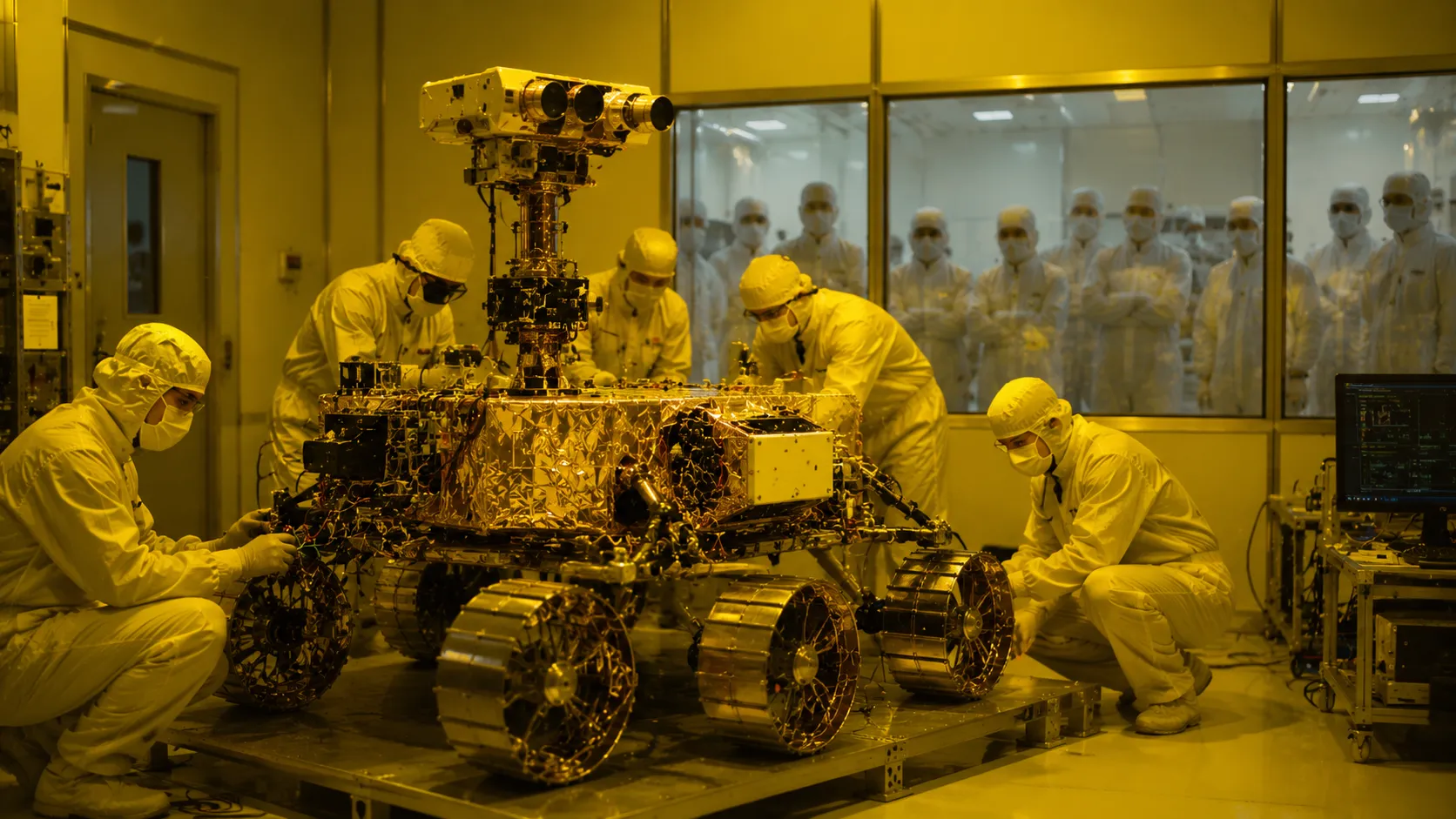
HYDERABAD — May 31, 2026 — In a modest industrial park on the outskirts of Hyderabad, behind a gate that bears no signage and a security guard who has been instructed to turn away visitors, a team of 87 engineers is building machines that will never operate on Earth. The machines are lunar rovers—autonomous, radiation‑hardened, designed to survive temperatures that swing from 127 degrees Celsius in the lunar day to minus 173 degrees in the lunar night. They are being built for NASA, which awarded the company—Aadyah Space Robotics, a startup that was founded in 2021 by three alumni of the Indian Institute of Technology Madras—a $120 million contract in March 2026 to design, build, and deliver a fleet of four rovers for the Artemis V mission, scheduled to land at the Moon's south pole in 2028.
The contract is the largest ever awarded by NASA to an Indian private‑sector company, and it marks a watershed moment in the commercialisation of space exploration. For decades, the business of building spacecraft for national space agencies was dominated by a handful of giant defence contractors—Boeing, Lockheed Martin, Northrop Grumman—whose costs were high, whose development cycles were slow, and whose appetite for the kind of rapid iteration that the new space economy demands was limited. The Artemis programme, which aims to establish a permanent human presence on the Moon by the end of the decade, has been deliberately structured to attract a new generation of commercial suppliers—smaller, faster, and cheaper than the incumbents. Aadyah Space Robotics, which had previously built rovers for ISRO's Chandrayaan programme and for a series of commercial lunar payload missions, was among the companies that NASA identified as capable of meeting its requirements at a cost that the agency's budget could support.
"The lunar economy is not a science‑fiction fantasy. It is a procurement pipeline. NASA is buying rovers, landers, habitats, and power systems from commercial suppliers the same way the Pentagon buys fighter jets—through competitive contracts, with fixed prices and delivery deadlines. The companies that can meet those requirements will own the lunar supply chain for the next generation. Aadyah is one of those companies." — Space‑industry analyst, speaking anonymously to TIGI
The Artemis Supplier Ecosystem
The most important structural shift in the global space industry over the past five years has been the transition from a government‑led, cost‑plus procurement model to a commercial, fixed‑price, competitive‑bidding model. The shift was pioneered by NASA's Commercial Orbital Transportation Services programme in the 2000s, which produced SpaceX and Orbital Sciences, and it was extended to lunar exploration through the Commercial Lunar Payload Services programme, which began delivering scientific payloads to the Moon in 2023. The CLPS programme demonstrated that a commercial supplier—a startup, in some cases—could deliver a payload to the lunar surface for a fraction of the cost that a traditional government programme would have incurred. The Artemis V rover contract is the logical extension of that model: a fixed‑price contract, awarded through a competitive tender, to a company that had already demonstrated its capability on previous, smaller missions.
The economics of the Artemis rover contract are instructive. The $120 million that NASA is paying Aadyah for four rovers is approximately one‑tenth of what the agency would have paid a traditional defence contractor for a comparable capability under the old cost‑plus model. The cost reduction is not a function of lower labour costs in India—the rovers are being designed and built in Hyderabad, but the components, the testing, and the integration are subject to the same NASA quality standards as any American‑built spacecraft. The cost reduction is a function of the commercial model: the fixed‑price contract incentivises the supplier to control costs, to manage schedules, and to deliver a product that meets the specifications at the lowest possible price. The traditional cost‑plus model, by contrast, incentivises the contractor to maximise costs—because the contractor's profit is a percentage of the total cost. The difference between the two models is the difference between a lunar rover that costs $1.2 billion and a lunar rover that costs $30 million—and the difference is transforming the economics of space exploration.
The Aadyah contract is also significant because it represents the first time that an Indian company has been selected as a prime contractor for a major NASA planetary‑exploration mission, rather than as a subcontractor or a component supplier. The distinction matters, because the prime contractor controls the design, the engineering, and the integration of the mission—and the capabilities that the prime contractor develops are capabilities that can be applied to future missions, for NASA and for other customers, commercial and governmental. The Indian space industry, which has historically been dominated by ISRO and its affiliated public‑sector enterprises, is now producing companies that can compete for, and win, the most demanding contracts in the global space market. The implications for the Indian space ecosystem—the talent, the supply chain, the investment—are substantial, and they will compound over time as the companies that win these contracts develop the capabilities that enable them to win more.
The Rover Technology
The rovers that Aadyah is building for Artemis V are not the slow, cautious, remotely operated vehicles that characterised the first generation of planetary rovers—the Sojourners, the Spirits, the Opportunities. They are autonomous, AI‑driven machines that can navigate the lunar surface without human intervention, that can identify and collect samples of scientific interest, and that can operate in the permanently shadowed craters at the Moon's south pole, where the temperatures are among the coldest in the solar system and where no rover has ever ventured. The autonomy is the key. The communication delay between the Earth and the Moon is approximately 2.5 seconds—too long for real‑time remote operation, and too short to justify the fully pre‑programmed command sequences that the previous generation of rovers used. The rover must be able to make decisions on its own—to recognise a rock that is worth sampling, to avoid a slope that is too steep, to retreat from a shadow that is too cold—without waiting for instructions from a human operator on Earth.
The AI that enables that autonomy was developed by Aadyah's team in Hyderabad, using a combination of computer‑vision algorithms, reinforcement‑learning techniques, and a vast library of simulated lunar environments that the company has built over several years. The AI was trained on data from previous lunar missions—the images, the topographical maps, the spectral analyses—and on a library of synthetic data that the company generated using its own simulation tools. The training process took years, and it required a level of computational resources that were, for a startup, significant. But the training is now largely complete, and the AI that will guide the Artemis V rovers across the lunar south pole is, in its final testing, performing at a level that exceeds NASA's requirements.
The rover's hardware is, in some respects, even more impressive than its software. The chassis is built from a titanium‑aluminium alloy that is both lightweight and strong enough to survive the vibrations of a rocket launch. The wheels are made from a shape‑memory alloy that can deform to absorb the impact of a rough landing, and then return to their original shape when heated by the first lunar sunrise. The electronics are shielded by a combination of physical shielding and software‑based error‑correction that can detect and correct the radiation‑induced bit‑flips that are the single greatest threat to any computer operating outside the protection of Earth's magnetic field. The rover's power system combines a radioisotope heater—a small pellet of plutonium‑238 that generates heat through radioactive decay, keeping the rover's electronics warm during the lunar night—with a solar‑panel array that charges the rover's batteries during the lunar day. The combination allows the rover to survive the 14‑day lunar night, which is the single greatest challenge for any vehicle that operates on the Moon's surface.
The Indian Space Startup Ecosystem
Aadyah Space Robotics is not an isolated phenomenon. It is part of a broader ecosystem of Indian space startups that has emerged over the past five years, driven by the liberalisation of the Indian space sector, the growing availability of venture capital for deep‑tech companies, and the increasing demand for commercial space services from both government and commercial customers. The Indian space startup ecosystem now numbers over 300 companies, spanning launch vehicles, satellites, ground systems, space‑situational awareness, and in‑space manufacturing. The ecosystem has attracted over $600 million in venture funding in the past two years alone, and it has produced two unicorns—Skyroot Aerospace and Pixxel—with several more on the way.
The liberalisation of the Indian space sector, which began in earnest in 2020 with the creation of the Indian National Space Promotion and Authorisation Centre, has been the single most important catalyst for the ecosystem's growth. IN‑SPACe, which functions as a regulatory clearinghouse and a facilitator for private‑sector space activities, has streamlined the process by which private companies can access ISRO's testing infrastructure, its launch ranges, and its technical expertise. The liberalisation has also opened the Indian market to foreign customers—the satellite operators, the space agencies, the defence ministries—who are looking for reliable, cost‑effective space services, and who are increasingly turning to the Indian private sector to provide them.
The Aadyah contract with NASA is, in this sense, both a product and a symbol of the Indian space startup ecosystem's maturation. It is a product of the capabilities that the ecosystem has developed—the technical talent, the manufacturing infrastructure, and the regulatory framework. And it is a symbol of the ecosystem's global competitiveness—a signal to the rest of the world that an Indian startup can win a contract that was once the exclusive preserve of the American defence‑industrial complex. The signal will be received, and it will be followed by more contracts, more investment, and more talent flowing into the Indian space sector. The lunar economy is being built, and the companies that are building it are increasingly Indian.
The Geopolitical Dimension
The Aadyah contract has a geopolitical dimension that extends well beyond the commercial. The Artemis programme is, at its core, a strategic initiative—an attempt by the United States to establish a permanent presence on the Moon before China does, and to build a coalition of allies and partners who will participate in that presence. The Artemis Accords, which now have over 40 signatories including India, are the diplomatic framework for that coalition. The commercial contracts that NASA is awarding to companies from Artemis Accords signatory countries are, in part, a way of deepening those countries' commitment to the Artemis programme—of giving them a stake in its success.
The Aadyah contract is the first major Artemis contract awarded to an Indian company, and it is likely to be followed by more. ISRO and NASA have been deepening their collaboration over the past several years, and the joint Chandrayaan‑5/LUPEX mission with Japan's JAXA is a further expression of the trilateral space cooperation between the three countries. The Artemis programme is, in this sense, not merely an American programme. It is an international programme, and the commercial contracts that are being awarded to companies from the partner countries are the mechanism through which the programme is becoming internationalised. The Aadyah rover that lands on the Moon in 2028 will be an Indian rover, built by an Indian company, funded by an American space agency, operating on the lunar south pole as part of an international mission. The geopolitics of the Moon are being written in contracts, and the contracts are being signed by startups.
What This Signals
The Aadyah contract is not primarily a story about a single startup or a single NASA mission. It is a story about the structural transformation of the global space industry—a shift from a government‑dominated, cost‑plus model to a commercial, fixed‑price, competitive‑bidding model, and from a supply chain that was concentrated in a handful of American and European defence contractors to a supply chain that is increasingly distributed across the world. The Indian space startup ecosystem is one of the primary beneficiaries of that transformation, and the Aadyah contract is the most visible evidence to date of the ecosystem's global competitiveness. The Moon is now a market, and the market is open to anyone who can build a rover that works.
SEO Title: The Moon Is Now a Startup Market: How a Hyderabad Company Won a $120M NASA Lunar Rover Contract
Meta Description: Aadyah Space Robotics, founded in 2021 by three IIT Madras alumni, won a $120M NASA contract to build four autonomous lunar rovers for the Artemis V mission. Inside the fixed‑price procurement model, the rover technology, and the geopolitical significance of the first Indian prime contractor on a major NASA planetary mission.


