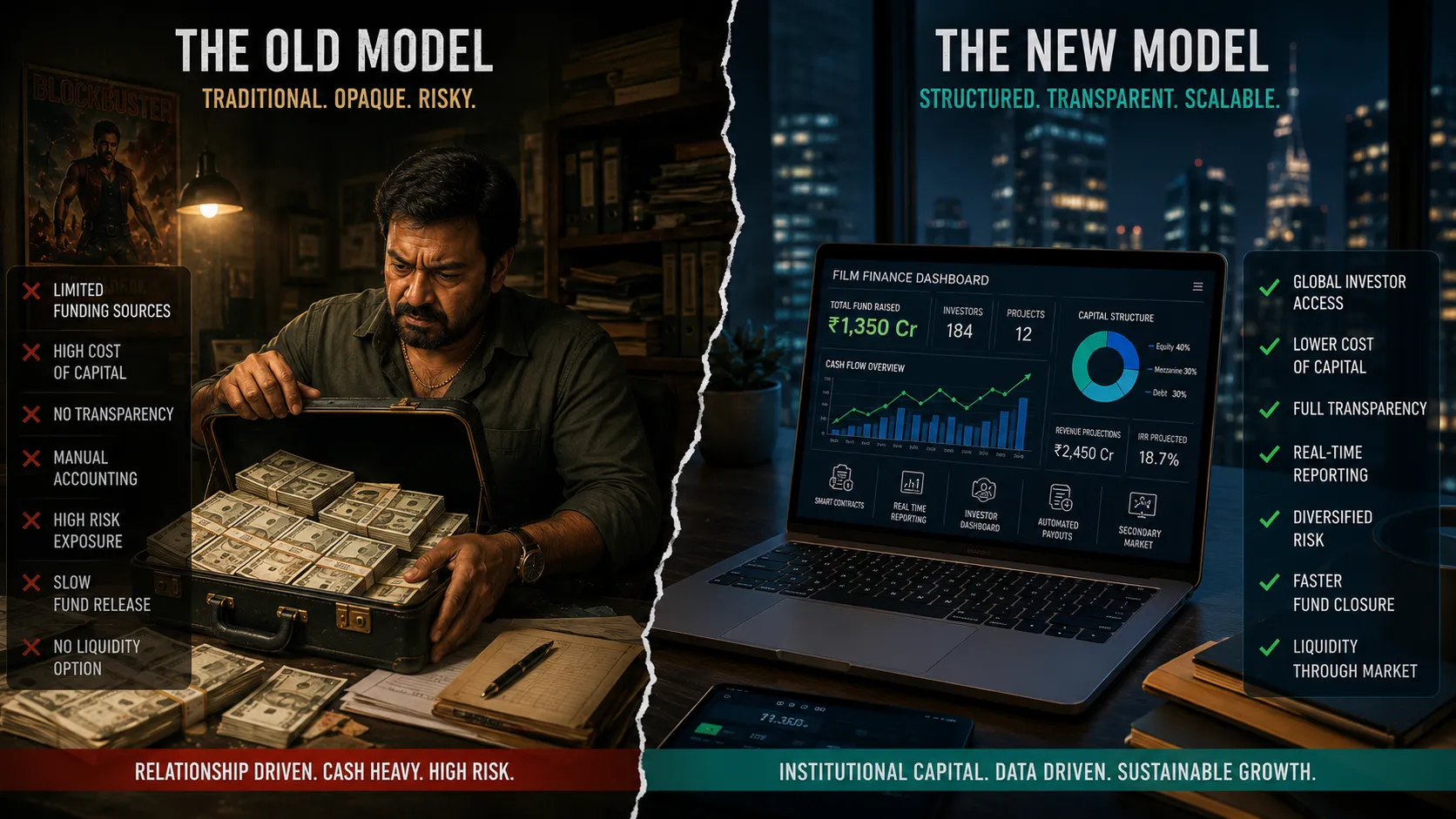
₹1,350 crore funds. $250 million capital programmes. Tokenised film IP. AI-powered studios. For decades, film financing was a closed network of insiders and gamblers. In 2026, the suits have finally taken over the screening room.
The producer had spent six months trying to raise ₹80 crore for his mid‑budget action film. He had approached every studio, every distributor, every high‑net‑worth individual in his contact list. He had promised preferential returns, creative control, even a producer credit. Nothing. Then a call came from a British Virgin Islands‑registered company he had never heard of. Within three weeks, the money was in his account. Not ₹80 crore. ₹135 crore. For a slate of films, not just his. The producer was relieved. The industry was terrified. Film financing, long a closed network of insiders and gamblers, had just been institutionalised.
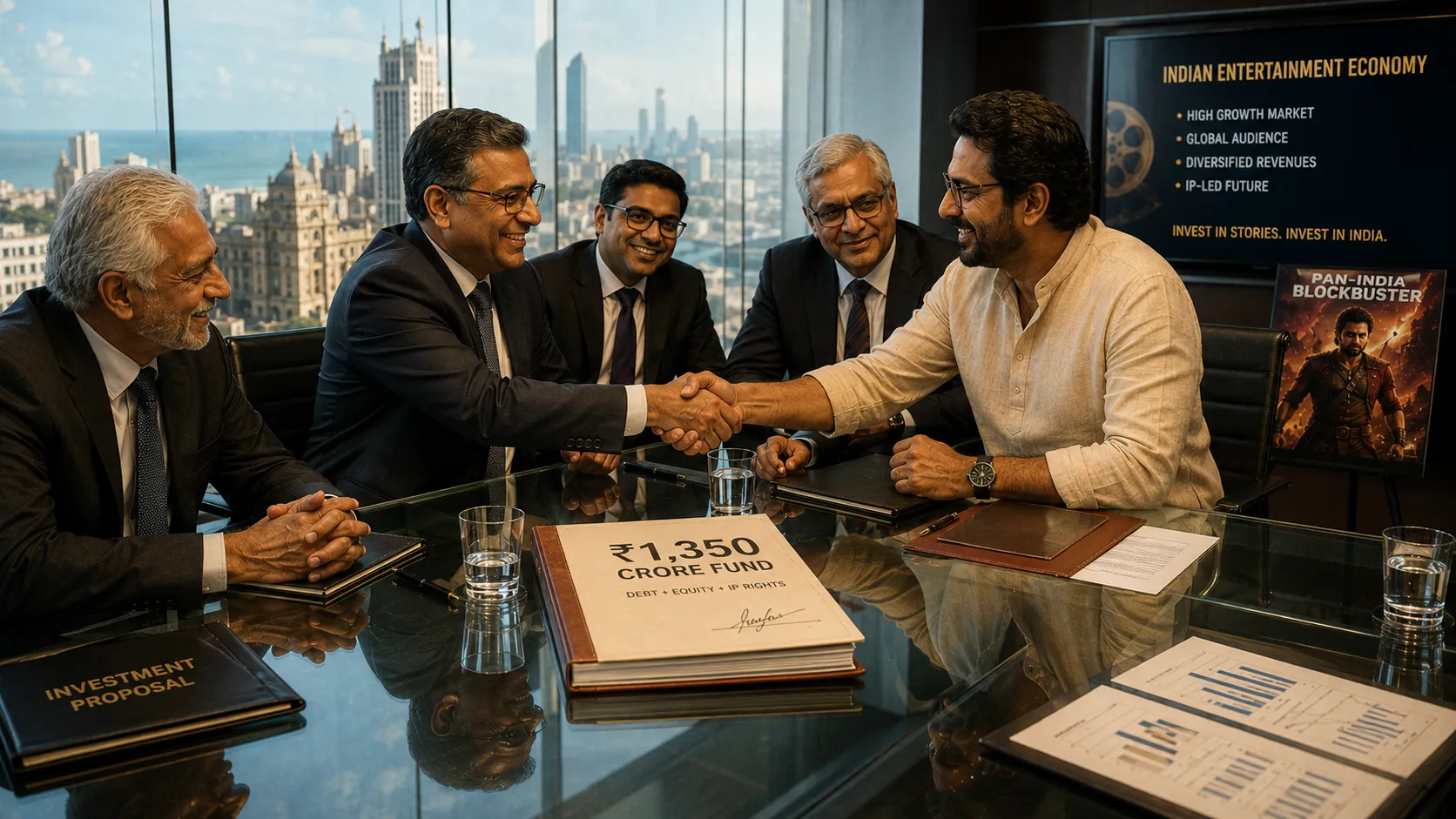
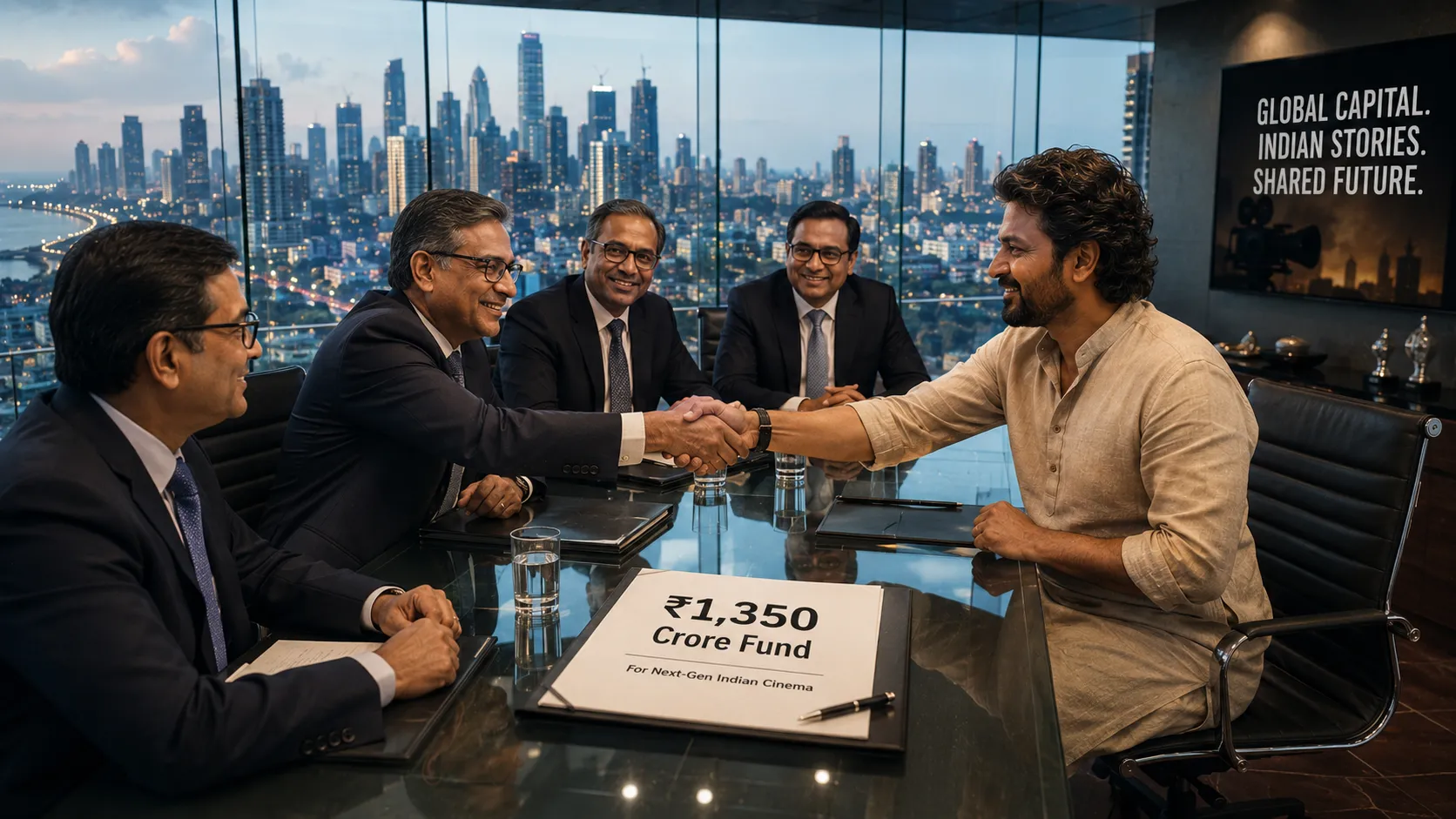
The company was CineNow. On June 14, 2026, it announced it was in the final stages of closing a ₹1,350 crore Secured Participation Fund — backed by commitments from overseas investors and family offices — to finance films in India. Most of the commitments have already been secured for the close‑ended fund, which will have a tenure of six years. The vehicle is structured as a slate‑based investment model, deploying capital across multiple film projects rather than a single title, with capital backed by enforceable rights across OTT, satellite, music and ancillary revenues.
The fund is the most visible symbol of a broader shift. In 2026, institutional capital is finally entering Indian cinema at scale. And it is changing everything.
The Problem With Old Bollywood Money
For decades, film financing in India operated on relationships, intuition and concentrated risk. Producers raised funds early, often under pressure. Investors entered with limited visibility into downstream revenues. Returns, when they came, were uneven and difficult to track. Despite the scale of the industry — India's media and entertainment sector crossed ₹2.5 trillion in 2024 — the capital behind it remained fragmented.
The results were predictable. According to industry estimates, film revenues declined about 5% to ₹187 billion in 2025, despite more than 1,600 releases. Only 11 Hindi films crossed the ₹1‑billion mark at the box office, down from 17 the previous year. Revenues from digital streaming and satellite rights softened, falling by around 10% as platforms shifted focus from aggressive content acquisition to profitability.
"Regional film financing in India in 2026 is primarily informal, meaning it relies on individual investors, family networks, and personal relationships rather than structured funds or institutional vehicles," one industry analysis noted. Most production financing is assembled project by project, with no standardised framework for evaluating risk, protecting investors, or ensuring that distribution is part of the plan.
The new players are trying to change that.
CineNow: Turning Film IP Into a Financial Asset
CineNow's core proposition is simple but potentially far‑reaching: treat film intellectual property as a financial asset class. At the heart of its model is the idea that a film is not a single binary bet, but a bundle of monetisable rights — theatrical, streaming, music and international distribution — each with its own revenue profile.
What has been missing is a system that organises, standardises and distributes this value efficiently. CineNow's approach borrows more from capital markets than from cinema. By using tokenisation, the platform aims to fractionalise exposure to film IP, allowing participation beyond the traditional circle of insiders. This shifts the investment dynamic from concentrated, high‑risk bets to potentially diversified allocations across multiple projects.
Equally significant is the shift in timing. Instead of value being realised only after a film's release, CineNow's structure allows a portion of that value to be recognised earlier — once a project is packaged and its revenue pathways are visible through distribution agreements and pre‑sales. A key innovation is the introduction of a liquidity window through tokenisation, allowing early investors to exit roughly 12 months after the fund's closure, when the film slate is expected to have appreciated in value.
"CineNow is building a new category at the intersection of finance, entertainment and technology by transforming film intellectual property into a structured, investable asset," said founder‑director Rohit Dalmia. The firm has onboarded Oscar‑winning sound designer Resul Pookutty and film industry executive Abhay Sinha as founding members of its strategic council.
VR Global Media's $250 Million Bet
CineNow is not alone. VR Global Media has launched a $250 million capital programme to build a globally scaled entertainment platform, with an initial $120 million fundraise already underway. The capital will be deployed across film production, distribution, exhibition, sports franchise ownership and creative economy fintech.
"This capital reinforces our commitment to transforming Indian film entertainment into a globally scalable, professionally governed asset class," said Ravi Shankar Shastri, CEO of VR Global Media. The company is partnering with UV Creations, which has deployed over $150 million across domestic and international markets. A key pillar of the strategy is technology integration — the company plans to set up an AI‑powered media technology and analytics lab, along with a global capability centre in Hyderabad.
"By combining disciplined capital deployment with creative vision and advanced technology, we are building a credible global entertainment platform focused on transparency, scalability, and long‑term value creation," Shastri said.
The Global Wave
The trend is not limited to India. Filmoney Global, a cross‑border film investment platform headquartered across the United States and the United Kingdom, launched in May 2026 with a clear thesis: "that film — long treated as an opaque and fragmented asset class — can be approached with the same discipline, structure, and strategic intent as institutional capital". The joint venture brings together experience across film production, investment banking, wealth management, and legal and regulatory strategy.
At Cannes in June 2026, a new Australian finance and production entity, Southern Sitara, was announced to fund and produce a slate of Australian‑Indian feature films. Conceived by filmmaker Anupam Sharma, Southern Sitara will provide development funding, production investment, gap financing, and cash flow loans for eligible projects. Targeting films with budgets between AUD 5–11 million, it uses a hybrid capital model combining proprietary funds with co‑raised capital. The first projects include Anupam Kher's directorial thriller and Shadows, a horror film blending First Nations and Indian mythologies.
AI, Crowdfunding, and the Democratisation of Film Finance
The institutional wave is accompanied by a democratisation wave. Wishberry, a crowdfunding platform backed by Reliance Entertainment and 3one4 Capital, has raised ₹10 crore in a Series A round to launch India's first crowdfunded film studio for low‑budget cinema. The platform has already raised more than ₹5 crore for four feature films from a clutch of high‑net‑worth individuals.
Abundantia Entertainment has partnered with AI video technology firm invideo to set up an artificial intelligence‑driven film studio, committing ₹100 crore to build a slate of five AI‑powered films over the next three years. A Lucknow‑based AI‑native film studio, TakeTwo, has secured pre‑seed funding from US and Canadian investors.
The common thread is structure. Whether through tokenisation, institutional funds, AI‑driven production, or crowdfunding, the old model — a producer, a rich uncle, and a prayer — is being replaced by something more disciplined.
The Challenges Ahead
The model comes with clear challenges. Secondary markets for tokenised film assets remain nascent, and liquidity cannot be assumed. Governance, transparency and standardisation — essential for institutional participation — will need to be built and tested over time. Scepticism is also inevitable. Cinema has long been viewed as unpredictable, influenced by taste rather than models. Translating it into a financial product will require not just engineering, but credibility.
The industry is also grappling with rising costs. Star fees have reached a point where they are defining budgets rather than just being part of them. Actors' entourages now eat up 10‑12% of production budgets for big films. The reported ₹4,000‑crore cost of Ramayana (for two films) makes it Indian cinema's biggest financial gamble.
Yet the direction of travel is difficult to ignore. If successful, CineNow and its peers could signal a broader shift — from film financing as an informal, closed network to a structured market where capital is allocated, priced and distributed with far greater efficiency. In doing so, they are not just introducing new platforms. They are challenging one of the oldest assumptions in the entertainment business: that while films may scale, the capital behind them does not have to. That assumption is now being tested.
The Bottom Line
For decades, Indian cinema ran on relationships, intuition, and the occasional gamble. The producer who knew the right distributor. The financier who trusted the star's name. The investor who hoped for a hit. It was a system that worked — sometimes — but it was also a system that left most projects underfunded, most investors in the dark, and most of the industry's potential unrealised.
In 2026, that system is being dismantled. CineNow's ₹1,350 crore fund, VR Global Media's $250 million programme, Filmoney Global's cross‑border platform, Southern Sitara's Australian‑Indian slate, and the wave of AI‑native and crowdfunded studios are not isolated experiments. They are the leading edge of a structural shift. Film is becoming an asset class. And the suits have finally taken over the screening room.
Whether that is good news for cinema — whether institutional capital will produce better films or just better balance sheets — remains to be seen. But one thing is certain: the old way of financing Indian movies is over. The new way is just beginning.