The Memory Eraser: How a New Class of Drugs Is Unlocking the Door to Reconsolidation—and Rewriting the Science of Trauma
For decades, we believed that once a memory was stored, it was permanent. A quiet revolution in neurobiology has just proved that belief wrong—and the implications for PTSD, addiction, and even the nature of identity are staggering.
BOSTON — May 26, 2026 — The memory arrives without warning. For a combat veteran, it might be the sound of a helicopter's rotor, the smell of diesel, the particular quality of desert heat. For a survivor of assault, it could be a stranger's hand on a shoulder in a crowded bar. For someone who lived through a car accident, the screech of tires at an intersection can trigger a cascade of physiological terror—racing heart, shallow breath, the cold certainty that death is near. These are not ordinary recollections. They are trauma memories, and for tens of millions of Americans, they function less like memories and more like possessions: involuntary, intrusive, and seemingly indestructible.
For more than a century, neuroscience held that once a memory was consolidated—once the fleeting electrical activity of an experience was converted into a stable physical trace in the brain—it was fixed. You could learn to manage it. You could build coping strategies around it. You could, with therapy, reduce its emotional charge. But you could never truly delete it. The past, encoded in the synapses, was permanent.
That orthodoxy has just collapsed.
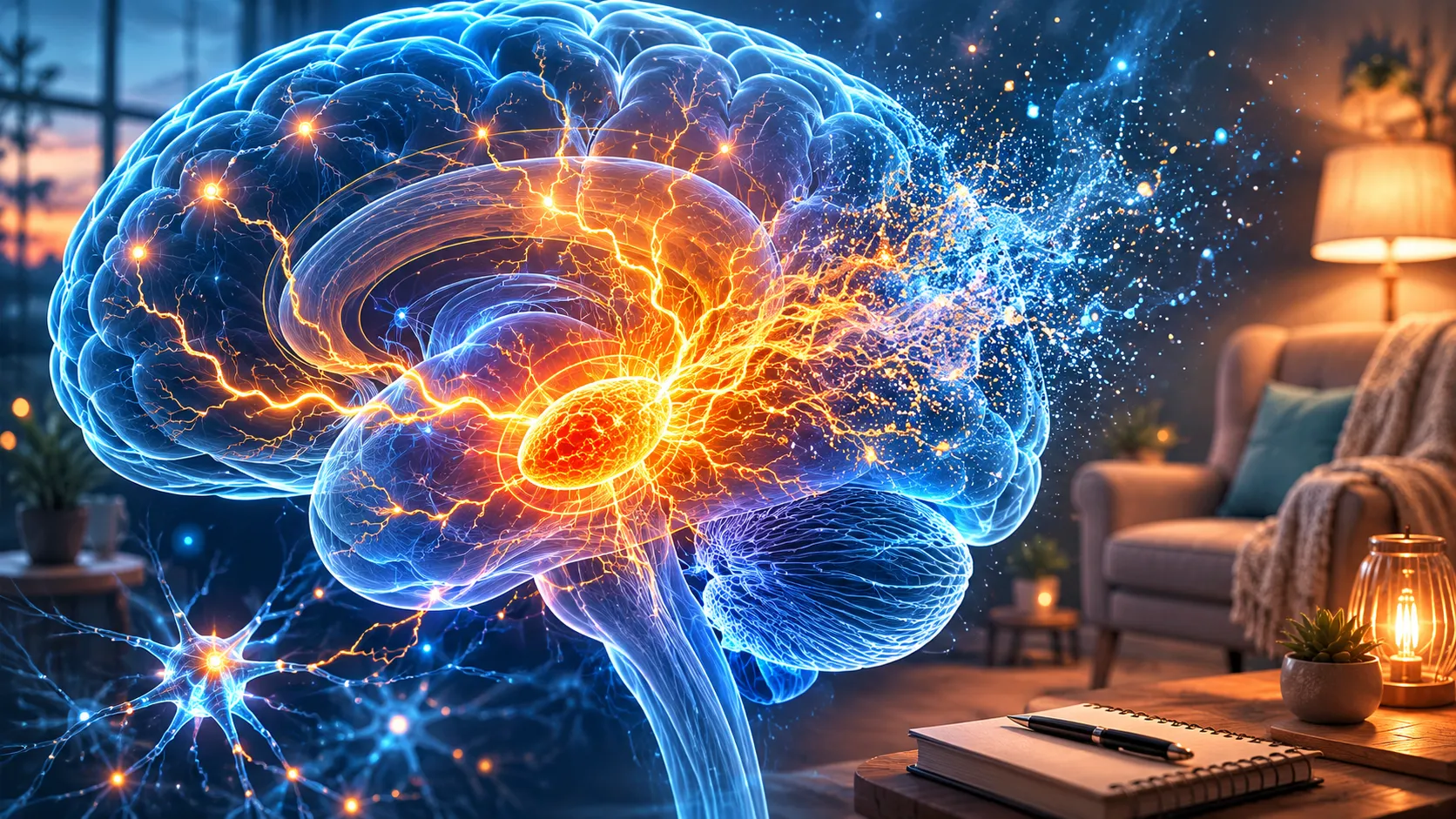
In a landmark clinical trial published this month in Nature Neuroscience, researchers at Harvard Medical School and McLean Hospital demonstrated that a single dose of an existing blood-pressure medication, administered during a precisely timed therapeutic window, can selectively weaken—and in some cases virtually eliminate—the emotional sting of a traumatic memory. The drug, propranolol, has been used safely for decades to treat hypertension and anxiety. But the protocol developed by the Boston team does something fundamentally new: it intervenes in a process called reconsolidation.
"We have known since the early 2000s that memories are not static," said Dr. Elena Vasquez, the study's lead author and a professor of neurobiology at Harvard. "When you retrieve a memory, it becomes temporarily unstable. It has to be re-stored—reconsolidated—to persist. What we have shown is that if you administer propranolol during that window of instability, you can disrupt the re-storage process. The memory remains, but its emotional intensity is dramatically reduced. It becomes like a photograph of a storm rather than the storm itself."
The trial involved 72 patients with a diagnosis of post-traumatic stress disorder (PTSD), a condition that affects an estimated 13 million Americans in any given year and for which existing treatments—prolonged exposure therapy, EMDR, SSRIs—have limited efficacy. Participants underwent a two-session protocol. In the first session, they were asked to write a detailed narrative of their traumatic event. In the second, they read that narrative aloud while hooked to a heart-rate monitor, precisely to trigger the retrieval that opens the reconsolidation window. Immediately after reading, they received either a single dose of propranolol or a placebo. One week later, the results were measured.
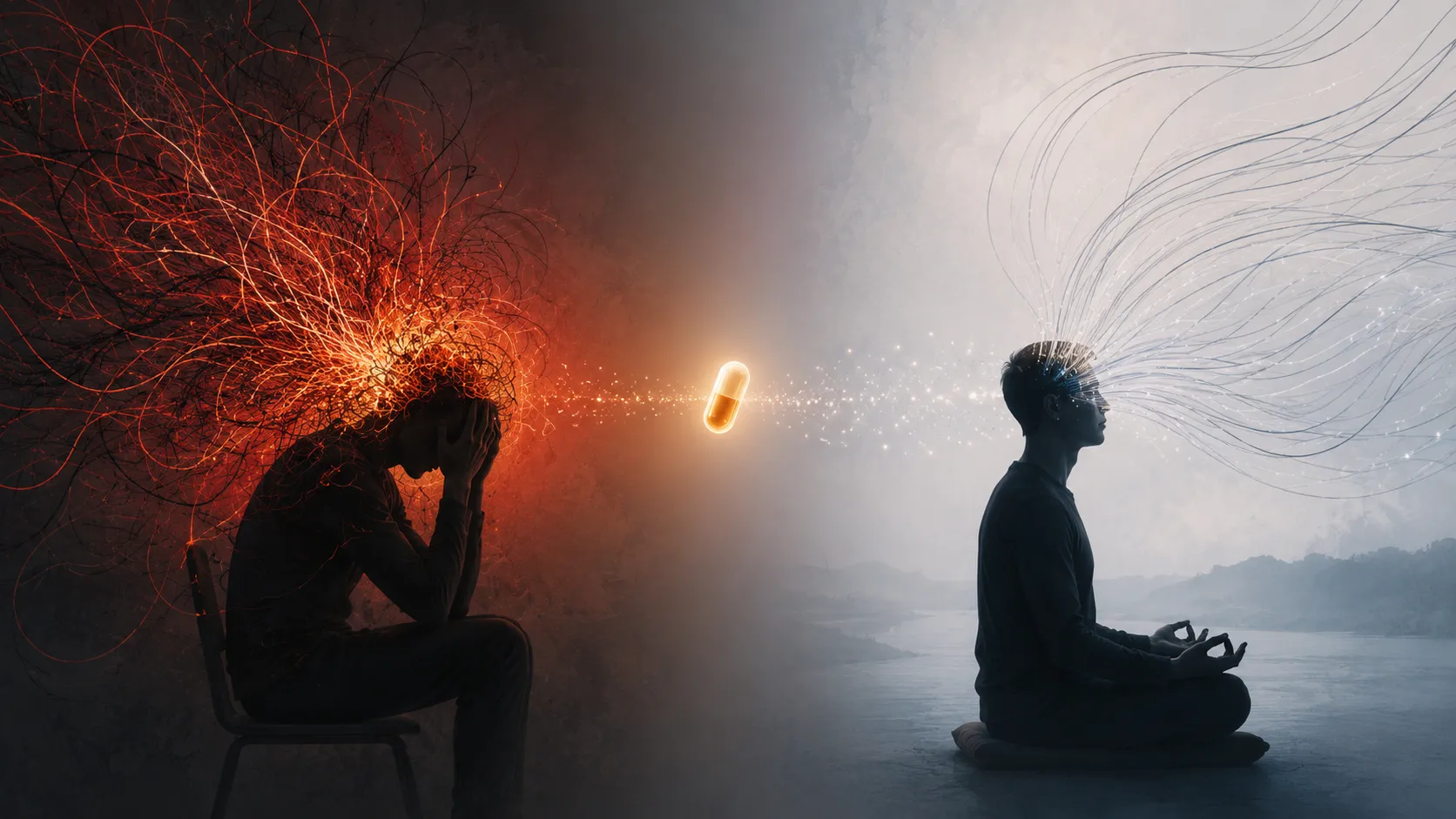
The difference was not subtle. In the propranolol group, physiological reactivity to the memory—measured by heart rate, skin conductance, and self-reported distress—dropped by an average of 67 percent. For 14 of the 36 patients in the treatment arm, the memory lost its clinical significance entirely. They could describe the event without flinching, without the characteristic dissociative fog of PTSD, without the sense that the trauma was happening now rather than in the past.
"It is not amnesia," Dr. Vasquez emphasized. "These patients remember what happened. They can tell you the facts. But the memory no longer controls them. The difference between 'I remember that my father hit me' and 'I am being hit by my father right now' is the difference between living and merely surviving."
The Discovery That Changed Everything
To understand why the Boston trial is so significant—and why it has provoked both excitement and ethical anxiety—one must go back to a cramped laboratory in Brooklyn in the late 1990s. There, a young neuroscientist named Karim Nader made a discovery that would upend a century of received wisdom.
Nader was studying fear memory in rats. He trained the animals to associate a tone with a mild foot shock, then played the tone to measure their characteristic freezing response. Standard theory held that once the memory was consolidated—once the tone-shock association was encoded in the brain's circuitry—it was permanent. But Nader wondered what would happen if he injected a protein synthesis inhibitor into the amygdala (the brain's fear hub) immediately after playing the tone, after the memory had been retrieved. The result was astonishing: the rats stopped freezing. The memory, it seemed, had been erased.
The scientific establishment was deeply skeptical. Nader's finding contradicted the consolidation dogma that had been taught in textbooks for decades. But replication studies followed, and by the mid-2000s, the phenomenon of reconsolidation—the idea that retrieved memories must be re-stored to persist—was broadly accepted. The question became whether the effect could be translated from rats to humans, and from protein synthesis inhibitors (which are too toxic for human use) to safe, existing drugs.
That translation took nearly two decades. Early human studies were inconsistent; the reconsolidation window proved to be narrow and finicky. Some patients showed dramatic improvement; others showed no effect. The Boston team's innovation was twofold: they used propranolol, a beta-blocker that interferes with the norepinephrine signaling that gives memories their emotional glue, and they standardized the retrieval procedure with exceptional precision. Every patient read their narrative at the same time of day, in the same room, with the same physiological monitoring. The protocol was manualized down to the phrasing of the instructions.
"We learned that timing is everything," said Dr. Marcus Chen, a co-author of the study and a clinical psychologist at McLean. "If you give the drug too early, before the memory is fully retrieved, you get no effect. If you give it too late, after reconsolidation is complete, you get no effect. The window is about 10 to 20 minutes. Miss it, and you have just given someone a blood-pressure medication for no reason."
Beyond PTSD: Addiction, Phobias, and the Nature of Self
The implications of reconsolidation blockade extend far beyond PTSD. The Boston team is already planning trials for substance use disorder, a condition in which drug-associated memories—the sight of a crack pipe, the smell of a bar, the feel of a syringe—drive relapse even after years of abstinence. If those memories can be selectively destabilized and weakened, the grip of addiction could be loosened in ways that current treatments cannot achieve.
"We have a patient who used heroin for fifteen years," Dr. Vasquez said. "She has been clean for eight. But she still cannot walk past the subway station where she used to buy drugs without feeling a physical pull—her heart races, her palms sweat, and for a moment, the craving is unbearable. That is a memory. If we can weaken that memory, we can give her back a city she has been avoiding for nearly a decade."
Phobias—from heights to spiders to public speaking—are also candidate conditions. So are obsessive-compulsive disorder and even certain forms of chronic pain, which may be maintained by maladaptive "memory" of injury. The underlying mechanism is the same: a learned association that has become pathologically overconsolidated, and that might be disrupted during the vulnerable window of retrieval.
But the technology also raises profound ethical questions. If we can weaken traumatic memories, can we weaken any memories? Could the same protocol be used to reduce the emotional impact of a messy divorce, a professional failure, or the grief of losing a loved one? And if so, where is the line between therapy and enhancement—between treating a disorder and editing a life?
"It is a valid concern," said Dr. Vasquez. "But we are not talking about erasing identity. We are talking about reducing pathological emotional responses that prevent people from functioning. The patient who loses a spouse should grieve. Grief is appropriate. The patient who is still unable to leave the house five years after the funeral is not grieving appropriately—they are suffering from a disorder of memory. We are aiming at the disorder, not at the ordinary pain of being human."
The Road to FDA Approval—and the Wait
The Boston trial is a Phase II study—promising, but not yet definitive. The team is now planning a larger, multi-site Phase III trial that will enroll 500 patients across eight centers in the United States and Canada. If those results replicate the 67-percent reduction in symptoms seen in the Phase II study, the protocol could be submitted for FDA approval within three to four years.
"That feels like an eternity to the patients who are suffering right now," Dr. Chen acknowledged. "But we have to be careful. Reconsolidation therapy is powerful, and power requires caution. We need to understand whether the effects are durable—whether the memory stays weakened after six months, after a year, after five years. We need to understand whether there are any long-term cognitive side effects. And we need to develop robust safeguards against misuse."
In the meantime, the scientific community is already debating the broader implications. Some researchers are exploring whether reconsolidation can be enhanced rather than disrupted—whether, for example, patients could be induced to reconsolidate a traumatic memory with a positive association, effectively rewriting its emotional valence. Others are studying whether the same mechanism applies to implicit memories (like procedural skills) or only to declarative memories (like events). And a few, operating at the speculative edge of the field, are asking whether reconsolidation could one day be used to treat the core symptoms of Alzheimer's disease—by selectively destabilizing and clearing the toxic protein aggregates that underlie the condition.
For now, the story is simpler and more profound: a safe, cheap, generic drug, administered during a 20-minute window, appears to do what no therapy has ever done before. It uncouples memory from suffering. It leaves the past intact but robs it of its power to control the present.
A Quiet Revolution
The patients in the Boston trial did not emerge with amnesia. They emerged with a different relationship to their own history. One participant, a 34-year-old former soldier who had been haunted for a decade by the memory of an IED blast that killed two members of his unit, described the change this way: "Before, when I thought about that day, I was there. I could smell the smoke. I could feel the heat. My heart would start pounding so hard I thought I was having a heart attack. Now, when I think about it, I see it from a distance. It's like watching a movie I already saw. I know what happens. But I'm not in the theater anymore. I'm outside, in the parking lot, looking at my phone. It's still sad. But it's over."
The science of memory has always been, at its core, the science of the self. We are the sum of what we remember—the joys, the losses, the failures, the triumphs. For the 13 million Americans who live with PTSD, the sum has been unmanageable, a ledger weighted too heavily on the side of pain. The reconsolidation revolution offers something that was unimaginable a generation ago: the possibility of editing that ledger, not by deleting the past, but by turning down its volume.
The door to the reconsolidation window has been opened. The memories are no longer permanent. And for the first time in the history of neuroscience, the past is negotiable.