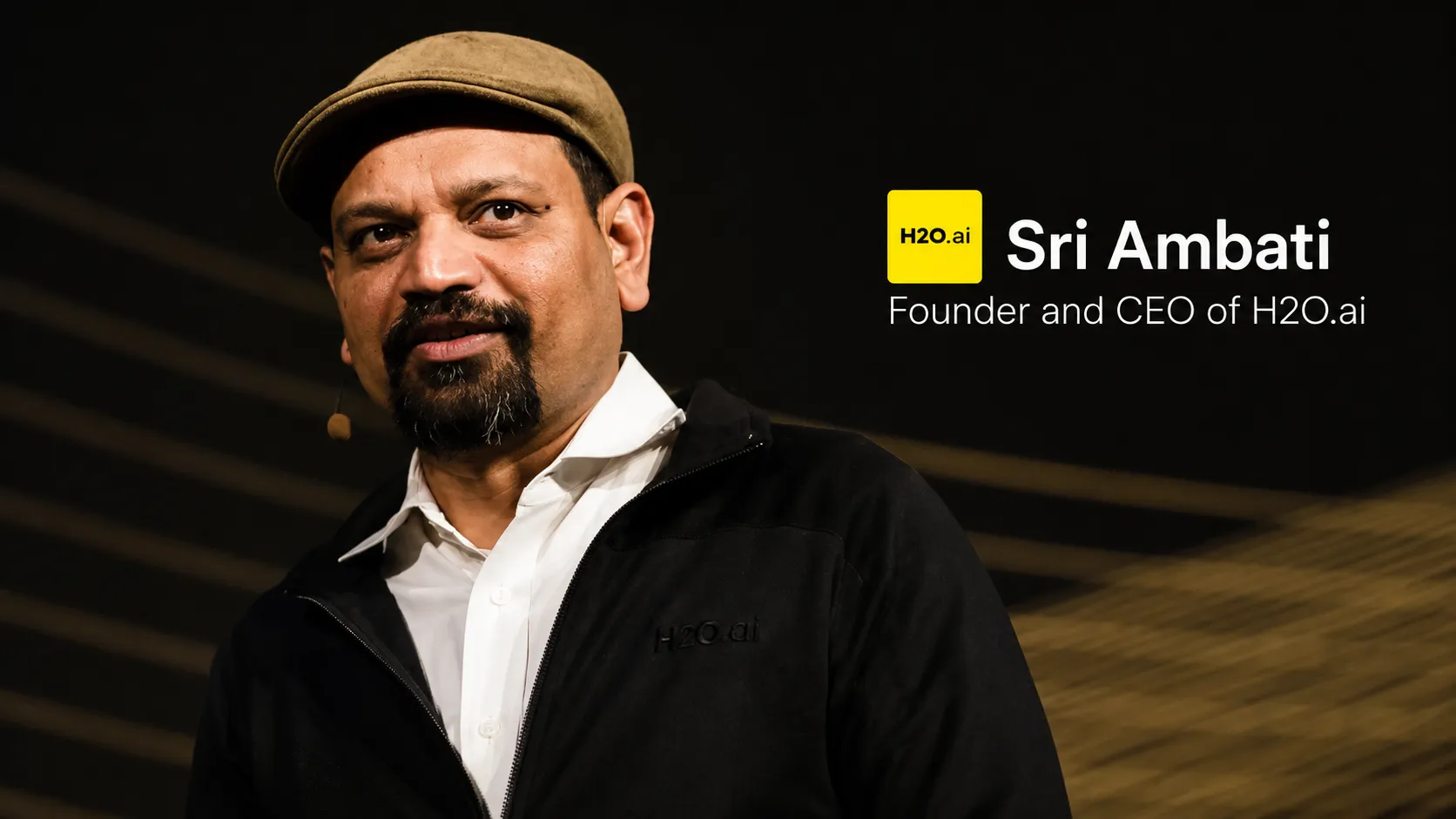
A Winding Path Through Silicon Valley's Infrastructure Layer
Not every consequential technology founder follows a straight line from an elite Indian engineering institute to a household-name Silicon Valley unicorn. Sri Satish Ambati's career is a study in patient, deliberate accumulation of deep technical expertise across some of the most demanding corners of enterprise software — infrastructure work that rarely makes headlines, but without which none of the flashier consumer-facing AI products of the last few years could exist. Ambati, born in India, pursued his graduate education at the University of Memphis before making his way into the heart of America's technology industry.
His early career reads like a tour of the unglamorous, deeply technical plumbing of enterprise computing. He worked at RightOrder, a startup building NoSQL trie-based indexing systems for semi-structured data. He then took what he has described as a sabbatical, pursuing theoretical neuroscience research at Berkeley — an unusual, intellectually adventurous detour for an engineer already building a career in distributed systems. From there, he joined Azul Systems, a Java multi-core computing startup, working as a partner and performance engineer tinkering across the entire ecosystem of enterprise applications at scale. He then became Director of Engineering at DataStax, before co-founding Platfora, a big data analytics company that was later acquired by Workday, Inc.
Scaling Statistics for the Age of Big Data
Before founding H2O.ai, Ambati spent time working alongside researchers at Purdue and Stanford scaling the R programming language — the standard statistical computing tool used by data scientists — across the kind of massive, distributed 'big data' infrastructure that was only just becoming common in the early 2010s. It was intensely technical, foundational work: making sophisticated statistical modeling tools actually usable at the scale modern enterprises needed, years before 'AI' became the term any company used to describe itself.
Founding H2O.ai: A Mission Before It Was Fashionable
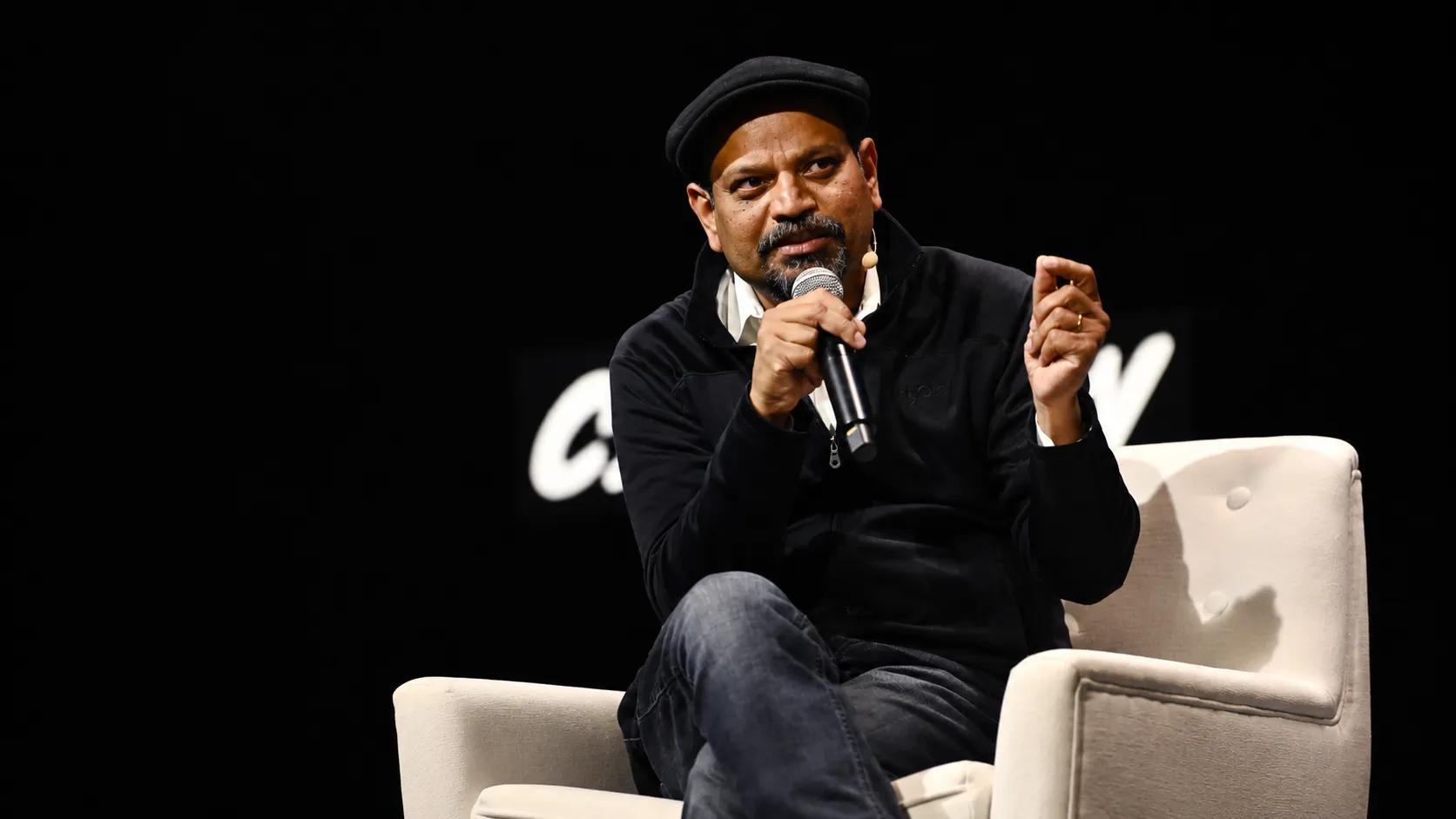
In 2012, years before generative AI captured the public imagination, Ambati founded H2O.ai with a mission that has remained remarkably consistent throughout the company's history: to 'democratize AI for anyone, anywhere.' At a moment when machine learning expertise was concentrated almost exclusively inside a small number of elite technology companies and research labs, H2O.ai set out to build open-source machine learning tools that data scientists, physicists, academics, and technologists outside of Big Tech could actually access and use. The company's open-source platform steadily built a devoted global following, eventually reaching adoption across more than 20,000 organizations worldwide — a scale of grassroots technical trust that few AI companies of any era have managed to build.
The Long, Unglamorous Middle: A Decade Building Before the AI Boom
For much of the 2010s, H2O.ai operated in relative obscurity outside of the specialized data science community, steadily building credibility the hard way — through open-source contributions, academic partnerships, and word-of-mouth trust among practitioners who actually used the tools daily, rather than through the kind of splashy consumer launches that generate mainstream press coverage. That patient, decade-long foundation is precisely what positioned H2O.ai to move quickly once the generative AI wave arrived in force after 2022. The company launched h2oGPT, its own large language model offering, extending its open-source machine learning heritage directly into the generative AI era, and has continued to build out enterprise-grade offerings recognized by Gartner as a leader in its Magic Quadrant for Data Science and Machine Learning Platforms.
"AI for Good": Turning a Tech Company Into a COVID-19 Relief Operation
Perhaps the most striking, and least typical, chapter of Ambati's story unfolded not in a boardroom but during a public health crisis. During the devastating Delta wave of the COVID-19 pandemic in India in 2021, when the country's hospital systems were overwhelmed and desperately short of medical oxygen, Ambati personally led an initiative called o2forindia.org, mobilizing resources to source oxygen concentrators for more than 200 public health organizations across Tier 2 cities and rural communities in India. It was, by every account, a genuine, hands-on humanitarian effort — not a corporate press release exercise, but a direct, urgent response to a crisis unfolding in the country of his birth, credited with helping save thousands of lives at the height of one of the deadliest phases of the pandemic anywhere in the world.
That episode reflects a broader philosophy Ambati has articulated consistently throughout his career: what his own team describes as a strong 'AI for Good' ethos, centered on the responsible and fair use of artificial intelligence to make the world a genuinely better place — a set of values his colleagues say directly drives H2O.ai's business model and corporate direction, not merely its marketing language.
Growing Into the Enterprise AI and Government Era
As H2O.ai has matured, the company has moved deliberately into some of the most security-sensitive corners of enterprise and government technology procurement. In 2026, the company achieved FedRAMP High authorization — one of the most rigorous security certifications a technology vendor can obtain, required to sell cloud software to the most sensitive parts of the U.S. federal government. That milestone, celebrated publicly by Ambati and his team as a 'major home run for makers,' reflects H2O.ai's steady evolution from an open-source community darling into a serious enterprise and public-sector AI infrastructure provider, trusted with some of the most consequential government workloads in the country.
H2O.ai has also continued expanding its global partnerships, including work with major financial institutions like Commonwealth Bank in Australia, demonstrating real business impact from AI deployment at some of the largest, most risk-conscious institutions in the world. Throughout this evolution, Ambati has remained a visible, engaged voice in broader public conversations about AI policy, including sharp public commentary on debates around AI export controls and questions of who gets access to the most advanced AI systems being built — issues with direct, personal resonance for a founder building global AI infrastructure as an immigrant entrepreneur navigating an increasingly complex geopolitical landscape around technology and national origin.
Why Open Source Became H2O.ai's Deepest Competitive Moat
In an industry where most AI companies today compete primarily on proprietary model performance and closed, subscription-based access, H2O.ai's decision to build its foundational reputation on open-source tools looks, in hindsight, like an unusually prescient strategic choice rather than a simple ideological preference. Open-source software builds a fundamentally different kind of trust than proprietary, closed platforms: developers and data scientists can inspect the underlying code themselves, verify how models actually work, and contribute improvements back to the community, creating a level of technical credibility that marketing alone cannot manufacture. By the time generative AI captured mainstream attention after 2022, H2O.ai had already spent a decade cultivating exactly that kind of grassroots, peer-verified trust across more than 20,000 organizations — a foundation of technical goodwill that gave the company a genuine head start in positioning h2oGPT and its subsequent enterprise offerings as credible, transparent alternatives to closed, black-box AI systems from larger competitors.
Navigating a New Era of AI Export Controls as an Immigrant Founder
Ambati's public commentary on questions of AI access and export controls carries a particular weight given his own position as an immigrant entrepreneur building critical AI infrastructure inside the United States. As debates intensified through 2026 over which countries and individuals should be permitted access to the most advanced AI models and computing infrastructure, Ambati has been notably direct in questioning policies that could restrict scientific collaboration based on national origin, describing certain proposed restrictions as a potential threat to what he has called 'American scientific meritocracy.' That willingness to engage publicly and critically with U.S. technology policy, even as the founder of a company that depends on maintaining strong relationships with the U.S. government and its most security-conscious agencies, reflects a level of civic engagement relatively uncommon among immigrant tech founders, many of whom tend to avoid wading into politically sensitive policy debates that could complicate their company's regulatory relationships.
The Gartner Recognition That Validated a Decade of Quiet Work
For a company built primarily on open-source community trust rather than aggressive marketing spend, H2O.ai's recognition as a leader in Gartner's Magic Quadrant for Data Science and Machine Learning Platforms represents a particularly meaningful form of validation. Gartner's evaluation methodology is notoriously rigorous, weighing not just technical capability but a vendor's completeness of vision, market execution, and long-term viability — criteria that reward exactly the kind of patient, decade-long product development Ambati pursued long before generative AI made machine learning a boardroom priority at nearly every major enterprise. Being named a leader in that Magic Quadrant, alongside far larger, more heavily funded competitors, gave H2O.ai's enterprise sales team a level of third-party credibility that pure open-source community adoption, however impressive at 20,000-plus organizations, could not fully provide on its own — opening doors into risk-averse enterprise and government procurement processes that typically defer heavily to Gartner's independent assessments before approving major software purchases.
Family and the Personal Side of a Public Founder
Beyond the professional milestones, Ambati's public LinkedIn presence offers glimpses of a founder who treats major personal and professional moments with similar candor — from celebrating the arrival of a daughter, born, as he noted, two weeks early on Father's Day, to publicly thanking longtime government and enterprise partners for what he describes as genuine partnership rather than transactional vendor relationships. That blending of personal milestones with professional announcements, common among founders who have built their companies over a long enough timeline that colleagues and customers become something closer to an extended community, reflects the particular culture Ambati has cultivated at H2O.ai over more than a decade — one where the line between the company's mission and its founder's own personal values around openness, humility, and public service remains genuinely difficult to separate.
A Career Built on Twelve Years Before the Word 'AI' Was Fashionable
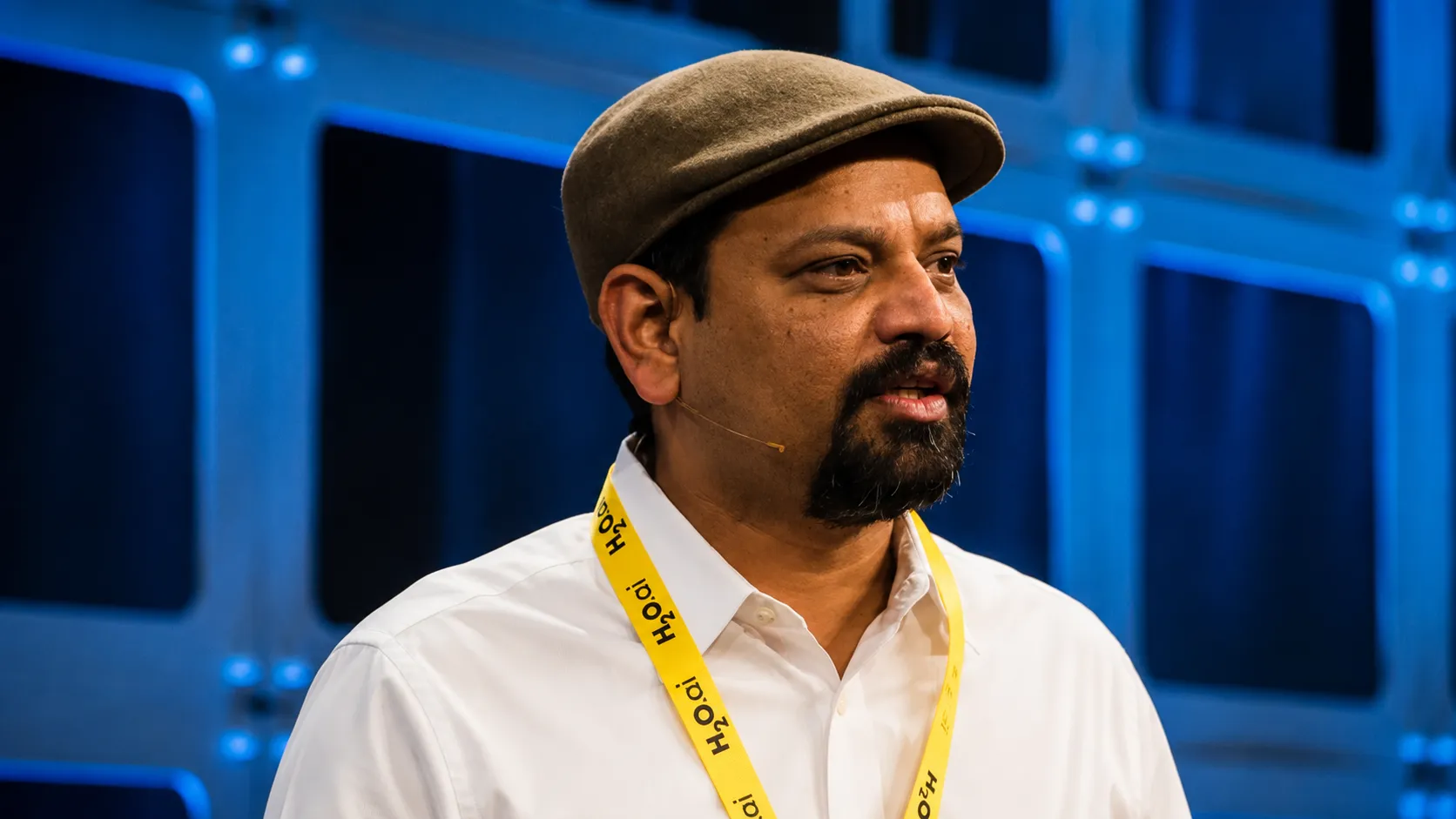
It bears repeating just how far ahead of the broader market H2O.ai's founding actually was. When Ambati started the company in 2012, the phrase 'artificial intelligence' had not yet reentered mainstream commercial vocabulary the way it has today; most enterprise technology conversations of that era centered on 'big data' and 'business intelligence' rather than machine learning or neural networks. Building an open-source machine learning company a full decade before ChatGPT's 2022 public launch triggered a global reassessment of what AI could do required a level of conviction about where the technology was inevitably headed that few investors or engineers shared at the time. That twelve-year head start, largely invisible to the broader public until the generative AI boom made machine learning suddenly fashionable, is arguably the single most underappreciated asset in H2O.ai's entire competitive position today — a form of institutional and technical maturity that newer, venture-fueled AI startups, however well-funded, simply cannot manufacture overnight.
A Founder's Journey Defined by Depth, Not Speed
What sets Sri Satish Ambati apart within the broader landscape of Indian-American AI founders is the sheer duration and depth of his technical journey before H2O.ai ever became a widely recognized name. He did not arrive at artificial intelligence chasing a sudden cultural moment; he spent nearly two decades — across NoSQL databases, theoretical neuroscience, distributed statistical computing, and big data infrastructure — quietly assembling precisely the technical and intellectual foundation the AI era would eventually require. His company's twelve-year head start building open-source machine learning tools, before generative AI became a mainstream obsession, gave H2O.ai a rare kind of earned, grassroots credibility that money alone cannot buy.
For the global Indian community, Ambati's story is also a meaningful reminder that entrepreneurial success and genuine humanitarian commitment are not mutually exclusive pursuits reserved for after a company has achieved massive financial success. His hands-on leadership of a life-saving oxygen relief effort during India's darkest pandemic days, run in parallel with building a serious AI infrastructure company, reflects a model of diaspora leadership rooted as much in giving back to the country of origin as in building wealth and influence abroad — a dual commitment that increasingly defines how the most respected members of the global Indian technology community choose to be remembered, long after the funding rounds and product launches have faded from the news cycle. As H2O.ai continues its push into government and enterprise AI infrastructure, Ambati's own decade-long emphasis on openness, community trust, and responsible AI development remains a distinctive, values-driven counterpoint to the faster, more purely commercial instincts that define much of the current generative AI landscape. That legacy of patient technical building paired with tangible humanitarian impact continues to set a high bar for founders across the diaspora.
As enterprise and government buyers increasingly demand transparency and auditability from the AI systems they deploy, the open-source foundation Ambati insisted on building more than a decade before that demand became mainstream now reads less like an early ideological preference and more like a prescient bet on exactly the kind of trust infrastructure the AI industry would eventually require at scale.


