The Machines Are Taking the Background: Bollywood's First AI‑Generated Extras Spark a Union Crisis That Could Reshape Film Production Forever
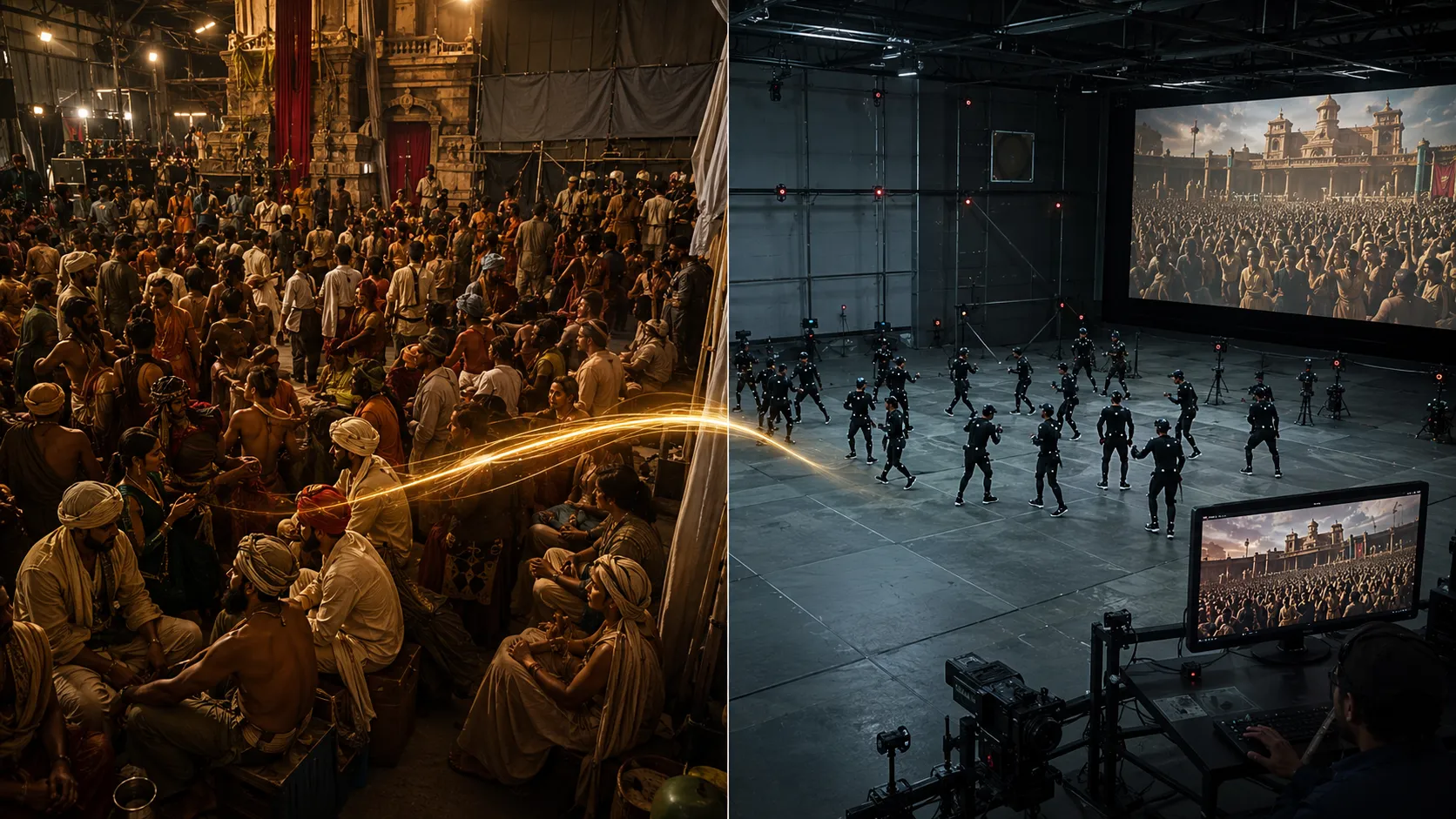
MUMBAI — May 30, 2026 — On a Monday morning three weeks ago, a junior artist named Rajesh Kumar arrived at a film set in Film City for a day's work as a background extra. He was one of 200 extras hired for a crowd sequence in a major Bollywood production. When he reached the holding area, he found 50 of his colleagues—not the 200 he had expected. The remaining 150 faces that would populate the crowd had been generated by an AI model, trained on a library of licensed images, and composited into the scene in post‑production. The extras who had been hired were not there to be filmed. They were there to provide motion‑capture data—to walk, to gesture, to react—so that the AI could map their movements onto the generated faces. The film's budget for background extras had been reduced by 75 percent. The line producer who had made the decision had done so with the blessing of the studio, which had been looking for ways to reduce production costs without sacrificing visual scale. The extras who had been replaced by algorithms did not find out until they arrived on set. The Federation of Western India Cine Employees—the powerful union that controls the labour supply for virtually every Hindi film production in the country—has now threatened to strike. The demand is simple: no AI‑generated extras on any union‑affiliated production. The studios, which have been quietly experimenting with AI background actors for months, are pushing back. The dispute is about to become the most significant labour conflict in the Indian film industry since the 100‑day strike of 2009. And the outcome will determine whether the economics of film production are permanently transformed by artificial intelligence—or whether the workers whose livelihoods depend on the old model can force the studios to slow down.
The Economics of the Synthetic Crowd
The AI‑generated background extra is not a futuristic fantasy. It is already operational on at least six major Bollywood productions, and the studios that are using it are saving between ₹50 lakh and ₹2 crore per film, depending on the scale of the crowd sequences. The technology works by training a generative AI model on a library of licensed facial images—photographs of real people, purchased from stock‑image platforms or sourced from consenting models—and then compositing those faces onto the bodies of motion‑captured performers in post‑production. The result is a crowd that looks real, moves naturally, and costs a fraction of what a real crowd would cost. The extras who are hired for the motion‑capture work are paid their standard daily rate, but the number of extras required is dramatically smaller than it would be for a conventional shoot. The savings are structural, and they are compelling. The studios argue that the AI extras are not replacing human workers. They are enabling films to achieve a scale of visual spectacle that would be impossible with human extras alone—crowds of thousands, rendered convincingly, that would be prohibitively expensive to assemble and manage on a physical set. The extras who are hired for motion‑capture work are still being paid, the studios point out, and the AI faces are generated from licensed images, not stolen from unwitting individuals. The technology, in the studios' framing, is not a threat to employment. It is a tool for creative ambition—a way of making films that look bigger, more spectacular, and more competitive with the Hollywood productions that have been using similar technology for years. The union's counter‑argument is that the studios' framing is disingenuous. The AI extras are not enabling new creative possibilities. They are replacing the same extras who would have been hired under the old model—reducing the number of working days available to union members, reducing the income that those members depend on, and establishing a precedent that the union believes will lead to the replacement of other categories of worker. The motion‑capture performer who replaces 150 extras today will, the union fears, be replaced by a fully synthetic performer tomorrow—an AI model that does not need a human body to generate a convincing crowd. The technology is advancing rapidly, and the union's demand—no AI‑generated extras, period—is a pre‑emptive strike against a future in which the background performer is entirely obsolete. The dispute has attracted attention from the international film industry, where similar conflicts are playing out. The Screen Actors Guild in the United States secured significant concessions on AI‑generated background actors in its 2024 contract negotiations with the major studios. The British actors' union, Equity, has been campaigning for similar protections. The FWICE's threatened strike is part of a global movement of entertainment workers who are confronting the same existential question: what happens to the people who build the movies when the machines can build them cheaper? The answer, in India as elsewhere, is being negotiated in real time—on film sets, in union offices, and, increasingly, in the courts.
What This Signals
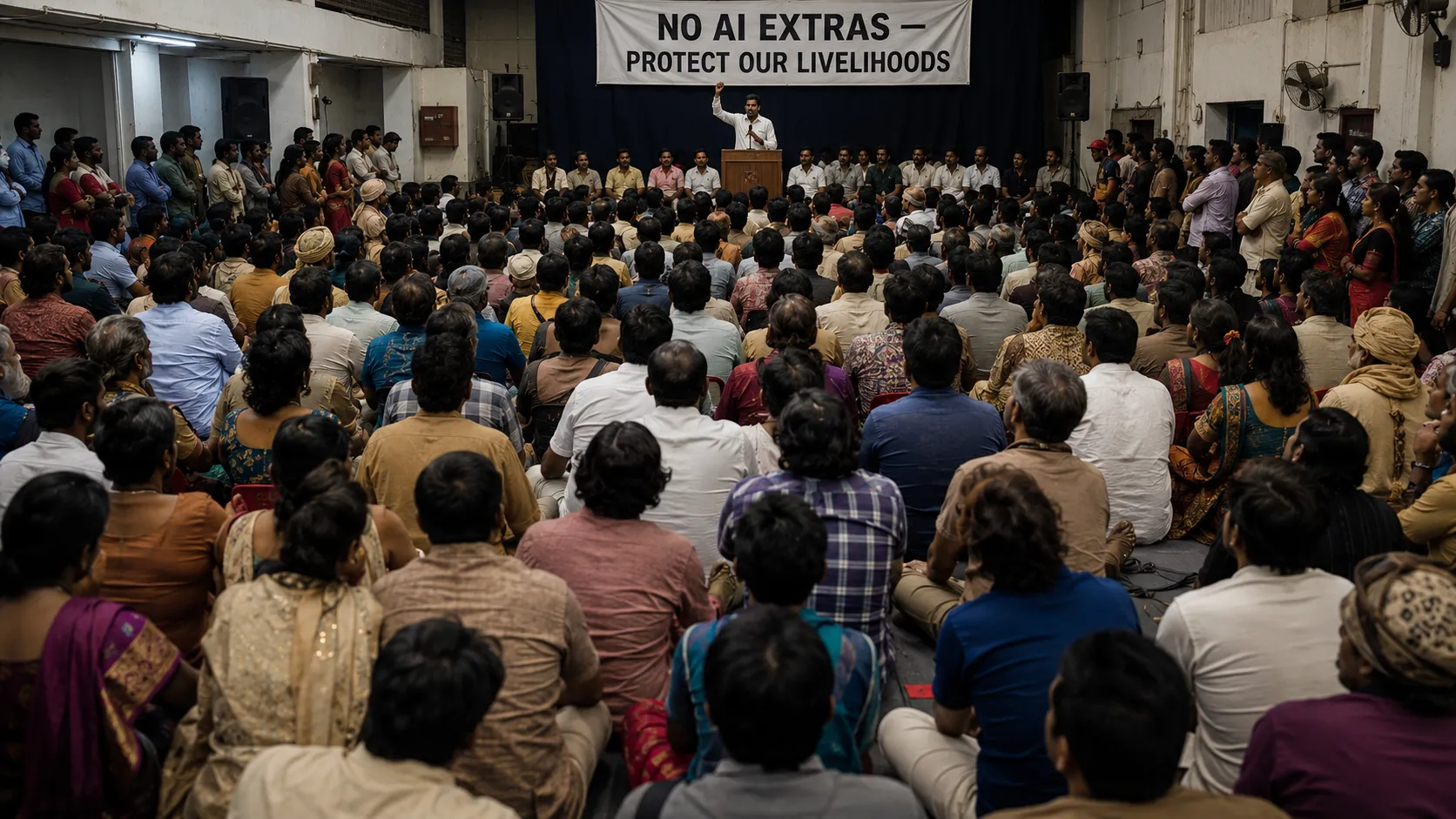
The AI extras revolt is not merely a labour dispute. It is the opening skirmish in a war that will determine the shape of the Indian film industry for the next generation—a war between the studios, who see artificial intelligence as a tool for reducing costs and expanding creative possibilities, and the workers, who see it as an existential threat to their livelihoods. The outcome of that war will depend on the bargaining power of the unions, the regulatory environment that the government creates, and the willingness of the audience to accept—or reject—films that are built, in part, by machines. The AI extra is the first category of worker to be threatened by the technology. It will not be the last. The spot boy, the cameraman, the editor, the colourist—each of them, in time, will face the same question that the extras are facing today: what happens to my job when the algorithm can do it cheaper? The answer is being written on a film set in Mumbai, where 50 extras in motion‑capture suits are performing for a crowd that will never exist—and 150 extras who once would have been in that crowd are standing outside the gates, waiting for a resolution that may never come.


