The Lithium Mine in Your Drawer: How a Delhi Startup Is Extracting 98% Pure Lithium from Dead Batteries—And Building the Circular Economy of the EV Age
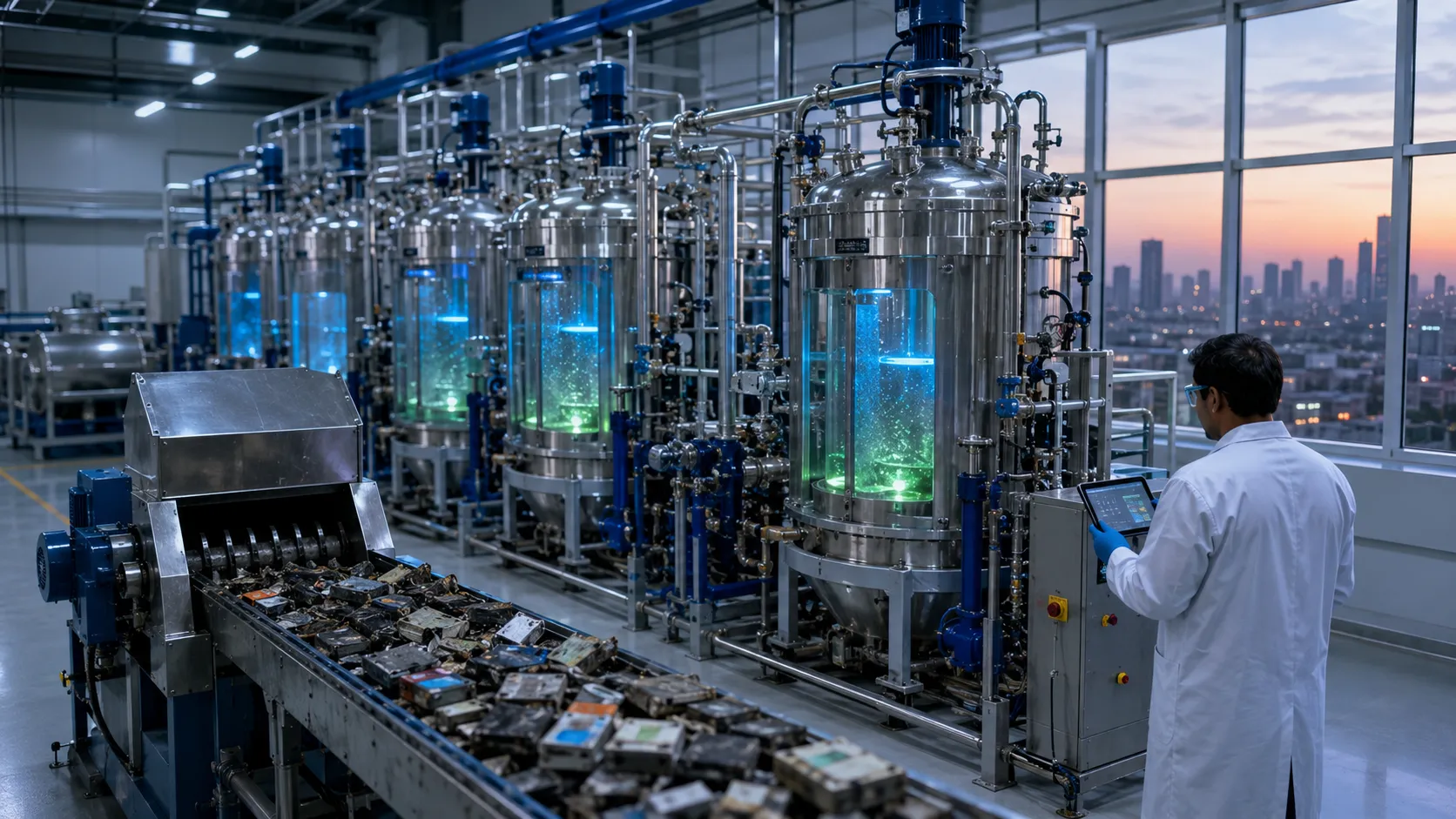
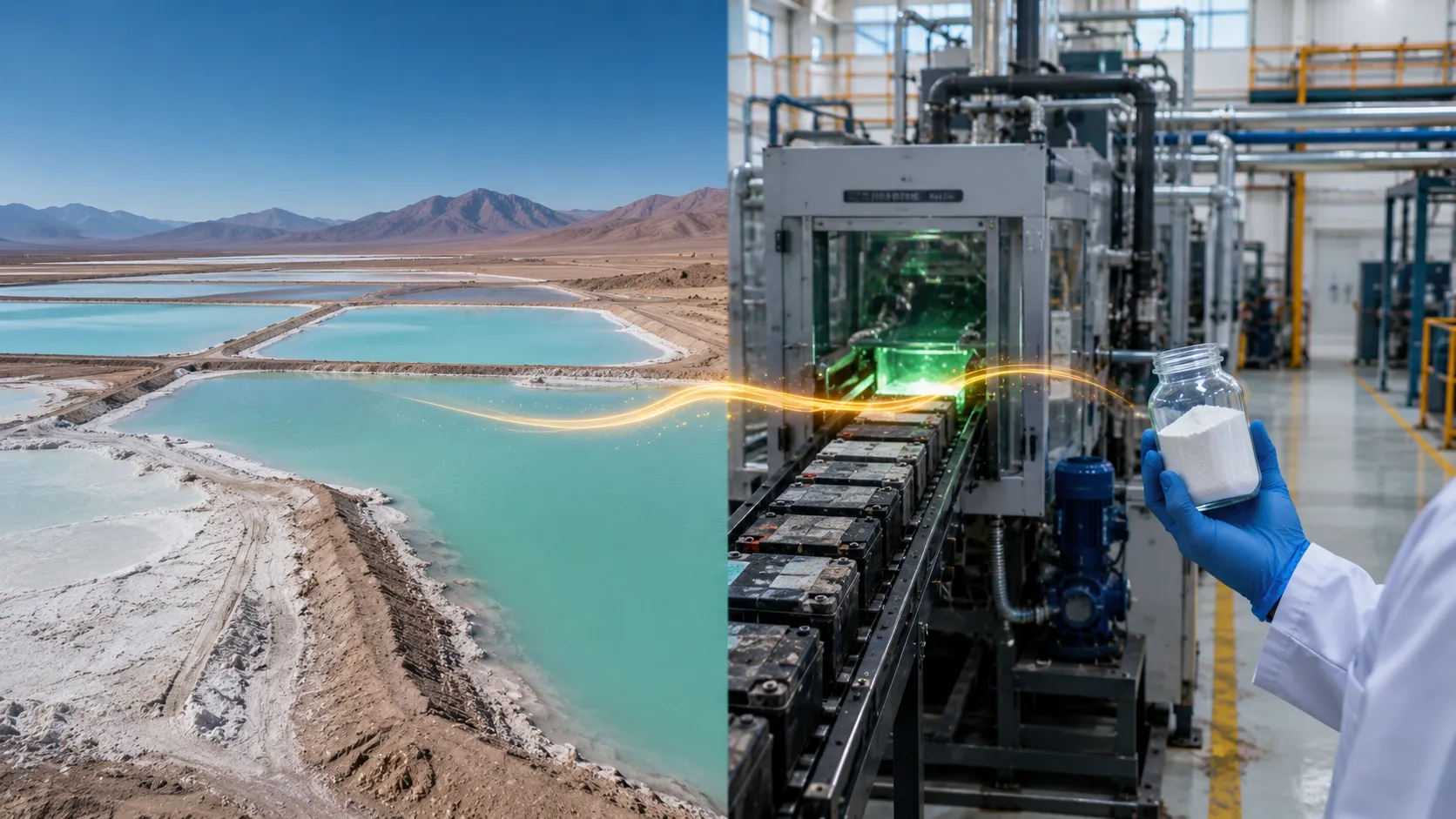
DELHI — May 31, 2026 — In a facility that smells faintly of metal and electrolytic fluid, on the industrial outskirts of Ghaziabad, a machine the size of a shipping container is quietly solving two of the most urgent problems of the electric‑vehicle revolution simultaneously. The machine is a hydrometallurgical extraction plant, and it is fed by a conveyor belt that carries a steady stream of dead lithium‑ion batteries—the discarded cells from electric two‑wheelers, three‑wheelers, and consumer electronics that would otherwise be destined for a landfill. The plant dissolves the batteries in a carefully controlled chemical bath, separates the materials, and extracts the lithium, cobalt, nickel, and manganese that the batteries contain—with a purity that, for lithium, exceeds 98 percent. The lithium that emerges from the Ghaziabad plant, in the form of a fine, white powder, is chemically identical to the lithium that was mined from a salt flat in Chile or a spodumene deposit in Australia. It can be sold directly to a battery manufacturer and used to build a new cell. The battery that died in a Delhi scooter last year will, within months, be powering a new scooter on the same streets.
The plant is operated by CycleCell Materials, a startup that was founded in 2022 by Dr. Arvind Rajan, a materials scientist who had spent a decade at the Indian Institute of Technology Delhi researching battery‑recycling technologies, and Meera Kapoor, a former private‑equity executive who had been looking for a climate‑tech investment and had concluded that battery recycling was the most underappreciated segment of the EV supply chain. The company’s first commercial‑scale plant, which began operations in January 2026, has a capacity to process approximately 5,000 tonnes of spent batteries per year—roughly the equivalent of the batteries from 50,000 electric two‑wheelers. The plant is currently operating at approximately 70 percent of its capacity, constrained by the supply of feedstock—a problem that will diminish as the first generation of EV batteries, which were sold between 2020 and 2023, reaches the end of its life over the next several years. The company has raised approximately $85 million from a consortium of investors led by Breakthrough Energy Ventures and the IFC, and it is planning to build a second, larger plant in Tamil Nadu, near the EV‑manufacturing hub of Chennai, which will increase its processing capacity to approximately 20,000 tonnes per year. It has signed offtake agreements with several major battery manufacturers, including Tata Agratas and Ola Electric, who are eager to secure a domestic source of the critical minerals that they currently import from China.
“The world is building an EV industry that is dependent on lithium from a handful of countries—Australia, Chile, China. India has almost no lithium deposits of its own. The only way we can build a sovereign EV supply chain is to build the recycling infrastructure that turns the lithium we have already imported into a resource we can use again. The dead battery in your drawer is not waste. It is the lithium mine of the future.” — Dr. Arvind Rajan, Co‑founder and CEO, CycleCell Materials
The Urban‑Mining Thesis
The most strategically significant insight behind CycleCell Materials is not about recycling. It is about sovereignty. India is the world’s third‑largest market for electric vehicles, with over 2 million electric two‑ and three‑wheelers on its roads, and that figure is projected to exceed 10 million by 2030. Every one of those vehicles contains a lithium‑ion battery, and every one of those batteries contains lithium, cobalt, nickel, and manganese—minerals that India does not produce in any significant quantity, and that it imports almost entirely from a global supply chain that is dominated by China. The lithium that powers an Indian EV is mined in Australia or Chile, refined in China, and shipped to an Indian battery manufacturer—a supply chain that is long, expensive, and vulnerable to the geopolitical disruptions that have become a permanent feature of the global economy. The battery that reaches the end of its life in India is, in effect, a stranded asset—a source of critical minerals that has already been paid for, that is physically located within India’s borders, and that could be recovered and reused, if only the infrastructure to recover it existed.
The urban‑mining thesis—the idea that the minerals that have already been mined, processed, and deployed in products can be recovered from those products at the end of their life, creating a domestic supply of critical materials that is independent of the global mining industry—has been a subject of discussion in policy circles for years. The CycleCell plant is the first commercial‑scale demonstration that the thesis is economically viable. The lithium that the plant extracts is competitive, on a cost‑per‑kilogram basis, with the lithium that is imported from China—and the cost advantage is expected to improve as the plant scales, as the feedstock supply grows, and as the extraction technology becomes more efficient. The urban‑mining thesis is not merely an environmental argument. It is an economic one, and the economics are beginning to work.
The urban‑mining thesis also has a strategic dimension that is particularly relevant to India’s position in the global EV supply chain. The countries that control the mining and refining of lithium—Australia, Chile, China—have a structural advantage over the countries that merely consume it. The country that can build a domestic lithium‑recycling industry can reduce its dependence on the mining countries, can insulate its EV industry from the price volatility of the global lithium market, and can capture a share of the value that is currently being exported to the refiners in China. The urban‑mining thesis is, in effect, a sovereignty strategy—and the CycleCell plant is the first physical expression of that strategy.
The Extraction Technology
The most important technological asset that CycleCell has built is its hydrometallurgical extraction process—the chemical‑engineering system that separates the lithium, cobalt, nickel, and manganese from the spent batteries and purifies each of them to a level that is suitable for reuse in new battery cells. The process is complex, but the principle is simple. The spent batteries are first shredded, and the metals are separated from the plastics, the casings, and the other non‑valuable materials. The resulting “black mass”—a fine, dark powder that contains a mixture of the cathode materials—is then dissolved in a carefully controlled chemical bath, and the individual metals are precipitated out of the solution, one by one, using a sequence of reagents that have been optimised for the specific chemistry of the lithium‑ion cells that the Indian EV market uses. The lithium is the last metal to be extracted, and it emerges from the process as a lithium‑carbonate powder that is 98 percent pure—sufficiently pure to be sold directly to a battery manufacturer and used to produce new cathode material.
The hydrometallurgical process that CycleCell uses is fundamentally different from the pyrometallurgical process—the high‑temperature smelting—that has historically been the dominant method of battery recycling. The pyrometallurgical process is energy‑intensive, produces significant greenhouse‑gas emissions, and recovers only a fraction of the lithium that the batteries contain—most of the lithium is lost in the slag. The hydrometallurgical process is more efficient, more selective, and more environmentally benign—it recovers over 90 percent of the lithium, and it produces almost no air emissions—but it is also more technically demanding, and it has required CycleCell to develop a set of proprietary chemical processes that are not available to its competitors. The proprietary processes are the company’s moat, and the moat is deep.
The extraction technology also benefits from the specific characteristics of the Indian EV market. The Indian market is dominated by lithium‑iron‑phosphate (LFP) batteries, which are the chemistry of choice for electric two‑ and three‑wheelers because of their lower cost, longer lifespan, and better thermal stability. The LFP batteries that CycleCell processes contain no cobalt—a metal that is expensive, toxic, and associated with human‑rights abuses in the Democratic Republic of Congo—and they are, in some respects, simpler to recycle than the nickel‑manganese‑cobalt (NMC) batteries that dominate the global EV market. The Indian battery‑recycling industry has a structural advantage over the global industry, because it is built on a chemistry that is simpler, cheaper, and more ethical to recycle—and CycleCell is the company that is exploiting that advantage most effectively.
The Feedstock Challenge
The single greatest constraint on CycleCell’s growth is not the technology, the capital, or the market. It is the feedstock—the supply of spent batteries that the plant can process. The Indian EV market is young, and the batteries that were sold in the first wave of adoption—between 2020 and 2023—are only now beginning to reach the end of their useful life. The volume of spent batteries that are available for recycling is currently limited, and the company is competing for that limited supply with a network of informal recyclers—the small, unregulated operators who collect dead batteries, strip them for the most valuable components, and dispose of the rest in ways that are environmentally harmful and economically wasteful. The informal recycling sector is a challenge that every formal battery‑recycling company in India must contend with, and CycleCell has been working with the government, the EV manufacturers, and the industry associations to build a formal collection network that can channel spent batteries into the regulated recycling stream.
The feedstock challenge will diminish over time. The Indian EV market is growing at a compound annual rate of over 70 percent, and the batteries that are being sold today will, within the next five to seven years, become the feedstock for the recycling plants of the future. The company that builds its recycling infrastructure today—that develops its technology, secures its offtake agreements, and establishes its collection network—will be positioned to capture a disproportionate share of the feedstock when the wave of battery retirements arrives. The feedstock challenge is, in this sense, a temporary constraint—and the companies that are willing to invest through the constraint are the ones that will be rewarded when the constraint is released.
The Global Ambition
The most strategically significant dimension of the CycleCell story is not the Indian market—which is large enough, on its own, to sustain a substantial recycling industry. It is the global market, which the company is beginning to explore. The global battery‑recycling market is projected to exceed $25 billion by 2030, driven by the same forces that are driving the market in India: the exponential growth of the EV industry, the increasing scarcity and cost of the critical minerals, and the regulatory pressure to build a circular economy for batteries. CycleCell’s hydrometallurgical technology, its LFP‑specific expertise, and its demonstrated ability to extract lithium at high purity and competitive cost are assets that can be deployed in other markets—the United States, the European Union, Southeast Asia—where the same supply‑chain vulnerabilities and the same environmental imperatives are creating a demand for domestic battery‑recycling capacity.
The company has begun preliminary discussions with potential partners in the United States—including a major American EV manufacturer and a consortium of battery‑industry stakeholders that is looking to build a domestic lithium‑recycling supply chain, supported by the incentives in the Inflation Reduction Act. The discussions are at an early stage, and the company’s immediate priority is to scale its Indian operations, but the global ambition is real and it is being pursued with the same methodical discipline that has characterised the company’s approach to the Indian market. The lithium that is extracted from a dead battery in Ghaziabad today may, within a few years, be powering an EV in California—and the company that built the technology to extract it will be the company that profits from the transaction.
What This Signals
The CycleCell Materials story is not primarily about a single startup or a single recycling plant. It is a story about the structural transformation of the global battery supply chain—a shift from a linear model, in which lithium is mined, used, and discarded, to a circular model, in which lithium is recovered, reused, and retained within the economy indefinitely, and from a supply chain that is concentrated in a handful of mining and refining countries to a supply chain that is distributed across every country that has a stock of spent batteries waiting to be recycled. The 98 percent‑pure lithium that is emerging from the Ghaziabad plant is not merely a chemical product. It is a proof of concept—evidence that the circular economy for batteries is technologically feasible, economically viable, and strategically essential. The dead battery in the drawer is now a resource, and the resource is being mined.


