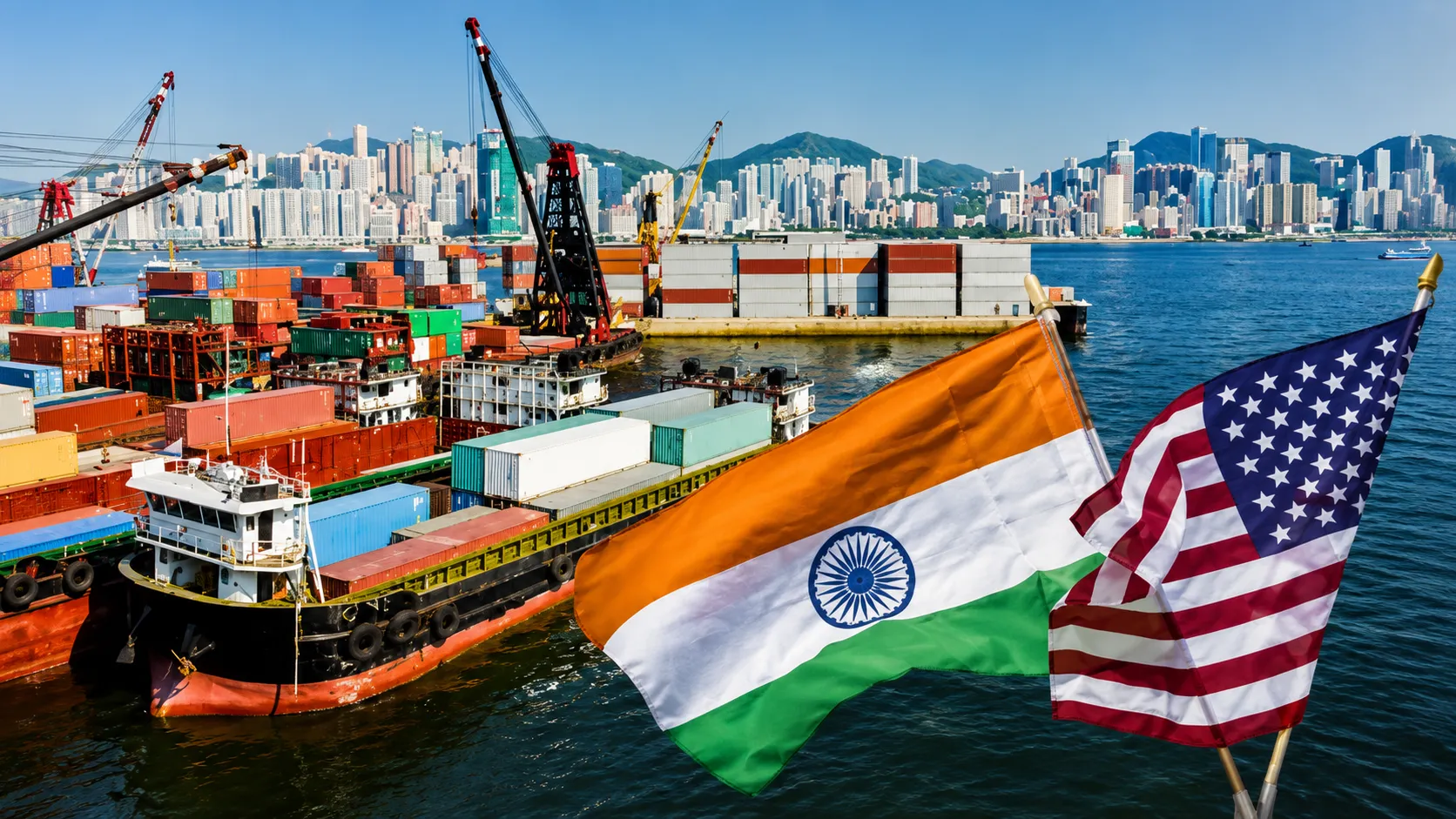
There is a particular kind of tension that builds around a negotiation everyone insists is nearly finished but which nobody will actually finish — and by the third week of July 2026, that tension had settled firmly over the corridors of New Delhi's Udyog Bhawan and Washington's Office of the US Trade Representative. A single number now frames what has become one of India's most consequential ongoing negotiations: July 24, the date on which a temporary tariff arrangement between India and the United States was set to lapse. Against that ticking clock, the first phase of a proposed India-US Bilateral Trade Agreement has been described, repeatedly and almost ritualistically, as parked at the "last one per cent" of its legal text — tantalisingly close, and yet, as of this week, still not signed and still not published.
It is the kind of framing that invites scepticism the longer it persists. Negotiators on both sides have used near-identical language for weeks now to describe the state of play. The on-record position from the American side has centred on the idea that the deal is at its "last one per cent," while India's Commerce and Industry Minister Piyush Goyal has repeatedly characterised the talks as "very close." Neither framing has meaningfully shifted in recent weeks, prompting analysts and trade watchers to note, with a mixture of exasperation and grudging respect for India's negotiating discipline, that in trade diplomacy the final one per cent is very often where the real value sits — the difference between a headline agreement and one that actually protects a country's most sensitive sectors.
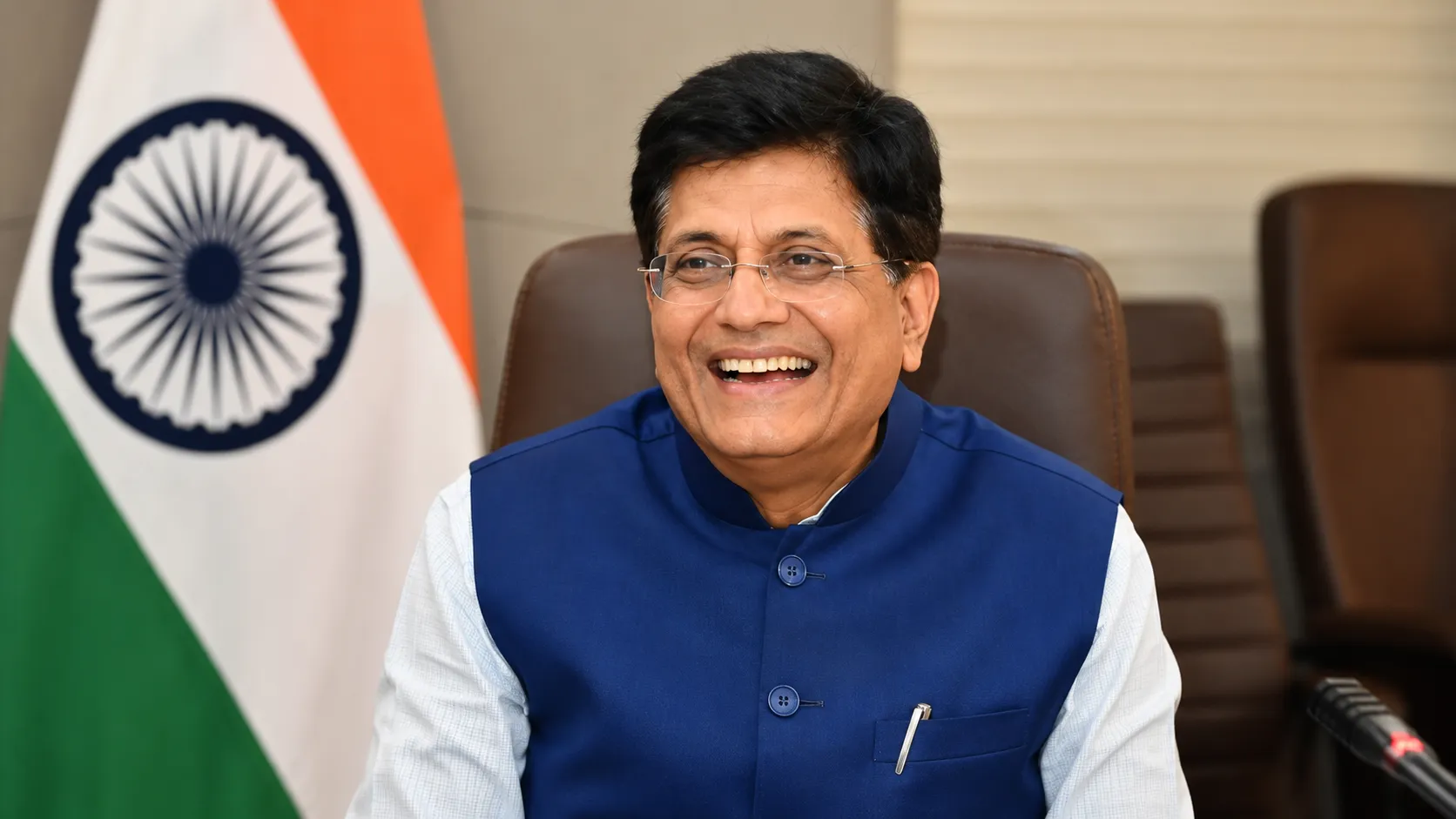
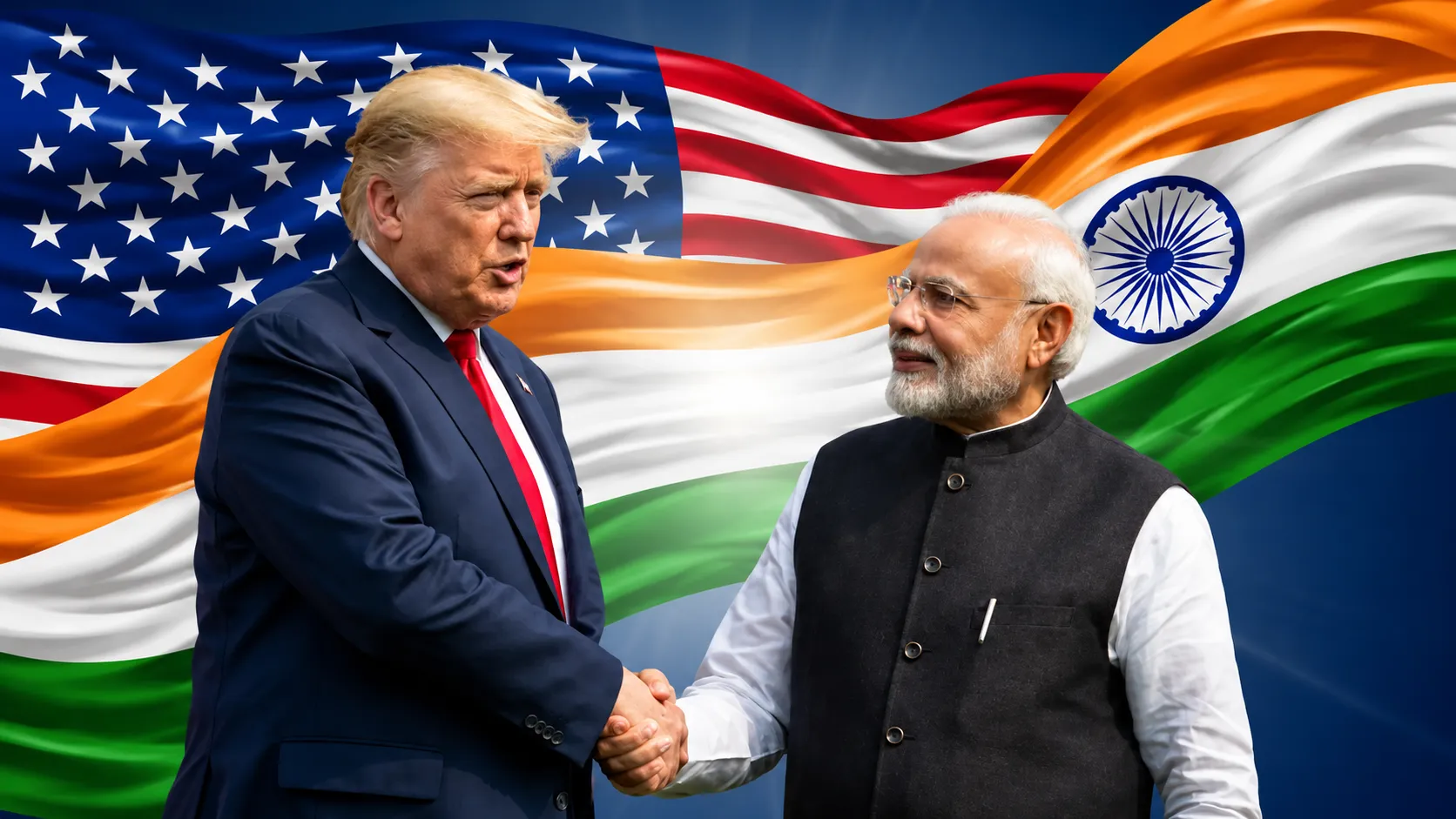
To understand why this last stretch has proven so difficult, it helps to rewind to how the two countries got here. Washington's reciprocal tariff on Indian goods had earlier been eased from a punishing 25 per cent down to 18 per cent, a concession won through months of painstaking negotiation earlier in the year. Both capitals have since coalesced around a shared ambition dubbed "Mission 500" — an agreement, at least in spirit, to double two-way trade between the world's largest economy and its most populous democracy to $500 billion by 2030. On paper, the ambition is enormous and the political will on both sides appears genuine: at the G7 leaders' pull-aside in France earlier this summer, Prime Minister Narendra Modi and President Donald Trump reportedly directed their respective trade teams to fast-track a deal, and the warmth was reaffirmed as recently as July 4, when Modi's message marking the 250th anniversary of American independence kept the diplomatic mood notably cordial.
Yet warmth at the leader level has not translated into a signed text at the working level, and the reasons are structural rather than personal. India's negotiating posture throughout this process has been unusually disciplined by the standards of past trade talks: rather than rushing to beat the July 24 calendar deadline, New Delhi has repeatedly signalled that it is negotiating for terms, not for timing — holding out for an agreement that gives Indian exporters a durable, competitive edge over rival Asian economies such as Vietnam and other ASEAN nations, rather than settling for a face-saving announcement that leaves the substantive tariff schedules unresolved. Commerce Minister Goyal has been explicit on this point in public remarks through the negotiation, framing India's objective not merely as securing lower tariffs in the abstract, but specifically securing tariffs that are more favourable than those extended to competing exporters in Vietnam, Bangladesh, and elsewhere in the region — a comparative-advantage strategy rather than an absolute one.
The commercial stakes embedded in this negotiation are difficult to overstate. The United States remains among India's largest single export markets, and the categories most directly exposed to the outcome of these talks — textiles, engineering goods, gems and jewellery, pharmaceuticals, and electronics — are precisely the sectors that have been driving India's recent export growth. A first-phase pact, once finalised, would not simply set a headline tariff number; it would shape the detailed tariff lines and rules of origin that determine which specific categories of Indian goods win shelf space, price competitiveness, and market access in the American economy over the coming years. For exporters in Tiruppur's textile clusters, Surat's diamond-cutting units, and Hyderabad's pharmaceutical manufacturing belt, the fine print of this agreement is not an abstraction — it is the difference between winning or losing orders against competitors in Ho Chi Minh City, Dhaka, and Phnom Penh.
There has also been a recurring undercurrent of unconfirmed chatter throughout the negotiation — periodic claims, largely circulating in unofficial channels, that the deal has "already been signed" in some interim form. Trade analysts and credible reporting have consistently flagged such claims as unverified rumour, unsupported by any sourced, on-record confirmation from either government, and inconsistent with the "last one per cent, not yet signed" framing that both Ambassador-level and ministerial-level officials have continued to offer publicly. Tariff baselines, any energy-purchase pledges India might make as part of a broader package, and provisions relating to India's imports of discounted Russian crude have all remained provisional, pending an actual published interim text — and market participants have been explicitly cautioned against treating any of these details as settled fact until a document is formally released.
The oil dimension of the negotiation deserves particular attention, because it sits at the intersection of trade diplomacy and the broader geopolitical currents rattling global energy markets this month. India's continued purchase of discounted Russian crude has been a recurring point of friction in the broader US-India relationship, one that has occasionally surfaced in tariff discussions as leverage from Washington's side. With Brent crude prices themselves spiking this week amid escalating tensions in West Asia, India's calculus around energy sourcing — and the diplomatic sensitivities tied to it — has become only more complicated at precisely the moment negotiators are trying to close out the final details of the broader trade text.
Beyond the tariff schedules themselves, the India-US economic relationship has been quietly deepening on parallel tracks even as the flagship trade deal remains unsigned — evidence, trade watchers argue, that the broader bilateral relationship retains real momentum regardless of how long the formal agreement takes to close. The education corridor between the two countries, for instance, has begun running meaningfully in both directions this year. The Illinois Institute of Technology has become the first American university cleared by India's University Grants Commission to establish an independent, degree-granting campus on Indian soil — Illinois Tech-Mumbai, to be located at Vikhroli, is slated to open in Fall 2026. Travelling the other way, IIT Bombay and SUNY Old Westbury announced a partnership in late June that will seed IIT Bombay's first-ever sub-campus in the United States, pencilled in for 2027. These are not trivial developments; they represent long-horizon institutional bets by both countries on a deepening relationship that outlasts any single administration's trade posture.
For Indian industry, the uncertainty of an unsigned deal carries real, quantifiable costs even before a single tariff line changes. Exporters operating on thin margins have had to plan shipment schedules, hedge currency exposure, and negotiate contracts with American buyers without knowing definitively what tariff regime will apply once the current temporary 10 per cent arrangement lapses. Industry bodies representing textile and engineering goods exporters have been vocal in recent weeks about the need for clarity, arguing that prolonged ambiguity is itself a competitive disadvantage, regardless of how favourable the eventual terms turn out to be, because it prevents businesses from making confident forward-looking commitments to buyers who have other sourcing options.
Markets, too, have been watching the trade deal saga closely as one of two central overhangs weighing on investor sentiment this month, the other being the crude oil-driven volatility roiling equities and the rupee. Analysts tracking Dalal Street have repeatedly flagged the India-US negotiation as a key swing factor for market direction in the near term — a signed, favourable deal would likely be read as a significant positive catalyst for export-oriented sectors and for overall risk appetite, while continued delay, or worse, an unfavourable resolution, could compound the anxiety already stemming from elevated oil prices and persistent foreign institutional selling.
What happens if July 24 passes without a signed agreement? Officials on both sides have suggested that the temporary tariff arrangement's expiry does not automatically mean a cliff-edge return to punitive tariff rates; rather, trade would likely revert toward Most Favoured Nation rates under World Trade Organization norms while negotiations continue, a scenario that, while not ideal, would not be catastrophic in the way an outright breakdown in talks would be. Still, industry participants have made clear they would prefer a signed agreement well before any such reversion, given the genuine cost of prolonged uncertainty on forward planning.
Looking ahead, the most likely scenario, according to trade analysts tracking the negotiation closely, remains a phased approach: an interim, first-tranche agreement covering the bulk of tariff lines and market access provisions, to be followed by subsequent phases addressing more contentious areas such as agriculture, dairy, and digital trade rules over an extended timeline stretching well into 2027 and beyond. This phased approach mirrors how India has historically structured complex trade negotiations, preferring incremental, defensible wins over a single sweeping agreement that risks political blowback from politically sensitive domestic constituencies, particularly in agriculture.
There is also a domestic political dimension to India's negotiating caution that is easy to overlook from outside the country. Agriculture and dairy remain among the most politically sensitive sectors in Indian trade policy, touching the livelihoods of tens of millions of smallholder farmers and dairy cooperatives whose economic security carries electoral weight far beyond their contribution to GDP. India has historically refused to extend the kind of market access in these sectors that trade partners routinely seek, and this negotiation has been no exception — officials have signalled that dairy and select agricultural categories are likely to remain largely protected even in a finalised first-phase deal, with the more contentious asks parked for later phases or excluded altogether. This is not a negotiating tactic unique to the Trump-Modi era; it reflects a durable, bipartisan feature of Indian trade policy that has survived multiple governments and multiple American administrations alike, and any assessment of why this deal has taken as long as it has must account for that structural reality rather than treating the delay as simply a matter of tariff-line horse-trading.
Comparisons with how India has handled other recent trade negotiations are instructive here. Just this year, India's free trade agreement with the United Kingdom moved from framework to signed text with relative speed, offering some optimism that India can close complex deals when the underlying architecture aligns with its sensitivities. The UK deal, however, involved a partner with a smaller and less politically fraught agricultural export interest in India than the United States, whose farm lobby has long pushed for greater access to India's vast market for corn, soybean, dairy, and other commodities — precisely the categories where Indian negotiators have historically drawn their firmest lines. The India-US negotiation, in that sense, is simply a harder problem than the UK deal was, and the extended timeline reflects that difficulty rather than any lack of political will on either side.
For businesses caught in the middle of this extended uncertainty, the practical advice from trade consultancies and export promotion councils has remained fairly consistent through recent weeks: continue operating under the existing temporary arrangement, maintain flexible logistics and shipment scheduling that can adapt to either outcome, and avoid overcommitting to long-term contracts that assume a specific tariff outcome that has not yet been formalised in writing. It is unglamorous advice, but it reflects the reality that in trade policy, as in markets, the only thing worse than an unfavourable outcome is planning around an outcome that turns out not to materialise at all.
As the clock ran down toward the July 24 deadline this week, one thing had become clear to almost everyone tracking the negotiation closely: the India-US Bilateral Trade Agreement, whenever it is finally signed, will be remembered less for the speed of its conclusion and more for the discipline India showed in refusing to be rushed. Whether that discipline is ultimately vindicated by a genuinely superior deal, or whether it simply delayed the inevitable at real cost to exporters caught in limbo, is a verdict history — and the fine print of the eventual agreement — will have to render.