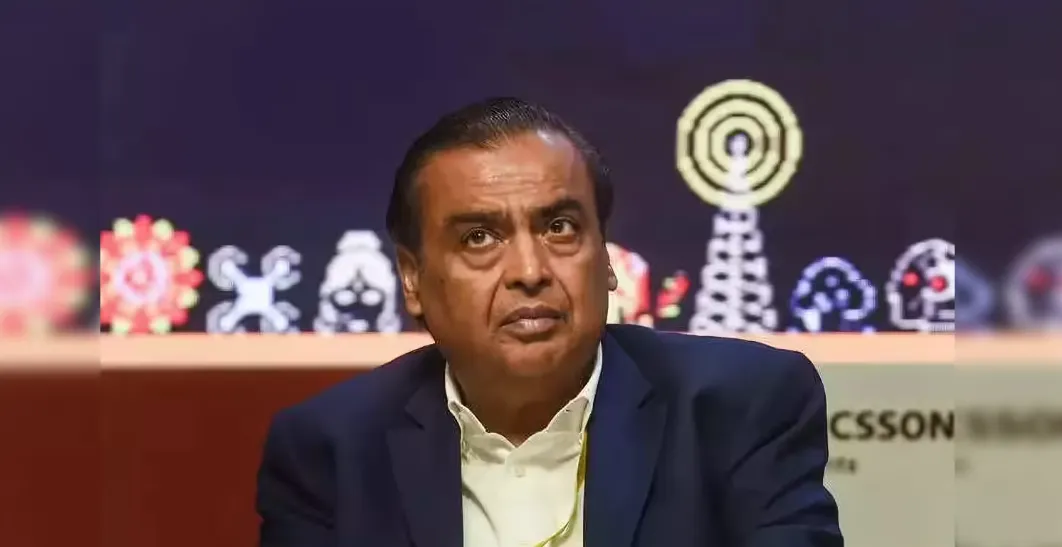
Jio Platforms, the digital crown jewel with 526 million subscribers, filed draft papers for a ₹37,700-crore IPO on Friday — a fresh issue of 27 crore shares that could surpass every public offering in Indian history. Meta and Google, which invested ₹77,000 crore in 2020, are watching their bet pay off. And the next generation of the Ambani family is leading the charge.
The moment had been anticipated for years. But when it finally came, it still felt seismic.
Speaking at Reliance Industries' 49th Annual General Meeting in Mumbai on Friday, June 19, 2026, Chairman and Managing Director Mukesh Ambani made the announcement that the market had been waiting for. "The Board of Jio Platforms has approved the Draft Red Herring Prospectus earlier today and it will be filed with SEBI today," he told shareholders, his voice carrying the weight of a decade of transformation. "This is a deeply emotional moment for me, for the entire Reliance family and for millions of its shareholders."
By the end of the day, Jio Platforms Ltd — the digital and telecommunications arm of Reliance Industries — had filed its DRHP with the Securities and Exchange Board of India, kicking off what is set to become the largest initial public offering in Indian stock market history.
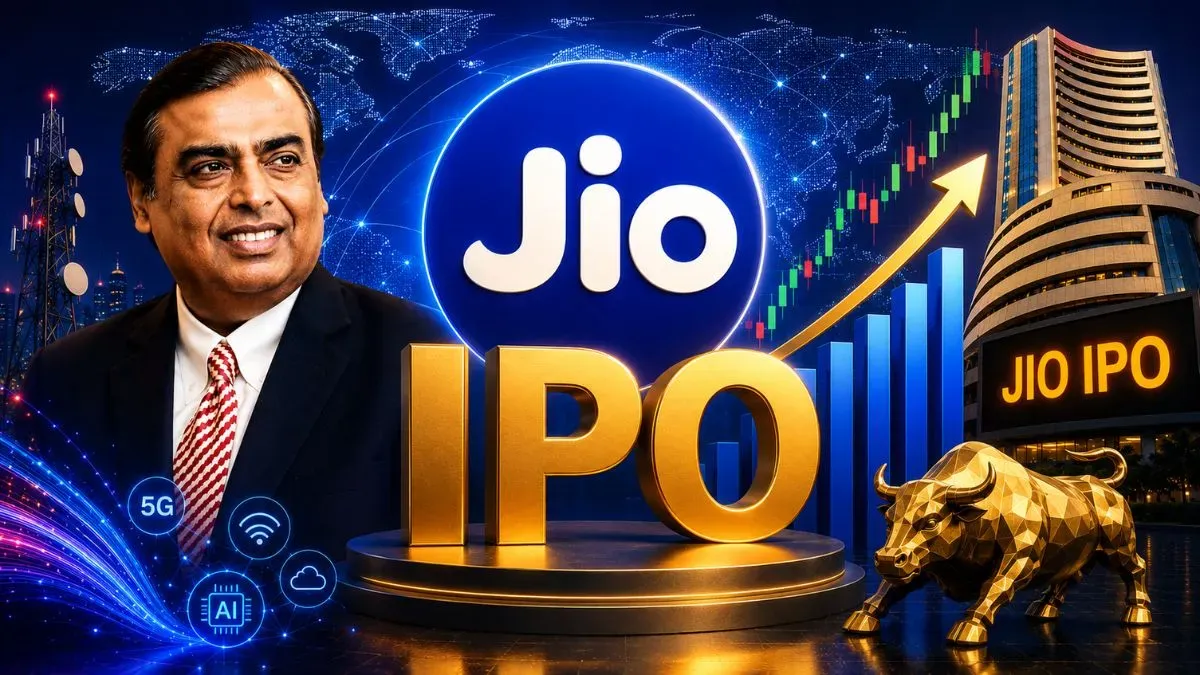
The Numbers That Will Rewrite Records
The IPO will consist of a fresh issue of up to 27 crore equity shares, each with a face value of ₹10. The final issue price will be determined through a book-building process. Crucially, there is no offer-for-sale component — existing investors, including Meta, Google, KKR, Silver Lake, and General Atlantic, are not selling any stake. This is purely growth capital for the company.
The issue is expected to raise approximately ₹37,700 crore ($4 billion), according to people familiar with the matter, valuing the business at nearly ₹9.5 trillion ($131–137 billion). That would comfortably surpass Hyundai Motor India's ₹27,870-crore IPO from October 2024 — currently the record holder for India's largest-ever public issue — and overshadow the ₹30,000-crore upcoming issue by the National Stock Exchange.
At that valuation, Jio Platforms would command a market capitalisation of about ₹12.69 lakh crore, placing it marginally ahead of Bharti Airtel (₹11.6 lakh crore) and among India's most valuable listed companies. Analysts at Morgan Stanley and Citi Research have pegged Jio Platforms' valuation at around $133 billion, implying a 13 times multiple on its estimated 2026-27 enterprise value against its EBITDA.
The Empire That Ambani Built: Jio by the Numbers
The numbers behind Jio Platforms are staggering. As of March 2026, the company served 524.4 million subscribers across consumers and businesses. Of these, 268.5 million are already on its 5G network, making it the largest single-country 5G network outside China.
In FY2026, Jio reported revenue of approximately ₹1.47 lakh crore and a profit after tax of around ₹30,000 crore — crossing the ₹30,000 crore mark for the first time. EBITDA rose 18.8% to ₹76,255 crore, with margins improving to 51.9%. The company carried approximately 60% of India's wireless data traffic in fiscal 2026. Data consumption on the network rose 30.8% year-on-year to 241 exabytes, placing Jio among the world's largest data operators. JioAirFiber connected 13 million homes, reinforcing its position as the world's largest fixed wireless broadband operator.
The Financial Engineering: Why a Pure Fresh Issue Matters
The IPO's structure is notable for what it is not. There is no offer-for-sale component. Existing investors — including the global giants that collectively invested about $20 billion in Jio Platforms in 2020 — are not selling a single share.
Instead, Jio Platforms is issuing new shares, with the proceeds going directly into the business. This means all shareholders would be diluted proportionately because new shares are created. In contrast, an OFS would have allowed only selling shareholders to reduce their stake while leaving the company's share capital unchanged.
Analysts believe this approach could help investors assign a clearer standalone valuation to Jio, whose telecom and digital businesses have remained embedded within the broader Reliance conglomerate for years. A fresh issue also signals that the company sees growth ahead — capital going into the business rather than shareholder exits.
Where the Money Is Going: Debt Repayment and Beyond
The bulk of the IPO proceeds — up to ₹27,500 crore — will be used to prepay borrowings at Reliance Jio Infocomm (RJIL), Jio Platforms' material subsidiary. As of March 2026, RJIL carried outstanding borrowings of ₹71,529 crore.
This is a significant deleveraging move. Jio Platforms' net debt stood at ₹27,579.20 crore as of March 2026, down from ₹45,273.4 crore in March 2025 and ₹48,440 crore in March 2024. Cash and bank balances increased to ₹16,946.6 crore from ₹8,423.6 crore a year earlier.
The remaining funds — an estimated ₹4,500–7,500 crore — will be allocated for general corporate purposes, including investment in technology, AI infrastructure, and the company's next growth phase.
The Shareholding Structure: Meta and Google's $77,000 Crore Bet
The DRHP reveals the ownership structure of India's most valuable digital company. Reliance Industries Ltd holds 66.43% of Jio Platforms.
Meta Platforms, through its affiliate Jaadhu Holdings LLC, is the largest foreign shareholder with 9.98%, having invested ₹43,574 crore in 2020. Google International LLC holds 7.73%, having committed ₹33,737 crore. Together, Meta and Google invested over ₹77,000 crore in Jio Platforms in 2020 — a bet that is now poised to pay off handsomely.
Other major investors include KKR & Co (2.31%), Vista Equity Partners (2.31%), Silver Lake (1.88%), Mubadala Investment Co (1.85%), General Atlantic (1.34%), and the Abu Dhabi Investment Authority (1.16%). These investors collectively own 30.89% of the company.
The Next Generation Takes the Helm
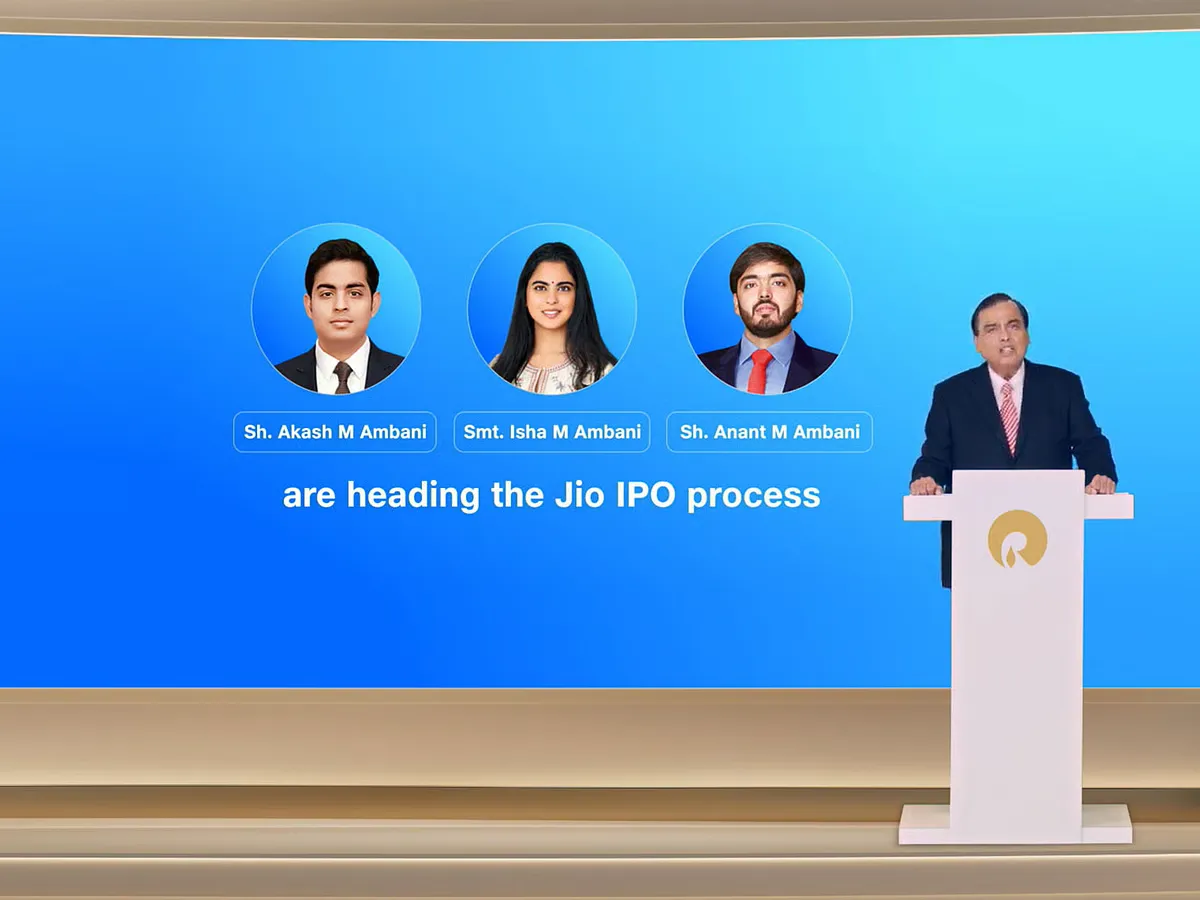
Perhaps the most striking aspect of the announcement was Mukesh Ambani's emphasis on succession. He said the IPO process is being led by his children — Akash, Isha, and Anant Ambani — who will spearhead the next phase of growth and value creation at Jio.
"Just as I had carried forward Dhirubhai Ambani's legacy for shared growth, Akash, Isha, and Anant are heading the Jio IPO process, and will lead the next generation of value creation opportunities in the future," Ambani told shareholders.
The generational transition is both symbolic and strategic. Akash Ambani, who serves as Managing Director of Jio Platforms, has been instrumental in the company's 5G rollout and digital expansion. At the AGM, he outlined Jio's next frontier: satellite internet. "We are also partnering with the leading global constellation providers by leasing satellite capacity, so that we can accelerate service availability while building our own long-term sovereign capability," he said.
What Jio Is Building Next: Satellite, AI, and the Next Decade
The IPO filing comes as Jio Platforms prepares its next growth phase. According to the DRHP and announcements at the AGM, the company is focusing on three key areas:
Satellite Broadband: Jio is building its own ground-station infrastructure in India and planning a sovereign low-earth-orbit satellite constellation. The company is also leasing satellite capacity from global constellation providers to accelerate service availability while building its own capability.
AI-Native Services: Jio is progressively embedding artificial intelligence across its technology stack, with the aim of achieving Level 4 on the TM Forum's Autonomous Networks scale. The company is also offering next-generation AI-based products, including AI assistants and enterprise AI suites.
6G and Beyond: The company plans to deepen 5G adoption and advance India's position in emerging 6G technologies.
Ambani's vision is clear. "The proposed listing of Jio will demonstrate to the world that India can build technology companies of global scale, global capability, and global value," he said.
The Bottom Line
Jio Platforms' IPO filing marks a watershed moment for Indian capital markets. A fresh issue of 27 crore shares, expected to raise ₹37,700 crore, would make it the largest public offering in Indian history. The company's valuation of nearly ₹9.5 trillion would place it among India's most valuable listed companies, surpassing Bharti Airtel.
The IPO is a pure fresh issue — no offer-for-sale, no existing investors exiting. The proceeds will be used to repay debt and fund the company's next growth phase: satellite broadband, AI-native services, and the next generation of digital infrastructure. Meta and Google, which invested over ₹77,000 crore in 2020, are watching their bet pay off.
And the next generation of the Ambani family is leading the charge. Akash, Isha, and Anant Ambani are heading the IPO process, signalling a leadership transition that will define Reliance's next decade.
"This is a deeply emotional moment for me, for the entire Reliance family, and for millions of its shareholders," Mukesh Ambani said. "I assure you that this will unlock great value for Reliance shareholders and offer an attractive investment opportunity to others."
The Jio genie is out of the bottle. And Indian capital markets will never be the same.


