
The Invisible Bank: How a Mumbai API Startup Built a $50 Million ARR Business by Powering the Financial Products of Every App You Use—Without Ever Touching a Customer
MUMBAI — May 31, 2026 — When a customer on a popular food‑delivery app pays for their meal in three interest‑free instalments, they are not interacting with a bank. When a freelancer on a gig‑economy platform receives an advance against their next week’s earnings, they are not borrowing from an NBFC. When a small business on an e‑commerce marketplace gets a working‑capital loan within 15 minutes of applying, they are not filling out a bank’s paperwork. In each of these transactions—and in millions of others that occur every day across India’s consumer‑internet economy—the financial product is being delivered by a Mumbai‑based startup called FinCore Infrastructure, which has built a set of APIs that allow any app, any platform, or any marketplace to embed lending, insurance, and wealth‑management products directly into its own user experience, without ever needing to acquire a banking licence, build a risk‑engine, or hire a compliance team.
FinCore, which was founded in 2021 by three former executives from the fintech division of a major Indian bank, has crossed $50 million in annualised recurring revenue without building a single consumer‑facing app. Its customers are the platforms—the food‑delivery apps, the ride‑hailing services, the e‑commerce marketplaces, the gig‑economy platforms, the SME‑focused SaaS companies—that want to offer financial products to their users, but that do not want to build the regulatory, technological, and operational infrastructure that financial products require. FinCore provides that infrastructure as a service: a set of APIs that handle everything from credit underwriting and loan origination to regulatory compliance and collections, and that connect the platform to a network of over 40 banks and NBFCs that actually fund the loans and bear the credit risk. The platform is, in effect, an invisible bank—a financial‑services layer that sits between the consumer and the capital, and that enables any digital platform to become a fintech company without the cost and complexity of actually becoming one.
The company’s growth has been remarkable. Its revenue has grown at a compound annual rate of over 180 percent for the past three years, driven by the rapid expansion of the embedded‑finance market in India—a market that barely existed five years ago, and that is now estimated to be worth over $8 billion in annual credit origination. FinCore’s platform currently powers the lending operations of over 60 digital platforms, and it processes approximately 2.5 million loan applications per month, with an average approval rate of approximately 45 percent and an average loan size of approximately ₹18,000. The company’s credit‑loss rate—the percentage of loans that default—is approximately 1.8 percent, which is substantially lower than the industry average for unsecured consumer lending in India, and which reflects the quality of the underwriting models that the company has built using the transaction data that its platform partners provide. FinCore closed a $120 million Series D funding round in April 2026, led by Ribbit Capital and the IFC, at a valuation of approximately $900 million, and it is widely expected to be one of the next Indian fintech companies to file for an initial public offering.
“Embedded finance is not a product. It is an infrastructure layer. The platforms that are embedding financial products into their user experiences are not becoming banks. They are becoming bank‑enabled—and the company that is enabling them is capturing a share of every transaction that flows through the pipes it has built.” — Fintech investor, speaking anonymously to TIGI
The Embedded‑Finance Thesis
The most important strategic insight behind FinCore’s business model is that the financial‑services industry is being unbundled—not at the consumer interface, but at the infrastructure layer. For decades, the dominant model of financial services was vertical integration: the bank built the product, acquired the customer, managed the risk, and held the capital. The model worked, but it was expensive, slow, and exclusionary—the bank could only serve the customers it could reach, and it could only reach the customers it could afford to acquire. The digital‑platform revolution has created a new model: the platform owns the customer relationship, the customer data, and the distribution channel; the fintech infrastructure provider owns the technology, the compliance, and the underwriting; and the bank or NBFC provides the capital and absorbs the credit risk. The model is more efficient, more scalable, and more inclusive than the vertically integrated alternative—and it is being adopted, with remarkable speed, across every segment of the Indian consumer economy.
The embedded‑finance thesis is particularly powerful in the Indian market, where the formal financial‑services infrastructure has historically been unable to reach a large share of the population. The gig‑economy worker who does not have a credit score, a salary slip, or a bank relationship can still be underwritten for a loan—because the platform that employs them has data on their earnings history, their work patterns, and their reliability, and the FinCore API can translate that data into a credit decision within seconds. The small business that sells on an e‑commerce marketplace and that has never borrowed from a bank can still access working capital—because the marketplace has data on its sales history, its inventory turnover, and its customer satisfaction, and the FinCore API can use that data to underwrite a loan. The embedded‑finance model does not merely extend credit to the same customers that the banks were already serving. It extends credit to customers that the banks could never reach—and the credit performance of those customers, so far, has been better than the banks’ traditional portfolios.
The API Economy
The most important technological asset that FinCore has built is its API platform—a set of standardised, well‑documented, developer‑friendly interfaces that allow any digital platform to integrate financial products into its own application within a matter of weeks, rather than the months or years that a traditional bank‑integration project would require. The platform handles the entire lifecycle of a financial product—the customer onboarding (including the KYC verification, the bank‑account validation, and the credit‑bureau check), the credit underwriting (using the platform’s proprietary machine‑learning models, which are trained on the transaction data that the platform partner provides), the loan origination (including the documentation, the agreement execution, and the disbursement), the repayment collection (including the automated deductions, the reminders, and the reconciliation), and the regulatory compliance (including the reporting to the credit bureaus, the tax authorities, and the Reserve Bank). The platform partner does not need to understand any of these functions. It needs only to integrate the API, and FinCore handles the rest.
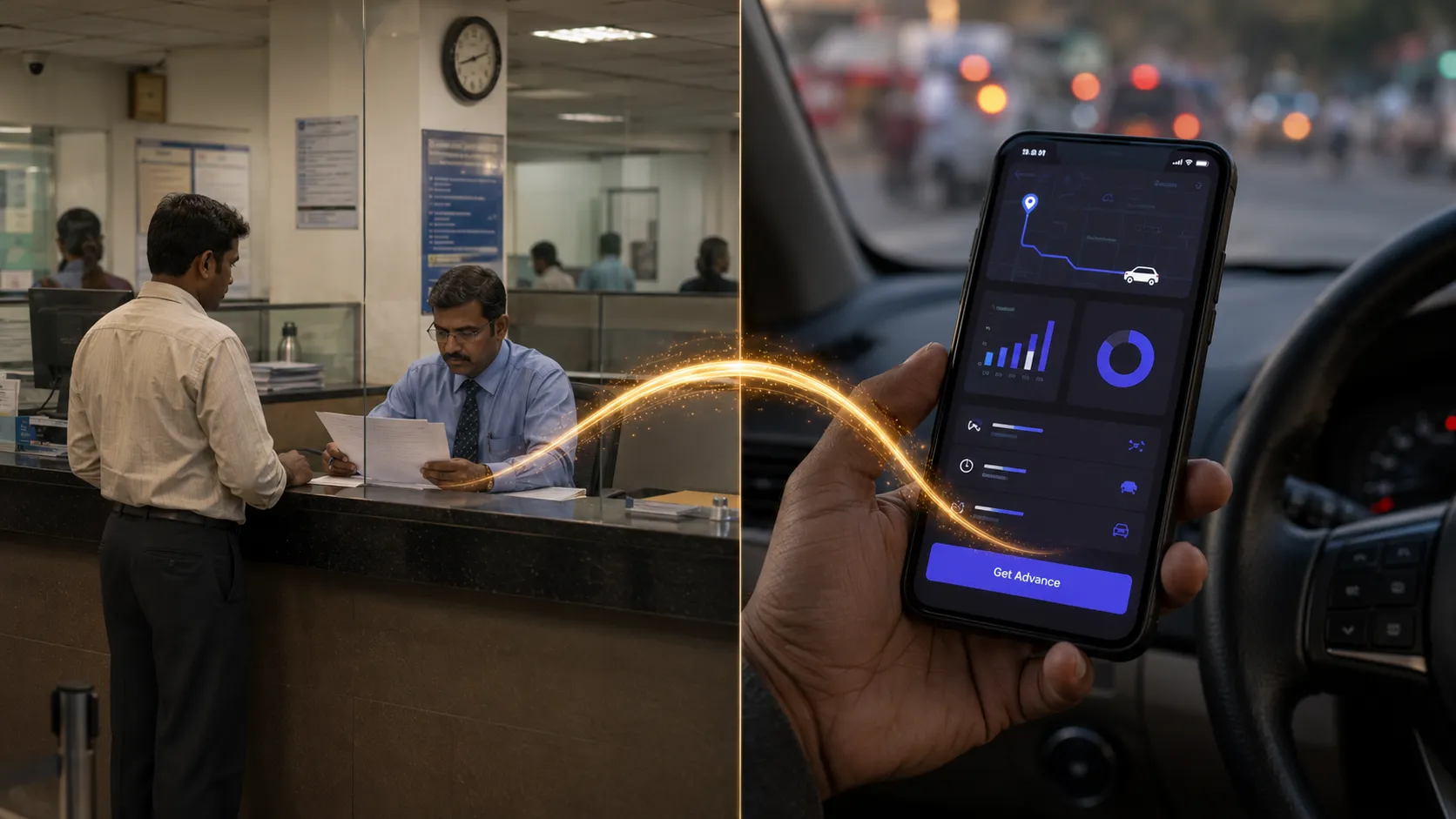
The API economy that FinCore is building has a structural characteristic that is common to all platform businesses: the value of the platform increases with the number of participants on each side of the market. The more platforms that integrate the FinCore API, the more loan applications the system processes, and the more data the underwriting models can be trained on—which improves the accuracy of the credit decisions, which reduces the default rate, which makes the platform more attractive to the banks and NBFCs that provide the capital. The more banks and NBFCs that connect to the platform, the more capital is available to fund the loans, and the more competitive the interest rates become—which makes the platform more attractive to the digital platforms that are embedding the financial products. The flywheel is spinning, and it is spinning faster as the platform scales.
The API platform also benefits from a regulatory advantage that is unique to the Indian market. The Reserve Bank of India’s digital‑lending guidelines, which were published in 2022 and which have been progressively implemented since then, require that all loan disbursals and repayments flow directly between the lender’s and the borrower’s bank accounts, and that the fintech platform that facilitates the loan must not take the credit risk onto its own balance sheet. The guidelines were designed to protect consumers from the predatory practices that had emerged in the unregulated digital‑lending market, and they have had the effect of making the embedded‑finance model—in which the platform is a technology provider, not a lender—the only compliant way for a non‑bank entity to offer credit products. The regulatory environment has, in effect, created a protected market for the embedded‑finance infrastructure providers—and FinCore, which was among the first companies to build a fully compliant platform, has benefited disproportionately from the regulatory tailwind.
The Competitive Landscape
The embedded‑finance market is attracting a growing number of competitors, each of which is pursuing a different segment of the market. Setu, which was acquired by Pine Labs in 2022, is focused on the payments and savings segments—the APIs that allow platforms to offer UPI‑based payments, bank‑account verification, and fixed‑deposit products. Lentra, which is backed by Bessemer Venture Partners, is focused on the lending segment for larger enterprises—the banks and NBFCs that want to digitise their own lending operations. YAP, which is backed by Flourish Ventures, is focused on the banking‑as‑a‑service segment—the APIs that allow platforms to offer full‑featured bank accounts, debit cards, and payment services. The competitive landscape is fragmenting along product lines, and the market is large enough to support multiple players. India’s digital‑lending market is projected to exceed $350 billion in annual origination by 2030, and the embedded‑finance infrastructure layer—the APIs that connect the platforms to the capital—is expected to capture between 10 and 15 percent of that market. The companies that are building that infrastructure today are competing for a share of a market that will be worth tens of billions of dollars within a decade.
The most significant competitive threat to FinCore is not another API startup. It is the technology platforms—the Googles, the Amazons, the Reliances—that are building their own embedded‑finance infrastructure, and that have the scale, the capital, and the data to compete directly with the independent API providers. Google Pay has been expanding its lending operations, offering pre‑approved credit to its users based on their transaction history on the Google Pay platform. Amazon Pay has been offering working‑capital loans to the sellers on its marketplace. Reliance Jio has been building a full‑stack financial‑services platform, integrating payments, lending, insurance, and wealth management into the Jio ecosystem. The technology platforms are, in effect, building their own FinCores—and the independent API providers are competing against them for the business of the smaller, independent digital platforms that do not have the resources to build their own financial‑services infrastructure. The competition is intensifying, and the market is consolidating, and the companies that survive the consolidation will be the ones that have built the deepest technology moats, the widest lender networks, and the strongest platform relationships.
What This Signals
The FinCore story is not primarily about a single startup. It is a story about the structural transformation of the Indian financial‑services industry—a shift from a model in which financial products were distributed through bank branches to a model in which financial products are embedded into the digital platforms that consumers and businesses use every day, and from a financial system that was built on the primacy of the bank to a financial system that is built on the primacy of the API. The $50 million ARR, the 2.5 million monthly loan applications, the 60 platform partners—these are not merely metrics. They are the evidence that the embedded‑finance model works, that the market is large, and that the infrastructure layer that FinCore is building is essential to the functioning of the digital economy. The invisible bank is not invisible because it is small. It is invisible because it is infrastructure—and the most valuable infrastructure is the infrastructure that no one sees.


