The Investing App Where 90% of Users Are Under 25: Inside the Gen Z Wealth Platform That Raised $3.7 Million From Lightspeed—and Is Taking on Zerodha, Groww, and an Entire Generation's Financial Anxiety
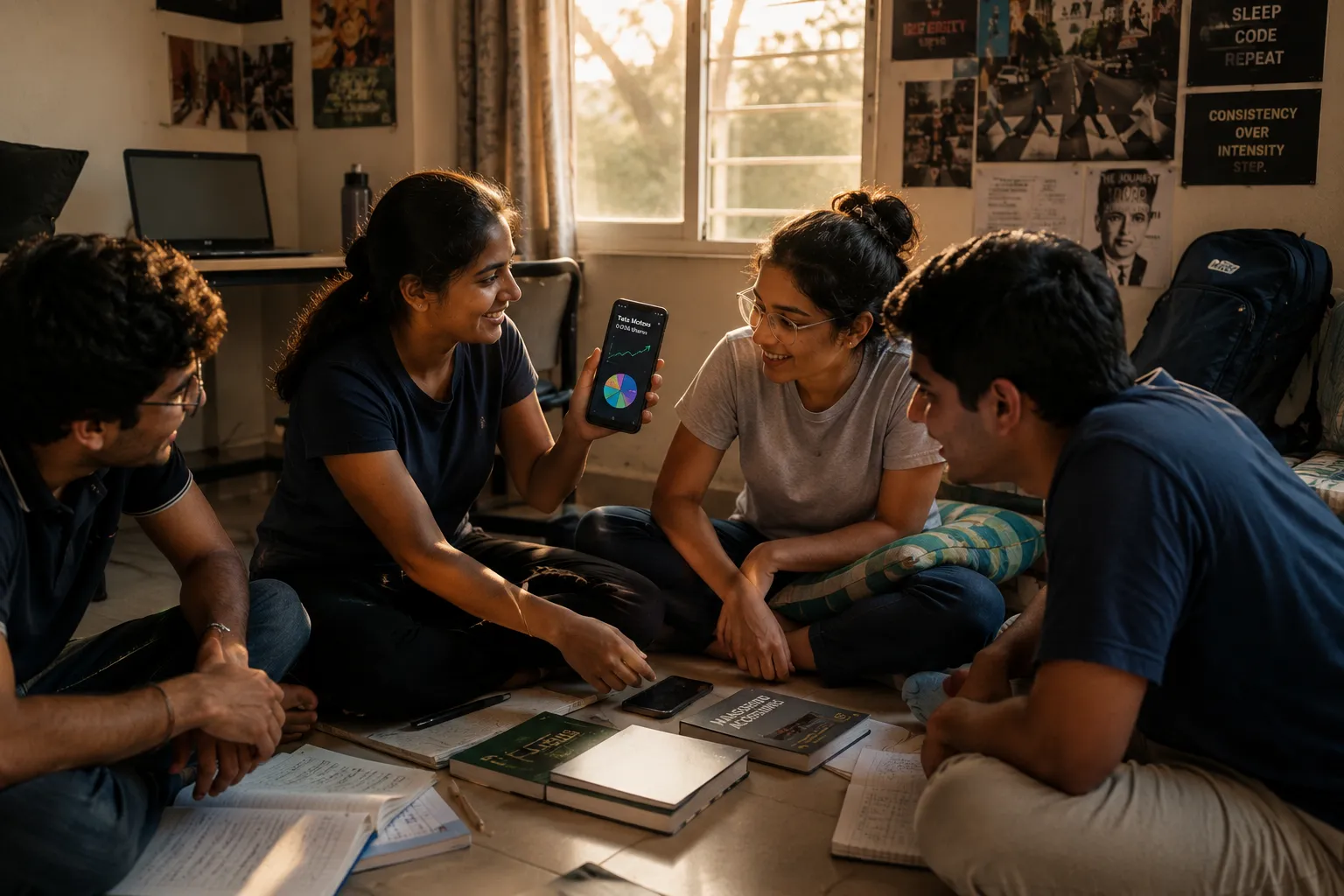
BENGALURU — May 24, 2026 — Sometime in 2023, a 19-year-old college student in Pune opened a trading account for the first time. She did not call a broker. She did not fill out a paper form. She did not watch a YouTube tutorial on candlestick patterns. She downloaded an app her friend had sent her, linked her bank account, and bought her first stock—a fractional share of Tata Motors—for ₹500. The entire process took less than four minutes. She has since invested another ₹15,000, built a portfolio of six stocks and two ETFs, and checks the app roughly once a day. She has never spoken to a financial advisor. She has never read a company balance sheet. And she is, by every available metric, exactly the kind of investor that India's traditional brokerage industry was never designed to serve.
The app is Trackk, a Bengaluru-based social investing platform that has quietly become one of the most closely watched experiments in Indian fintech. The company, founded in 2022 by Kabir Cariappa, a former fintech operator, and Rohan Cariappa, has raised $3.7 million from Lightspeed Venture Partners and a roster of angel investors who have backed some of India's most successful consumer technology companies. Its user base is growing fast. Its demographic profile is the youngest of any investment platform in the country. And its thesis—that the next generation of Indian investors does not want a trading terminal, does not trust traditional financial advice, and will learn about money the same way they learn about everything else, through social media and peer networks—is either the future of Indian finance or a regulatory disaster waiting to happen, depending on whom you ask.
Kabir Cariappa, 25, is the older of the two brothers behind Trackk. He spent two years at Groww, the decacorn investment platform that has overtaken Zerodha in total users, before deciding that the market opportunity he had glimpsed from inside one of India's fastest-growing fintech companies was too large to ignore. "Groww did an incredible job of making investing accessible," he said. "But we saw a different kind of user emerging—someone who didn't just want a simplified trading interface, but who wanted to learn, experiment, and build wealth in a social context." The insight was that investing, for Gen Z, was not primarily a financial activity. It was a social one. Young investors talked about stocks the way they talked about music, or fashion, or video games. They shared screenshots of their portfolios. They followed finfluencers. They wanted to see what their friends were buying—not because they were lazy, but because they had learned, from a lifetime of social media, to trust peer recommendations over institutional authority.
Trackk was built to serve that user. The platform allows investors to build and share public portfolios, follow other users, and see curated stock ideas from a community that skews young, digital-native, and deeply skeptical of traditional financial gatekeepers. The interface is designed to feel like a social app, not a trading terminal. The language is casual, not clinical. The onboarding is designed for someone who has never invested before—and who might be intimidated by the complexity of a full-featured brokerage platform. The app has been downloaded over a million times. Its users are disproportionately under 25. And its growth has been almost entirely organic—driven not by advertising spend, but by the same peer-to-peer virality that powered the early growth of platforms like Robinhood in the United States.
The Gen Z Investing Wave
The structural tailwind behind Trackk's growth is the single most significant shift in Indian financial behaviour since the demat account was introduced in 1996. India is in the midst of an unprecedented retail investing boom. The number of demat accounts in the country has surged from roughly 4 crore in 2020 to more than 18 crore by early 2026. Millions of first-time investors—many of them young, many of them in Tier-2 and Tier-3 cities, many of them with no prior exposure to financial markets—have entered the equity market for the first time. The pandemic accelerated the trend, as lockdowns gave people time, boredom, and an urgent need for supplementary income. But the trend has outlasted the pandemic, driven by rising disposable incomes, the digitization of financial infrastructure, and a growing cultural acceptance of equity investing as a legitimate path to wealth creation.
The demographic profile of these new investors is starkly different from the previous generation. They are younger. They are more comfortable with technology. They are more likely to make their first investment based on a recommendation from a friend or a finfluencer rather than a financial advisor. They are more likely to invest in fractional shares, thematic ETFs, and international stocks. And they are far less likely to read a company's annual report before buying its stock. This last point has generated considerable anxiety among market veterans, who worry that a generation of investors raised on social media is being set up for a painful reckoning when the bull market eventually ends.
Trackk's bet is that the anxiety is misplaced. Young investors, the company argues, are not stupid. They are inexperienced. The difference is critical. An inexperienced investor needs education, low-risk ways to experiment, and a community that normalises learning from mistakes. A platform that treats them like children—with paternalistic warnings and restrictive product offerings—will lose them to platforms that treat them with respect. "We don't believe in gatekeeping," Kabir said. "We believe in building guardrails."
The guardrails are visible in the product design. Trackk limits the amount new users can invest in high-risk instruments. It surfaces educational content alongside investment options. It labels portfolios by risk profile and provides clear, plain-language explanations of what each portfolio contains. It encourages users to start small, diversify, and invest for the long term. The platform is not trying to turn 19-year-olds into day traders. It is trying to turn them into long-term investors—and it is trying to do it in a language they understand.
The Lightspeed Bet
The $3.7 million seed round that Trackk raised in late 2024 was led by Lightspeed Venture Partners, one of the world's most respected venture capital firms and an early backer of Indian fintech giants including OYO, Udaan, and ShareChat. The round also included several prominent angel investors whose names are associated with some of the most successful consumer technology companies in India. The investment was a bet—not just on Trackk, but on a thesis about how the next generation of Indian investors would discover, evaluate, and purchase financial products.
The thesis, as articulated by Lightspeed partner Rahul Taneja, is that the Indian fintech market is entering a new phase. The first phase was infrastructure: building the payment rails (UPI), the account-opening infrastructure (demat, KYC), and the basic trading platforms that made equity investing accessible to millions of Indians for the first time. The second phase is experience: building the interfaces, the communities, and the trust mechanisms that will determine which platforms those millions of new investors actually use.
"The infrastructure phase of Indian fintech is largely complete," Taneja said. "The question now is: who will own the customer experience for the next hundred million investors?" Trackk's answer is that the experience will be social, mobile-first, and built around the specific needs and behaviours of Gen Z. It is an answer that Lightspeed was willing to bet on.

The Competition
Trackk is entering one of the most crowded and well-funded segments of the Indian fintech market. Groww, the market leader by total users, has raised over $400 million and serves more than 10 crore registered users. Zerodha, the most profitable broker in the country, commands the loyalty of serious traders and has never lost a rupee of customer funds to a platform failure. Angel One, Upstox, and 5paisa are competing aggressively on pricing and features. PhonePe and Google Pay are expanding into financial services, leveraging their massive installed bases of payment users to cross-sell investment products. The competitive intensity is extraordinary.
Trackk's differentiation is not pricing. The platform charges zero brokerage on equity delivery—the same as Zerodha and Groww—and its fee structure is comparable to other discount brokers. The differentiation is experience. Trackk is not trying to be the best trading platform. It is trying to be the best platform for someone who has never invested before—and who might be scared to start. The social features, the educational content, the community-driven stock discovery, and the design language that feels like a consumer app rather than a financial tool are all built around that user.
The risk is that the user will eventually outgrow the platform. A 19-year-old who buys her first fractional share on Trackk might, five years later, want a more sophisticated trading interface, access to derivatives, or the ability to trade in international markets. If Trackk cannot offer those features, it will lose the customer to Groww or Zerodha. The company's response is that it is building for the long term—that the product roadmap includes the features that users will need as they mature, and that the loyalty built in the early years will translate into retention.
Whether that bet pays off depends on execution. Trackk is a seed-stage company with a small team and limited resources. It is competing against platforms with hundreds of engineers, massive marketing budgets, and years of brand equity. The path to scale is not guaranteed. But the Lightspeed investment, the organic growth, and the demographic tailwind suggest that the bet is worth making.
The Finfluencer Problem
No discussion of Gen Z investing is complete without addressing the elephant in the room: the finfluencer economy. Social media platforms are saturated with self-proclaimed financial experts offering stock tips, trading strategies, and get-rich-quick schemes to audiences that are young, impressionable, and largely unaware of the risks involved. The Securities and Exchange Board of India has repeatedly warned about unregistered investment advisors operating on social media. Several high-profile finfluencers have been investigated for fraud. The line between financial education and financial promotion is blurry, and the regulatory framework for governing it is still evolving.
Trackk's approach to the finfluencer problem is to sidestep it. The platform does not host finfluencers. It does not pay creators to promote stocks. It does not allow users to monetize their portfolios or earn commissions from followers who copy their trades. The social features are designed to facilitate peer-to-peer learning—friends sharing ideas with friends—not top-down advice from self-appointed gurus. "We are not a finfluencer platform," Kabir said. "We are a community of investors who learn from each other."
The distinction is important, but it is also fragile. A platform that allows users to share portfolios and follow each other will inevitably attract users who want to build large followings and monetize their influence. Managing that tension—encouraging community while preventing the emergence of unregulated advice—will be one of the central operational challenges of Trackk's next phase of growth.
The Road Ahead
Trackk is still a young company. It has raised $3.7 million, built a product that users love, and validated a thesis about how Gen Z discovers and engages with financial products. The next phase—scaling the user base, building the revenue model, and navigating the increasingly complex regulatory environment for digital investment platforms—will determine whether the company becomes a durable business or a promising experiment.
The revenue model is still evolving. Like most discount brokers, Trackk makes money on transaction fees for intraday and derivatives trades, while equity delivery is free. The company is also exploring subscription-based premium features—advanced analytics, curated research, and personalised portfolio insights—as a way to diversify revenue and reduce dependence on transaction volumes. The path to profitability is not yet clear, but the unit economics of the discount brokerage model are well understood, and Trackk's cost structure—small team, no physical branches, cloud-based infrastructure—is inherently lean.
The regulatory environment is a larger uncertainty. SEBI has been tightening its oversight of digital investment platforms, introducing new rules around client fund handling, KYC verification, and investor education. The regulator has also signalled that it is watching the social investing space closely, with particular concern about platforms that blur the line between information and advice. Trackk has been careful to stay on the right side of that line, but the regulatory landscape is evolving, and the company will need to adapt as it scales.
The larger ambition is to build the default investment platform for a generation—the app that young Indians open when they get their first paycheck, their first bonus, or their first serious conversation about money with their parents. It is an ambition that Groww, Zerodha, and every other platform in the market shares. Trackk's advantage is that it was built, from the ground up, for the user that the incumbents are still trying to understand. The 19-year-old in Pune who bought her first stock for ₹500 is not a future customer. She is already here. The question is whether Trackk can keep her—and the millions like her—as they grow up, build wealth, and become the investors of tomorrow.
What This Signals
The Trackk story is not primarily about an app. It is about the collision of two massive structural shifts—the retail investing boom and the Gen Z social media revolution—and about the entrepreneurs who are building at the intersection of the two.
For decades, investing in India was an activity reserved for a small, predominantly male, predominantly urban elite. The infrastructure required to open a demat account, execute a trade, and manage a portfolio was expensive, complex, and intimidating. The cultural assumption was that investing was something you did after you had accumulated significant savings—and that you did it through a broker, or a bank, or a financial advisor who spoke a language you did not understand.
The digitization of financial infrastructure—UPI, Aadhaar-based KYC, instant demat account opening, zero-commission trading—has demolished those barriers. The result is a generation of first-time investors who have no memory of paper forms, no relationship with a traditional broker, and no patience for the paternalistic, jargon-heavy language of traditional finance. They are learning about money the same way they learn about everything else: through their phones, from their friends, in small, incremental, low-stakes experiments.
Trackk is one of a growing number of platforms trying to serve that user. Whether it succeeds or fails, the demographic transformation it is riding will reshape Indian finance for decades. The 19-year-old who buys her first stock for ₹500 today will be a 35-year-old with a family, a mortgage, and a seven-figure portfolio in 2042. The platform that earns her trust today will have a relationship that compounds for decades. That is the prize. And the race to claim it is just beginning.


