
Two Engineering Classmates and a Data Problem Nobody Wanted to Touch
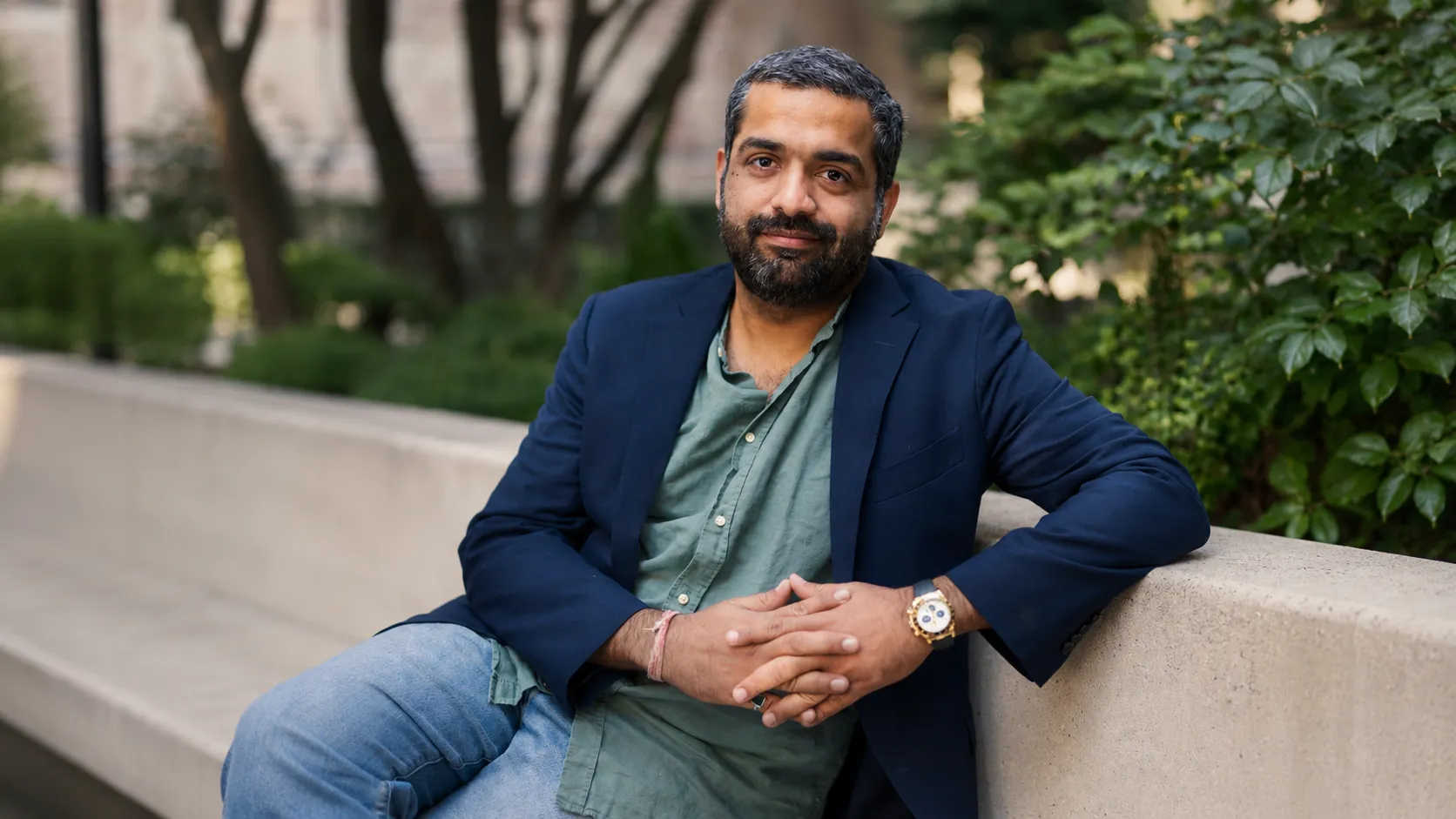
Every great healthcare technology company tends to be born from a very specific, very personal frustration with how broken the system actually is. For Kanav Hasija, that frustration crystallized not on a hospital floor, but during an academic research project at two of America's most prestigious universities. Hasija and Abhinav Shashank had met years earlier as undergraduates at the Indian Institute of Technology, Kharagpur, part of the 2010 batch, forging a friendship and working relationship that would eventually reshape a corner of the American healthcare industry.
After graduating from IIT Kharagpur, the two took different early paths — Shashank moved into the automation space in India, while Hasija headed to the United States to study patent law, eventually earning a master's degree in patent law from the University of New Hampshire. It was an unusual detour for an engineer, one that would later prove valuable in a highly regulated, intellectual-property-sensitive industry like healthcare technology. Their paths reconverged around 2011, when Shashank and Hasija began a data analytics research project spanning Wharton and Harvard University, focused on a deceptively difficult technical challenge: how to bring together distributed, fragmented datasets and apply meaningful analytical tools to them.
The Realization: Healthcare Was Drowning in Data It Couldn't Use
It was through this research that Hasija and Shashank confronted the specific inefficiency that would become Innovaccer's founding insight. American healthcare, they discovered, was generating an enormous, ever-growing volume of patient data — but that data lived scattered across dozens of disconnected electronic health record systems, hospital networks, and care settings, with no unified way for a physician to see a complete picture of a single patient. It wasn't a shortage of information that was hurting patient care; it was the complete inability to connect information that already existed. As one detailed account of the company's founding puts it, physicians and healthcare organizations were 'drowning in data but starved for insights' — a phrase that has since become something close to Innovaccer's founding mantra.
In 2014, Hasija and Shashank, joined by a third co-founder, Sandeep Gupta — an IIM Ahmedabad graduate with prior experience at TCS, Microsoft, and Ingersoll Rand — formally launched Innovaccer. The company's mission was to build a cloud layer that could connect with numerous existing electronic health record systems simultaneously, unifying patient data across disparate EHRs and care settings to give doctors and care teams the tools they needed at the actual point of care, rather than buried in a records request three departments away.
Building Trust in One of the Most Regulated Industries on Earth
The single hardest part of Innovaccer's early journey was not, in fact, a technical problem — it was a trust problem. Healthcare in the United States is governed by an extraordinarily dense web of privacy regulation, institutional risk-aversion, and legacy technology vendors with entrenched, decades-long relationships with hospital systems. For three young founders, two of them fresh off an academic research project and none of them American-born, walking into hospital boardrooms and convincing chief information officers to hand over access to their most sensitive, tightly regulated data was an uphill climb that required patience most venture-backed software founders never have to exercise. Hasija, drawing on his unusual patent law training, played a central role as the company's Chief Product Officer, developing the proprietary Innovaccer Data Activation Platform — the technical foundation underpinning what would later be branded the Innovaccer Health Cloud, described by the company as the industry's first full-stack platform purpose-built for healthcare.
From a Research Idea to a $3.2 Billion Valuation
The patience paid off. Innovaccer's Health Cloud platform steadily built a reputation among providers and payers as a genuinely differentiated way to unify clinical, operational, and financial healthcare data. The company grew from its 2014 founding into a business serving major health systems across the country, and by 2021, Innovaccer had raised a $150 million Series E round at a valuation of $3.2 billion — officially joining the small, elite club of Indian-founded unicorns to emerge from Silicon Valley. Total funding raised by the company has since grown past $675 million across nine funding rounds and 38 investors, according to data from Tracxn, with the company's headquarters based in San Francisco and a significant engineering and operations presence built out in India.
As the industry moved toward generative AI, Innovaccer built Sara, a conversational AI assistant named after the Hindu goddess of knowledge, Saraswati — a deliberate cultural nod from its Indian-origin founding team. Sara was designed to let care teams ask complex questions about population health data and receive humanlike, immediate responses, translating what used to require a data analyst and a multi-day turnaround into a natural-language conversation available on demand. The company's broader product suite has since expanded to include tools like Gravity, Atlas, Galaxy, Flow, Story Health, and an autonomous agentic AI layer spanning population health management, revenue cycle management, payer risk and quality programs, and public sector health initiatives.
A Twelve-Year Chapter Closes, and a New One Begins
By the mid-2020s, after twelve years of building Innovaccer from an academic research idea into one of the most prominent healthcare data platforms in the country, Hasija transitioned out of his day-to-day operating role as Chief Product Officer, moving into a position as a co-founder and board member while Abhinav Shashank continued to lead the company as CEO. It is worth being precise here, in the interest of the accurate, fact-checked journalism this publication is committed to: while all three individuals are properly credited as Innovaccer's co-founders, Shashank has served as CEO throughout the company's history, while Hasija's central contribution was as the company's chief product architect and, in his own words on platforms like Indiaspora, someone who spent twelve years 'building Innovaccer and helping reduce the cost' of American healthcare delivery.
Hasija's next chapter has already begun. He is now the co-founder and CEO of MeltPlan, a new venture built on the operating lessons and product instincts he sharpened over more than a decade at Innovaccer — a familiar arc among successful founders in the Indian-American technology community, where a first major company becomes the training ground, the capital base, and the credibility platform for a second, more independently defined act.
The Unusual Value of a Patent Law Detour
Among the many details that distinguish Hasija's path from the more conventional Silicon Valley engineer-to-founder pipeline, his decision to pursue a master's degree in patent law at the University of New Hampshire stands out as particularly consequential, even if it initially looked like a departure from a pure engineering career. Healthcare technology is one of the most intellectual-property-sensitive, litigation-prone sectors in the American economy, where a company's ability to defend its proprietary data architecture, and to navigate the dense regulatory thicket surrounding patient data interoperability, can determine whether it survives its first serious legal challenge from a competitor or an incumbent electronic health records vendor. Hasija's legal training gave Innovaccer's founding team a genuine structural advantage most healthtech competitors, staffed purely by engineers and clinicians, simply did not have: an internal, founder-level understanding of how to protect and structure the company's core technology as defensible intellectual property from day one, rather than treating that as an afterthought to be handled entirely by outside counsel.
Scaling Inside America's Most Risk-Averse Buying Committees
Selling software to American hospital systems is notoriously one of the slowest, most bureaucratically layered enterprise sales processes in the entire technology industry, often involving compliance committees, security audits, and clinical staff sign-off processes that can stretch a single sales cycle out to eighteen months or longer. For three founders without deep, pre-existing relationships inside American hospital administration, building enough credibility to close those early deals required years of patient, methodical relationship-building — attending health IT conferences, publishing detailed case studies, and slowly accumulating reference customers willing to vouch for the platform to their peers at other health systems. That grinding, multi-year sales discipline, largely invisible from the outside, is precisely what allowed Innovaccer to eventually reach the scale where it could serve major health systems, payers, and government health agencies simultaneously, rather than remaining a niche vendor serving a handful of early adopters.
Naming an AI Assistant After a Goddess of Knowledge
The decision to name Innovaccer's conversational AI assistant 'Sara,' after Saraswati, the Hindu goddess of knowledge, wisdom, and learning, reflects something deeper than a clever branding choice — it is a small but telling window into how deliberately the company's Indian-origin founding team has woven cultural identity directly into its product decisions, even while building a company squarely focused on the American healthcare market. For a founding team navigating the culturally conservative, deeply American institutional world of hospital administration and health insurance, choosing to publicly root a core product in explicitly Indian cultural symbolism was itself a quiet statement of confidence — a signal that the founders saw no need to obscure their own heritage in order to be taken seriously by the health systems and government agencies that make up Innovaccer's client base. That confidence has proven justified: Sara has gone on to become a central, widely used feature of the Innovaccer Health Cloud platform, helping care teams translate complex population health data into immediate, humanlike answers.
Competing Against Verily, IQVIA, and Entrenched Health IT Giants
Innovaccer's competitive landscape includes some of the most deeply entrenched names in health technology, including Alphabet's Verily, the clinical data giant IQVIA, and Veeva Systems, according to competitive analysis from Tracxn — companies with vastly larger balance sheets, decades-long incumbent relationships with major health systems, and, in several cases, direct backing from some of the largest technology companies in the world. That Hasija, Shashank, and Gupta managed to carve out a genuinely differentiated position against competitors of that scale, building a company now employing more than 1,200 people, speaks to just how precisely the founding team identified a real, underserved gap in the market: not simply better analytics, but a genuinely unified, full-stack data activation layer capable of connecting the sprawling, fragmented mess of electronic health record systems most hospital networks had accumulated over decades of piecemeal technology purchasing decisions.
A Widening Circle of Institutional Trust
By the mid-2020s, Innovaccer's client base had expanded well beyond individual hospital systems to include large payer organizations and government public health agencies, a progression that reflects the gradual, compounding trust the company built over more than a decade of consistent execution. Winning government health program contracts in particular requires clearing an even higher bar of security certification, data governance, and procurement scrutiny than private hospital system sales, and Innovaccer's ability to expand into that segment stands as further validation of the founding team's original, patient approach to building durable institutional relationships rather than chasing quick, transactional wins.
A Story About Patient, Long-Horizon Building
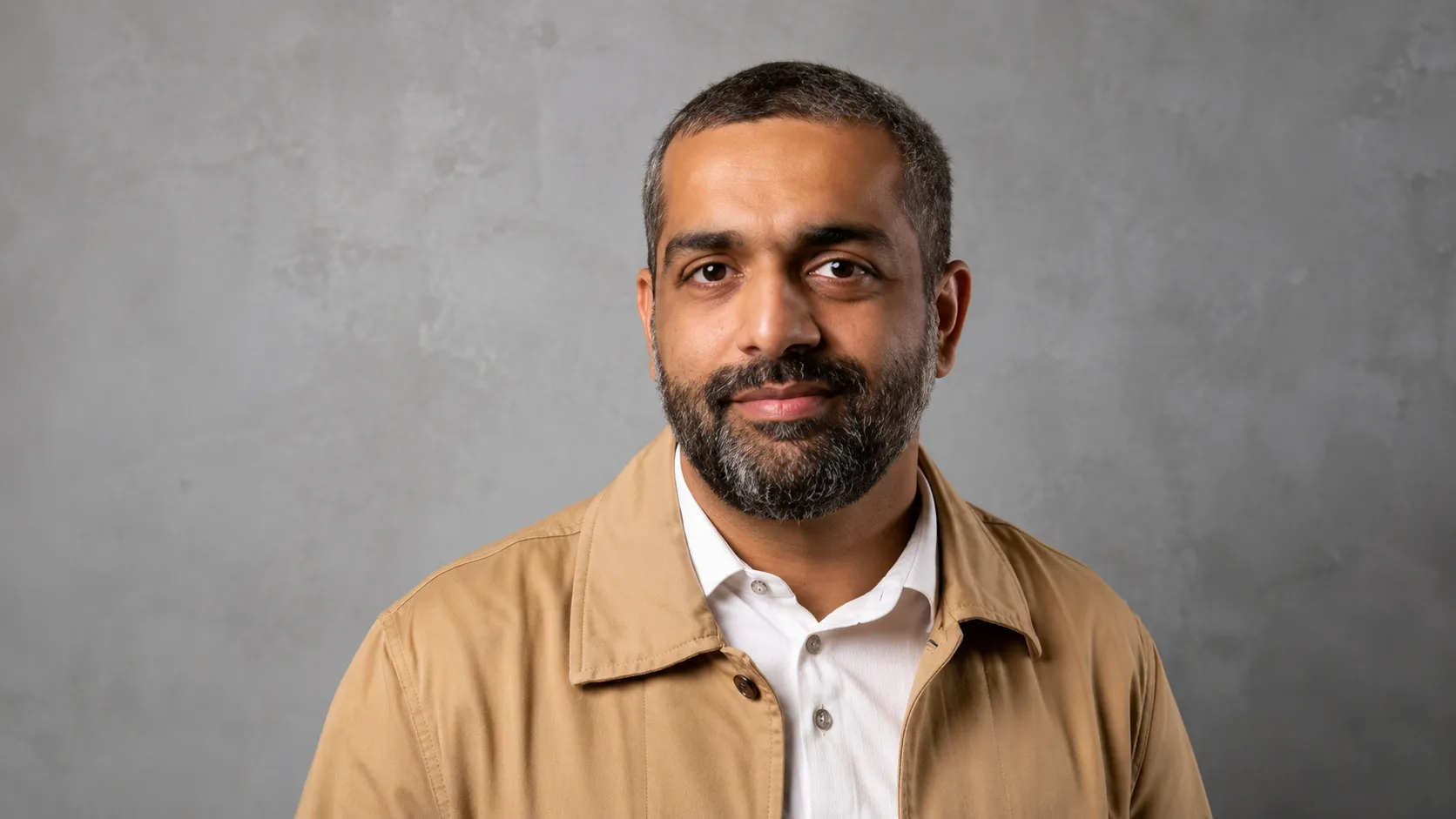
What makes Hasija's story distinct from some of the more dramatic, headline-grabbing founder narratives elsewhere in this series is its sheer duration and its lack of shortcuts. There was no single viral moment, no billion-dollar overnight valuation spike, no dramatic pivot from an unrelated field. There was, instead, twelve years of grinding, incremental trust-building inside one of the most conservative, regulation-bound industries in the American economy — the kind of long, patient company-building that rarely trends on social media but quietly reshapes how millions of patients receive care.
For young Indian and NRI engineers looking at Hasija's career, the lesson is less about a single flash of brilliance and more about compounding, disciplined execution: an unusual academic detour into patent law that turned out to be strategically valuable, a genuine research-driven insight into a real-world problem, and more than a decade of unglamorous product-building before the word 'unicorn' ever entered the conversation. Innovaccer's continuing growth, and Hasija's own transition into a second founder journey with MeltPlan, together tell a story less about a single triumphant leap and more about the durable, generational value that patient, technically rigorous company-building can create — a lesson increasingly relevant to a new generation of Indian-origin founders now entering health technology, drug discovery, and clinical AI, industries that reward exactly the kind of long-horizon patience Hasija's own career has consistently demonstrated. That legacy, still unfolding, offers a grounded, credible model for the next wave of Indian-origin healthcare entrepreneurs now entering the field.
As American healthcare continues its slow, uneven shift toward value-based, data-driven care models, the interoperability infrastructure Hasija helped design in Innovaccer's earliest years has only grown more central to how large health systems actually operate day to day, a quiet, structural legacy that will likely outlast any single funding round or valuation headline associated with the company.


