
The Healthtech IPO Wave: PharmEasy, HealthKart, and Lybrate Are All Filing to Go Public—Inside the ₹15,000 Crore Pipeline That's Finally Proving Digital Healthcare Can Make Money
MUMBAI — May 30, 2026 — In the winter of 2022, PharmEasy was in trouble. The online pharmacy and diagnostics platform, which had raised over $1.5 billion from investors including TPG, Prosus, and Temasek, had borrowed heavily to finance the acquisition of its largest competitor, Medlife, and then again to acquire the diagnostic chain Thyrocare. The debt was substantial—approximately $300 million—and the company's path to repaying it was uncertain. The IPO that PharmEasy had filed for in 2021 had been withdrawn, a casualty of the market's post‑pandemic repricing of technology stocks. The company's valuation, which had peaked at over $5 billion, was being marked down by its own investors. The financial press was writing its obituary. The narrative was familiar: another Indian startup that had raised too much, spent too fast, and was now facing the consequences.
Four years later, PharmEasy has filed a fresh draft red herring prospectus with the Securities and Exchange Board of India, seeking to raise approximately ₹6,500 crore in what will be the largest health‑technology initial public offering in Indian history. The company's revenue for FY26 is projected to exceed ₹7,000 crore, with a net profit margin of approximately 4 percent—a modest figure by the standards of the technology industry, but a transformative one for a company that was losing money on every transaction as recently as 2023. The Thyrocare acquisition, which was once described as a debt‑fuelled disaster, has become the engine of the company's profitability—the diagnostic business generating the margins that the pharmacy business could not, and the combined entity achieving a scale that neither could have reached alone. The online pharmacy that was supposed to be dead has, instead, become the largest health‑tech company in India—and the IPO pipeline that it leads now includes HealthKart, the nutrition‑and‑wellness D2C brand that has filed for a ₹3,500 crore IPO, and Lybrate, the telemedicine platform that has filed for a ₹1,800 crore listing. Together, the three companies represent a combined IPO pipeline of approximately ₹11,800 crore—and a bet, by the public markets, that the Indian health‑tech sector has finally crossed the threshold from cash‑burning startup to sustainable enterprise.
"The health‑tech market has been the most difficult sector in Indian consumer internet to build a profitable business. The regulatory environment is complex. The customer‑acquisition costs are high. The trust barrier is enormous. The companies that have survived the past five years are the ones that have built real businesses—not the ones that bought growth with venture capital. The IPO pipeline is the market's judgment that those businesses are finally ready." — Health‑tech investor, speaking anonymously to TIGI
The PharmEasy Resurrection
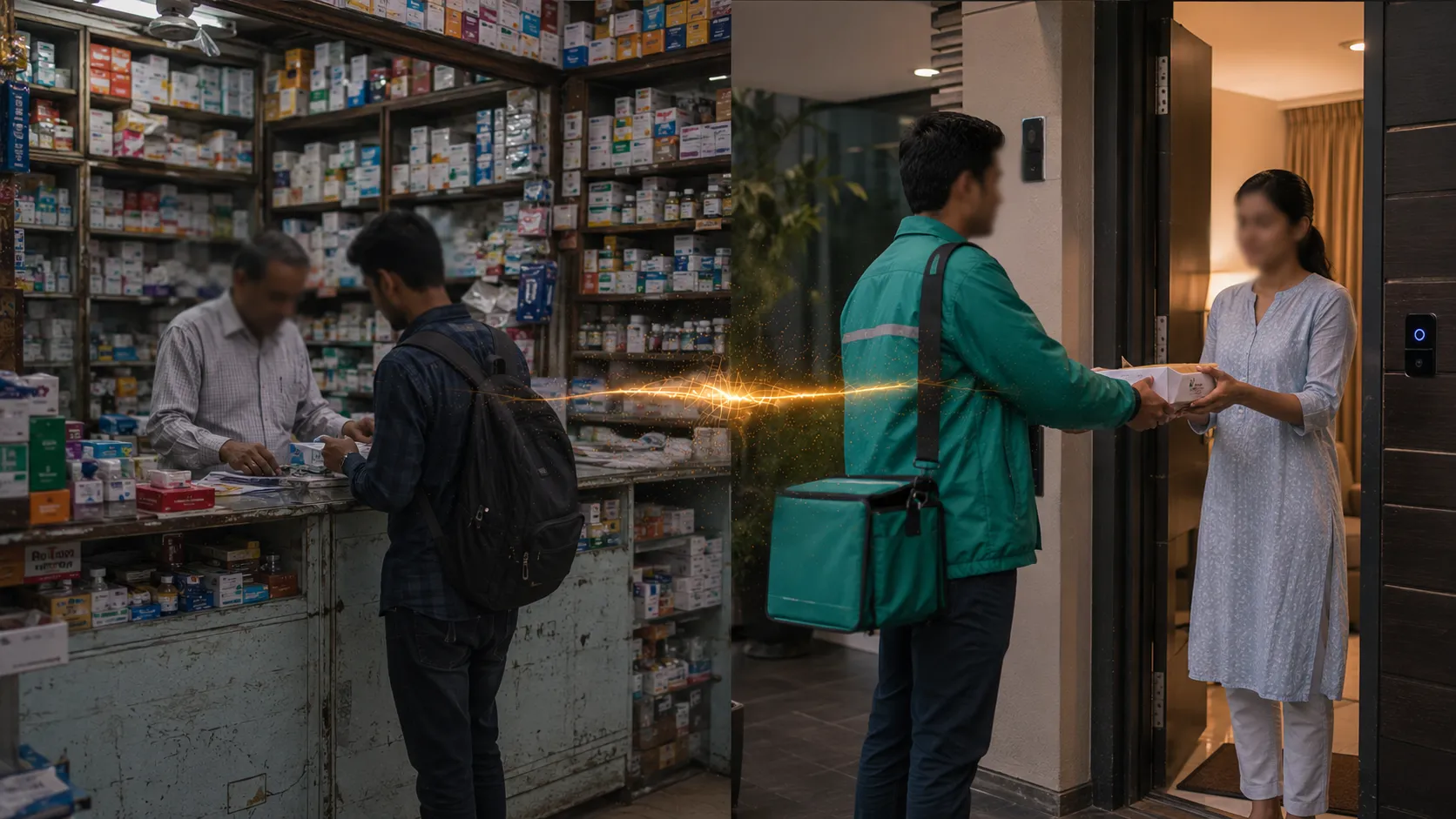
The PharmEasy resurrection is the most instructive story in the Indian health‑tech sector, because it contains every element of the sector's boom, bust, and recovery. The company was founded in 2015 by Dharmil Sheth and Dhaval Shah, two engineers who had previously worked at a logistics startup and who believed that the Indian pharmacy market—fragmented, inefficient, dominated by small, independent retailers—was ripe for disruption. The proposition was simple: a digital platform that would allow customers to order medicines online, at a discount, with delivery to their doorstep. The proposition worked, for a time, because the venture‑capital market was willing to fund the losses, and because the pandemic created a surge in demand for digital pharmacy services. PharmEasy grew rapidly, acquiring customers, expanding into diagnostics, and raising capital at ever‑higher valuations. By 2021, it was the largest digital pharmacy in India, and it was preparing to go public at a valuation of over $5 billion.
The IPO was withdrawn in November 2021, a casualty of the market's post‑pandemic repricing of technology stocks. The company's financials, which had been prepared for a market that was willing to value growth over profitability, were suddenly being scrutinised by investors who wanted to see a path to positive unit economics. The Thyrocare acquisition, which had been announced in June 2021, was supposed to be the catalyst for that path—the diagnostic business generating the margins that the pharmacy business could not—but the integration was more difficult, and more expensive, than the company had anticipated. The debt that PharmEasy had taken on to finance the acquisition became a burden, and the company was forced to restructure its balance sheet, to renegotiate its debt covenants, and to cut costs aggressively. The restructuring was painful, but it was effective. By FY25, PharmEasy had returned to growth, and by FY26, it had achieved profitability—the first major Indian health‑tech company to do so.
The PharmEasy that is filing for an IPO in 2026 is a fundamentally different company from the one that withdrew its IPO in 2021. It is larger, more diversified, and more profitable. The pharmacy business, which was once the company's primary revenue driver, now accounts for approximately 55 percent of revenue. The diagnostics business, which was built through the Thyrocare acquisition and subsequent organic expansion, accounts for approximately 30 percent. The telemedicine business, which was launched during the pandemic and which has been growing steadily, accounts for approximately 10 percent. The remaining 5 percent comes from the company's nascent health‑insurance distribution business and its enterprise‑wellness offering. The diversification is not merely a revenue strategy. It is a risk‑management strategy—a way of ensuring that the company is not dependent on any single segment of the health‑tech market for its growth.
The PharmEasy IPO will be a watershed moment for the Indian health‑tech sector—not merely because of its size, but because of the signal it sends. The company that was supposed to be dead has instead become the largest health‑tech company in India, and its IPO will be the first test of whether the public markets are willing to value a digital‑health platform at a multiple that reflects its growth potential rather than its current profitability. The outcome of that test will determine the IPO prospects of every other health‑tech company in the pipeline—and the pipeline is filling fast.
The HealthKart and Lybrate Filings
HealthKart, the D2C nutrition‑and‑wellness brand that filed its draft papers in April 2026, is a different kind of health‑tech company. It was founded in 2011 by Sameer Maheshwari, a former investment banker who had spent years researching the Indian nutrition‑supplement market and who believed that the market was large, underserved, and ready for a trusted, digitally native brand. The company began as an online retailer of third‑party supplements, but it quickly pivoted to building its own brands—MuscleBlaze for sports nutrition, TrueBasics for general wellness, HK Vitals for daily health—that now account for the majority of its revenue. The pivot was strategic: the margins on owned brands are significantly higher than the margins on third‑party products, and the brand loyalty that the owned brands generate is significantly more durable. HealthKart's revenue for FY26 is projected to exceed ₹2,800 crore, with a net profit margin of approximately 8 percent—a figure that is higher than PharmEasy's, and that reflects the structural advantages of the D2C brand model.
The HealthKart IPO is significant because it represents the maturation of the Indian D2C health‑and‑wellness market—a market that barely existed a decade ago, and that is now large enough to support a public listing. The company's brands—MuscleBlaze, TrueBasics, HK Vitals—have become household names in the urban, health‑conscious demographic, and the company's direct‑to‑consumer distribution model gives it a relationship with its customers that the traditional supplement brands, which sell through pharmacies and retail chains, cannot match. The HealthKart customer who buys MuscleBlaze protein powder every month is not merely a transaction. They are a subscriber—a recurring‑revenue stream that the company can rely on, and that the public markets will value accordingly.
Lybrate, the telemedicine platform that has filed for a smaller IPO, is the third major health‑tech listing of 2026. Lybrate was founded in 2013 by Saurabh Arora, a former engineer who had experienced the difficulty of accessing quality healthcare in India's smaller cities and who believed that a digital platform could bridge the gap between patients and doctors. The company's platform allows patients to consult with doctors via text, voice, or video, and it has built a network of over 200,000 doctors across India. The company's revenue for FY26 is projected at approximately ₹600 crore, with a net profit margin of approximately 3 percent. The Lybrate IPO is smaller than the PharmEasy and HealthKart offerings, but it is significant for the same reason: it represents the public market's willingness to value a digital‑health platform that has achieved profitability, however modest, after years of venture‑capital‑fuelled growth.
The Profitability Threshold
The most important variable in the health‑tech IPO wave is the profitability threshold. The Indian health‑tech market, like every other segment of the consumer‑internet economy, was built on a model that was subsidised by venture capital. The startups that dominated the sector—PharmEasy, Netmeds, 1mg, Practo, Lybrate—raised enormous sums at enormous valuations, and they used that capital to acquire customers, to subsidise prices, and to build infrastructure. The model worked, for a time, because the venture capitalists were willing to fund the losses, and because the market was growing fast enough to justify the valuations. But the model stopped working when the venture‑capital market tightened, when the public markets began to demand profitability rather than growth, and when the startups that had been burning cash for years were forced to confront the brutal arithmetic of their own business models.
The profitability threshold has been the single most difficult hurdle for the Indian health‑tech sector to cross. The health‑tech business is, by its nature, a low‑margin business. The pharmacy business is a commodity business—the margins on prescription medicines are thin, and the competition from the offline pharmacies is intense. The diagnostics business is a capital‑intensive business—the equipment, the laboratories, and the quality‑control systems required to operate a diagnostic chain are expensive. The telemedicine business is a trust‑intensive business—the customer who is willing to consult a doctor online is a customer who must trust the platform, the doctor, and the quality of the consultation, and that trust is difficult to build and easy to lose. The health‑tech companies that have achieved profitability are the ones that have found a way to generate margins in a low‑margin industry—through scale, through diversification, and through the discipline that the post‑ZIRP era has forced upon them.
The profitability threshold also has a regulatory dimension. The Indian health‑tech sector is regulated by a patchwork of laws and agencies—the Drugs and Cosmetics Act, the Pharmacy Act, the Clinical Establishments Act, the Telemedicine Practice Guidelines—that were designed for an offline, pre‑digital healthcare system. The health‑tech companies that have survived the regulatory gauntlet are the ones that have invested in compliance, in legal expertise, and in the relationships with the regulators that are necessary to operate in a sector that is, by its nature, subject to intense public scrutiny. The regulatory environment is not hostile to the health‑tech sector, but it is demanding—and the demands are easier to meet for the larger, more established, and better‑capitalised players than for the smaller, independent startups. The IPO pipeline is, in this sense, a reflection of the regulatory maturity of the sector—a signal that the companies that are going public have built the compliance infrastructure that the public markets require.
The Competition from the Platforms
The most significant competitive threat to the Indian health‑tech sector is not another health‑tech startup. It is the technology platforms—the Amazons, the Flipkarts, the Reliance Jios—that are building their own digital‑pharmacy and telemedicine capabilities, and that have the scale, the capital, and the customer relationships to compete with the standalone health‑tech companies on every dimension that matters. Amazon Pharmacy, which launched in India in 2023, has been expanding rapidly, leveraging the trust and the logistics infrastructure of the e‑commerce platform to offer prescription medicines at competitive prices. Flipkart Health, which launched in 2024, has been pursuing a similar strategy. Reliance Jio's digital‑health platform, which is integrated with the Jio ecosystem, has been building its own pharmacy and telemedicine capabilities.
The platform threat is real, but it is not existential. The health‑tech companies that are going public have built brand equity, customer trust, and operational expertise that the platforms cannot replicate overnight. The PharmEasy customer who has been ordering medicines from the platform for five years is not going to switch to Amazon Pharmacy because it is marginally cheaper. The HealthKart customer who has been using MuscleBlaze protein powder for three years is not going to switch to a Flipkart‑owned brand because it is more convenient. The trust that the health‑tech companies have built is their moat, and the moat is deeper than the platforms' price advantages. The IPO pipeline is, in this sense, a bet that the trust moat will hold—that the customers who have been acquired over years of service will remain loyal to the platforms that earned their loyalty, even as the technology giants enter the market.
What This Signals
The health‑tech IPO wave is not primarily a story about three companies. It is a story about the structural maturation of the Indian health‑technology sector—a shift from a market that was defined by venture‑capital‑fuelled hypergrowth to a market that is defined by profitability, regulatory compliance, and the discipline of the public markets. The companies that are going public—PharmEasy, HealthKart, Lybrate—are the survivors of a decade‑long process of experimentation, consolidation, and natural selection. They have built real businesses, with real customers, real revenue, and, for the first time, real profits. The health‑tech sector has been the most difficult sector in Indian consumer internet to build a sustainable business—and the companies that are about to list on the public markets are the ones that have finally figured out how to do it. The ₹15,000 crore IPO pipeline is the market's judgment that the effort was worth it.


