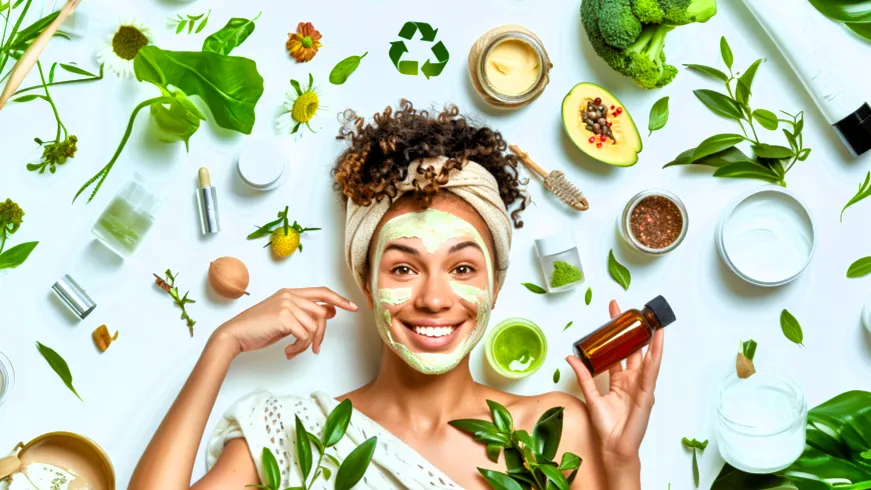
The Numbers That Define a Revolution
The statistics are nothing short of remarkable. The global natural skincare market was valued at approximately $22.8 billion in 2025 and is projected to reach $39.24 billion by 2030, growing at a compound annual growth rate of 11.4%. This growth rate significantly outpaces the broader skincare market, which is growing at around 5-6% annually. In simpler terms, natural skincare is growing at nearly twice the speed of the overall industry.
If we expand the lens to include the broader natural and organic cosmetics market—which encompasses makeup, haircare, and personal care products—the numbers become even more impressive. This broader market was valued at $43.95 billion in 2025 and is expected to reach $54.19 billion by 2030. The skin and sun care segment alone generated $17.2 billion in 2025 and is projected to grow at a CAGR of 6.9% through 2035.
In the United States, certified organic product sales rose 5.2% in 2024, more than double the growth rate of the total market. This indicates that consumers are not just buying natural products opportunistically; they are actively seeking them out and prioritizing them over conventional alternatives. The shift is structural, not cyclical.

Why the Shift? Understanding Consumer Motivation
Several converging factors are driving the mass adoption of natural skincare products. Understanding these motivations is crucial for brands looking to capitalize on the trend.
First, heightened awareness of synthetic chemicals. Consumers are increasingly educated about the potential harms of parabens, sulfates, phthalates, and synthetic fragrances. Social media influencers, dermatologists, and wellness advocates have popularized the concept of "clean beauty," creating a generation of consumers who scrutinize ingredient lists with the same rigor as food nutrition labels. The fear of endocrine disruptors, carcinogens, and skin irritants has made synthetic formulations unpalatable to a growing segment of the population.
Second, the wellness movement. Skincare is no longer viewed as a standalone beauty routine; it is an integral part of overall health and wellness. Consumers are applying the same holistic principles to their skincare that they apply to their diets and fitness regimens. If they wouldn't eat synthetic chemicals, why would they apply them to their skin—the body's largest organ? This philosophical alignment has driven demand for products that are not just safe but actively nourishing.
Third, environmental consciousness. The natural skincare boom is inextricably linked to broader environmental concerns. Consumers are worried about microplastics, non-biodegradable packaging, and the carbon footprint of cosmetic manufacturing. Natural brands often emphasize sustainable sourcing, minimal packaging, and ethical labor practices, appealing to eco-conscious shoppers who want their purchases to reflect their values.
Fourth, the Indian context. In India, traditional knowledge systems like Ayurveda have long emphasized the use of natural ingredients for skincare. The modern natural skincare movement is, in many ways, a rediscovery of this ancient wisdom. Indian consumers are increasingly rejecting chemical-laden Western formulations in favor of products that incorporate turmeric, neem, sandalwood, aloe vera, and other time-tested botanicals. This cultural alignment gives Indian natural skincare brands a unique competitive advantage.
The Indian Natural Skincare Boom
India is emerging as a significant player in the global natural skincare market, driven by a combination of traditional knowledge, entrepreneurial energy, and a rapidly growing middle class with disposable income. Several Indian brands have successfully captured consumer attention and market share.
BloomyBliss is a noteworthy example. The brand launched an organic skincare line featuring ingredients sourced from its own organic farm, ensuring complete traceability and quality control. By controlling the supply chain from farm to bottle, BloomyBliss offers consumers unprecedented transparency. The products are packaged in eco-friendly materials, reinforcing the brand's sustainability credentials. This farm-to-face model is gaining traction as consumers demand to know exactly where their ingredients come from.
AFFOREST Green Beauty introduced India's first jackfruit-based skincare line, addressing pigmentation and aging concerns with a unique blend of botanicals. The inclusion of ashwagandha and niacinamide reflects a sophisticated understanding of both traditional Indian ingredients and modern dermatological science. By positioning itself at the intersection of tradition and innovation, AFFOREST has carved out a distinct niche in a crowded market.
Mama Earth, perhaps India's most recognizable natural skincare brand, has achieved remarkable scale by combining Ayurvedic principles with modern formulations. The brand's emphasis on toxin-free, cruelty-free, and sustainable products has resonated with millions of Indian consumers. Mama Earth's success has inspired a wave of imitators and demonstrated that natural skincare can be both profitable and scalable.
The Science Behind Natural Formulations
One of the most significant developments in the natural skincare industry is the growing sophistication of formulations. Gone are the days when natural products were viewed as inferior to their synthetic counterparts in terms of efficacy. Modern natural skincare brands are investing heavily in research and development, leveraging green chemistry, biomanufacturing, and advanced extraction techniques to create high-performance formulations.
Green chemistry principles are being applied to develop ingredients that are not only natural but also more effective and stable. Biomanufacturing—using microorganisms to produce active ingredients—is enabling brands to create compounds that are identical to those found in nature but more scalable and consistent.
For example, plant stem cell technology is being used to create powerful anti-aging ingredients without harvesting endangered plants. Fermentation techniques are being employed to enhance the bioavailability of botanical actives, making them more effective at penetrating the skin barrier. These scientific advancements are blurring the line between natural and synthetic, creating products that are both clean and clinically effective.

The Role of Packaging and Sustainability
Sustainability in natural skincare extends beyond the formulation to the packaging. Consumers are increasingly scrutinizing the environmental impact of packaging, and brands are responding with innovative solutions. Biodegradable packaging, refillable containers, and minimalist designs are becoming standard in the natural skincare segment.
The use of glass over plastic, recycled materials, and plant-based inks are common practices among natural brands. Some companies have even introduced return-and-recycle programs, allowing consumers to send back empty containers for proper recycling or upcycling. These initiatives not only reduce environmental impact but also build brand loyalty among eco-conscious consumers.
The "zero-waste" movement has also found its way into skincare. Brands are offering solid shampoo bars, cleansing balms in reusable tins, and concentrated formulas that require less packaging. While these products represent a small fraction of the market, they are growing rapidly and appealing to the most environmentally committed consumers.
The Digital Transformation and Consumer Engagement
The natural skincare boom has been amplified by digital platforms. Social media, particularly Instagram, TikTok, and YouTube, have become the primary channels for discovery and education. Influencers, dermatologists, and skincare enthusiasts share ingredient breakdowns, routine tutorials, and product reviews, creating a rich ecosystem of content that drives consumer decision-making.
Indian skincare brands have been particularly adept at leveraging digital platforms. They use educational content to demystify ingredients, build trust, and differentiate themselves from competitors. Live sessions with founders, behind-the-scenes glimpses of manufacturing, and user-generated content campaigns create a sense of community and authenticity that traditional advertising cannot replicate.
E-commerce has also played a crucial role. Direct-to-consumer models allow brands to bypass retail intermediaries, maintain control over their pricing and messaging, and build direct relationships with customers. Subscription services, personalized recommendations, and AI-driven skin analysis are enhancing the customer experience and driving repeat purchases.
Challenges and Criticisms
Despite its remarkable growth, the natural skincare industry faces several challenges and criticisms that must be addressed for sustained success.
First, greenwashing. As with any trend, there are companies that exploit consumer trust without delivering genuine benefits. Brands may label products as "natural" or "organic" while containing synthetic ingredients, or they may make exaggerated claims about efficacy. This erodes consumer trust and undermines the credibility of the entire category. Regulatory bodies are increasingly scrutinizing such practices, but enforcement remains inconsistent.
Second, efficacy questions. While natural ingredients can be highly effective, not all natural formulations are created equal. Some natural products may lack the stability or penetration needed to deliver visible results. Consumers who try ineffective natural products may become disillusioned and return to conventional alternatives. The industry must prioritize clinical validation and transparent communication about efficacy.
Third, cost and accessibility. Natural and organic skincare products often carry a premium price tag, making them inaccessible to price-sensitive consumers. While this is partly justified by higher-quality ingredients and sustainable practices, it also risks creating a two-tier market where only the affluent can afford clean beauty. Brands are exploring ways to lower costs without compromising quality, but the challenge remains significant.
Fourth, supply chain complexity. Sourcing natural ingredients ethically and sustainably is more complex than sourcing synthetic alternatives. Natural ingredients can be subject to seasonal availability, crop failures, and price volatility. Brands must invest in resilient supply chains and fair-trade partnerships to ensure consistent quality and availability.
The Future Outlook
Looking ahead, the natural skincare industry shows no signs of slowing down. Several trends will shape its evolution over the next five to ten years.
Personalization will become increasingly important. AI-driven tools will analyze individual skin types, concerns, and preferences to recommend bespoke formulations. Natural brands that can offer personalized solutions will have a significant competitive advantage.
Biotechnology will play a larger role. As mentioned earlier, biomanufacturing will enable the production of natural-identical ingredients at scale, reducing reliance on agricultural sourcing and minimizing environmental impact. This will also help address supply chain challenges and price volatility.
Inclusivity will become a non-negotiable. Consumers are demanding products that work for all skin tones and types, not just a narrow ideal. Natural brands must invest in diverse testing and formulation to ensure their products are truly universal.
Regulatory harmonization will improve. As the natural skincare market grows, regulatory bodies will develop clearer standards and definitions for terms like "natural," "organic," and "clean." This will reduce greenwashing and build consumer confidence.
India's role will expand. With its rich botanical heritage, cost-effective manufacturing, and growing domestic market, India is poised to become a global hub for natural skincare. Indian brands that invest in research, quality, and global distribution will be well-positioned to capture international market share.
Conclusion
The natural skincare revolution is not a fleeting trend; it is a structural shift in consumer behavior that reflects deeper changes in how people think about health, wellness, and sustainability. The numbers tell a clear story: natural skincare is growing at twice the rate of the broader market, and this growth is being driven by informed, values-driven consumers who demand transparency, efficacy, and ethical practices.
For brands, the opportunity is immense but demanding. Success requires more than simply adding a few natural ingredients to existing formulations. It requires a fundamental commitment to quality, sustainability, and consumer education. Brands that can deliver on these dimensions will build lasting relationships with customers and capture significant market share.
For consumers, the natural skincare boom offers unprecedented choice and control. They can now make purchasing decisions that align with their values while achieving the skin health results they desire. The future of skincare is clean, conscious, and natural—and that future has already arrived.


