The Great Unbundling: How D2C from Tier 2 & 3 India is Rewriting the Global E-commerce Playbook
The next revolution in global consumerism isn't happening in New York, London, or even Mumbai. It is brewing in the quiet, ambitious corridors of Ahmedabad, Indore, and Coimbatore. For decades, Western media and investors fixated on India's urban elite as the primary drivers of consumption. But a quiet, seismic shift is turning that assumption on its head.
Consider this: only a few years ago, a first-time premium skincare buyer existed almost exclusively in the tony neighborhoods of South Delhi. Today, that customer lives in Udaipur. They are just as ingredient-conscious, just as design-savvy, and crucially, they are moving the needle for the market. In the last fiscal year, Tier 2 and 3 cities drove 66% of all new direct-to-consumer (D2C) orders, not only proving their appetite but also pushing the sector to grow at 32% year-on-year. This isn't just growth; it is the "Great Unbundling" of the Indian consumer—a transition where the future of retail is being built by first-time buyers in small towns.
For the American reader who tracks the Asian growth story, the narrative needs an update. The Indian dream is no longer just about a $70 billion e-commerce market. According to ICICI Securities, that figure is expected to nearly triple to $214 billion by FY30. This boom is fueled by the "Bharat" consumer—digitally native, value-conscious, and finally empowered by the internet. This is the new story of the Impactful Global Indian.
The Space Race Moves to Hyderabad
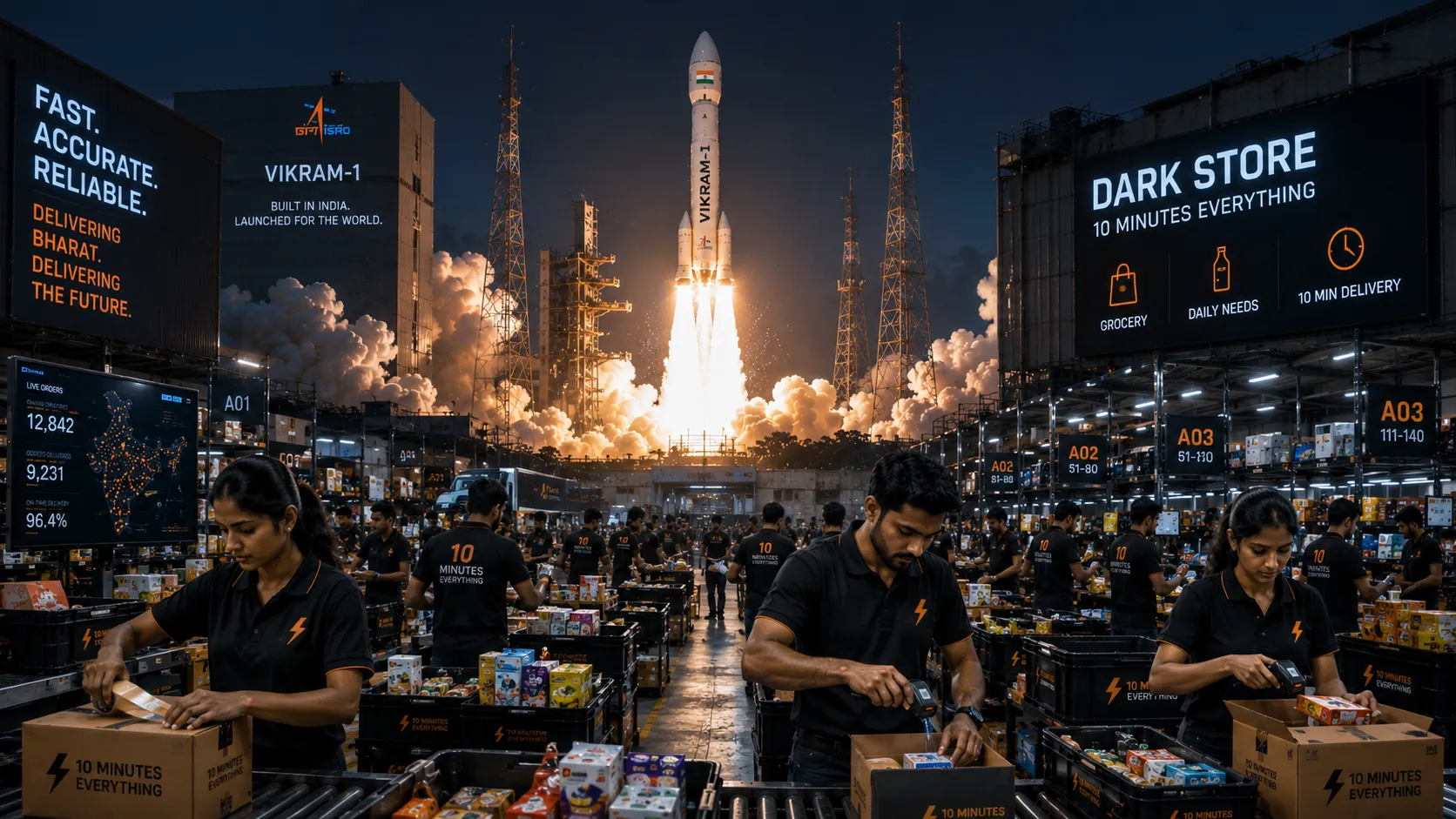
While "Bharat" fuels the e-commerce engine, India’s tech prowess is soaring—literally. The Indian startup ecosystem officially entered the stratosphere in May 2026 when Hyderabad-based Skyroot Aerospace became the country’s first space-tech unicorn.
The story of Pawan Kumar Chandana and his team is the quintessential Tech-Tiger fable. Less than a decade ago, the idea of a private Indian company building orbital rockets was pure fantasy, dominated entirely by ISRO (the Indian Space Research Organisation). Yet, in a landmark funding round led by Sherpalo Ventures and GIC—joined by giants like BlackRock—Skyroot raised $60 million, pushing its valuation past the $1.1 billion mark.
This isn't just a vanity valuation. The funding is being deployed to prepare for the launch of Vikram-1, India’s first privately developed orbital rocket, slated for the coming weeks. For the global tech community, this signals that India has moved beyond being just a software back-office. It is now a serious player in hard tech, satellites, and launch systems. As the country aims to increase its share of the global space economy, the "Space Unicorn" might soon become a new normal.
The "Bharat" Consumer: Data, Logistics, and the Profitability Shift
The D2C boom has a hidden hero—operations. The early days of Indian e-commerce were defined by marketing spend and "growth at all costs." Today, the conversation has shifted to unit economics. The data from a massive study covering over 400 million order items reveals the secret to survival: Logistics and Retention.
The Unicommerce India D2C Report 2026 found something fascinating. Growth isn't coming from raising prices; the entire market grew 33% by selling more products to more people, not by charging more. However, profitability is being threatened by high Return-to-Origin (RTO) rates, particularly for Cash-on-Delivery (COD) orders. During the festive season, COD orders posted a staggering 58% return rate, while Prepaid orders sat at under 15%.
The Fix: The brands that pulled ahead incentivized prepaid payments. By offering faster delivery or micro-cashbacks, they nudged fence-sitters to pay upfront, driving RTO rates down from 39% to 21% in just a few months.
The Outcome: Technology is creating personalized shopping experiences, moving away from "spray and pray" marketing to AI-led recommendations. This efficiency is unlocking a future where Tier 2 cities are not just consumption hubs but also hubs for building nationally scaled brands.
Beyond the Metro: The Value Commerce Explosion
Let’s look at the structural shifts. A joint report by Redseer and Flipkart highlights a fascinating divergence in the Indian online retail market (currently at ~$80 Billion growing at 21%).
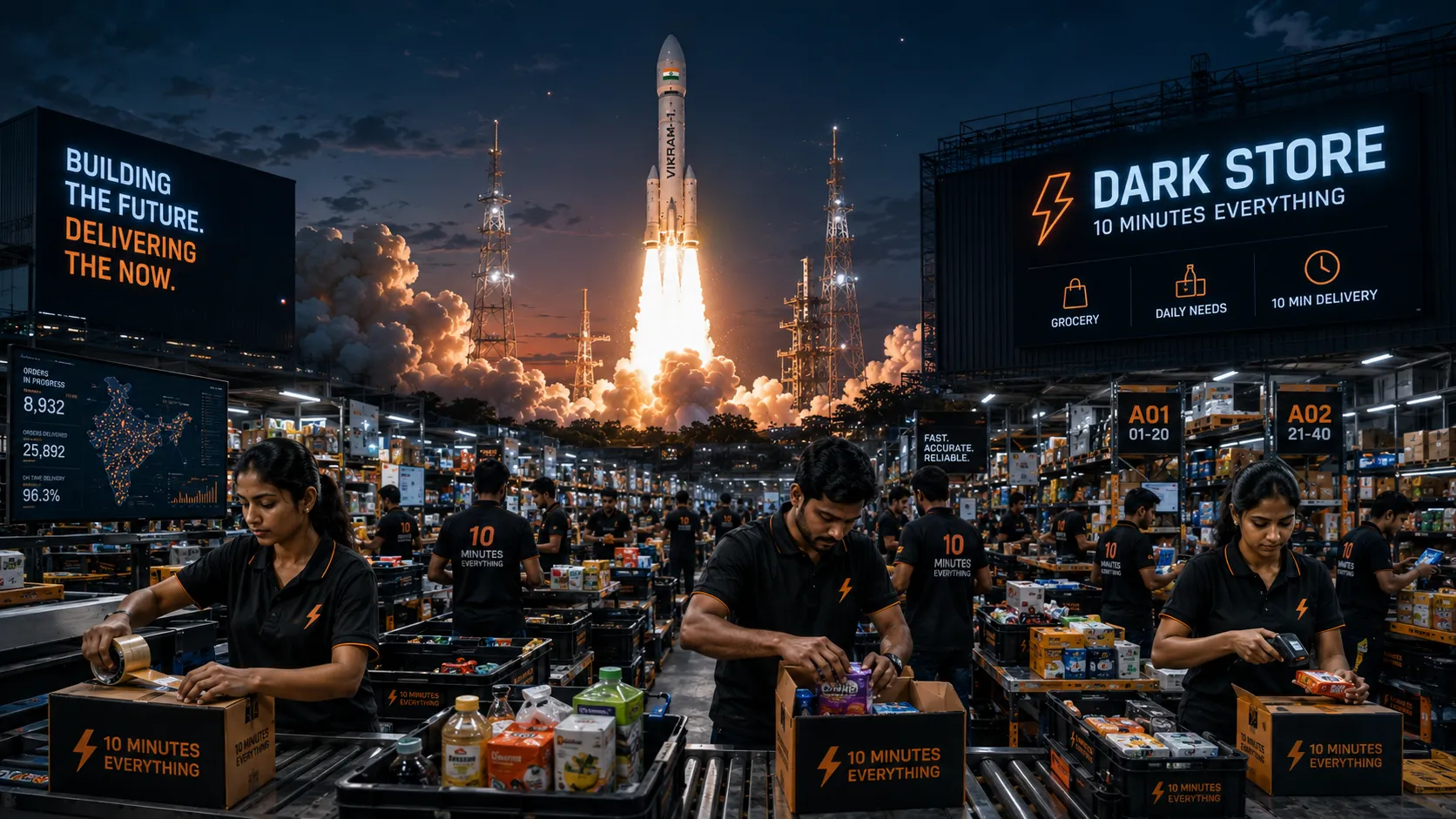
Speed in the Metro: Quick Commerce (delivery in 10-15 minutes) is now the dominant growth engine in urban India, growing at an astonishing 120% year-on-year. Platforms are expanding their dark store networks to over 200 cities to satiate the demand for instant essentials.
Scale in "Bharat": Meanwhile, Value Commerce is taking over Tier 2+ India. With an average selling price kept deliberately low, this segment is prioritizing user acquisition and penetration, introducing 320-340 million annual transacting users to the online world.
The takeaway for global investors is clear: The "India Strategy" is no longer a monolith. One must play the immediate gratification game in the metros while playing the patient, volume-based scale game in the hinterlands.
The Return of the "Unbundled" Brand
In the middle of all this tech frenzy, the "Cult of the Founder" is returning. Instead of competing purely on price, new-age brands are winning on trust and community. D2C Insider recently launched ConsumerX Ventures, a ₹150 crore fund aimed squarely at pre-seed and seed-stage consumer brands.
This is being mirrored across the ecosystem. The kitchenware brand Cumin Co. raised $5 million on the back of delivering 10X revenue growth within eight months of launch. Similarly, Anveshan, a clean-label food brand, raised ₹150 crore, with 50-55% of its revenue now coming directly from those Tier 2 and 3 cities we’ve been discussing.
These brands are redefining what "Made in India" means. They are not just copycats; they are building products specifically for Indian tastes—whether it is a pan optimized for Indian cooking or ghee processed with modern safety standards. For the Global Indian reader, these are the assets to watch: businesses that blend Indian cultural nuance with global quality standards.
The Final Verdict: A 1500-Word Macro View
India is currently the world's fastest-growing major e-commerce market, projected to double from $65 billion in 2025 to over $180 billion by 2030. However, the "Impactful Global Indian" must look past the headline GDP numbers. The real story is verticalization and decentralization.
We are moving from a time when one giant Amazon or Flipkart served everyone, to a time when a girl in Indore orders a niche, science-backed protein snack directly from a D2C brand on Instagram, paid for by UPI, and delivered in 48 hours. The marriage of UPI, logistics efficiency, and digital trust is finally creating the "Emerging Asia" market that investors have dreamed of for decades.
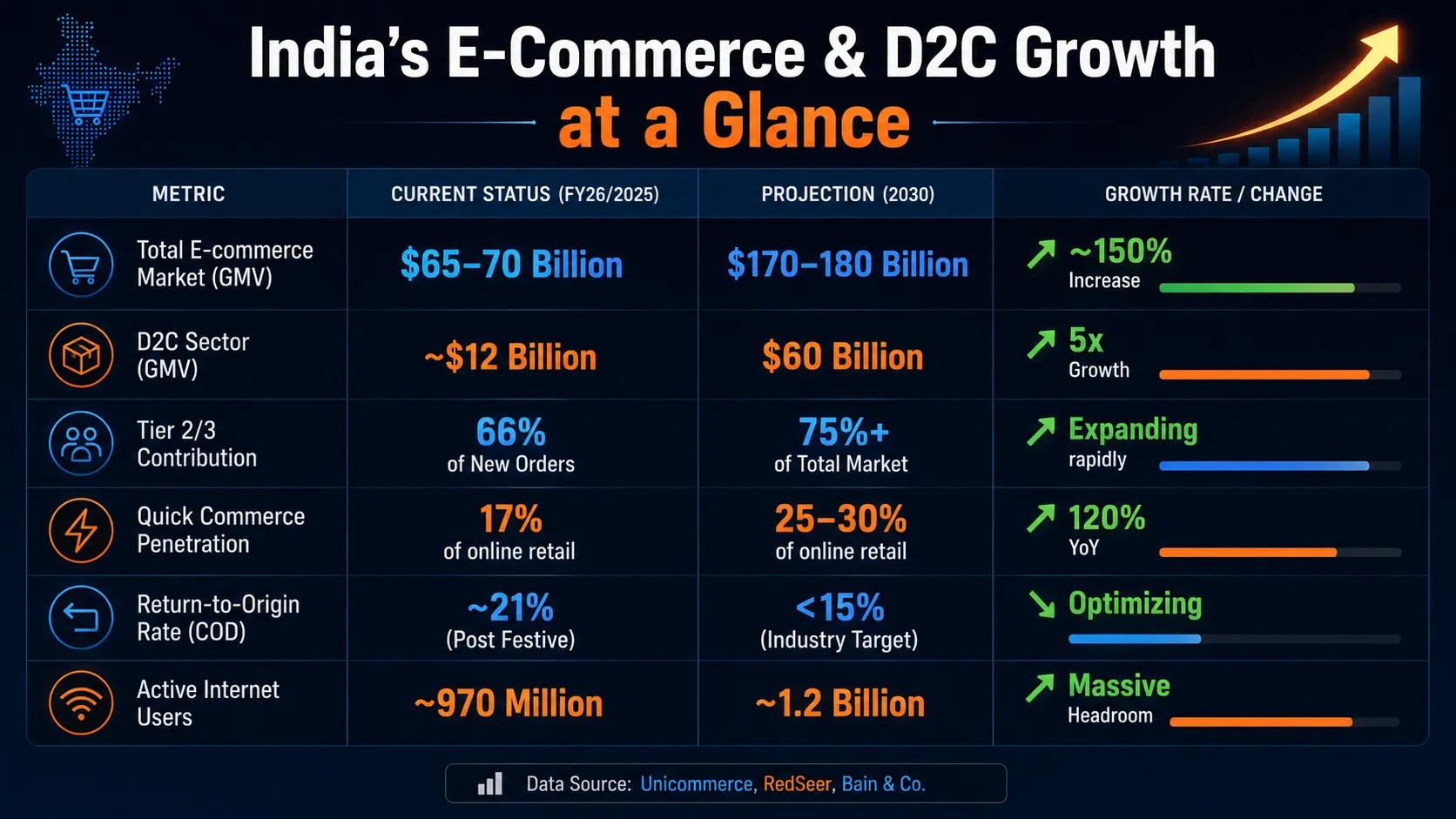
Chart Data: "India's E-Commerce & D2C Growth at a Glance"
Data Source: Unicommerce, RedSeer, Bain & Co.
Metric | Current Status (FY26/2025) | Projection (2030) | Growth Rate / Change |
|---|---|---|---|
Total E-commerce Market (GMV) | $65–70 Billion | $170–180 Billion | ~150% Increase |
D2C Sector (GMV) | ~$12 Billion | $60 Billion | 5x Growth |
Tier 2/3 Contribution | 66% of New Orders | 75%+ of Total Market | Expanding rapidly |
Quick Commerce Penetration | 17% of online retail | 25–30% of online retail | 120% YoY |
Return-to-Origin Rate (COD) | ~21% (Post Festive) | <15% (Industry Target) | Optimizing |
Active Internet Users | ~970 Million | ~1.2 Billion | Massive Headroom |


