The Great AI Paradox of 2026: Private Startups Are Worth 20x Revenue, Hyperscalers Are Spending $725 Billion, and Every Gadget Is Turning Into a Chatbot
SAN FRANCISCO — May 2026 – Somewhere between a Googlebook launch event on Tuesday, an Amazon Alexa announcement on Wednesday, and a Microsoft Edge overhaul on Thursday, the technology industry crossed an invisible threshold. It happened quietly, buried in product blogs and earnings calls, but its implications will reverberate for the rest of the decade. AI is no longer something you use. It is something you inhabit. And the price the world is paying—in venture capital, in cloud infrastructure, and in the wholesale redesign of everyday digital life—is unlike anything the technology industry has ever seen.
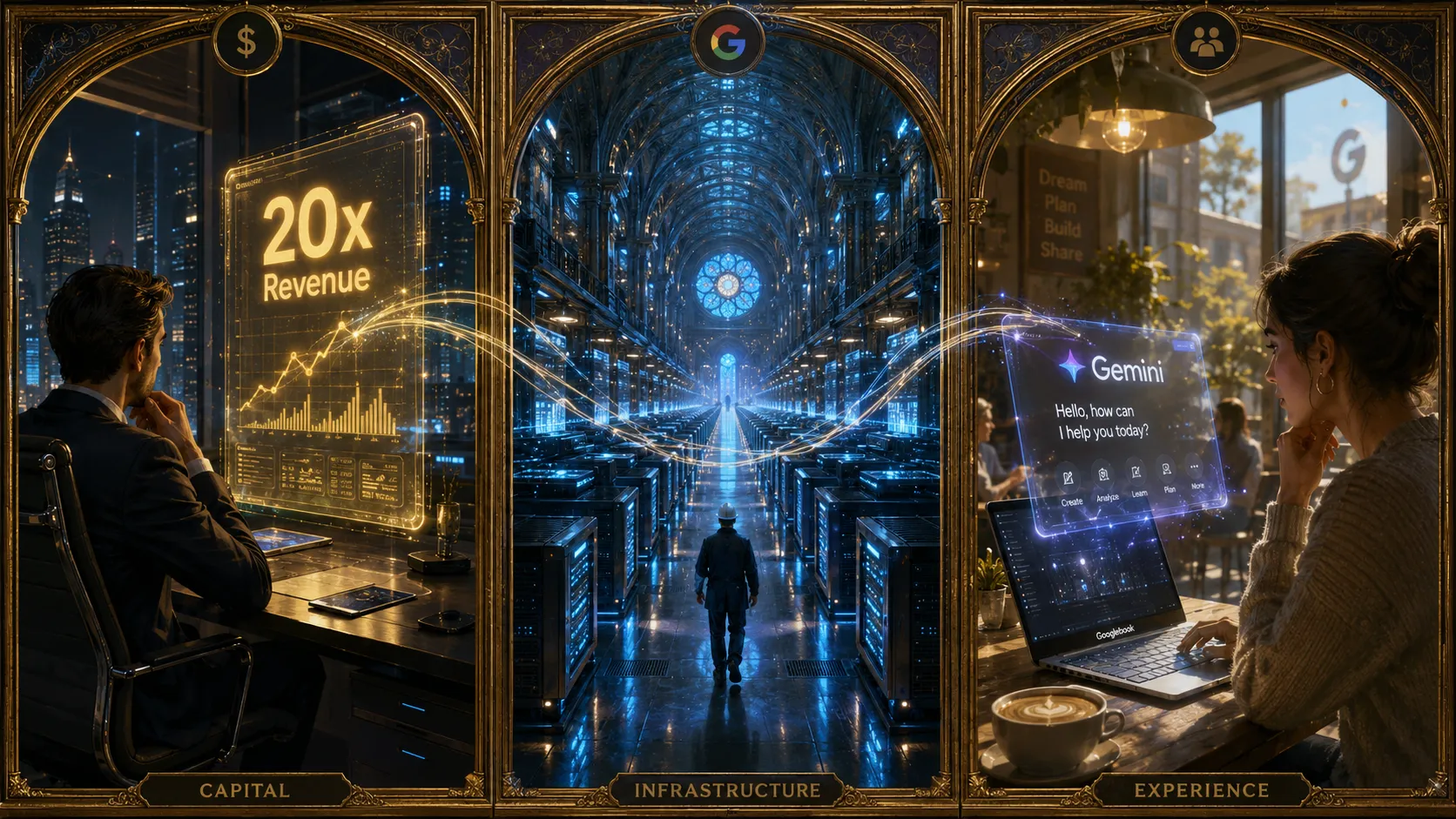
The numbers that landed in mid-May 2026 tell a story that is dazzling, disorienting, and faintly terrifying all at once. Private AI startups are commanding revenue multiples of 20x to 28x while public SaaS companies scrape by below 5x. The four largest hyperscalers—Microsoft, Alphabet, Amazon, and Meta—are on track to spend a combined $725 billion on AI infrastructure this year. Google just announced a laptop that replaces the cursor with a chatbot. Amazon killed its old AI shopping assistant and put Alexa directly into the search bar. Microsoft retired a dedicated Copilot mode in Edge because, the company explained, AI no longer needs its own room. It lives in the walls now.
Taken individually, each of these stories is a product update or a financial metric. Taken together, they are a portrait of an industry in the grip of a conviction so powerful it has overridden the normal laws of valuation gravity, capital discipline, and product design. The question hanging over all of it is the same one that has haunted every technology boom since the railroads: is this the beginning of a new economic order, or the most expensive exercise in collective faith ever undertaken?
The Valuation Canyon
The single most arresting number in the technology industry right now is not a product price or a market cap. It is the gap between what private investors are willing to pay for AI companies and what public investors are willing to pay for software companies that actually make money.
According to data from Forge Global, the "Private Magnificent 7"—OpenAI, Anthropic, Databricks, xAI, Stripe, SpaceX, and Anduril—have surged from a combined valuation of 264billionatthebeginningof2023toroughly264billionatthebeginningof2023toroughly1.2 trillion, a 96% increase in the past year alone. By comparison, the public Magnificent 7 tech stocks gained 34% over the same period. The top ten private companies have appreciated 569% in three years, versus 132% for the Nasdaq-100.
The revenue multiples tell an even starker story. Databricks, which crossed a 5.4billionrevenuerun−rateinitsfiscalfourthquarterwith655.4billionrevenuerun−rateinitsfiscalfourthquarterwith65100 billion valuation. That implies a revenue multiple between 20x and 28x, depending on the measurement period. Meanwhile, an analysis of 145 public SaaS companies showed median public software revenue multiples below 5x as of May 12, 2026.
Databricks is not an outlier. OpenAI, valued at 852billioninMarch2026afterclosinga852billioninMarch2026afterclosinga122 billion funding round, now generates 2billioninmonthlyrevenue—anannualizedrunrateof2billioninmonthlyrevenue—anannualizedrunrateof24 billion. That translates to roughly a 35x multiple, attached to a company that projects a $14 billion loss in 2026. The public markets would never tolerate such math. The private markets cannot get enough of it.
What explains the canyon? The answer has less to do with fundamentals than with posture. Public software investors have spent the last several years repricing companies after higher interest rates ended the zero-rate growth era. Companies that once traded at 30x or 40x revenue saw dramatic multiple compression as Wall Street demanded earnings discipline instead of growth at any cost. Private AI companies have largely escaped that reset. Private investors are behaving as though the AI race has already narrowed to a handful of eventual winners, and the fear of missing the next generation of tech giants outweighs the fear of overpaying.
There is a logic to this—but also a risk. The logic is that AI represents a platform shift as consequential as the internet itself, and that the companies that dominate the early infrastructure layer will compound for decades. The risk is that platform shifts are littered with the bones of companies that were valued like winners before anyone knew what winning actually looked like. The public SaaS graveyard is full of former darlings that once traded at 20x revenue and now languish in single digits. The private AI pantheon has not yet been tested by a bear market, a recession, or the simple passage of time.
The $725 Billion Furnace
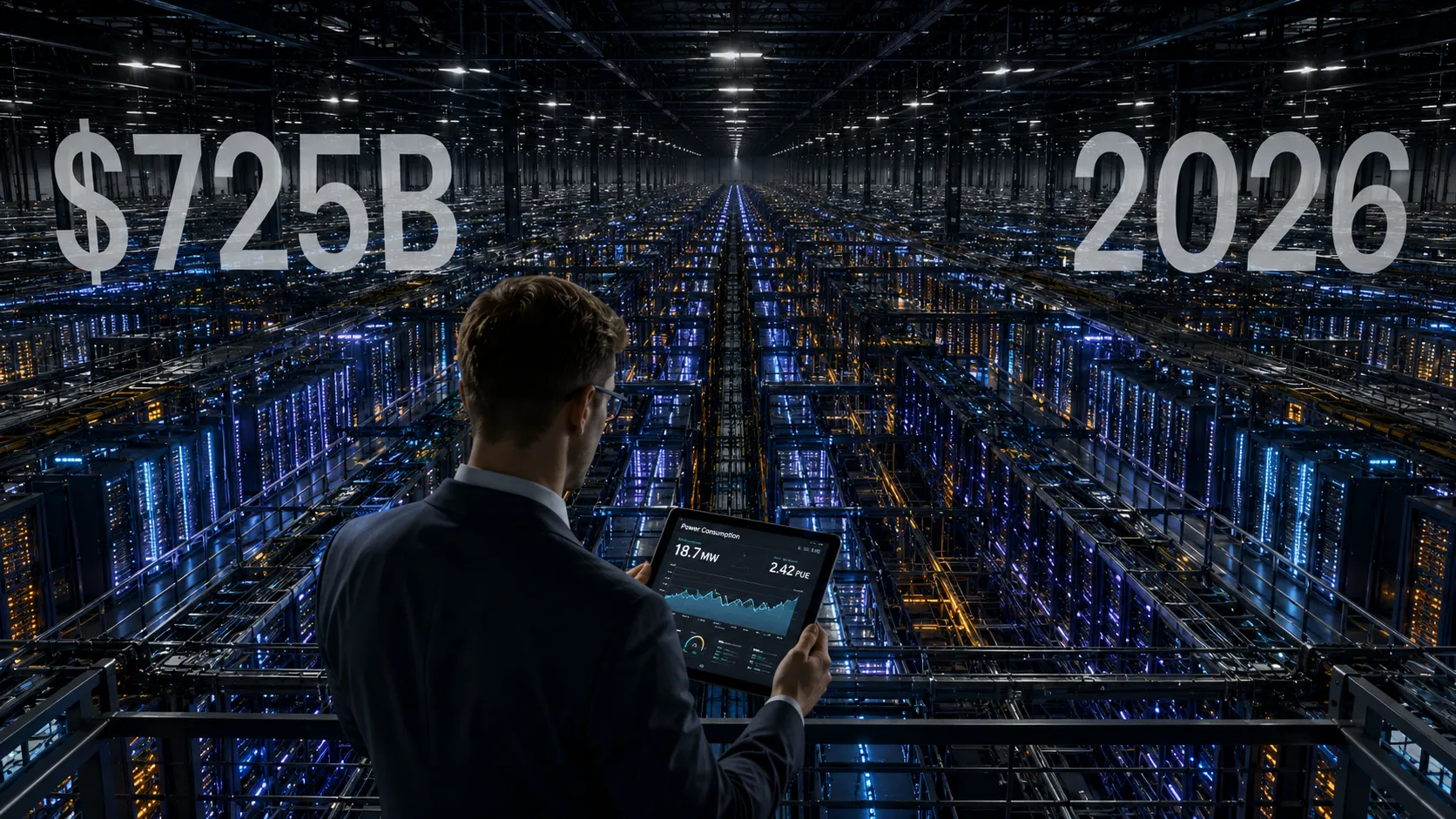
If private valuations are the fever chart of AI optimism, hyperscaler capital expenditure is the furnace that keeps the temperature rising. In the span of a single earnings week in late April 2026, the four largest AI infrastructure spenders laid out plans that, combined, approach $725 billion for the year.
Microsoft expects calendar-year 2026 capital expenditures to reach 190billion,afigurethatincludes190billion,afigurethatincludes25 billion attributed solely to higher component pricing—particularly memory chips, where DRAM and high-bandwidth memory costs have surged as capacity is diverted into AI servers. Alphabet guided to 180billionto180billionto190 billion, with capex expected to increase "significantly" in 2027. Amazon held firm on a plan approaching 200billion,withAWSalonegenerating200billion,withAWSalonegenerating37.6 billion in quarterly revenue at 28% growth—its fastest pace in fifteen quarters. Meta raised its forecast to 125billionto125billionto145 billion, a $10 billion hike at both ends that sent its stock down 6% on the announcement.
These are not normal numbers. The combined $725 billion exceeds the annual GDP of Switzerland or the combined GDP of Greece, Portugal, and Hungary. It represents the largest concentrated infrastructure buildout in the history of private industry—larger than the railroad boom, larger than the interstate highway system, larger than the buildout of the internet itself in real terms.
Yet a growing body of analysis suggests the headline figure overstates the actual pace of physical expansion. RBC Capital Markets found that memory chip prices could account for approximately 45% of the total capex increase in 2026. Of the $98 billion increase in memory spending, nearly three-quarters is attributed solely to price hikes, not higher sales volumes. Excluding memory costs, the underlying capital expenditure growth rate drops from roughly 80% to about 40%.
SemiAnalysis estimates that memory spending as a share of hyperscaler capex has jumped from roughly 8% in 2023 to a projected 30% in 2026—a nearly fourfold shift in three years. The hyperscalers are not buying dramatically more servers. They are paying dramatically more for the same components, as the supply chain for advanced memory struggles to keep pace with AI demand.
The revenue is real—Google Cloud crossed 20billionforthefirsttime,up6320billionforthefirsttime,up636.6 billion. Microsoft's AI business surpassed a 37billionannualrevenuerunrate,up12337billionannualrevenuerunrate,up12314.2 billion in operating income at a 37.7% margin. These are serious businesses generating serious cash. But the question that hangs over the entire buildout is whether the revenue will grow fast enough to justify the spending before the capital markets lose patience.
The Interface Eats the World
While the financiers argue about multiples and the engineers race to cool server racks, something equally consequential is happening at the consumer layer. AI is ceasing to be an app you open and becoming the default interface through which you interact with the digital world. Three announcements in a single week in mid-May made this shift unmistakable.
On Tuesday, May 12, Google announced the Googlebook, a new category of premium laptop designed "from the ground up for Gemini Intelligence." The device merges ChromeOS with the Android tech stack, runs all Android applications, and places Gemini at the center of the user experience. It introduces a "Magic Pointer"—a redesigned cursor that doubles as a contextual AI shortcut—and a "Create My Widget" feature that lets users build personalized dashboards by simply describing what they want. Acer, ASUS, Dell, HP, and Lenovo will launch Googlebook laptops in Fall 2026. The message was clear: the operating system is no longer a file manager. It is an AI agent that anticipates what you need before you ask.
On Wednesday, Amazon retired Rufus, the AI shopping chatbot it had launched in 2024, and replaced it with Alexa for Shopping—an agentic AI that lives directly in the Amazon search bar. The new tool draws on a user's purchase history, browsing behavior, and Alexa interactions to provide personalized product comparisons, price history tracking going back a full year, and the ability to schedule purchases when a product hits a target price. Alexa for Shopping is available to all U.S. customers for free, a sharp contrast to the $20 monthly fee for Alexa+. The shopping assistant is no longer a chatbot you consult. It is the store itself.
On Thursday, Microsoft announced it was retiring "Copilot Mode" in the Edge browser—not because the feature was failing, but because it was succeeding too well to remain a separate mode. Copilot is now integrated directly into the browser core on both desktop and mobile, with the ability to access information across all open tabs, compare products across pages, summarize multiple articles, and analyze content without the user switching to a dedicated AI window. The browser is no longer a window onto the web. It is an AI agent that reads the web alongside you, and increasingly on your behalf.
Taken together, these three announcements form a pattern that extends well beyond product updates. Google, Amazon, and Microsoft have each concluded, independently, that AI is not a feature to be added to existing products. It is the organizing principle around which products must be rebuilt. The search bar, the laptop, the browser—these are the most fundamental interfaces of the consumer internet, and all of them are being refactored around a single assumption: the user will talk to the machine, and the machine will figure out the rest.
What Every Entrepreneur Can Learn
The great AI paradox of 2026 offers three lessons that apply far beyond the companies making headlines.
First, valuation is a story you tell before it is a number you earn. The private AI companies commanding 20x to 28x revenue multiples are not more profitable than their public SaaS counterparts. They are telling a more compelling story about the future—and they have found investors who believe that story deeply enough to pay for it. For any founder, the ability to articulate a future so vivid and so defensible that it overrides conventional valuation metrics is not a soft skill. It is the single most valuable capability in the fundraising arsenal.
Second, infrastructure booms create both winners and traps. The $725 billion hyperscaler buildout is generating enormous revenue for chipmakers, cloud providers, and the startups that ride the wave. But a significant portion of that spending is being consumed by component price inflation rather than real capacity expansion. The entrepreneurs who profit most from infrastructure booms are not necessarily those who spend the most, but those who understand where the real bottlenecks are—and position themselves on the supply side of those constraints.
Third, interface shifts are the most underrated form of disruption. When Google puts Gemini in the cursor, when Amazon puts Alexa in the search bar, and when Microsoft puts Copilot in the browser, they are not just adding features. They are changing the way humans relate to machines, and those shifts create openings for new products, new workflows, and new competitors that incumbents cannot easily copy because they are tied to the old interface paradigm. The entrepreneurs who win the next wave will be those who understand that AI is not a technology layer. It is a way of being.
The Road Ahead
The three stories that collided in mid-May 2026—the valuation canyon, the capex furnace, and the interface transformation—are not separate narratives. They are three faces of the same phenomenon. The private markets are paying for dominance because the hyperscalers are spending for dominance. The hyperscalers are spending for dominance because they believe the interface transformation will make AI the primary medium of digital life. And the interface transformation is accelerating because the capital is flowing to make it possible.
Whether this cycle ends in a new economic order or a painful correction depends on a question no one can yet answer: will the revenue catch up to the spending? The cloud businesses of Microsoft, Google, and Amazon are growing at rates that would have seemed implausible three years ago. But the spending is growing even faster, and the memory chip inflation that is quietly consuming a growing share of every capex dollar suggests that the physical constraints on AI expansion are more stubborn than the software industry is accustomed to.
For now, the momentum is self-reinforcing. Private investors see hyperscaler spending and conclude that the AI buildout is real. Hyperscalers see private valuations and conclude that the returns must be enormous. Consumers see AI embedded in every interface and conclude that this is simply how technology works now. The circle is closed. The paradox is complete. The only thing everyone agrees on is that the stakes are too high to sit out.


