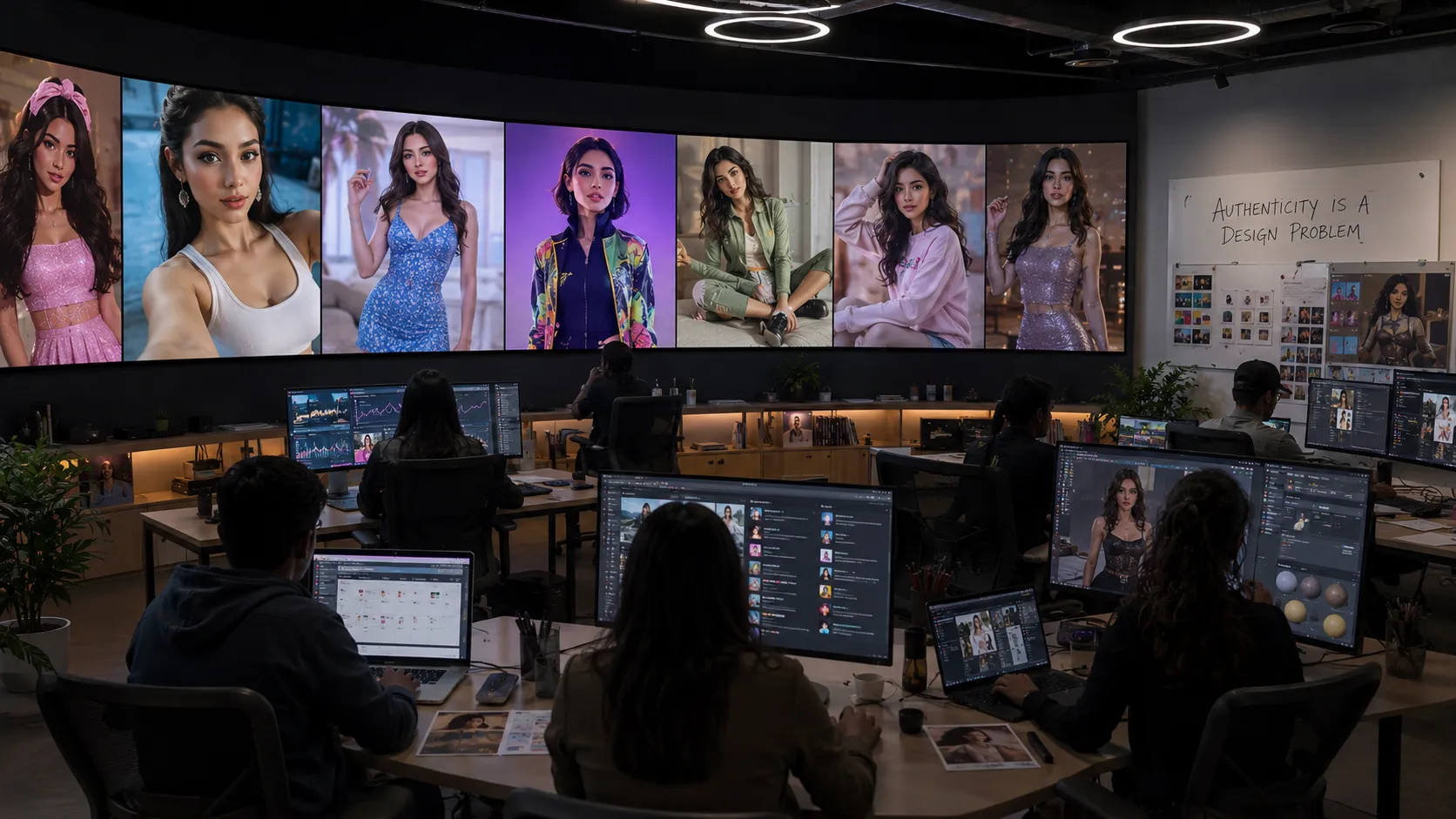
The Girl Who Doesn't Exist: How Kyra—and a Dozen Other AI‑Generated Avatars—Are Quietly Stealing Brand Deals from Real Influencers, and Why Marketers Prefer the Fake Ones
MUMBAI — May 30, 2026 — Kyra is 22 years old. She has 2.7 million followers on Instagram, a further 1.2 million on YouTube, and an engagement rate that consistently outperforms her human peers by a factor of three. She posts from a sun‑drenched apartment in Bandra that does not exist, wears clothes from a walk‑in wardrobe that was never constructed, and shares life updates—breakups, travels, new hobbies—that never happened. In February 2026, she signed an exclusive brand‑ambassador deal with a major Indian skincare company for ₹1.2 crore. The company’s marketing head, when asked whether it mattered that Kyra is entirely computer‑generated, replied with a question of his own: “She’s never late to a shoot, never gets into a controversy, and her engagement rate is triple our last human ambassador’s. Why would we go back?”
The virtual influencer economy, which barely existed three years ago, is now a ₹500‑crore‑a‑year industry in India, and it is growing at a compound annual rate of nearly 60 percent. Agencies like Toffee, VirtualHumans, and Meta‑Influence have built stables of AI‑generated avatars—Kyra, Maya, Naina, Rohan, Zara—each with a carefully constructed backstory, a distinct aesthetic, and a target demographic that they serve with algorithmic precision. The brands that once competed to sign Bollywood stars and cricketers are now competing to sign avatars. The celebrities who once commanded premium endorsement fees are watching their rates being undercut by pixels. And the influencer‑marketing industry, which was supposed to be the most human corner of the advertising economy, is discovering that the most effective influencers are the ones who were never human at all.
The Economics of the Unreal
The most powerful force driving the virtual‑influencer revolution is not technological. It is economic. A Bollywood A‑lister charges between ₹5 crore and ₹10 crore for a single endorsement deal, plus production costs, plus the logistical complexity of scheduling a shoot around a film career that is itself wildly unpredictable. A top‑tier human influencer—a Kusha Kapila or a Bhuvan Bam—charges between ₹30 lakh and ₹80 lakh per campaign. Kyra’s agency charges ₹15 lakh for a comparable package, and the content can be produced in 48 hours, from any location, in any style, without ever requiring the talent to leave her non‑existent apartment. The cost differential is not marginal. It is structural, and it is driving a reallocation of marketing budgets toward the virtual platforms at a pace that is surprising even the agencies that are building them.
The economics are particularly compelling for the mid‑market brands—the D2C skincare lines, the health‑tech startups, the fashion‑tech platforms—that constitute the fastest‑growing segment of the Indian advertising economy. These brands cannot afford a Bollywood star, and they are increasingly reluctant to pay the rising rates of the human‑influencer market, which has been inflated by the influx of venture capital and the competitive dynamics of the creator economy. The virtual influencer offers these brands a combination of quality, consistency, and affordability that no human alternative can match. The avatar never demands a fee increase. The avatar never defects to a competitor. The avatar’s content can be A/B‑tested, optimised, and iterated with a speed and precision that human creators cannot match. For the performance‑marketing teams that are driving the growth of India’s consumer‑internet economy, the virtual influencer is not a novelty. It is a tool, and the tool is working.
The returns on that tool are measurable. Brands that have switched from human to virtual influencers report, on average, a 40 percent reduction in cost‑per‑engagement and a 25 percent increase in conversion rates on affiliate‑linked sales. The virtual influencer’s audience is younger, more digitally native, and more comfortable with the idea of a synthetic personality than the audience for traditional celebrity endorsements. Gen Z consumers, who have grown up with AI‑generated content in every dimension of their digital lives—filters, avatars, game characters, chatbots—do not draw the same distinction between the real and the virtual that older consumers draw. For them, Kyra is not “fake.” She is a creator, like any other, and the fact that she was rendered rather than born is, at most, a curiosity. The brands that understand this generational shift are the ones that are betting most aggressively on the virtual‑influencer economy, and the returns they are generating are reinforcing their commitment.
The Agency Behind the Avatar
The virtual‑influencer economy is not being built by the technology companies that developed the generative‑AI models that power it. It is being built by a new generation of creative agencies—Toffee, VirtualHumans, Meta‑Influence—that have recognised that the most valuable skill in the AI era is not the ability to build the models, but the ability to build the characters that the models render. The technology is a commodity. The character is the asset.
The character‑creation process at a leading virtual‑influencer agency is a blend of brand strategy, narrative design, and data science. The agency begins by identifying a target demographic—say, 18‑to‑24‑year‑old women in Tier‑1 cities who are interested in skincare, fashion, and wellness—and then reverse‑engineers a character who will appeal to that demographic. The character’s name, age, appearance, backstory, aesthetic, voice, and content style are all designed to maximise engagement with the target audience. The character is then rendered using a combination of generative‑AI models, 3D‑design software, and motion‑capture data, and is deployed across a curated set of social‑media platforms. The agency’s creative team writes the character’s posts, designs her visual content, and manages her interactions with followers—responding to comments, liking posts, and maintaining the illusion of a real, present, emotionally available human being. The character’s engagement metrics are tracked in real time, and her content strategy is adjusted continuously to optimise for reach, engagement, and conversion.
The agency’s business model is a hybrid of the talent‑agency model and the content‑studio model. The agency owns the intellectual property of the avatar—a critical distinction from the human‑influencer market, where the talent owns their own brand and can walk away from the agency at any time. The agency licenses the avatar to brands for campaigns, retains a share of the endorsement revenue, and, increasingly, develops its own direct‑to‑consumer brands around the avatars—Kyra’s skincare line, Maya’s athleisure brand, Naina’s wellness app. The avatar is not merely a marketing channel. She is a brand platform, and the agency that controls the platform controls the economics of the business. The model is not yet profitable at scale—the technology costs are still high, and the market is still small—but the trajectory is unmistakable. The virtual‑influencer agency of 2030 will look less like a talent agency and more like a consumer‑products company, with a portfolio of avatar‑driven brands that compete directly with the celebrity‑backed brands that dominate the market today.
The Human Backlash
The virtual‑influencer economy has provoked a predictable backlash from the human influencers whose livelihoods it threatens. The argument, articulated with increasing urgency by the influencers themselves and by the trade associations that represent them, is that the virtual influencer is fundamentally deceptive—a product that is designed to look human, to act human, and to sell products as if it were human, without ever disclosing its synthetic nature to the audience that consumes it. The Advertising Standards Council of India has been petitioned to require mandatory disclosure of virtual influencers—a label, similar to the “paid partnership” tag, that would identify AI‑generated content as such. The Ministry of Electronics and Information Technology has been urged to develop a regulatory framework for synthetic media that would govern the use of virtual influencers in advertising. The human‑influencer community has launched a campaign, #RealNotRendered, that has attracted support from several prominent Bollywood celebrities who see the virtual‑influencer economy as a direct threat to their endorsement income.
The backlash is understandable, but it is likely to fail. The virtual‑influencer agencies are already moving toward voluntary disclosure—not out of ethical conviction, but because the data suggests that audiences do not care whether an influencer is real, as long as the content is engaging. The agencies that have tested disclosure labels on their virtual influencers have found that engagement rates do not decline when the synthetic nature of the avatar is revealed. The audience that follows Kyra is not following her because they believe she is a real person. They are following her because they like her aesthetic, her recommendations, and her content. The distinction between real and virtual, which matters enormously to the human influencers who are losing market share, matters almost not at all to the consumers who are driving the market.
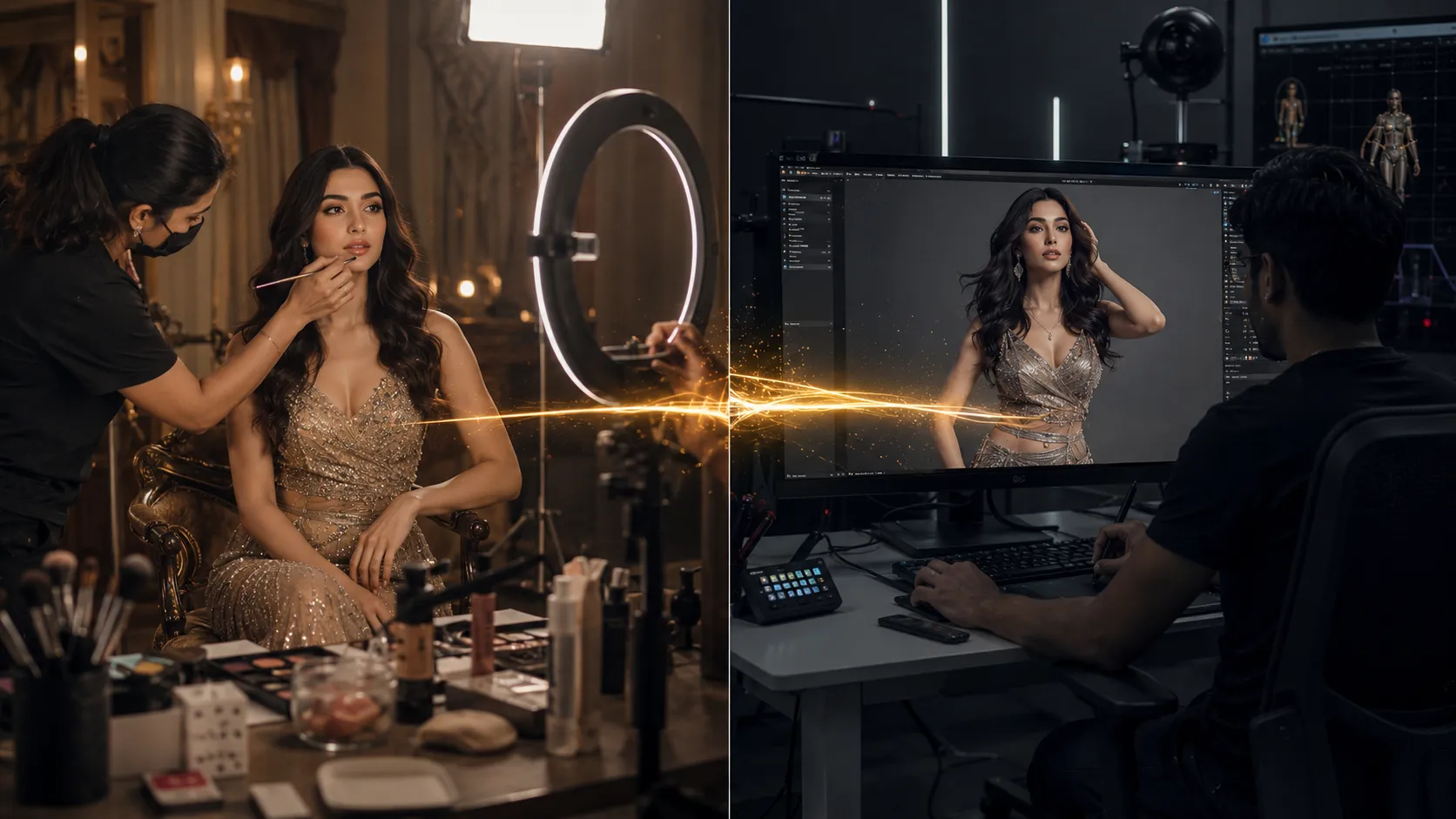
The deeper question raised by the virtual‑influencer economy is not about regulation or disclosure. It is about the nature of influence itself. The influencer is a person whose power derives from the audience’s belief that they are authentic—that the life they are sharing, the products they are recommending, and the emotions they are expressing are genuine. The virtual influencer inverts that logic. She is authentic because she is designed to be—because every post, every expression, every recommendation is the product of a deliberate creative process that is optimised for audience engagement. The audience knows, at some level, that Kyra is not real, and they do not care, because Kyra’s authenticity is not personal. It is aesthetic. She is authentic to her brand, not to her life—because she has no life to be authentic to. The virtual influencer is not a fake human. She is a new category of entity—a brand that looks like a person, a product that performs like a friend. And the market, so far, is voting with its wallet.
The Celebrity Response
The most consequential response to the virtual‑influencer economy has come not from the regulators, but from the celebrities themselves. The Bollywood stars who once dominated the endorsement market have been quietly exploring their own virtual‑influencer strategies—not to replace themselves, but to extend themselves. The star who creates an AI‑generated avatar of their younger self, or an AI‑generated companion character who exists in the same digital universe, can participate in the virtual‑influencer economy without competing directly against their own endorsement business. The avatar can reach audiences that the star cannot—younger audiences, international audiences, niche audiences—and can generate revenue that is incremental to the star’s existing income streams. The celebrity who embraces the virtual‑influencer economy is not cannibalising their own market. They are expanding it.
Several major Bollywood stars have been in discussions with virtual‑influencer agencies about developing their own AI‑generated avatars. The conversations are at an early stage, and no major star has yet launched a virtual counterpart, but the direction of travel is clear. The celebrity who controls their own virtual avatar—who owns the IP, who approves the content, who captures a share of the revenue—is a celebrity who has diversified their income stream beyond the traditional endorsement model. The virtual‑influencer economy is not merely a threat to the celebrity‑endorsement economy. It is also an opportunity—a new platform, a new format, a new way of monetising the fame that the star has spent their career building. The stars who understand this are the ones who will thrive in the virtual‑influencer era. The stars who do not are the ones who will find themselves competing with avatars that are younger, cheaper, and more engaging than they can ever be.
The broader context is an Indian advertising economy that is being reshaped by the same forces that are transforming the entertainment industry: the fragmentation of the audience, the rise of digital platforms, and the growing power of algorithms to determine what content gets seen and what content does not. The virtual influencer is the most extreme expression of that transformation—a personality that is built entirely for the algorithm, optimised for every metric that the platforms measure, and immune to the human frailties that make traditional celebrities risky investments. The brands that are adopting virtual influencers today are the early adopters of a model that will, within a decade, be as common as the celebrity endorsement was a generation ago. The humans who are competing with the avatars for market share are fighting a battle they are likely to lose—not because the avatars are better, but because the market has changed in ways that make the avatars more valuable. The influencer economy was built on the promise of authenticity. The virtual‑influencer economy is built on the realisation that authenticity, like everything else, can be designed.
What This Signals
The virtual‑influencer economy is not primarily a story about technology. It is a story about the structural transformation of the advertising industry—a shift from a model in which influence was the product of human charisma to a model in which influence is the product of algorithmic optimisation, from a market in which the talent held the power to a market in which the platforms and the agencies hold the power, and from an industry built on the unpredictable, ungovernable, gloriously messy reality of human personality to an industry built on the controlled, measurable, infinitely replicable reality of synthetic design.
Kyra is 22 years old. She has 2.7 million followers. She signed a ₹1.2 crore brand deal in February. She has never had a bad day, never tweeted something she regrets, never aged. She is not real, and it does not matter. The market has decided that she is valuable, and the market is never wrong—at least, not for long. The girl who does not exist is the future of influence, and the future is already here


