Imagine a world where you never look down at a glowing rectangle again. No unlocking, no swiping, no app store. Just a voice, a whisper in your ear, or a gentle tap on your lapel—and the entire power of artificial intelligence is woven into the fabric of your reality. That's the pitch. That's the bet. And the two most influential figures in modern industrial design and AI are betting six and a half billion dollars that you're ready to throw your iPhone in the trash.
Silicon Valley has been trying to kill the smartphone for a decade. Google tried Glass. Meta tried the Metaverse. Humane tried the AI Pin. All failed. They were clunky, creepy, or just plain useless. But none of them had Jony Ive.
In January 2026, at the World Economic Forum in Davos, OpenAI's Chief Global Affairs Officer Chris Lehane dropped a bombshell that sent shockwaves through the tech world. Speaking at Axios House, Lehane confirmed that OpenAI's secretive hardware collaboration with LoveFrom—the design firm founded by Sir Jony Ive—is "on track" for a launch in the second half of 2026. "We are looking at something in the latter part [of 2026]," Lehane told Axios, noting that while this was the "most likely" timeline, "we will see how things advance." He stopped short of committing to a launch date and even spilling the beans on what the product might be. But the message was clear: the post-smartphone era is coming, and OpenAI intends to lead it.
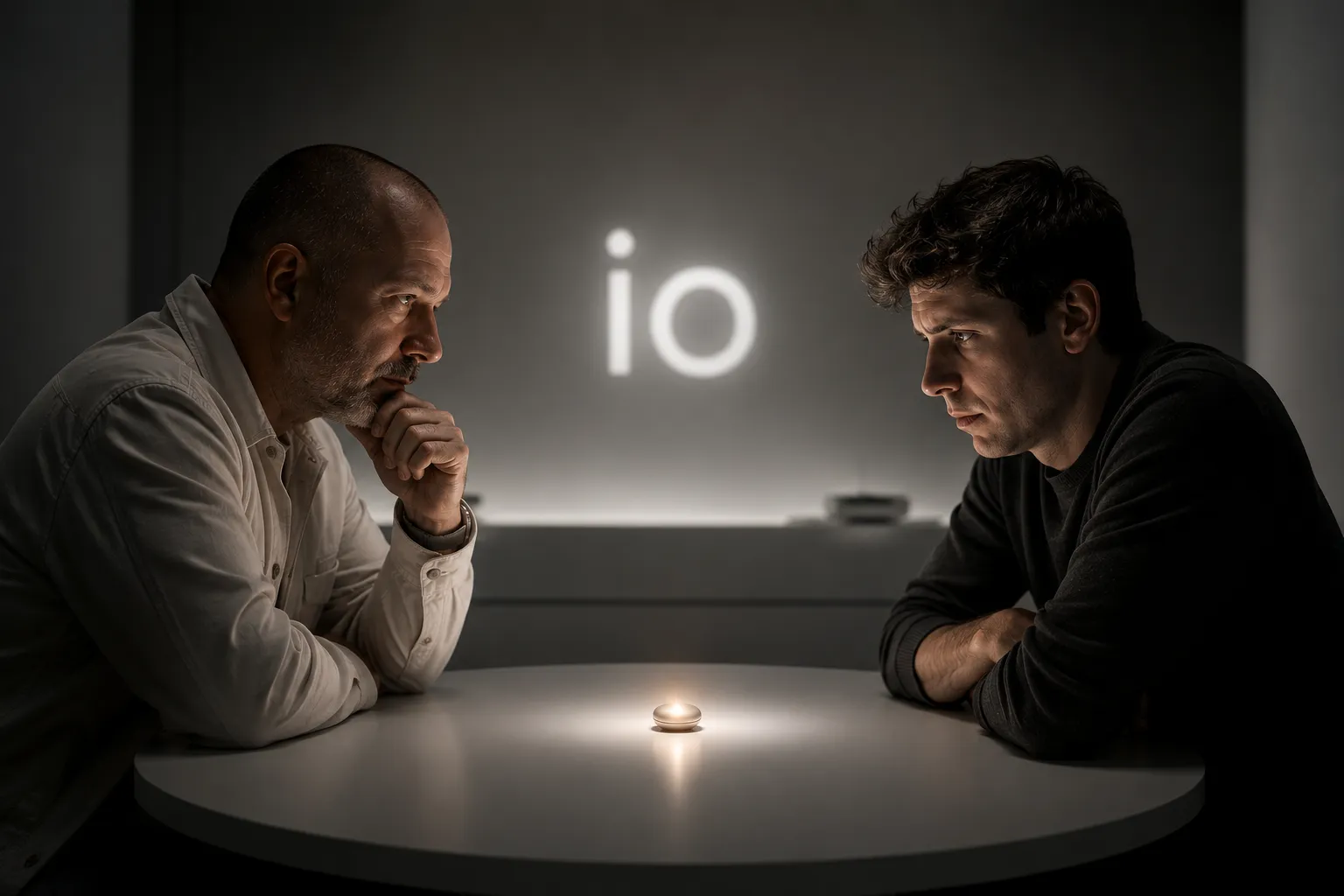
The story goes much deeper. In May 2025, OpenAI executed a stealthy $6.5 billion all-stock acquisition of 'io Products'—a secretive hardware startup that Ive had been quietly incubating at LoveFrom with former Apple colleagues Scott Cannon, Evans Hankey, and Tang Tan. The acquisition wasn't just about talent; it was about design philosophy. Ive, who famously obsesses over materials, curves, and the "soul" of objects, is applying the same minimalist rigor that sold 2.2 billion iPhones to a device with no screen at all.
The design team, a joint venture between OpenAI and Ive's firm LoveFrom, is internally referred to as the "io" team. And they have been aggressively bolstering their ranks with Apple veterans. Engineer and interface designer Janum Trivedi—a key figure behind the evolution of iPadOS, credited with building Split View, iPad Pointer Gestures, and Multitasking Drag & Drop—has joined the team to work on "io products." Reports indicate that more than 40 former Apple employees have now joined OpenAI's hardware efforts, a move so aggressive that Apple reportedly offered significant bonuses to certain employees to prevent further departures.

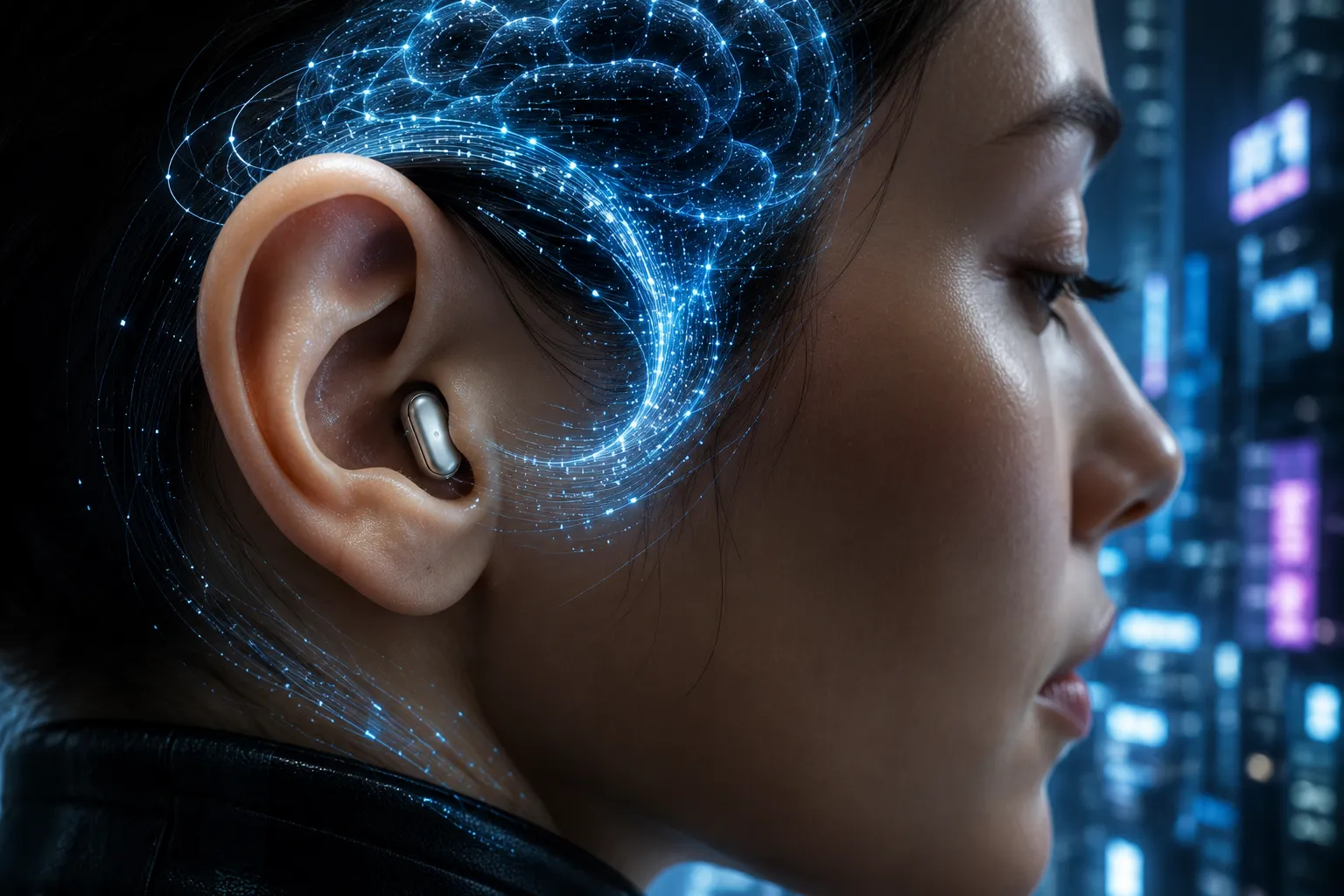
According to internal leaks and supply chain rumors, the primary launch device—codenamed "Sweetpea" —will be a small, screen-free, voice-first wearable. Early prototypes suggest a design akin to a capsule-shaped audio device that hooks behind the ear, small enough to wear around the neck or slip into a pocket. There is no home button. There is no display. Interaction is entirely through voice, haptic feedback, and environmental audio. A second device, codenamed "Gumdrop," is reportedly in development as an AI-powered pen.
Multiple reports have suggested that the device is expected to be a small, possibly wearable form factor with no traditional screen, controlled almost entirely through voice and sound. Speculation has been rife that it may be a pin, an earpiece, or a new category of wearable entirely. OpenAI's CFO Sarah Friar, who has already personally tested the device, was asked whether it is an earpiece. Her response was delightfully evasive: "If I tell you it's an earpiece, Jony will come and steal my teenage son. I might give him to him."
Friar described a visceral reaction to using the device. "It feels very natural, but it feels very lovable," she said during a live interview at the All-In Podcast team's Liquity Summit in California. "What Jony and team are really good at is bringing humanity to devices. I don't really know how to explain that well, but when you see it, you feel it."
OpenAI CEO Sam Altman has been cryptic but ambitious in his descriptions. He has described the hardware as "peaceful" and suggested that users will be "shocked" by its simplicity. He has also made it clear that the device is not a phone, ending one line of speculation. The Financial Times reports that OpenAI is creating a palm-sized, screenless device that can take audio and video cues from physical environments and respond to users' requests.
Altman and Ive have also shared a rather unusual design benchmark. Altman recalled Ive's philosophy: "I remember he said once early on, we'll know we have the design right… when you want to lick it or take a bite out of it." The goal is to make the device so irresistible that consumers feel a visceral attraction to it—a design philosophy that has defined Ive's most iconic creations.
The hardware manufacturing is rumored to be handled by Foxconn, with a projected initial run of 40 to 50 million units—an astronomical bet for a first-generation product. This reflects OpenAI's confidence that the world is ready for the post-smartphone era. The company is reportedly working with Apple's manufacturing ecosystem in China, including suppliers such as Luxshare and Goertek. Foxconn replaced Luxshare as the manufacturing partner, with production potentially shifting to the U.S. or Vietnam.
The timeline has shifted slightly. OpenAI's CFO Sarah Friar confirmed that the device will be unveiled by "the end of this year." This is earlier than a previous legal filing which indicated the device would not ship until February 2027. The rumor mill suggests a targeted launch window of September 2026.
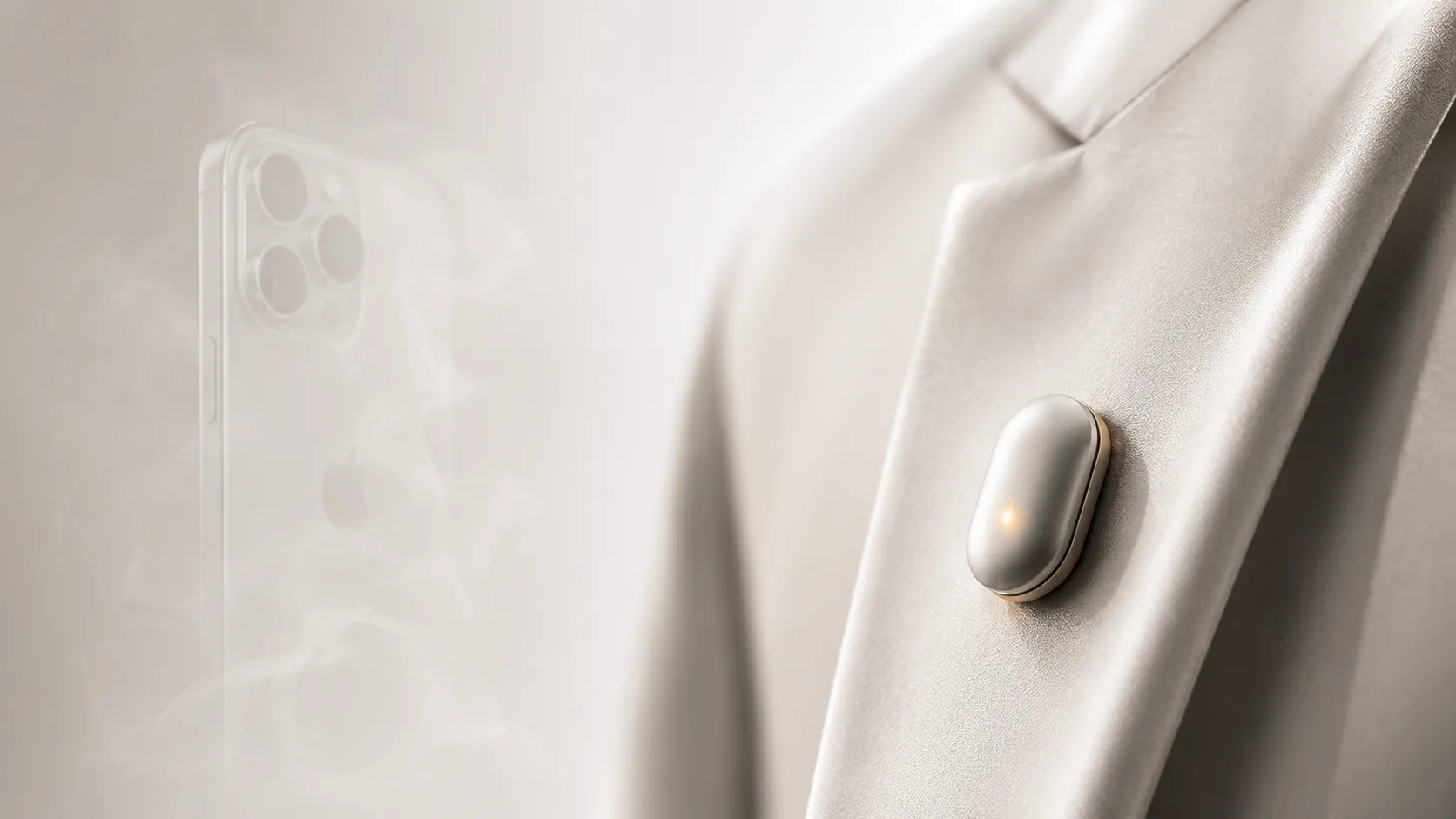
Of course, skepticism is rampant. The AI Pin from Humane, which raised over $200 million, flopped spectacularly. Meta's Ray-Ban smart glasses have captured 75-80% market share in the wearable space, but they remain a niche product. Early AI experiments have largely been failures. But Ive is not the Humane team. He is the man who turned the beige, clunky computer into the translucent, colorful iMac G3. He is the man who convinced the world that a phone without physical keys was not a downgrade, but a liberation.
The stakes could not be higher. Smartphones account for roughly 60% of Apple's revenue, and Apple has no comparable wearable device in this category. If Ive and Altman succeed, they won't just launch a product—they will launch the end of an era. If they fail, they will have burned $6.5 billion on the world's most expensive fashion accessory. Either way, it will be the most watched hardware launch since the original iPhone itself.
The countdown has begun.