The Four Friends Who Thought Indian Men Deserved a Better Shave—and Built a ₹700 Crore Empire Before Gillette Saw It Coming
GURUGRAM — May 24, 2026 — Shantanu Deshpande was 28 years old, sitting in a comfortable McKinsey office, earning a salary that most Indian twenty-somethings could only dream of. He was on the consulting track—the one that leads to business school, then back to consulting, then to a corner office somewhere with a view and a pension and the quiet satisfaction of a life well-executed. He was good at it. He was also, by his own later admission, bored out of his mind.
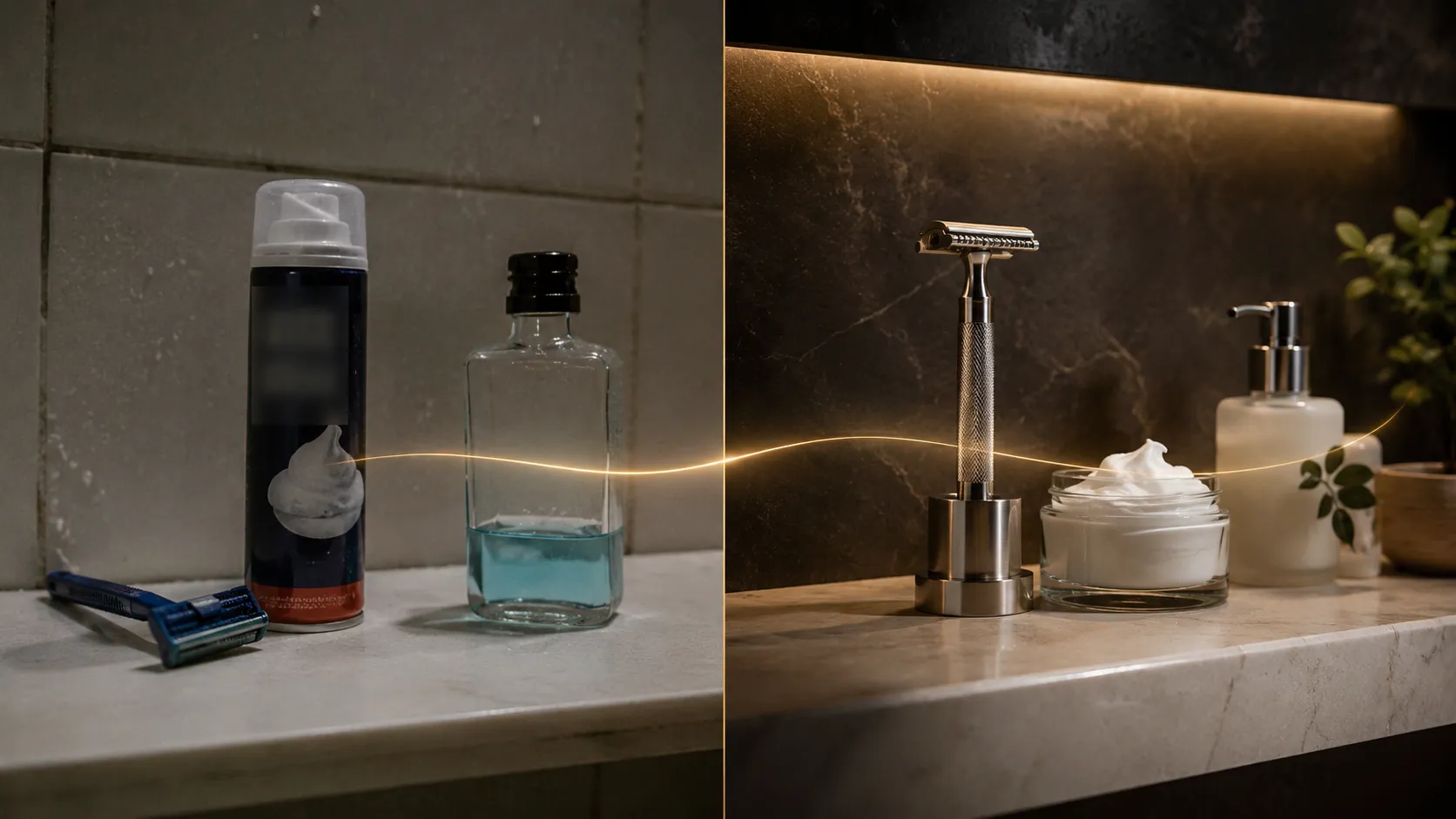
The idea arrived in 2014, in a conversation with a friend who was then interning at Harry's, a hipster New York shaving brand that had turned a commodity—razor blades—into a lifestyle product. Shantanu began thinking about the Indian bathroom. Specifically, he began thinking about what happened there every morning, when millions of Indian men dragged cheap plastic razors across their faces because that was what the market offered them. Gillette dominated the premium end. The rest was a wasteland of low-quality disposables, harsh creams, and after-shaves that stung like antiseptic. Nobody had ever looked at the Indian shaving ritual and thought: this could be beautiful.
Shantanu did. He called Raunak Munot, his school friend who was then Director of Social Strategy at GroupM in New York. He called Rohit Jaiswal, a college friend who had built distribution channels at Emel and Crompton Greaves. He called Deepu Panicker, a senior analyst at McKinsey who understood engineering and design. "Raunak always wanted to build a brand from scratch," Shantanu later recalled. "Rohit was keen to establish an FMCG company. Deepu had a passion for design. Together, they were the right fit." In October 2015, the four friends launched Bombay Shaving Company—a premium grooming brand that treated the morning shave not as a chore, but as a ritual worth investing in.
Eleven years later, the company is closing in on ₹700 crore in annual revenue. It has raised approximately ₹210 crore in total funding—including ₹136 crore from Sixth Sense Ventures in late 2025 and a Series A investment from Colgate-Palmolive, the $75 billion consumer goods giant that chose BSC as its very first startup bet in India. It has turned profitable at the PAT level, doubled its performance year-on-year, and is targeting an initial public offering within 18 to 24 months. Its women's grooming brand, Bombae, now contributes 40 to 45 percent of overall growth. The four friends who started with a conviction that Indian men deserved better have built something that Gillette—the $82 billion market leader—is now watching closely.
The McKinsey Mafia and the Four Founders
The founding team of Bombay Shaving Company did not emerge from a dorm room or a hackathon. They emerged from the most institutional of Indian professional backgrounds—management consulting, advertising, and engineering—and their founding was, in retrospect, as methodical as a McKinsey project plan.
Shantanu Deshpande was the strategist, the McKinsey-trained problem-solver who saw the market gap and refused to let it go. Raunak Munot, who had spent years building brand strategy for Audi of America and Jaguar Land Rover at GroupM in New York, was the storyteller—the person who understood that a razor was not just a razor, but an object around which an entire identity could be constructed. Rohit Jaiswal, who had built distribution channels at Emel and Crompton Greaves, was the operator—the person who understood that building a great product was meaningless if it could not reach the customer. Deepu Panicker, the engineer and designer, was the craftsman—the person who obsessed over blade angles, handle weights, and the precise molecular composition of shaving creams.
"From day one, meetings were calendared, invites sent, meeting logs registered, recruitment done with consensus, values and culture defined, professional standards and expectations drafted out," Shantanu told YourStory in 2017. "Organisationally, we had a solid foundation." The statement captures something essential about BSC's founding: this was not a startup built by college dropouts figuring it out as they went along. It was a startup built by professionals who had spent years inside large organizations and understood, at a granular level, how to build systems that scaled. The four friends combined McKinsey's analytical rigor, GroupM's brand-building expertise, and the operational discipline of people who had managed real supply chains.
The early product development was obsessive. When a sizeable number of customers told the company they wanted a closer, more aggressive shave, BSC designed a new razor part and shipped it to everyone free of cost—not because it was good marketing, but because the founders genuinely believed that the product should evolve with customer feedback. They sourced fragrances from world-class perfumers. They worked with chemical engineers to formulate shaving creams that did not dry out the skin. They collaborated with industrial designers to create packaging that customers wanted to display on their bathroom shelves, not hide in a cabinet.
The result was a brand that felt, from its earliest days, more premium than its price point. BSC positioned itself not as a cheaper alternative to Gillette—the classic Indian startup playbook—but as a better experience. The razors were precision-engineered. The creams were made with natural ingredients. The packaging was minimalist, masculine, and beautiful. The subscription model encouraged habit formation. The messaging was aspirational: shaving was not something you did because you had to. It was something you did because you cared about how you looked and felt.
The Colgate Bet
The most strategically significant validation of BSC's approach arrived not from a venture capital firm, but from a consumer goods giant. In 2020, Colgate-Palmolive—the $75 billion American multinational that sells toothpaste, soap, and personal care products in more than 200 countries—made its first-ever startup investment in India. It chose Bombay Shaving Company, picking up an approximately 14 percent minority stake through its Hong Kong arm for roughly ₹18 crore.
The investment was significant not for its size—₹18 crore is modest by venture capital standards—but for what it signalled. Colgate-Palmolive does not make startup investments lightly. The company had spent more than a century building brands through internal R&D, mass-market distribution, and television advertising. Its decision to back a six-year-old Indian D2C grooming startup was a recognition that the channels through which consumers discovered and purchased personal care products were shifting—from supermarket aisles to Instagram feeds, from television commercials to YouTube reviews, from the Gillette rack at the neighbourhood pharmacy to a website that sold razors by subscription.
"Building a consumer brand in India needs time, capital, and long-term vision," Shantanu said at the time. "After having proven product-market fit with promising repeat rates and product response, we are now looking to scale the brand." The Colgate investment gave BSC not just capital, but the implicit endorsement of one of the world's most respected consumer goods companies. It also gave the company access to Colgate's expertise in supply chain, distribution, and brand-building—the kind of institutional knowledge that a startup cannot acquire through venture capital alone.
The Colgate relationship has deepened over time. By 2025, Colgate-Palmolive (India) was listed among BSC's key investors, alongside Sixth Sense Ventures, Fireside Ventures, and Reckitt Benckiser. The presence of multiple global FMCG giants on the cap table was not an accident. BSC was positioning itself not just as a D2C brand, but as a platform that could eventually be acquired by—or compete credibly with—the largest personal care companies in the world.
The Bombae Pivot
The most important strategic decision BSC has made in the past three years had nothing to do with men's grooming. In 2022, the company launched Bombae, a women's grooming brand focused initially on hair removal—trimmers, razors, and creams—and later expanding into the broader women's styling category. The decision was not an obvious one. BSC had spent seven years building a distinctly masculine brand identity, and the women's grooming market was crowded with established players and D2C startups alike.
The pivot has been transformative. By March 2026, Bombae was contributing 40 to 45 percent of BSC's overall growth. Deepak Gupta, the company's co-founder and COO, told BW Retail World that "Bombay in itself should become as big as what we are in three years' time as an entire organisation"—suggesting that the women's portfolio could significantly reshape the company's revenue mix ahead of its public listing.
The Bombae strategy reflects a broader structural insight about the Indian personal care market. The beauty and personal care sector in India was valued at approximately $16 billion in 2018 and has been growing at a compound annual rate that makes it one of the most attractive consumer markets in the world. Within that market, women's grooming—particularly in categories like hair removal, skincare, and styling—represents a substantially larger addressable market than men's grooming alone. By expanding into women's products, BSC was not diluting its brand. It was capturing a share of the same household budget from a different angle.
On the question of gender-based pricing—the so-called "pink tax" that has drawn increasing consumer scrutiny—Gupta was direct: "Consumers are smart, and information asymmetry is broken now. If any brand tries to fool the consumer through the pink tax, the consumer will realise it. There's no point doing it. Make sure you deliver value to the consumer. That's more important than trying to tax the consumer because they are of different gender." The statement is both good ethics and good business. In a market where customers can instantly compare prices across platforms, charging women more for the same product is not just unfair—it is commercially unsustainable.
The Quick-Commerce Acceleration
The single biggest structural tailwind behind BSC's growth has been the rise of quick commerce. Platforms like Blinkit, Zepto, and Swiggy Instamart have transformed how urban Indians buy everyday essentials—and personal care products are increasingly part of that basket.
Quick commerce now contributes roughly 30 percent of BSC's overall revenue, according to the company's COO. The channel has been particularly effective at driving growth into Tier-2 cities, where BSC currently has no plans to open exclusive brand outlets. A customer in Indore or Nagpur who discovers BSC on Zepto can have a razor or shaving cream delivered to her doorstep in under 20 minutes—a distribution capability that would have required years of physical retail expansion to achieve even five years ago.
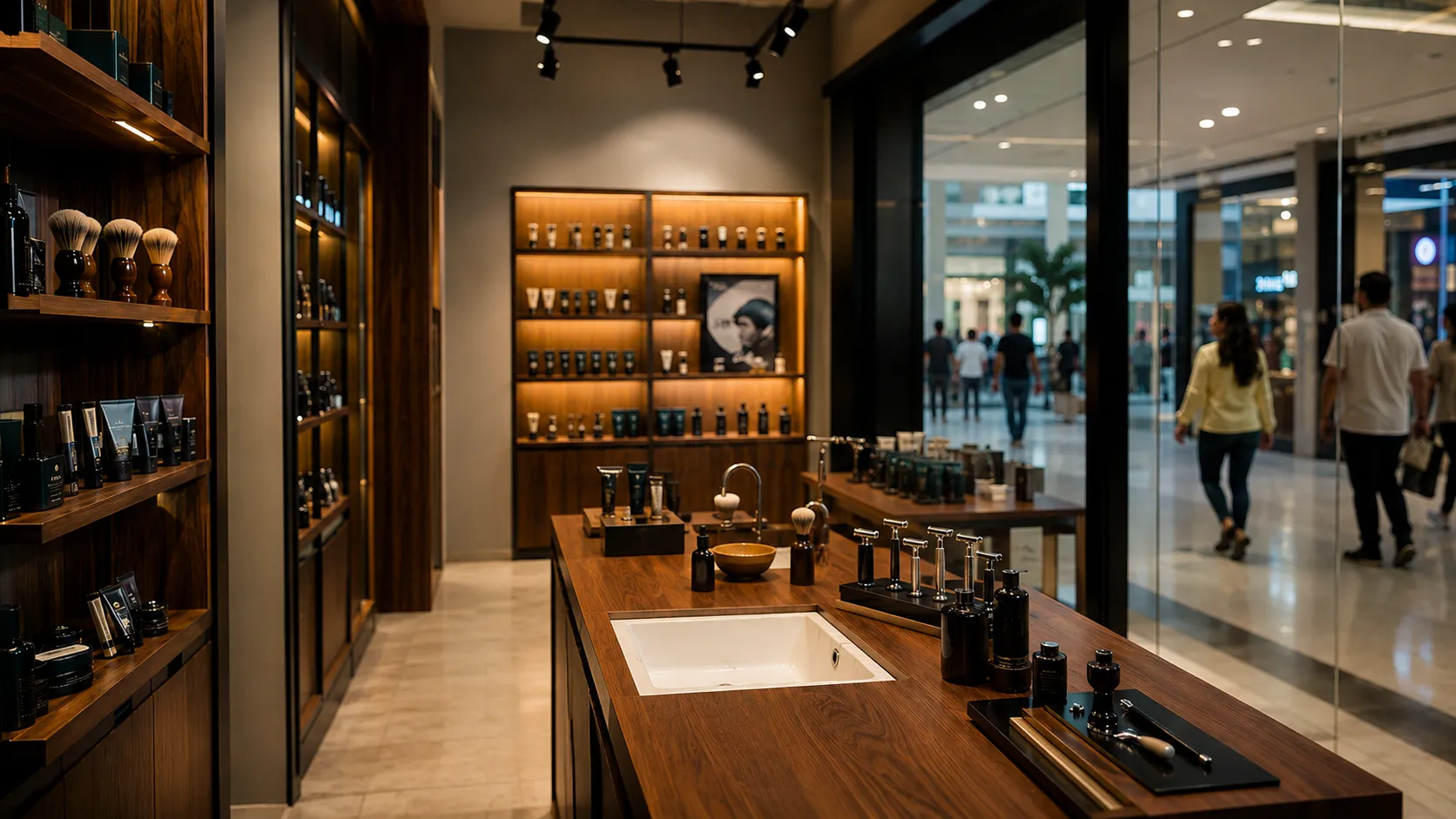
The company remains overwhelmingly digital in its revenue composition. "We continue to be a very digital-first organisation," Gupta said. "Still, 85–90 percent of revenue continues to come from online channels." BSC's own D2C website remains its single largest revenue platform, followed by marketplaces like Amazon and Flipkart, and then quick-commerce platforms. The physical stores—approximately 20 at last count, located in metro malls and high streets—serve primarily as brand-building and discovery touchpoints rather than primary revenue drivers.
The digital-first strategy has allowed BSC to compete with incumbents like Gillette and Philips without matching their massive distribution networks. Gillette products are available in virtually every kirana store, pharmacy, and supermarket in India—a physical footprint that took decades and billions of dollars to build. BSC has bypassed that infrastructure entirely, reaching customers through channels that did not exist when Gillette built its distribution empire. The result is a structural cost advantage: BSC does not need to pay distributors, wholesalers, and retailers the margins that consume a significant share of revenue in the traditional FMCG model.
The Controversy
No profile of Shantanu Deshpande is complete without acknowledging the episode that made him, briefly and painfully, one of the most criticised CEOs on the Indian internet.
In August 2022, Deshpande posted on LinkedIn that young professionals should work 18 hours a day for the first four to five years of their careers, avoid "rona-dhona" (whining), and worship their work. The post went viral—and the backlash was immediate, fierce, and global. The BBC covered it. CNN covered it. Thousands of commenters accused him of promoting toxic workplace culture, exploitation, and the kind of hustle-worship that burns out young workers. Within days, Deshpande had posted an apology, calling it his "final" LinkedIn post, and deactivated his account. "I apologise for hurting sentiments," he wrote. "You won."
The episode was ugly, but it revealed something about Deshpande that is relevant to understanding BSC's trajectory. He is a founder who believes, genuinely and deeply, in intensity—in throwing yourself into your work with a commitment that most people would find unreasonable. That intensity produced a brand that has grown from zero to ₹700 crore in a decade. It also produced a social media post that nearly destroyed his reputation. The same quality that built the company almost broke the founder.
Deshpande has since returned to LinkedIn with a more measured presence, and the controversy has largely faded from public memory. BSC's growth has not been affected—the company's revenue has more than doubled since the episode. But the incident serves as a reminder that founder-led brands carry the personality of their founders, for better and for worse. BSC's intensity, its focus on quality, and its refusal to settle for the ordinary are all expressions of Deshpande's personality. So was the 18-hour-workday post. The brand and the founder are inseparable.
The Road to IPO
BSC is now charting a profitability-first path to the public markets. The company is targeting approximately ₹150 crore in EBITDA and crossing the ₹1,000 crore revenue mark before filing its draft papers. "Being a consumer company, we like to have an IPO as a milestone in this journey," Deepak Gupta told BW Retail World. "Two to one-and-a-half years, we should get ready."
The ₹136 crore funding round led by Sixth Sense Ventures in late 2025—which included participation from Shantanu Deshpande himself, the Patni Family Office, Gulf Islamic Investments, and former Indian cricketer Rahul Dravid—was structured as a mix of primary and secondary transactions designed to strengthen the company's balance sheet ahead of the listing. The round valued BSC at approximately ₹824 crore.
The path from ₹700 crore to ₹1,000 crore in revenue, and to ₹150 crore in EBITDA, will require BSC to do something it has not yet done at scale: build a physical retail presence. The company currently operates about 20 exclusive brand outlets in metro malls and high streets—a fraction of the physical footprint that a public-market consumer company is expected to have. Expanding that footprint while maintaining profitability will be the central operational challenge of the next two years.
The competitive landscape is intensifying. Gillette and Philips remain dominant at the premium end. A new generation of D2C grooming brands—Ustraa, LetsShave, Beardo (acquired by Marico)—are competing for overlapping customer segments. The quick-commerce platforms that have accelerated BSC's growth also represent a long-term threat: if Blinkit and Zepto can deliver any brand's razor within 20 minutes, the switching cost for the customer is near zero. BSC's response is to invest in brand loyalty, product quality, and an omnichannel experience that no pure-play D2C competitor can easily replicate.
What This Signals
The Bombay Shaving Company story is not primarily about shaving. It is about the structural transformation of Indian consumer brands—and about the generation of founders who are building them.
For decades, the Indian personal care market was dominated by multinational giants—Gillette, Colgate, Unilever, P&G—who had built their distribution networks in an era before the internet, before quick commerce, before D2C. Those networks were expensive, slow to build, and impossible to replicate. The assumption, for most of that era, was that Indian startups could not compete with the multinationals at the premium end of the market. The best they could hope for was to offer cheaper alternatives to price-sensitive consumers.
BSC rejected that assumption. It built a premium brand from scratch, not by undercutting Gillette on price, but by offering a better product experience—better design, better ingredients, better packaging, and a better story. It reached customers not through the decades-old distribution networks that Gillette had spent billions building, but through channels that did not exist when Gillette built them: Instagram, YouTube, D2C websites, and quick-commerce platforms. It built a brand that customers felt proud to display on their bathroom shelves, not one they bought because it was the cheapest option.
The Colgate-Palmolive investment was the most significant external validation of this approach. Colgate did not invest in BSC because it thought the company would beat Gillette. It invested because it believed BSC had figured out how to build a consumer brand in the digital era—and that the lessons from BSC could be applied across Colgate's broader portfolio. The Sixth Sense Ventures round and the impending IPO are further validations that the D2C model, executed with discipline and patience, can produce a company of genuine scale.
Shantanu Deshpande is no longer the bored McKinsey consultant who wondered whether Indian men deserved a better shave. He is the founder of a ₹700 crore grooming brand, preparing to take it public, competing with Gillette at the premium end of the market. The four friends who started with a conviction and a credit card have built something that the multinationals—for all their resources, their distribution networks, and their century of brand equity—never saw coming. The razor that changed Indian shaving was not made by Gillette. It was made by four friends in Gurugram who believed that the morning ritual deserved more respect.


