The Five-Week Software Upgrade That Could Save Your Next Flight: How a Romanian Startup Is Rewriting the Code That Keeps 10 Million Planes a Year From Colliding
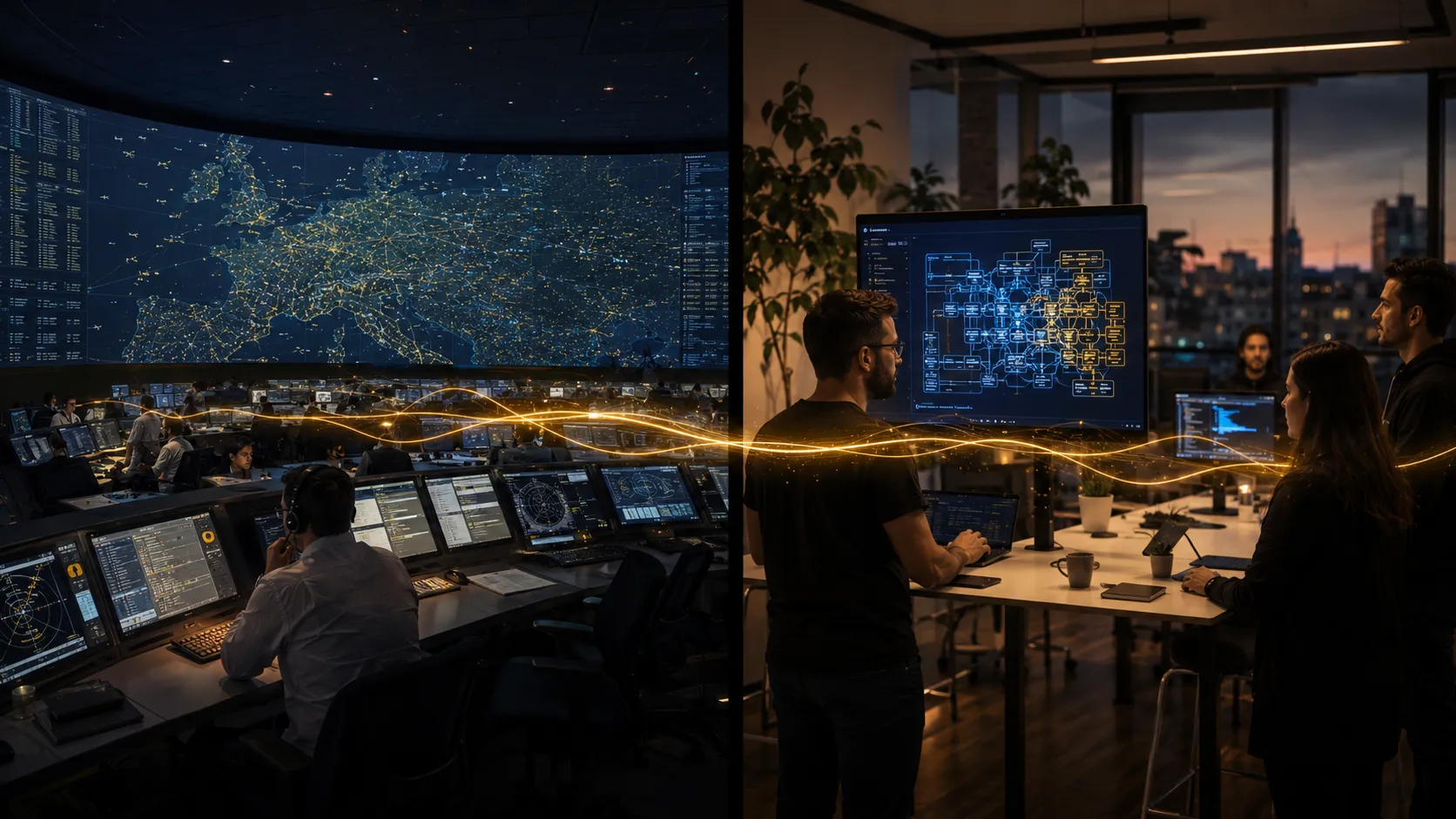
BUCHAREST — May 22, 2026 — In a modest office in Romania's capital, a team of engineers has spent the past year doing something that the global aviation industry has spent decades trying to avoid: they rewrote the software that coordinates air traffic across an entire continent. Not a prototype. Not a simulation. The actual production software that underpins aviation systems used in airports and air traffic control operations across Europe, contributing to successful journeys for tens of millions of airline passengers every year.
The software they replaced was fifteen years old. It had been patched, updated, and stretched beyond its original design parameters by generations of engineers who understood that aviation software cannot be rewritten—it can only be extended, layer by careful layer, because a mistake in production code could, in the worst case, contribute to the conditions that lead to a midair collision. The conventional estimate for replacing the application was six months of careful, methodical work by a team of senior engineers.
DesignVerse, a Bucharest-based AI startup founded by two Romanian engineers who had spent their careers building software for Oracle, self-driving cars, and enterprise platforms, did it in just over a month. Not by cutting corners. Not by sacrificing safety. But by building an AI platform that ingests an organization's own documentation, design systems, component libraries, and technical rules, then generates production-ready software that matches the existing architecture with a fidelity that manual coding cannot match. The development was five times faster than conventional methods. The quality, according to EUROCONTROL, was uncompromised. The implications—for aviation, for banking, for cybersecurity, for every industry that runs on legacy code it is afraid to touch—are only beginning to be understood.
The Problem That Nobody Wanted to Touch
To understand what DesignVerse has built, one must first understand the structural problem that has paralyzed enterprise software modernization for a generation.
The global economy runs on legacy code. The air traffic control system that guides planes across European airspace. The banking platforms that process trillions of dollars in transactions. The cybersecurity infrastructure that protects government networks. The public-sector applications that manage pensions, healthcare records, and tax collection. All of these systems were built years or decades ago, in programming languages that are no longer taught, on architectures that are no longer documented, by engineers who have long since retired. They work. They are reliable. They are also impossible to modify without enormous cost and enormous risk.
The conventional solution—manual redevelopment by teams of enterprise engineers—is slow, expensive, and error-prone. A large bank might spend three years and $50 million to replace a single core system, only to discover at the end of the process that the new system does not integrate properly with the fifteen other legacy systems that were built alongside the old one. The result is that most organizations simply do not modernize. They patch. They extend. They hire the last remaining COBOL programmers on Earth at escalating consulting rates. They cross their fingers.
General-purpose AI coding tools—GitHub Copilot, Cursor, Claude Code—have made it easier to write new software. But they are not designed for the specific challenge of modernizing legacy enterprise systems. They do not understand a customer's existing architecture. They do not incorporate the internal design systems and component libraries that govern how software is built at a particular organization. They do not guarantee compliance with the regulatory frameworks that govern aviation, banking, and healthcare. They are excellent for prototyping. They are not safe for production.
DesignVerse was built to fill that gap. The platform ingests a customer's own documentation, design systems, component libraries, and technical rules—the institutional knowledge that defines how software is built at a particular organization—and uses that context to generate production-ready code that matches the existing architecture. The output is not generic. It is specific to the customer, consistent with the customer's standards, and compliant with the regulatory frameworks that govern the customer's industry.
The Oracle Diaspora
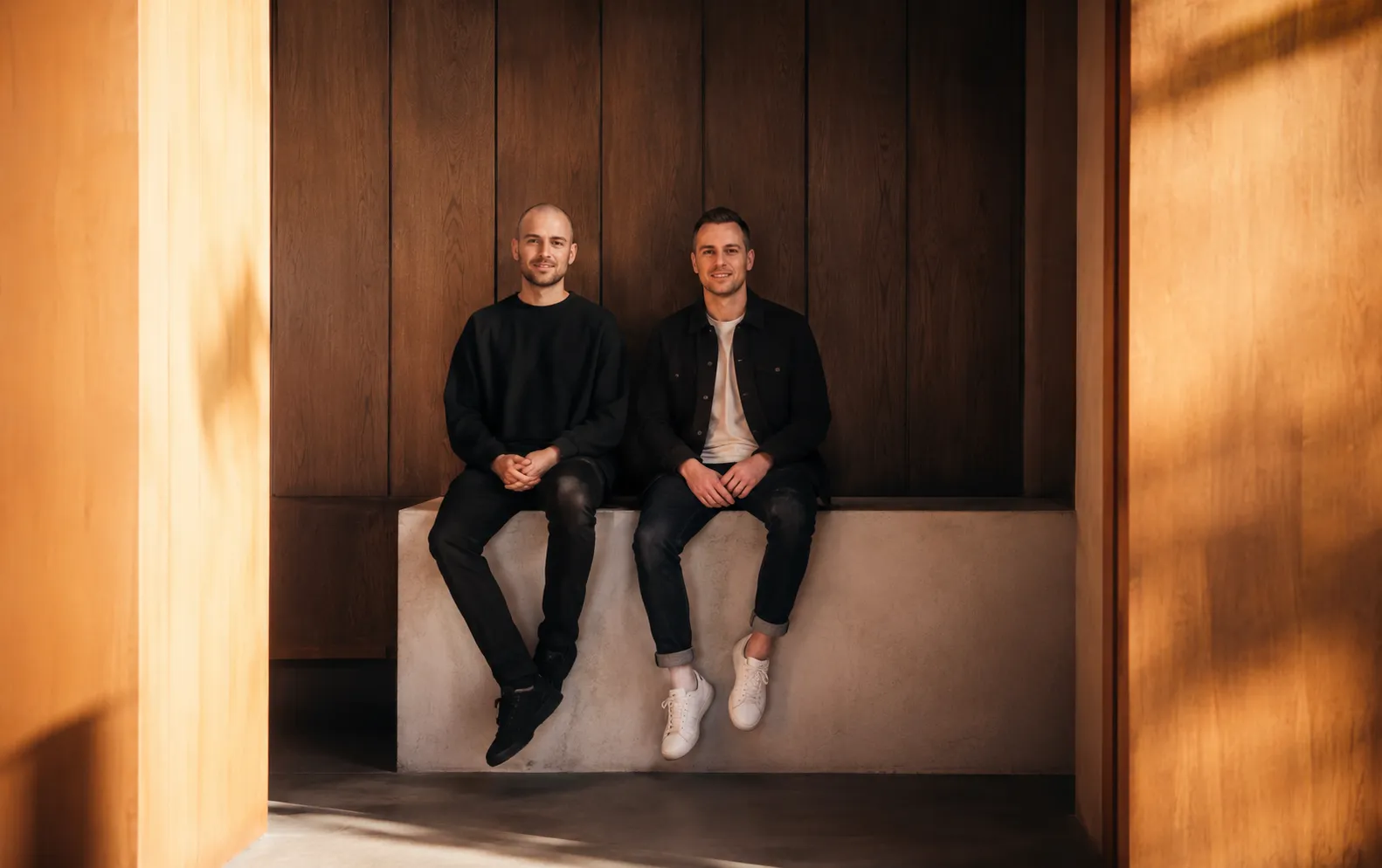
Andrei Manolache and Robert Dragutoiu are not the typical founders of a European AI startup. They did not come from academia. They did not graduate from an incubator. They came from the enterprise—specifically, from Oracle, where Manolache served as the product design lead for the Redwood design system, the visual and interaction framework used across the company's entire suite of enterprise software products. Dragutoiu, his co-founder and CTO, spent more than two decades building complex systems, including advanced self-driving automotive software and AI-driven engineering platforms.
The experience gave them a perspective that most AI founders lack: they understood, from the inside, why large organizations struggle to modernize software. The problem, as they saw it, was not a shortage of engineering talent. It was a structural gap between what design teams specify and what engineering teams build. In a large enterprise, a product designer creates a detailed specification—a visual language, a component hierarchy, an interaction model. An engineering team interprets that specification, manually reconstructs it in code, and deploys it. The process is slow, inconsistent, and prone to errors that compound over time.
"Large organizations still lose enormous amounts of time translating design work into production software," Manolache said. "Designers create intent, but engineers must manually reinterpret and rebuild it, which leads to inconsistency and delays. DesignVerse removes that friction entirely, allowing teams to generate functional enterprise applications directly from their design systems, validating the behavior instantly with business stakeholders and bridging the gap."
The insight was validated by the speed at which EUROCONTROL adopted the platform. The pan-European aviation organization, which coordinates air traffic across 41 member states and handles approximately 10 million flights per year, had embarked on its largest digital transformation programme to date—the Integrated Network Management programme—and was looking for tools that could accelerate the modernization of its legacy systems without compromising the safety standards that govern aviation software. DesignVerse's platform was tested on a 15-year-old application. It replaced the application in just over a month. The software now underpins aviation systems used in airports and air traffic control operations across the continent.
The Seed Round and the Road Ahead
On May 13, 2026, DesignVerse announced a $5.5 million seed funding round, bringing its total capital raised to $6.35 million following an earlier $850,000 pre-seed round. The round was co-led by the British investment fund Begin Capital and the Romanian fund GapMinder VC, with participation from Underline Ventures and strategic angel investors from Adobe, the London Stock Exchange Group, and UiPath.
The presence of angels from Adobe and UiPath is significant. Adobe's investment signals that one of the world's largest design-software companies sees DesignVerse as complementary to its own ecosystem—a platform that extends design systems into production code, rather than a competitor that replaces them. UiPath's involvement suggests that the robotic process automation giant sees a future in which AI-driven software modernization complements its own automation platform, creating an end-to-end pipeline from legacy system analysis to modernized deployment.
The funding will be used to expand DesignVerse's engineering team and accelerate growth across enterprise markets in Europe and the United States. The company surpassed $1.1 million in annual recurring revenue in less than five months, all from enterprise customers in sensitive sectors—aviation, banking, cybersecurity, and public infrastructure. The commercial traction suggests that the market for AI-driven enterprise modernization is larger and more urgent than the venture capital industry has recognized.
The company will join EUROCONTROL at Airspace World 2026 in Lisbon next week, where the aviation industry gathers to discuss the future of air traffic management, modernization, and AI-driven transformation across global aviation infrastructure. The appearance is a coming-out party—a signal that a Bucharest startup, founded by two Oracle veterans who saw a problem that no one else was solving, has built something that the largest aviation organization in Europe trusts with its most critical software.
What This Signals
The DesignVerse story is not primarily about aviation. It is about the modernization problem that haunts every large organization on Earth—the banks that run on COBOL, the government agencies that run on Fortran, the hospitals that run on custom software written by contractors who retired a decade ago. The AI industry has spent the past three years building tools that help developers write new code faster. It has spent almost no time building tools that help organizations modernize the old code they are afraid to touch.
The reason is simple: modernizing legacy code is a much harder problem than generating new code from scratch. It requires understanding the existing architecture, the institutional rules, the regulatory constraints, and the accumulated undocumented knowledge that makes the old system work. It requires generating code that is not merely functional but consistent with standards that were established before the AI was trained. It requires a level of reliability that most AI systems cannot guarantee.
DesignVerse's platform addresses those constraints by building what Dragutoiu calls a "contextual layer"—an AI model that is trained not on generic code repositories but on the specific documentation, design systems, component libraries, and technical rules of each customer. The model learns how a particular organization builds software, and it generates code that matches that organization's standards. The result is modernization that is both faster and safer than the manual alternative.
The five-week software upgrade that DesignVerse delivered to EUROCONTROL is not a one-off achievement. It is a proof of concept for a technology that could, within a decade, transform how every large organization modernizes its legacy systems. The 15-year-old application that was replaced in just over a month is a signal—that the code we have been afraid to touch is not invulnerable, and that the tools to modernize it safely are finally arriving. The startup that built those tools is based in Bucharest, not Silicon Valley. The next time you board a plane in Europe, the software that guides it through the sky may have been generated by an AI platform built by two Romanian engineers who understood, before anyone else, that the hardest problem in enterprise software is not writing new code. It is safely replacing the old.


