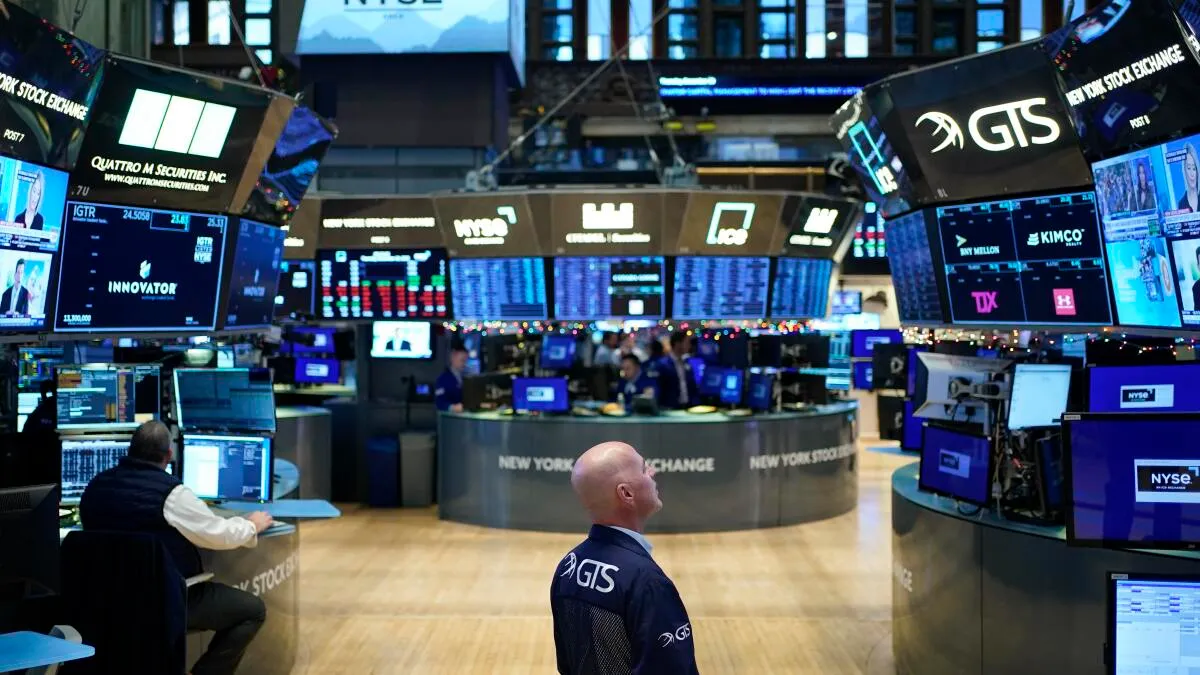
Wall Street was supposed to sell off. The Federal Reserve opened the door to a rate hike, inflation remained sticky, and the new chairman signaled a hawkish turn. Instead, the Nasdaq surged nearly 2%, the S&P 500 hit 7,500, and semiconductors led the charge. The market just told the Fed something it didn't want to hear: we don't believe you.
The Federal Reserve did everything it was supposed to do to scare the market.
In its first policy meeting under new Chairman Kevin Warsh, the central bank held interest rates steady at 3.50% to 3.75%. But it also opened the door to a rate hike later this year — a sharp reversal from the rate cuts that had been expected just months earlier. Nine of 18 FOMC officials now penciled in at least one rate hike for 2026. Six of those supported two quarter-point increases. The median projection for the fed funds rate at the end of 2026 rose to 3.8%, up from 3.4% in March. The statement removed language hinting that the Fed was leaning toward future cuts. Inflation forecasts were marked up from 2.7% to 3.6%.
By any historical measure, that is a hawkish pivot. And on Wednesday, the market reacted exactly as expected: the S&P 500 fell 1.2%, the Nasdaq tumbled 1.3%, and the Dow dropped 1%.
Then Thursday happened.
The Nasdaq surged 1.91% to 26,517.93. The S&P 500 rose 1.08% to 7,500.58. The Dow edged up 0.14% to 51,564.70. The Philadelphia Semiconductor Index jumped 6.5%. Technology stocks led the charge. Investors had effectively told the Fed: we see your hawkish signals, and we're raising you a geopolitical ceasefire.
The Iran Trade: Why Oil Trumped Rates
What changed in 24 hours? A piece of paper signed in Geneva.
President Trump and his Iranian counterpart signed an interim memorandum of understanding to end hostilities and reopen the Strait of Hormuz. The deal extended the April ceasefire for another 60 days, giving both sides more time to reach a final agreement. "Oil is flowing," Trump wrote on Truth Social. Three Saudi tankers carrying six million barrels of oil made their way out of the strait.
The impact on energy markets was immediate and dramatic. Oil crashed to a three-month low. Brent crude fell to around $78 a barrel, while West Texas Intermediate dropped just above $74. US crude fell 3.36% to $74.21. Oil had reached as high as $120 per barrel at the peak of the conflict and fell nearly 29% in a month. The war premium was draining fast.
For investors, the math was simple. Lower oil prices mean lower inflation. Lower inflation means less pressure on the Fed to hike rates. As Ian Lyngen at BMO Capital Markets put it: "The progress toward releasing oil supply from the Persian Gulf has supported equity prices. Lower energy costs have also eased forward inflationary concerns and led to meaningful declines in longer-dated Treasury yields".
The market essentially decided that the Fed's hawkish signals were less important than the disinflationary impact of crashing oil prices. Investors bet that falling energy costs would cool inflation faster than the Fed could tighten, reducing the need for rate hikes later this year.
The Tech Trade: Semiconductors Lead the Charge
The tech rally was not just about oil. It was also about a specific catalyst: Intel and Apple.
Trump announced on Truth Social that Intel and Apple would work together to design and produce semiconductors in the US. Intel shares surged 10% to a record high. The stock has already risen 240% so far this year. The Philadelphia Semiconductor Index hit a record high, rising 4.6%.
The chip rally spread across the sector. Nvidia surged nearly 3%. AMD gained 4.9%. Micron Technology rose 8.7%. Marvell Technology surged 7.27% after KeyBanc raised its price target from $260 to $385. The Nasdaq's 1.9% gain was driven almost entirely by semiconductors and AI infrastructure plays.
The Intel-Apple partnership is significant beyond the immediate stock reaction. It represents a fundamental shift in the semiconductor landscape. Apple, which has traditionally relied on TSMC for chip manufacturing, is now partnering with Intel on US-based production. The deal aligns with the Trump administration's push for domestic semiconductor manufacturing and could reshape the global chip supply chain.
The broader context matters too. The market is already up roughly 8% for the year despite war and global energy disruptions. Of the companies that have gone public in the past two months, 18 have been tech firms. The tech trade remains the market's dominant theme, and Thursday's rally was a powerful reaffirmation of that trend.
The Energy Trade: The Losers of the Iran Deal
Every rally has its losers. On Thursday, they were in the energy sector.
Oil's collapse dragged down energy stocks across the board. Chevron fell 2.2%. Exxon Mobil dropped 3%. ConocoPhillips fell 2.8%. Occidental Petroleum dropped 2.8%. APA Corporation fell 3.8%.
The selloff reflected a market that had priced in a sustained war premium. When the premium evaporated, so did the stock prices. As one analysis put it, "Oil crashed below $80/barrel and gas fell under $4/gallon after the U.S.-Iran deal eliminated the war premium — but the market treated a temporary price normalization as a structural earnings disaster for energy stocks".
The energy sector's decline was a mirror image of the tech sector's rally. Lower oil prices benefit consumers, businesses, and tech companies that rely on energy-intensive data centers. They hurt oil producers and drillers. The market's message was clear: the pain of lower oil prices is concentrated, but the benefit is broad.
The Consulting Trade: Accenture's Collateral Damage
There was one more loser on Thursday, and it had nothing to do with oil or Iran.
Accenture, the global consulting giant, reported disappointing results and cut its revenue guidance. The stock plunged 18%, its worst decline on record. Peers such as Cognizant and Capgemini fell between 8% and 11%. The US-listed shares of Infosys (ADRs) were down 10% overnight.
The Accenture selloff is a reminder that not all tech-adjacent stocks are benefiting from the AI boom. Consulting firms are facing pressure as clients delay discretionary spending and extend deal cycles. The same AI enthusiasm that lifted semiconductor stocks is creating uncertainty for consulting firms that advise clients on AI adoption.
The divergence is striking. Chip stocks rallied on AI optimism. Consulting stocks sold off on AI uncertainty. The market is pricing in a future where AI creates more winners than losers — but it's also acknowledging that the transition will be uneven.
The Technical Trade: Triple Witching and Volatility
Thursday was also a "triple witching" day — the quarterly expiration of stock options, stock-index futures, and stock-index options. Notional options worth $7.5 trillion faced expiry. The combination of the Iran deal, the Fed pivot, and the options expiry created a volatile trading session.
Wall Street will be closed on Friday for the Juneteenth holiday. The shortened week meant that Thursday's gains — and losses — carried extra weight. For the week as a whole, the S&P 500 recorded a 0.93% increase, the Nasdaq rose 2.43%, and the Dow gained 0.71%. It was the second consecutive week of gains for all three major indexes.
The VIX, the market's fear gauge, spiked more than 12% to 18.44 after the Fed decision on Wednesday. By Thursday, it had subsided. The market had absorbed the Fed's hawkish signals and moved on.
The Bottom Line
The Federal Reserve did everything it was supposed to do to scare the market. It held rates steady but opened the door to a hike. It signaled that inflation remains a concern. It removed language hinting at future cuts. The market sold off on Wednesday, exactly as expected.
Then Thursday happened. The Nasdaq surged nearly 2%. The S&P 500 hit 7,500. Semiconductors led the charge. Energy stocks collapsed. Oil crashed to a three-month low. And the market told the Fed something it didn't want to hear: we don't believe you'll actually hike.
The Iran deal was the catalyst. The reopening of the Strait of Hormuz sent oil prices tumbling, easing inflationary pressures and reducing the need for aggressive Fed tightening. Investors bet that falling energy costs would cool inflation faster than the Fed could raise rates. The market essentially decided that the Fed's hawkish signals were less important than the disinflationary impact of crashing oil prices.
The tech rally was powered by more than oil. The Intel-Apple partnership gave semiconductors a specific catalyst. AI infrastructure demand remained robust. The Philadelphia Semiconductor Index hit a record high. The Nasdaq's 1.9% gain was driven almost entirely by tech.
But the rally was not universal. Energy stocks collapsed. Consulting stocks sold off on Accenture's guidance cut. The divergence reflects a market that is increasingly selective — rewarding AI winners and punishing oil producers.
For now, the market has spoken. It has looked at the Fed's hawkish signals and raised them a geopolitical ceasefire. Whether that bet pays off depends on whether oil prices stay low and inflation continues to moderate. But on June 18, 2026, the market made its position clear: the Fed may talk tough, but the market isn't buying it.
,


