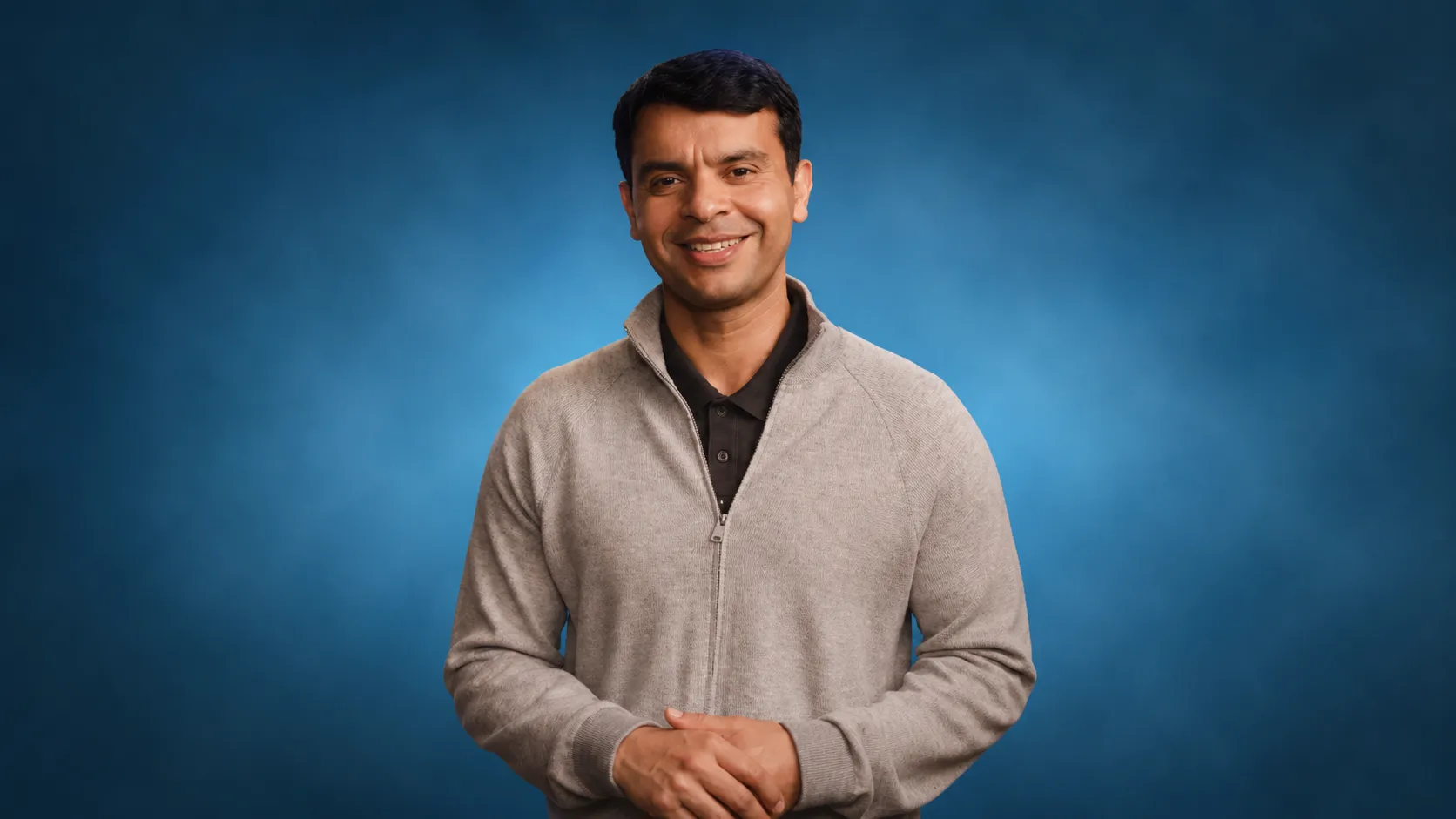
From Chandigarh to the Architecture Behind Google Search
Mohit Aron was born around 1973 and grew up in Chandigarh, India, before earning his Bachelor of Technology in Computer Science from the Indian Institute of Technology, Delhi, in 1995 — one of the earliest steps in a career that would eventually place him at the literal infrastructural core of the modern internet. From IIT Delhi, Aron moved to the United States to pursue graduate study at Rice University, completing his Master's degree in 1998 and a PhD in Computer Science in 2001, specializing in distributed computing under the guidance of his advisor, Peter Druschel — a field that, at the time, remained a highly specialized academic discipline rather than the foundation of trillion-dollar technology companies it would soon become.
Aron's early professional path included a stint at a company called Zambeel starting in 2000, before he joined Google in 2003, where he spent nearly five years as a lead developer on one of the most consequential engineering projects in the company's history: the Google File System, the foundational software that manages how data is stored and accessed across Google's massive-scale computing clusters. It is difficult to overstate the significance of this early career chapter — the Google File System is, quite literally, part of the technical bedrock that made Google's entire search engine, and by extension much of the modern internet's infrastructure, possible at global scale.

"The Father of Hyperconvergence"
After leaving Google, Aron spent time at Aster Data Systems, a data warehouse company, from 2007 to 2009, deepening his expertise in how organizations store, process, and extract insight from massive volumes of data. It was this accumulated expertise — Google-scale distributed systems combined with enterprise data warehousing experience — that led Aron, in 2009, to co-found Nutanix alongside Dheeraj Pandey and Ajeet Singh, serving as the company's Chief Technology Officer.
Nutanix set out to solve a problem that had quietly plagued enterprise data centers for years: the complexity of managing separate, siloed systems for storage, computing, and networking. Aron and his co-founders pioneered what became known as hyperconverged infrastructure — an architecture that combines storage, compute, and networking into a single, unified system, dramatically reducing data center complexity while increasing scalability, so that companies no longer needed to purchase, manage, and maintain entirely separate storage and compute systems. That contribution earned Aron a nickname that has followed him throughout his career: the 'father of hyperconvergence.' Nutanix's growth was rapid and significant. Venture capital firms invested over $312 million across five funding rounds, and the company reached a $1 billion valuation by 2013, officially becoming a unicorn, before eventually going public and, years later, reaching a valuation of over $5 billion as a listed company.
Walking Away From a Unicorn He Co-Founded
In early 2013, at a moment when Nutanix's own success and trajectory were becoming increasingly clear, Aron made a decision that many founders in his position would never seriously consider: he left the company he had co-founded and helped build into a unicorn, in order to start an entirely new venture. It is a genuinely rare choice in the startup world — walking away from a company on a clear, accelerating growth trajectory, forfeiting the comfort and validation of continuing to lead something already succeeding, in pursuit of a new, unproven idea with no guaranteed outcome.
Founding Cohesity: Solving the Problem Beneath the Problem
That new idea became Cohesity, founded in 2013, built around a problem Aron had identified as the natural next frontier beyond hyperconvergence: the mass fragmentation of enterprise data itself. As Aron has explained, the vast majority of a typical enterprise's data — backups, archives, file shares, object stores, and the data used for development, testing, and analytics — sits scattered across fragmented, disconnected infrastructure silos, making that data difficult to protect, expensive to manage, and nearly impossible to meaningfully analyze. Cohesity's platform was designed to consolidate those fragmented silos onto a single, web-scale system spanning on-premises data centers, the cloud, and edge computing environments, uniquely allowing organizations to run applications directly on top of that unified data platform — transforming what had traditionally been treated as passive backup storage into an active, analyzable, valuable business asset.
Cohesity's growth mirrored, and in some respects exceeded, the trajectory Aron had already achieved once at Nutanix. The company was named a 'Tech Pioneer' by the World Economic Forum in 2018, recognized by CRN as a top storage emerging vendor for three consecutive years, and named one of Network World's '10 Hot Storage Startups to Watch.' By its Series E funding round, Cohesity's valuation had reached $2.5 billion — more than double the valuation the company had commanded at its Series D round less than two years earlier, a pace of value creation that placed Aron among an extremely small group of entrepreneurs to have built two separate, distinct billion-dollar data infrastructure companies.
"Disagree and Commit": Aron's Leadership Philosophy
Across numerous public interviews and podcast appearances, Aron has articulated a consistent, distinctive leadership philosophy that has clearly shaped how he has built both of his companies. Speaking on the podcast Venture with Grace, Aron described a principle of collaborative alignment he calls 'disagree and commit': once a decision has genuinely been made within an organization, the priority shifts entirely to moving forward with full conviction, fixing course later if needed, rather than continuing to relitigate the decision. 'Momentum matters more than perfection,' is how his approach has been summarized. He has also spoken candidly about a lesson he believes most founders learn far too late in their careers: that founders often get lost in their own technology, when success actually comes from delighting customers and easing their genuine pain — a philosophy that requires founders to think from the customer's perspective rather than purely from an engineering one.
The Data Backbone of the Agentic AI Era
As artificial intelligence has reshaped enterprise technology priorities through 2025 and 2026, Aron and Cohesity have positioned the company's core data management and security infrastructure as directly relevant to the industry's next major shift: agentic AI. In 2026, Cohesity deepened its strategic partnership with Nutanix — the very company Aron co-founded and left over a decade earlier — combining Nutanix's hybrid multicloud platform with Cohesity's data security and insight capabilities to build joint 'Cyber Clean Room' solutions, explicitly designed to help enterprises prepare for the security demands of an era increasingly defined by autonomous AI agents operating across enterprise data. It is a notable, almost symbolic turn in Aron's career: two companies he built at different points in his life, more than a decade apart, now formally collaborating to address the next generation of enterprise technology challenges together.
Why Leaving a Winning Company Is the Hardest Decision in Tech
The decision to leave Nutanix in early 2013, at precisely the moment the company's momentum was becoming undeniable, deserves closer examination, because it runs directly counter to nearly every conventional piece of startup wisdom about founder commitment and company-building. Most investors, board members, and startup mentors would strongly counsel a co-founder against leaving a company on a clear unicorn trajectory to chase an unrelated, unproven idea — the opportunity cost, in terms of both equity value and professional reputation, is simply too large for most people to rationally accept. Aron's willingness to make that trade reflects a specific kind of founder psychology, one oriented more toward solving the next unsolved technical problem than toward maximizing the financial outcome of any single venture. That same psychology, notably, is what allowed him to identify data fragmentation as the next major unsolved problem in enterprise infrastructure while he was still deeply embedded inside Nutanix, watching customers struggle with exactly the kind of disconnected backup and archival systems that Cohesity was later built to solve.
Two Companies, One Legacy, Now Working Together
The 2026 strategic partnership between Cohesity and Nutanix, jointly building 'Cyber Clean Room' solutions for the agentic AI era, represents a rare and almost poetic turn in enterprise technology history: two separate billion-dollar companies, founded by the same person at different points in his career, now formally collaborating rather than competing. For Aron personally, that convergence reflects something deeper than corporate strategy — it is a tangible demonstration that the two distinct technical problems he chose to solve, hyperconverged infrastructure and enterprise data management, were never truly separate challenges at all, but two closely related pieces of the same larger puzzle: how modern enterprises store, secure, and extract value from their data at massive scale. Few founders in the history of enterprise technology have had the rare opportunity to watch two of their own creations, built a decade apart, formally join forces to address the next generation of industry challenges together.
Mentoring the Next Generation From San Jose
In the years since Cohesity's rise to a multi-billion-dollar valuation, Aron has increasingly turned his attention toward mentoring and advising the next generation of founders navigating the same distinctive, technically demanding path he pioneered — from deep infrastructure engineering roles inside Big Tech, toward founding companies that solve genuinely foundational, unglamorous enterprise problems rather than chasing consumer trends. His appearances on podcasts like Founded & Funded with Madrona Venture Group and Venture with Grace reflect a founder who has become notably generous with the specific, tactical lessons of his own career: how to identify true product-market fit rather than superficial customer interest, how to structure a hiring strategy for early-stage technical teams, and how to balance an ambitious long-term vision against the unglamorous, day-to-day execution required to actually build it. For a wave of younger Indian-American and NRI engineers currently working inside companies like Google, Meta, and Microsoft, quietly considering whether to make the leap into founding their own infrastructure-focused startups, Aron's own well-documented journey — and his increasing visibility as a mentor to that same community — offers both a credible playbook and a living, still-active proof point that the path he walked twice can, in fact, be walked again.
The Rice University PhD That Started Everything
Aron's academic training at Rice University, culminating in a 2001 PhD in distributed computing under advisor Peter Druschel, deserves particular credit for the trajectory that followed, because distributed systems — the study of how multiple independent computers coordinate to behave as a single, reliable system — was, at the turn of the millennium, a niche academic specialization with relatively few obvious, large-scale commercial applications outside of a handful of research labs and telecommunications companies. That Aron chose to specialize so deeply in a field that would only become commercially central to the technology industry years later, as cloud computing and massive-scale data infrastructure became the backbone of nearly every major internet company, reflects either remarkable foresight or remarkable luck — and most people who have worked closely with him over the following two decades tend to describe it, consistently, as the former rather than the latter.
A Blueprint for Repeatable, Disciplined Founder Success
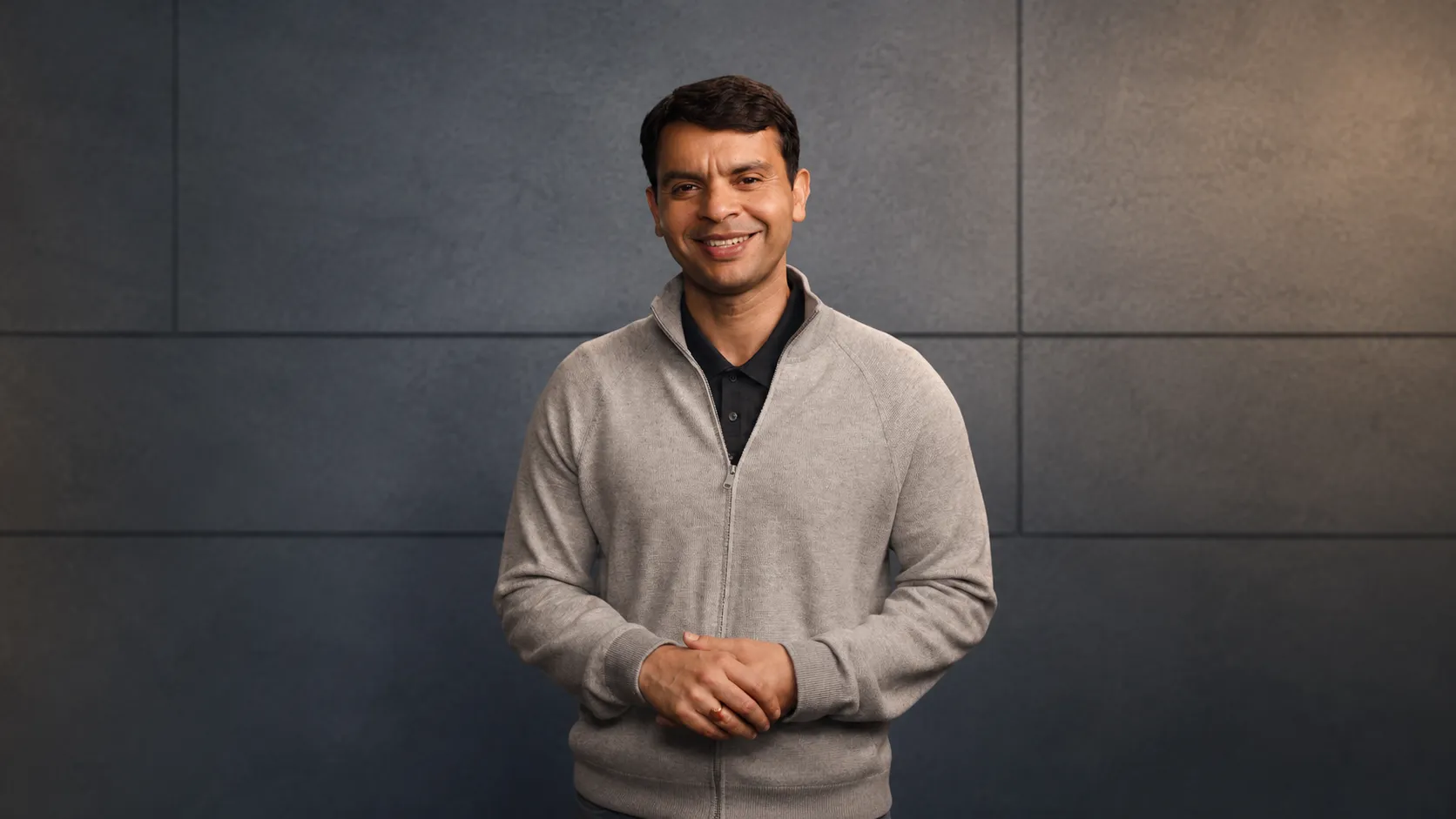
Mohit Aron's career offers the Indian and NRI entrepreneurial community a particularly instructive model precisely because of its rare repeatability. Building one billion-dollar infrastructure company from deep, highly specialized technical expertise is already an exceptional achievement. Walking away from that company at the peak of its early momentum, and successfully building a second, entirely distinct billion-dollar company addressing an adjacent but genuinely different problem, is a feat achieved by only a small handful of technology founders anywhere in the world. From a childhood in Chandigarh, through an IIT Delhi computer science education, to helping build the literal file system underpinning Google's search infrastructure, to founding two of the most consequential data infrastructure companies in modern enterprise technology, Aron's journey stands as one of the clearest examples of how deep, patient, foundational technical expertise — cultivated over decades rather than chased in a single viral moment — can be repeatedly and deliberately converted into enduring, category-defining business success, a lesson that continues to resonate with every new generation of Indian-origin engineers now weighing their own leap from a stable Big Tech career into the uncertainty of founding something entirely their own. His story remains one of the most compelling proof points that deep infrastructure expertise, patiently built, can be repeated on demand.
As enterprise data volumes continue to explode under the weight of agentic AI systems that require constant, secure access to a company's most sensitive information, the foundational infrastructure work Aron pioneered first at Google, then at Nutanix, and finally at Cohesity, increasingly reads not as three separate chapters, but as one continuous, decades-long project to solve the same underlying question: how should the world's most important data actually be stored, secured, and made useful at true global scale.


