The Face That Wasn't Hers: How a Bollywood Star's Deepfake Nightmare Is Reshaping the ₹10,000 Crore Endorsement Economy—And the Law Is Scrambling to Catch Up
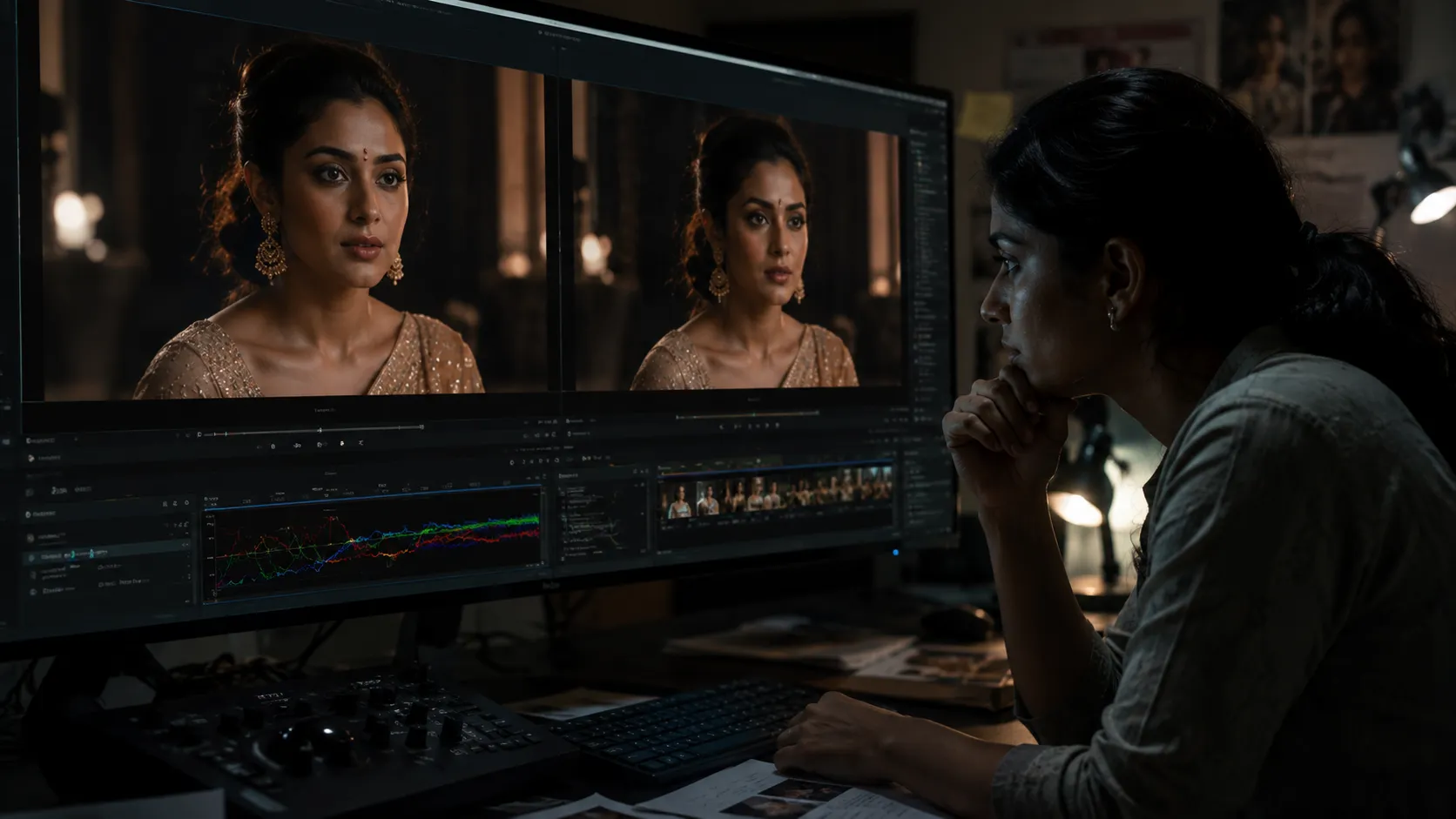
MUMBAI — May 30, 2026 — The video appeared on a Tuesday evening in March, uploaded to a fringe pornography site and then, within hours, circulated across WhatsApp groups, Telegram channels, and X. It showed a famous Bollywood actress—one of the most recognisable faces in the country, a woman whose image had been licensed to a dozen major brands, whose endorsement portfolio was valued at over ₹200 crore—engaged in an explicit sexual act. The video was, of course, entirely fabricated. The actress's face had been digitally mapped onto the body of a performer in an existing pornographic video using deepfake technology—the same generative‑AI tools that can now produce photorealistic synthetic media with a sophistication that makes detection difficult and attribution nearly impossible. The actress's legal team sent takedown notices to every platform that was hosting the video. Most of them complied, eventually, but the video had already been downloaded, copied, and re‑uploaded thousands of times. It is still circulating. It will probably circulate forever.
The deepfake crisis that has been building in the shadows of the AI revolution has now fully arrived in the Indian entertainment industry—and it is reshaping the endorsement economy, the legal landscape, and the relationship between celebrities and their own images in ways that no one anticipated. The actress at the centre of the March incident has not been named publicly, at her own request. Her representatives have declined to comment for this story. But the crisis she experienced is not unique, and it is not over. The same technology that can fabricate a pornographic video can fabricate an endorsement—a synthetic video of a celebrity appearing to endorse a product they have never used, a political candidate they have never supported, or a cause they have never embraced. The celebrity's face, once their most valuable and most protected asset, has become a raw material for anyone with access to a generative‑AI model and a library of publicly available images. The law that was supposed to protect that asset is still being written—and the celebrity who is waiting for the law to catch up is waiting for a protection that may never arrive.
"The deepfake is the most significant threat to the celebrity‑endorsement economy since the invention of the photograph. The celebrity's image is their most valuable asset. The deepfake steals that asset, weaponises it, and distributes it at a speed and a scale that no legal system can match. The industry is not prepared. The law is not prepared. The celebrities are not prepared." — Media lawyer who has represented multiple Bollywood actors in deepfake cases, speaking anonymously to TIGI
The Economic Anatomy of a Stolen Face
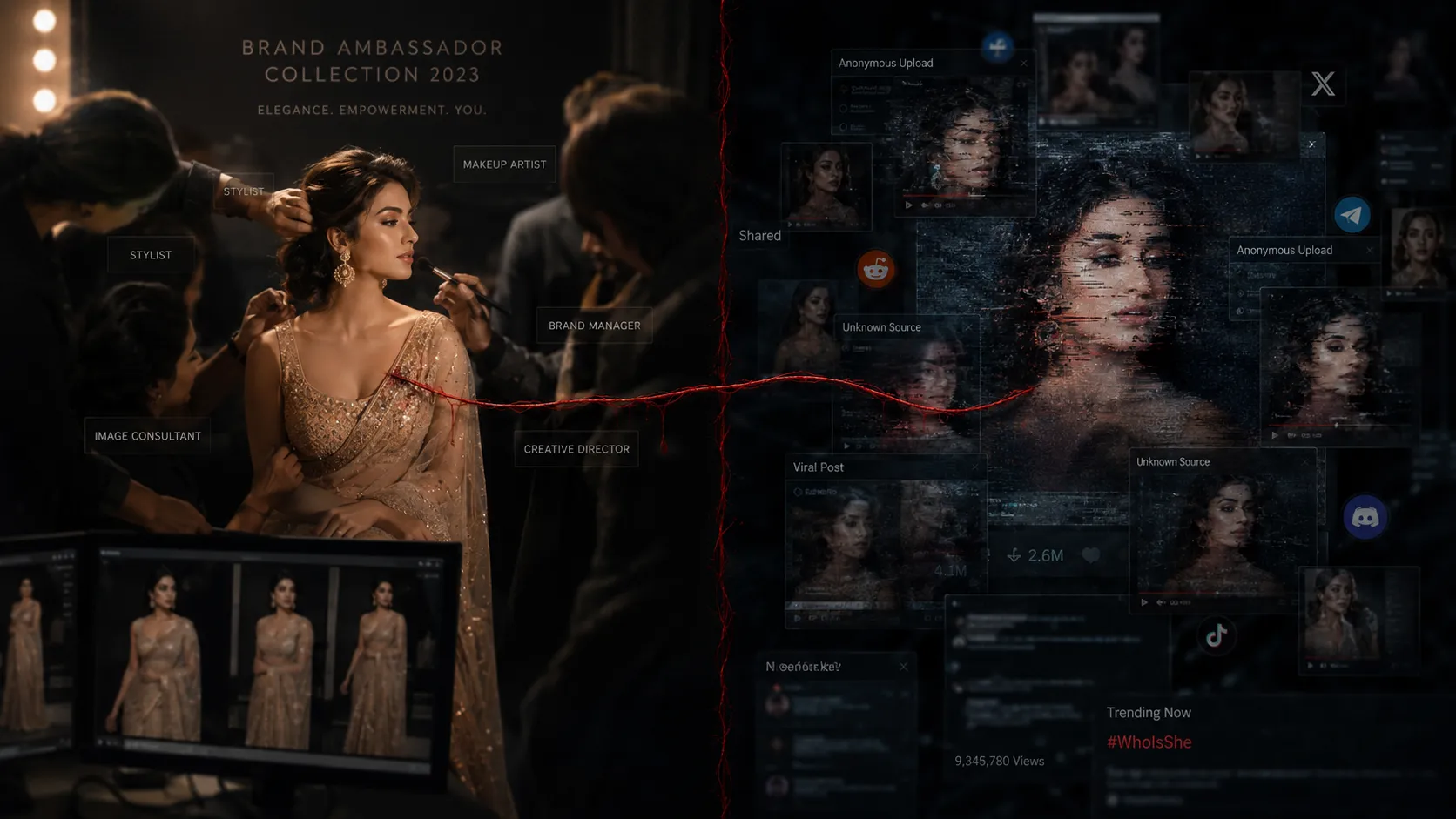
The most important dimension of the deepfake crisis is not the personal violation, although the violation is real and profound. It is the economic damage—the erosion of the celebrity's most valuable commercial asset. The Bollywood actress whose face was stolen in March had built her endorsement portfolio over two decades, carefully selecting the brands she would associate with, negotiating the terms of each deal, and managing her public image with a discipline that reflected the stakes. Her face was not merely her identity. It was her business, and the business was worth approximately ₹200 crore in annual endorsement revenue. The deepfake that was circulated in March did not merely humiliate her. It threatened to destroy the commercial value of the asset that she had spent her career building.
The economics of the stolen face are complex and poorly understood, even by the industry that depends on them. The brand that has signed a celebrity to an endorsement contract is not merely buying the right to use the celebrity's image. It is buying the trust that the celebrity's image represents—the trust that the celebrity has accumulated over years of public performance, and that the brand is borrowing for the duration of the contract. The deepfake that circulates on a pornographic site erodes that trust. The consumer who has seen the deepfake—and who may not know, or may not believe, that it is synthetic—will associate the celebrity with the content of the deepfake. The association may be unfair, but it is real, and it damages the brand that the celebrity has built and the brands that the celebrity endorses. The actress whose face was stolen in March lost at least one endorsement contract as a direct result of the incident, according to a person familiar with the negotiations. The brand, a premium skincare company, decided that the association with the deepfake was too risky to continue. The contract was terminated, and the revenue was lost.
The deepfake crisis also threatens the broader endorsement economy in a more structural way. The brand that is considering signing a celebrity to an endorsement contract must now account for the risk that the celebrity's image will be stolen, weaponised, and devalued by a deepfake creator who is beyond the reach of any legal remedy. The risk is difficult to quantify, but it is real, and it is being priced into the endorsement contracts that are being negotiated today. The celebrity who once commanded a premium for their image is now being asked to accept a discount—or to indemnify the brand against the losses that a deepfake might cause. The endorsement economy is being reshaped by a technology that neither the celebrities nor the brands control, and the reshaping is only beginning.
The Legal Vacuum
The most frustrating dimension of the deepfake crisis, for the celebrities and the brands that are affected by it, is the legal vacuum in which it operates. The Indian legal system has no statute that specifically criminalises the creation or distribution of non‑consensual deepfake pornography. The Information Technology Act, 2000, which is the primary legislation governing digital content, was drafted before the generative‑AI revolution and contains no provisions that are specifically designed to address synthetic media. The remedies that are available to the victims of deepfakes—the civil law of defamation, the criminal provisions against obscenity and harassment, the platform‑level takedown mechanisms—are generic tools that were designed for a pre‑AI era, and they are being applied, imperfectly and inconsistently, to a problem that they were never intended to solve.
The proposed AI Act—the Artificial Intelligence (Regulation and Governance) Act, 2026, whose draft was released by the Ministry of Electronics and Information Technology on May 28—is the government's attempt to fill that vacuum. The Act proposes to make the creation and distribution of non‑consensual deepfake pornography a criminal offence, punishable by up to three years in prison, and to impose a duty on the platforms to proactively detect and block such content. The Act also proposes a mandatory watermarking and labelling requirement for all AI‑generated content, which would make it easier for consumers to distinguish between authentic and synthetic media, and which would give the victims of unauthorised deepfakes a legal basis for challenging them. The Act, if it is enacted in something close to its current form, will be the most significant legislative intervention in the deepfake crisis that any democratic government has attempted. But the Act is still a draft. It has not been debated in Parliament, it has not been enacted into law, and it will not take effect for at least another year—and the deepfakes are being created and distributed today. The legal vacuum is being filled, but it is being filled slowly—too slowly for the celebrities whose faces are being stolen, and whose livelihoods are being damaged, while the law catches up.
The Platform Responsibility
The most immediate source of relief for the victims of deepfakes is not the law. It is the platforms—the social‑media networks, the video‑sharing sites, the messaging services—that are hosting the content and that have the technical capability to remove it. The platforms have, for the most part, responded to the deepfake crisis with a mixture of cooperation and resistance. They have complied with takedown notices when they have been sent—sometimes within hours, sometimes within days—but they have resisted the imposition of a proactive monitoring obligation, arguing that the volume of content that is uploaded to their platforms every day is too large to be monitored effectively, and that the AI tools that are used to generate deepfakes are also being used to detect them, but that the detection tools are not yet reliable enough to be deployed at scale.
The platform‑responsibility debate is the central fault line in the global conversation about AI governance, and the deepfake crisis is the issue that is forcing the debate to a resolution. The European Union's Digital Services Act, which took effect in 2024, imposes a proactive monitoring obligation on the largest platforms—the obligation to identify and remove illegal content, including non‑consensual deepfakes, without waiting for a user complaint. The Indian AI Act proposes a similar obligation, but it also proposes a safe harbour for the platforms that make a good‑faith effort to comply—a recognition that the technology for detecting deepfakes is still evolving, and that the platforms cannot be held to a standard of perfection that the technology cannot yet achieve. The platform‑responsibility debate is unresolved, and it will remain unresolved for years—but the deepfake crisis is forcing the platforms, the regulators, and the victims to confront the question that the debate raises: who bears the cost of a technology that can steal a person's face?
The Celebrity Response
The most consequential response to the deepfake crisis is not coming from the government or the platforms. It is coming from the celebrities themselves. The actress whose face was stolen in March has not spoken publicly about the incident, but her representatives have been working, quietly and intensively, with the government, the platforms, and the industry associations to develop a coordinated response to the deepfake threat. The response has several dimensions. The first is legal: the actress has filed a civil suit against the platforms that hosted the deepfake, seeking damages for the violation of her privacy and the erosion of her commercial value, and she is preparing a criminal complaint against the unknown individuals who created and distributed the content. The second is technological: her team has been working with a startup that has developed a deepfake‑detection tool, and she is planning to deploy the tool across the platforms where her image is most frequently used, to identify and flag synthetic content before it can spread. The third is contractual: she has been renegotiating her endorsement contracts to include deepfake‑related protections—clauses that allow her to terminate the contract, and to seek damages, if a deepfake of her image is circulated, and that require the brand to share the cost of monitoring and takedown.
The celebrity response is being watched closely by the rest of the entertainment industry, and it is likely to become the template for how the industry manages the deepfake threat. The celebrities who have the resources—the legal teams, the technology partners, the contractual leverage—will be able to protect themselves, to some extent, from the damage that deepfakes can cause. The celebrities who do not have those resources—the smaller actors, the regional stars, the influencers—will be more vulnerable, and their vulnerability will increase as the technology becomes more accessible and the deepfakes become more convincing. The deepfake crisis is, in this sense, not merely a threat to the celebrity‑endorsement economy. It is a threat to the entire structure of the entertainment industry—a technology that can steal the most valuable asset that any performer possesses, and that can do so at a speed and a scale that no legal or technological defence can fully counter.
What This Signals
The deepfake crisis is not primarily a story about a single video or a single actress. It is a story about the collision of two structural forces that are reshaping the entertainment industry—the exponential improvement of generative‑AI technology, and the glacial pace of the legal and regulatory response—and about the celebrities who are caught in the gap between them. The technology that can steal a face will not be uninvented. The deepfakes will become more convincing, more accessible, and more difficult to detect. The celebrities who are building their defences today—the legal teams, the technology partners, the contractual protections—are building a fortress against a flood that is already rising. The fortress will not hold forever. But it will hold long enough, perhaps, for the law to catch up—and for the industry to develop the norms, the standards, and the infrastructure that will be necessary to survive in a world where every face can be stolen, and where the distinction between the real and the synthetic is increasingly impossible to maintain.


