The Drone Didi: How India Is Using Women-Led Drone Pilots to Fix Last-Mile Logistics
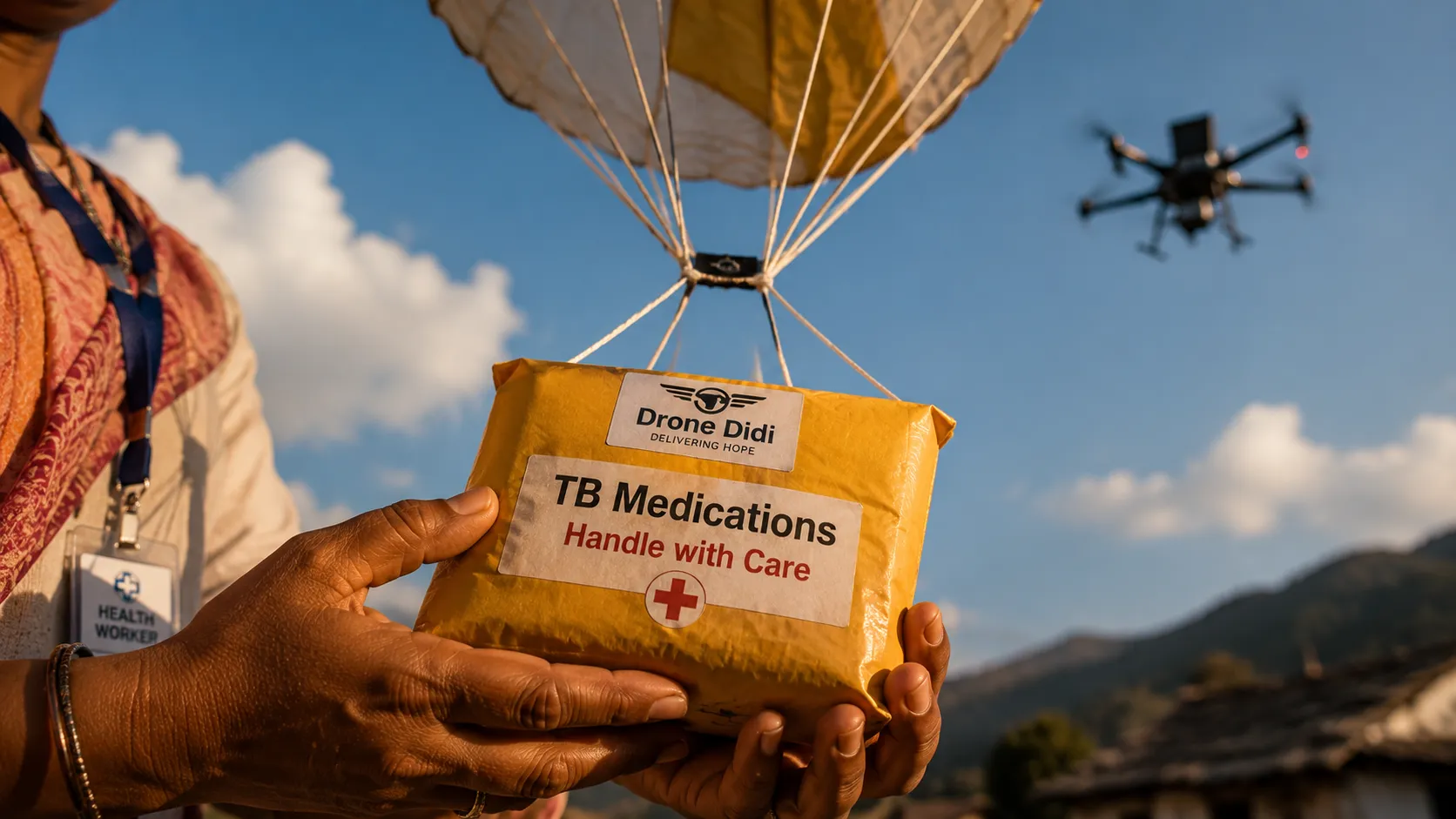
Meena Devi never imagined she would fly anything. A mother of two in a remote village near the Nepal border, her day once began at 4 AM, fetching water and cooking over a chulha. Today, she arrives at a small concrete shed—the “Drone Hub”—wears a green jacket with a “Drone Didi” badge, and powers up a hexacopter.
Her mission: deliver TB medicines to five villages across a river that has no bridge. The old way: a six-hour round trip on foot, crossing a seasonal ford that becomes impassable during monsoons. The new way: 11 minutes of flight time, a gentle drop via parachute, and a confirmation photo on her phone.
Meena is one of the first 500 women trained under the Indian government’s Drone Didi scheme (launched formally in late 2024, now scaling rapidly in 2026). The target: train 15,000 women over two years, focusing on rural self-help groups. But what began as a pilot for agricultural spraying—fertilizers, pesticides—has exploded into a last-mile logistics network for e-commerce, healthcare, and even disaster relief.
In the first half of 2026 alone, Drone Didi pilots collectively completed over 1.2 million deliveries across 18 states. Their payloads range from 2 kg to 15 kg. Their flight radius: up to 15 km. Their impact: priceless.
The Backstory: From Subsidy to Supply Chain
The Drone Didi scheme was originally conceived under the Namo Drone Didi initiative, a sub-scheme of the central government’s Lakhpati Didi program (aiming to make 2 crore women “lakhpatis” or annual earners of over ₹1 lakh). The initial focus was agricultural spraying—a cheaper, safer alternative to manual spraying of pesticides.
But the COVID-19 pandemic had already demonstrated drones’ potential for medical logistics. In 2025, the Indian Council of Medical Research (ICMR) partnered with the Ministry of Rural Development to expand the Drone Didi fleet for vaccine delivery to hard-to-reach areas. The results were stunning: vaccines that previously took 2-3 days (and often broke the cold chain) now arrived within 45 minutes, with real-time temperature monitoring.
Then came the private sector. E-commerce players like Flipkart and Amazon—struggling with high Return-to-Origin (RTO) rates in remote pin codes—saw an opportunity. By partnering with local Drone Didi cooperatives, they could offer same-day delivery to villages where traditional logistics failed. Pharmacy chains like Apollo and NetMeds followed suit.
By June 2026, the Drone Didi network had become a three-way public-private-community partnership: government subsidy for training and certification, private companies for payload demand, and women entrepreneurs for last-mile execution.
The Business Case: How a Drone Didi Makes Money
Let’s talk numbers, because this is not charity—it’s a business model.
A trained Drone Didi typically works with a local Drone Service Provider (DSP). She operates a made-in-India drone (models from Garuda Aerospace, Dhaksha, and IdeaForge dominate). Per delivery, she earns between ₹50 to ₹200, depending on distance and weight. A good day might see 20 deliveries—that’s ₹4,000 ($48). Monthly earnings of ₹50,000-60,000 ($600-720) are not uncommon in high-volume clusters.
For comparison, the average rural monthly household income in India is around ₹15,000. A Drone Didi can earn three to four times that. Many have become the primary breadwinners for their families, buying smartphones, sending children to private schools, and even purchasing small plots of land.
One of the most successful hubs is in Jammu & Kashmir, where Drone Didis deliver fresh apples from orchards to pack houses, bypassing middlemen and reducing spoilage. The Apple Drone Didi cooperative in Shopian district reported a 40% increase in farmer profits in 2025.
The Tech Stack: Made in India, Flown by Women
India’s drone ecosystem has matured rapidly. The Drone Rules 2021 and the Production Linked Incentive (PLI) scheme for drones have spurred local manufacturing. Over 60% of components in the typical Drone Didi’s hexacopter are now Indian-made—motors from Bengaluru, batteries from Pune, frames from Coimbatore.
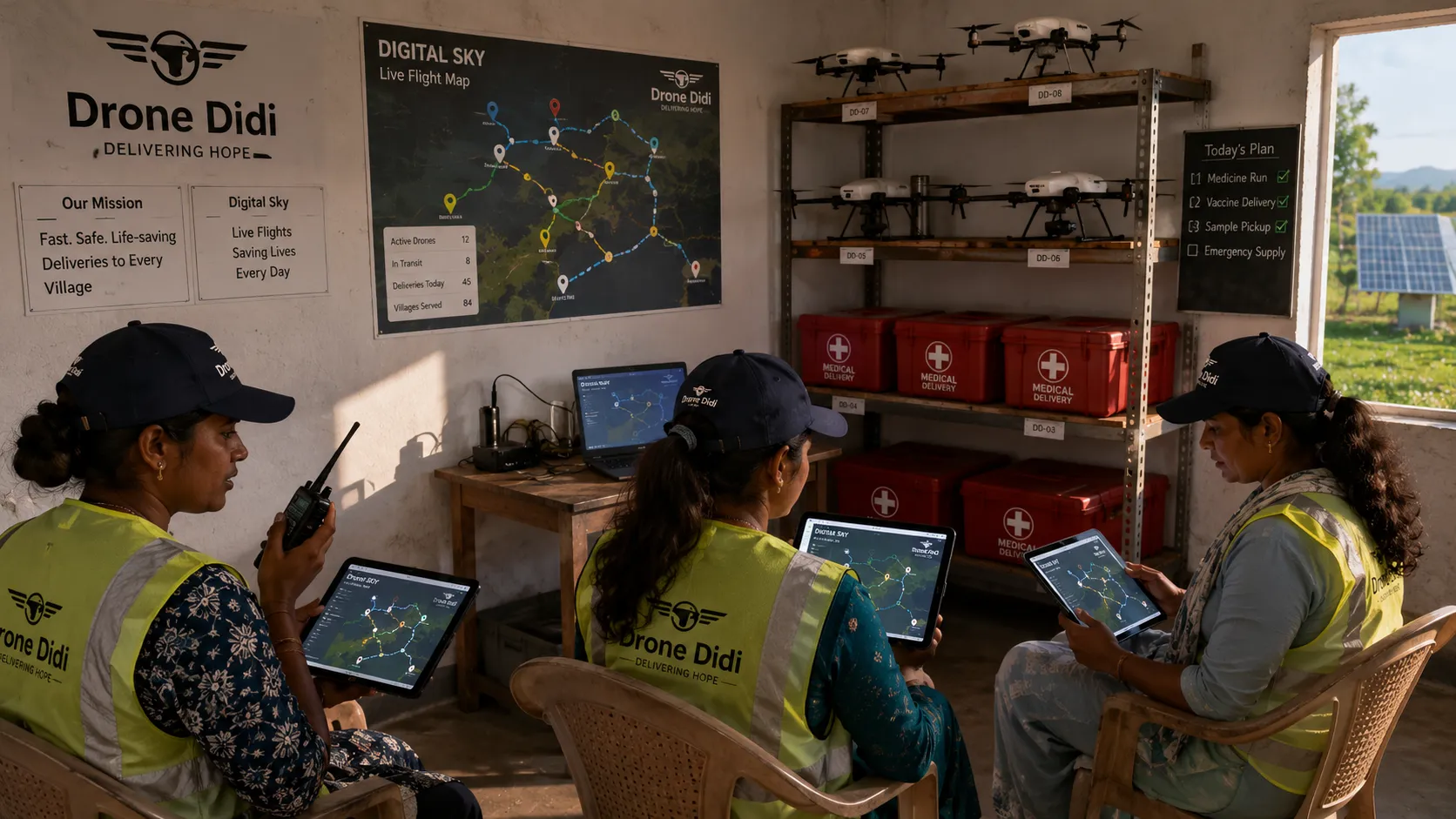
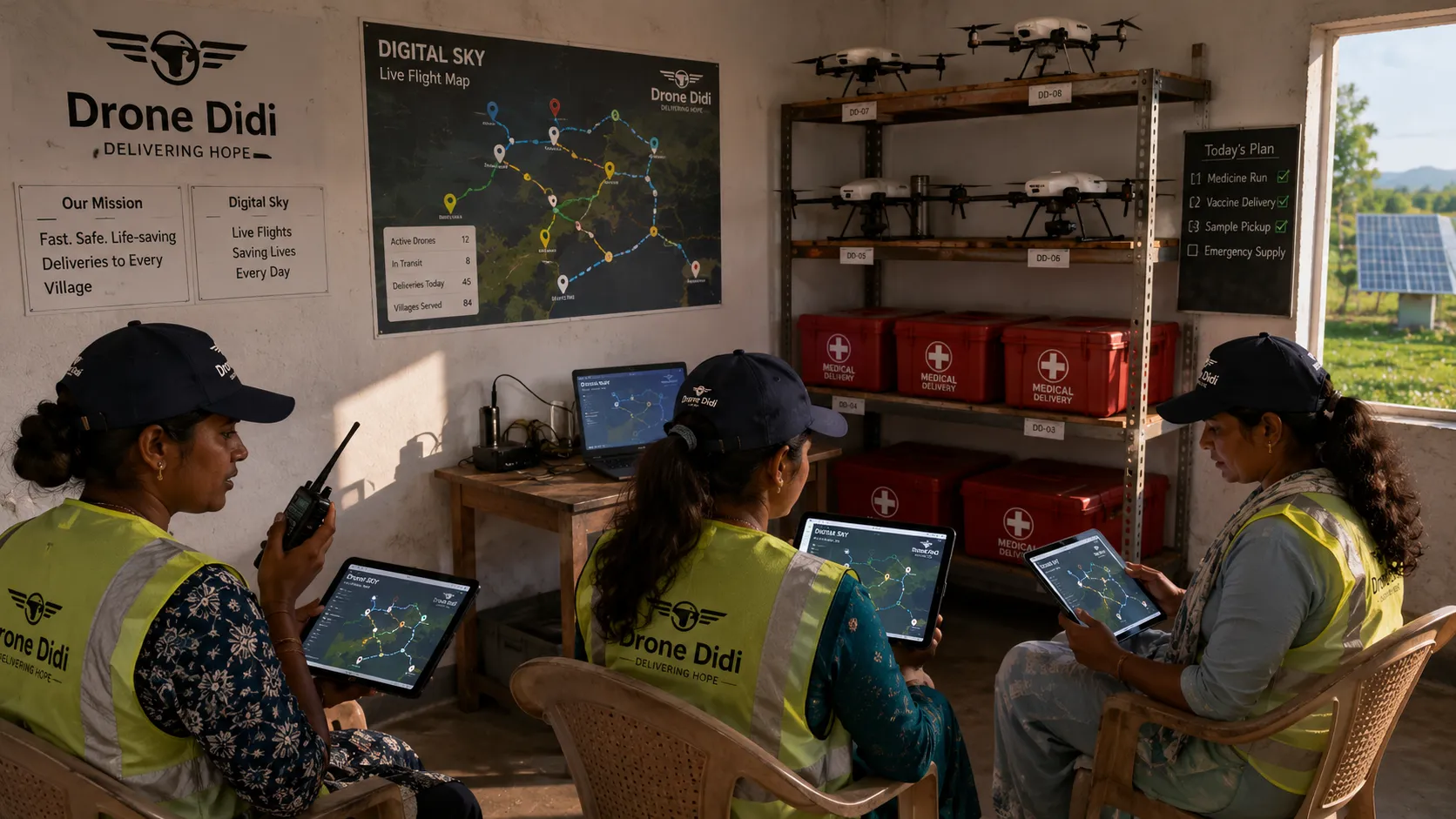
The software is equally impressive. The Digital Sky platform (India’s drone airspace management system) now includes a “Drone Didi” interface that pre-approves flight paths for deliveries, handles no-fly zone alerts, and automatically uploads delivery proof to the cloud. Training is provided by certified drone schools, with courses ranging from 10 to 30 days, including basic repair and maintenance.
Crucially, the scheme has invested heavily in safety and community acceptance. Each Drone Didi hub has a “Safe Landing Zone” protocol. Villagers are educated about drone arrival alerts. Privacy concerns are addressed via payload-only compartments with no cameras facing residential areas.
The Challenges: Not All Skies Are Clear
No revolution is without turbulence. Drone Didis face three major hurdles:
Weather and terrain: High winds, rain, and dense forest cover still ground flights. Himachal and Uttarakhand hubs lose about 20% of potential flight days to weather.
Battery range: Current drones max out at 15-20 km round trip. Beyond that, relay hubs are needed—which are still sparse.
Patriarchal resistance: In some conservative districts, women piloting drones has faced opposition from local councils. The government has responded with awareness campaigns featuring male sarpanchs championing Drone Didis as “village assets.”
Nevertheless, the scheme has an 85% retention rate after one year—remarkably high for rural employment programs. The combination of dignity, income, and technology has proven addictive.
The Future: 15,000 Didis and Beyond
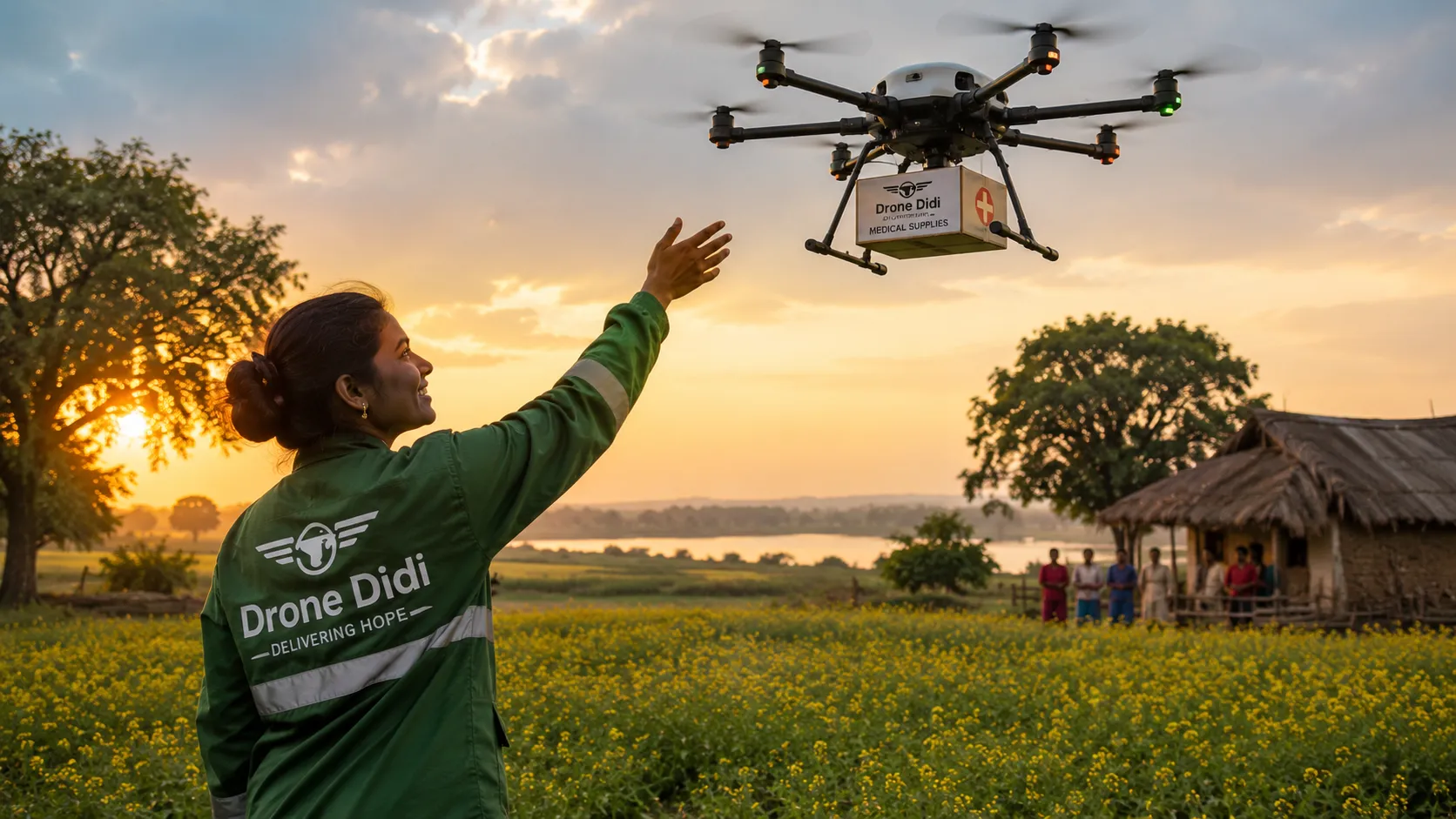
By 2027, the government aims to have 15,000 trained Drone Didis across 750 districts. But private projections are even more ambitious. A joint report by BCG and Garuda Aerospace suggests that India’s rural drone logistics market could be worth $4 billion by 2030, creating 200,000 direct and indirect jobs—most of them for women.
International interest is also growing. Delegations from Vietnam, Kenya, and Peru have visited Drone Didi hubs in Madhya Pradesh and Tamil Nadu to study the model. NPCI International (yes, the same team behind UPI’s global expansion) is exploring a technology transfer for “Digital Sky - Lite” for emerging economies.
For the Global Indian reader, the Drone Didi story is a reminder that the most impactful innovations are often the quietest. No billion-dollar unicorn valuation. No splashy launch event. Just a woman, a drone, and a determination to turn impossible deliveries into routine flights.
The drone industry often talks about “beyond visual line of sight” (BVLOS) as a technical milestone. But India has already discovered a more meaningful milestone: beyond household line of sight—a place where women are no longer confined to kitchens, but command the skies.
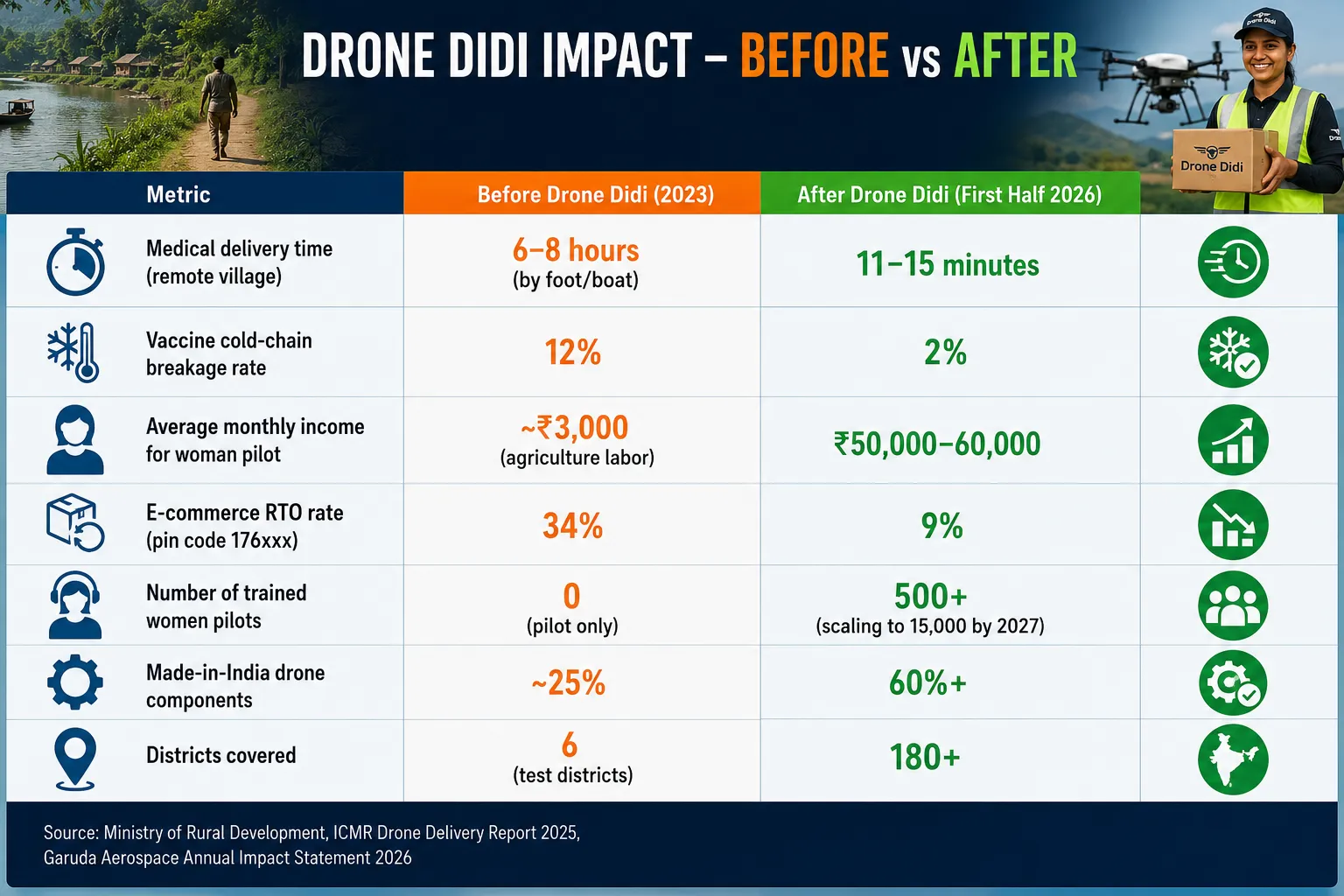
CHART: “Drone Didi Impact – Before vs After”
Metric | Before Drone Didi (2023) | After Drone Didi (First Half 2026) |
|---|---|---|
Medical delivery time (remote village) | 6–8 hours (by foot/boat) | 11–15 minutes |
Vaccine cold-chain breakage rate | 12% | 2% |
Average monthly income for woman pilot | ~₹3,000 (agriculture labor) | ₹50,000–60,000 |
E-commerce RTO rate (pin code 176xxx) | 34% | 9% |
Number of trained women pilots | 0 (pilot only) | 500+ (scaling to 15,000 by 2027) |
Made-in-India drone components | ~25% | 60%+ |
Districts covered | 6 (test districts) | 180+ |
Source: Ministry of Rural Development, ICMR Drone Delivery Report 2025, Garuda Aerospace Annual Impact Statement 2026


