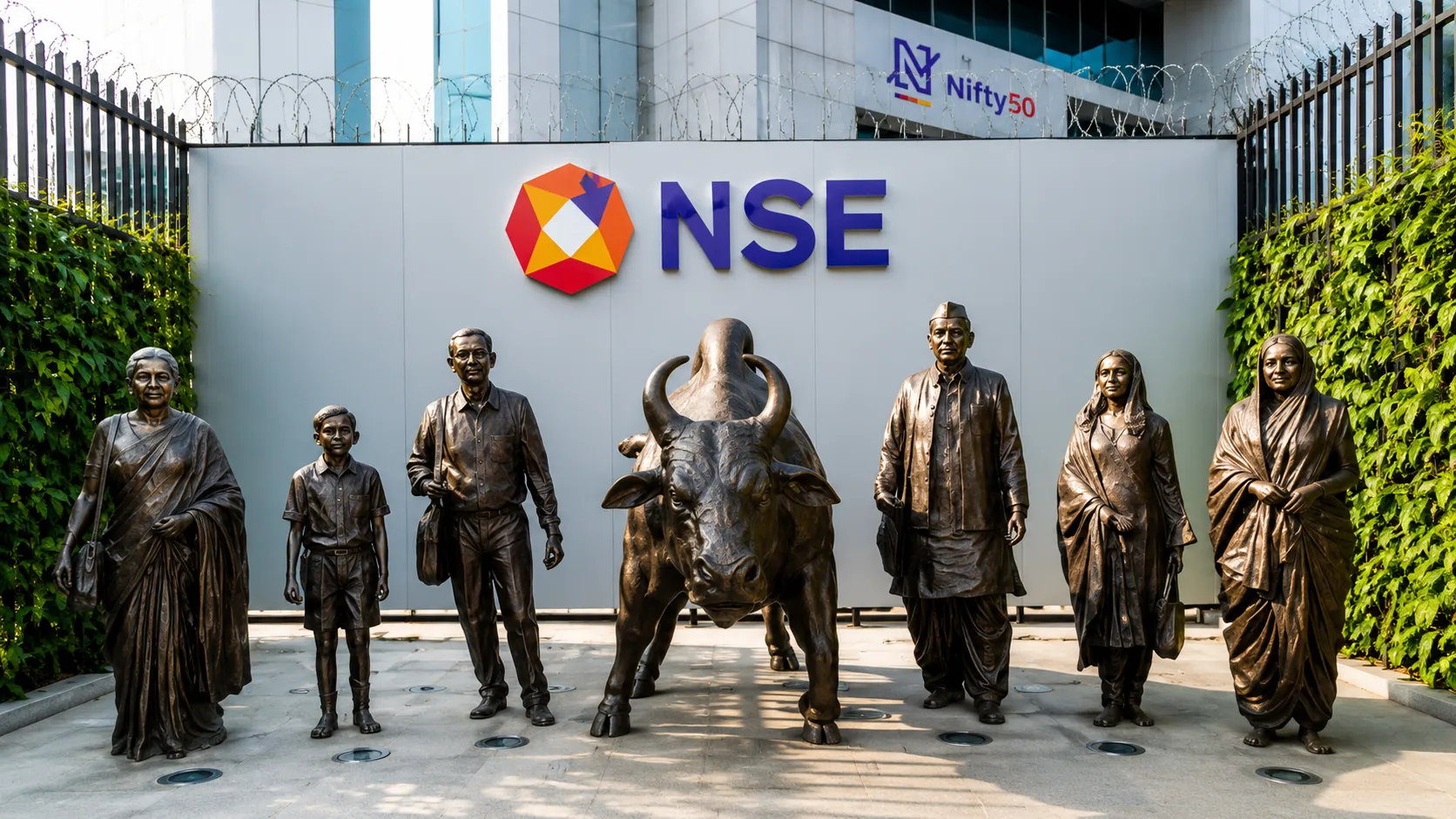
After nearly ten years of regulatory battles, boardroom drama, and a co‑location scandal that refused to die, India's largest stock exchange has filed its DRHP for a ₹30,000‑crore public offering — entirely an offer‑for‑sale. SBI, CPPIB, and Temasek are selling. LIC is holding on. And the house that built India's capital markets is finally opening its doors to the public.
The file had been sitting in draft for nearly a decade. On Wednesday night, June 17, 2026, it finally moved.
India's largest stock exchange, the National Stock Exchange of India (NSE), filed its Draft Red Herring Prospectus (DRHP) with the Securities and Exchange Board of India (SEBI) and the BSE. The 614‑page document sets the stage for what is expected to be the biggest initial public offering in Indian history — a ₹30,000‑crore offering that could surpass Hyundai Motor India's ₹27,859‑crore IPO and LIC's ₹20,557‑crore offer.
The long‑awaited listing marks a significant milestone for India's capital markets. The exchange first filed its draft IPO papers in 2016, but the process was put on hold after the co‑location controversy triggered regulatory scrutiny. For nearly a decade, the IPO was "just around the corner" — until it wasn't. Then it was "back on track." Then it was "stalled again."
Now, finally, the waiting is over.
The Offer: Entirely an OFS, No Money for NSE
The NSE IPO is structured entirely as an offer for sale (OFS) of up to 14.89 crore equity shares, with a face value of ₹1 each, representing nearly 6 per cent of NSE's paid‑up capital. There is no fresh issue component, meaning the exchange itself will not receive any proceeds from the public offering. All proceeds will go to the selling shareholders.
Based on NSE's unlisted market valuation of around ₹5 lakh crore, market participants estimate the issue size at approximately ₹30,000 crore. At that size, it would become the country's biggest public offering, surpassing Hyundai Motor India's ₹27,859‑crore IPO and LIC's ₹20,557‑crore offer.
Under current market regulations, an Indian stock exchange cannot list its shares on its own platform, which means NSE will list its shares on rival BSE — mirroring the arrangement under which BSE shares are currently listed on NSE.
The Sellers: SBI Leads, LIC Holds On
The selling shareholders include some of India's largest financial institutions:
State Bank of India — the largest selling shareholder, offering up to 24.75 million shares
MS Strategic (Mauritius) Ltd — a Morgan Stanley affiliate, divesting up to 16 million shares
Canada Pension Plan Investment Board — selling up to 11.87 million shares
Aranda Investments (Mauritius) Pte Ltd — a Temasek affiliate, selling up to 11.24 million shares
Bank of Baroda — offering around 11 million shares
Stock Holding Corporation of India Ltd — offering around 11 million shares
General Insurance Corporation of India (GIC Re) — selling up to 10.65 million shares
The New India Assurance Company Ltd — selling up to 10.5 million shares
National Insurance Company Ltd — divesting around 6 million shares
United India Insurance Company Ltd — divesting around 6 million shares
Notably, Life Insurance Corporation of India (LIC) , the exchange's single‑largest shareholder with a 10.72 per cent stake, is not selling any stake in this offering. Premji Invest (2.35 per cent holding) and Radhakishan Damani (1.58 per cent stake) are also not selling their shares.
The Financials: A Cash Machine With a Temporary Dent
NSE's financials remain robust despite regulatory headwinds:
Revenue from operations: ₹16,601 crore in FY26, up from ₹14,780 crore in FY24
Net profit (PAT): ₹10,302 crore in FY26, compared to ₹8,305 crore in FY24
Dividends: ₹35 per share in both FY25 and FY26, and ₹18 per share (adjusted for bonus shares) in FY24
Zero debt on its books
However, on a year‑on‑year basis, PAT declined from ₹12,188 crore in FY25 to ₹10,302 crore in FY26 — a drop of approximately 15 per cent — partly reflecting the impact of SEBI's regulatory tightening of equity derivatives.
The exchange reported total income of ₹18,713.37 crore in fiscal year 2026. Its operating model benefits from relatively low non‑volume‑linked expenses and strong profitability margins compared with global peers. Sustained cash generation helps fund investments, maintain capital buffers and support ecosystem development.
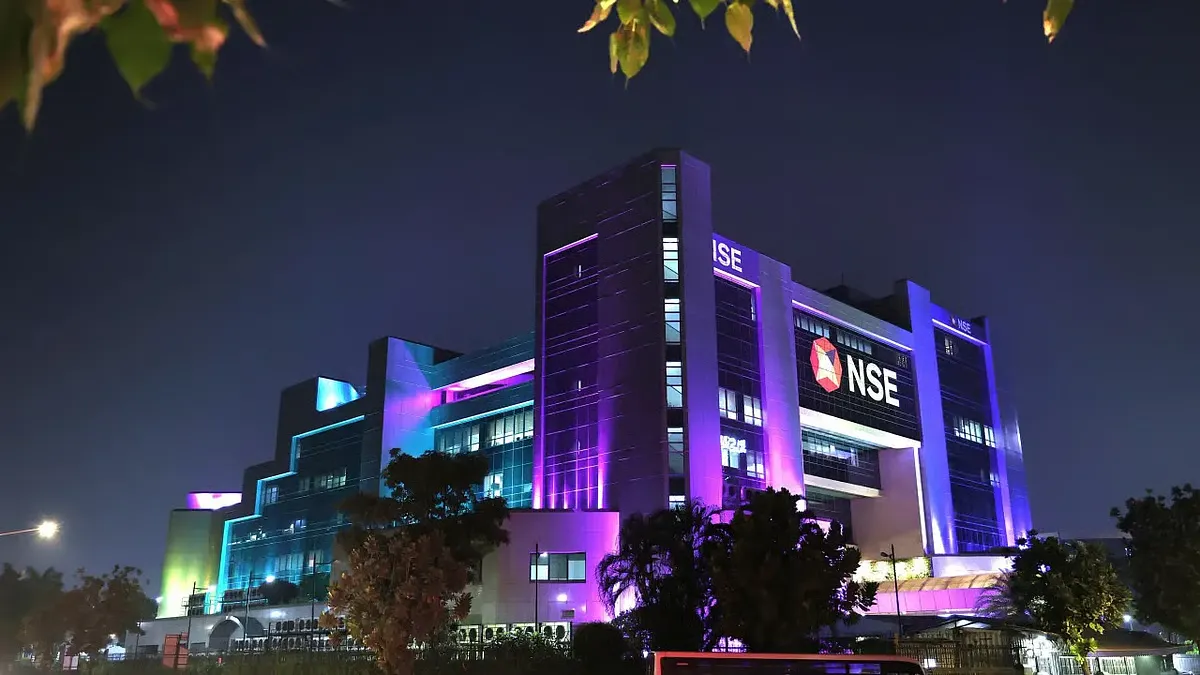
The Scale: World's Largest Derivatives Exchange
NSE's dominance is staggering:
Largest stock exchange in India by total turnover in the cash market and in equity derivatives every year from FY2001 to FY2026
Largest exchange in India by total turnover in exchange‑traded currency derivatives from FY2009 to FY2026
Largest equity derivatives exchange globally, with over 36.99 billion contracts traded in FY26
Global market share of 11.38 per cent in cash equities trades and 51.18 per cent in equity derivatives contracts traded
Third largest globally in terms of number of trades in cash equities
The exchange has retained its position as the world's largest derivatives exchange by number of contracts traded for seven consecutive years.
The Investors: 129 Million and Counting
NSE's Unique Registered Investors base has grown at a compounded annual rate of 26.9 per cent, from 30.87 million in March 2020 to 129.1 million in March 2026. Investors on NSE's platform span over 99 per cent of Indian postal codes, reflecting the exchange's role in democratising access to capital markets.
Total fund mobilisation through NSE's platform in FY26 stood at ₹20.3 trillion. The exchange's technology infrastructure processed an average of 12‑14 billion messages daily as of March 2026. It also recorded its highest‑ever cumulative trading activity on June 4, 2024, when total trades across segments touched 293.85 million.
The Co‑Location Overhang: Almost Resolved
The co‑location case continues to be a key overhang — but resolution is now in sight. On Friday, June 19, SEBI Chairperson Tuhin Kanta Pandey said the regulator has internally approved the settlement in the long‑pending co‑location case and that the matter is expected to be resolved soon.
In its DRHP, NSE disclosed that it has made a provision of ₹1,391 crore towards the proposed settlement with SEBI in connection with the co‑location matter. The exchange added that a revised settlement amount of ₹1,491 crore has been proposed and is awaiting final regulatory approval.
The IPO process gathered pace in 2024 after shareholders approved a 4:1 bonus issue. SEBI subsequently cleared the path for the listing in January 2026 and formally approved the IPO a month later. The regulator's clearance was significant as it was delinked from the settlement of some long‑pending cases linked largely to alleged regulatory violations around co‑location.
The Risks: Regulatory, Technology, and Legal
The DRHP also flags key risks. The exchange has experienced several technology‑related disruptions, including a February 2021 trading disruption that led to a market‑wide trading halt for more than five hours. In May 2025, its website was targeted by a high‑volume DDoS attack involving nearly 395 million hits within 11 minutes.
Ongoing legal proceedings related to the co‑location and dark fibre cases remain unresolved. The exchange also identified AI as an emerging risk, warning that AI‑driven trading strategies could amplify market volatility. A petition pending before the Bombay High Court seeks directions to probe foreign shareholding and beneficial ownership of certain investors in NSE and a stay on the listing process until the probe is over.
The Bottom Line
After nearly a decade of regulatory delays, boardroom drama, and a co‑location scandal that refused to die, India's largest stock exchange has filed its DRHP for what is expected to be the biggest IPO in Indian history. The ₹30,000‑crore offering — entirely an offer‑for‑sale — will see SBI, CPPIB, Temasek, and a host of PSU insurers sell their stakes. LIC, the exchange's single‑largest shareholder, is holding on.
The exchange's dominance is unmatched: the world's largest derivatives exchange, 129 million registered investors, 99 per cent of Indian postal codes covered, and a cash machine that generates over ₹10,000 crore in annual profit. The co‑location overhang is close to resolution. The regulatory hurdles have been cleared.
For retail investors, the question is no longer if the NSE IPO will happen — it's when the subscription window will open. The answer, if current timelines hold, is soon. After a decade of waiting, the house that built India's capital markets is finally opening its doors to the public.


