
The Creator Economy Unicorn — How India’s Digital Stars Are Building Startup Empires
The Podcaster Who Became a Conglomerate
In 2019, Ranveer Allahbadia was a young fitness influencer with a YouTube channel called BeerBiceps. He posted workout videos, grooming tips, and motivational content. By 2023, he had over 7 million subscribers across his channels and was one of India’s most recognizable digital faces.
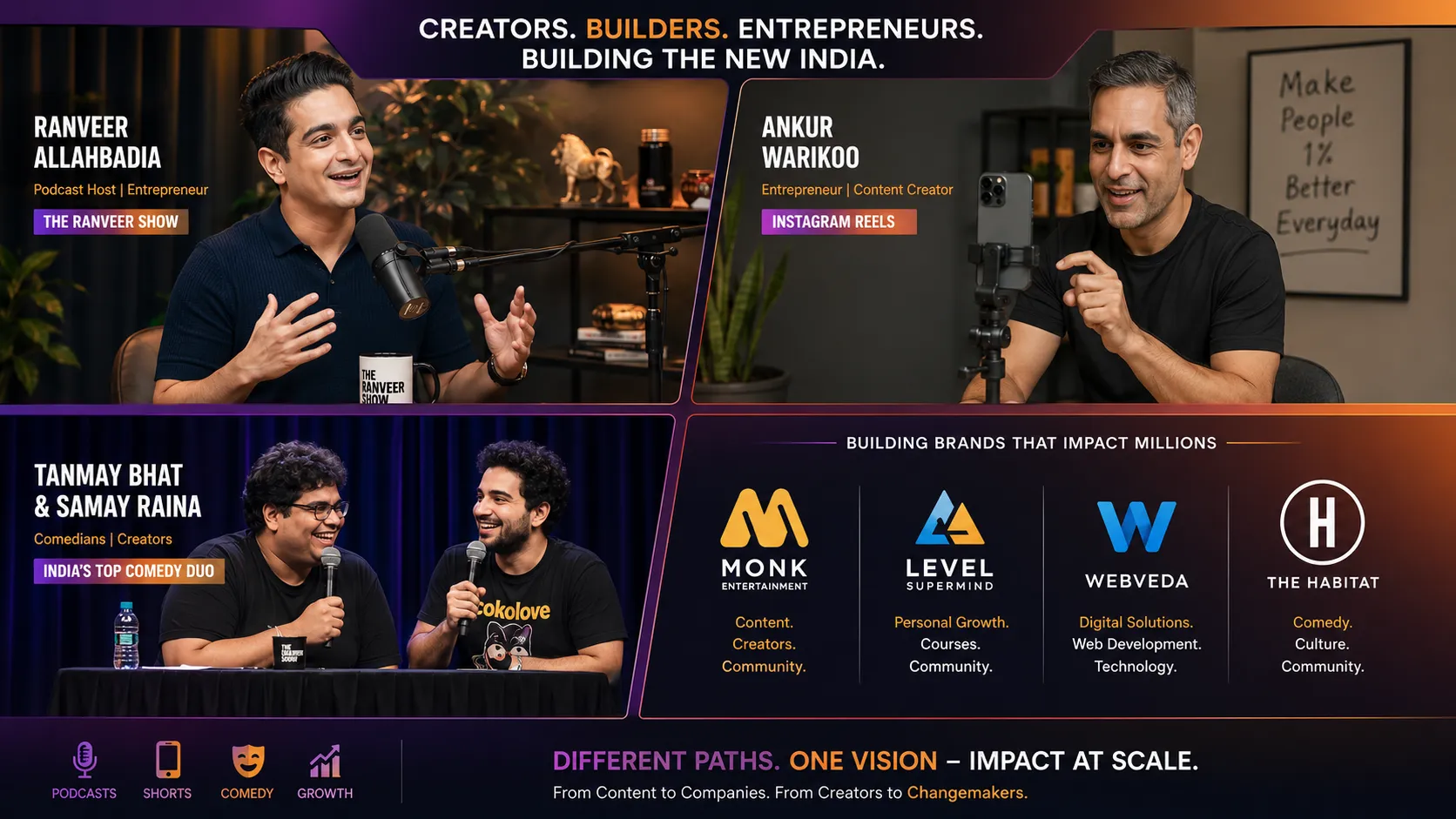
But Ranveer didn’t stop at being a creator. He co‑founded Monk Entertainment, a talent management agency that represents dozens of digital creators. He launched Level Supermind, a mental wellness app that raised $2 million in seed funding. He created BigBrainCo, a branded content studio that works with Fortune 500 companies. He also invested in several D2C brands, including The Whole Truth Foods and Bombay Shaving Company.
Today, Ranveer’s annual revenue from his businesses exceeds ₹100 crore. His net worth is estimated at ₹150 crore. He is the poster child for a new generation of creators who think like entrepreneurs.
Why Creator-Led Businesses Are the Next Big Thing
India has over 100 million content creators, but only a tiny fraction earn a full‑time living. The traditional path—ads, sponsorships, affiliate marketing—is volatile. Ad rates fluctuate. Sponsors come and go. One algorithm change can kill a channel.
So the smart creators are pivoting. They are launching products (D2C), building platforms (SaaS), managing other creators (agencies), and investing in startups (VC). They are turning their audience into a business asset, not just a marketing channel.
Venture capitalists have noticed. In 2025, creator-led startups raised over $500 million in funding. Notable deals include:
Monk Entertainment – $15 million Series A led by Elevation Capital
Slayy Point’s Clout – $10 million seed round
Carry Minati’s CMI – undisclosed investment from VC firm
Ankur Warikoo — From CEO to Creator to Entrepreneur
Ankur Warikoo was the founding CEO of Nearbuy (acquired by Groupon). Then he became a prolific content creator on LinkedIn, Instagram, and YouTube, sharing lessons on entrepreneurship, finance, and personal growth. He amassed over 5 million followers.
Instead of selling ads, Ankur launched WebVeda, an edtech platform offering paid courses on financial literacy and career success. He also wrote a best‑selling book, Do Epic Shit. He runs paid workshops and mentorship programmes.
His annual income from creator-driven businesses is estimated at ₹20 crore. He has invested in 30+ startups as an angel. Ankur’s story shows that you don’t need to be a 25‑year‑old tech bro to build a creator empire.
Tanmay Bhat, Samay Raina & The Indie Comedy Mafia
Tanmay Bhat built his brand as a comedian and writer for AIB (All India Bakchod). After AIB disbanded, he pivoted to content creation. He now runs a talent management and content production company that represents Indian stand‑up comedians and YouTubers like Samay Raina, Ashish Chanchlani, and Zakir Khan.
His company, The Habitat, produces comedy tours, digital shows, and brand partnerships. It also manages merch for its talent. In 2025, The Habitat reported ₹50 crore in revenue.
Samay Raina, known for his chess streaming and roast comedy, has launched his own merchandise line and a mobile game. He also co‑owns a production studio that creates web series for OTT platforms.
These creators are building mini‑conglomerates that span content, merchandise, live events, and talent management.
The Business Model of a Creator Unicorn
What does a creator-led business empire look like? Typically, it has five revenue streams:
Direct monetization: YouTube ad revenue, podcast sponsorships, affiliate income.
Products: D2C brands, merchandise, digital courses, paid communities.
Services: Talent management, content studios, brand consulting.
Investments: Equity stakes in startups (in exchange for promotion and mentorship).
Live experiences: Tours, workshops, meet‑and‑greets, online events.
The most sophisticated creators combine all five. They also build teams—editors, managers, lawyers, accountants—to professionalise their operations.
The Role of Venture Capital in the Creator Economy
Traditional VCs used to ignore creators. They were seen as “influencers,” not founders. That has changed. Funds like Lightspeed, Accel, and Elevation Capital now have dedicated creator economy verticals.
Why the shift? Because creators have the hardest asset to acquire: trust and attention. A creator with 5 million loyal followers can launch a product and sell it without spending a rupee on ads. That’s a superpower.
VCs are also backing creator‑focused platforms. Koo (microblogging), Streamlabs (creator tools), and Tonic (paid newsletters) have raised significant capital.
Challenges Creators Face as Entrepreneurs
Not every creator succeeds as a founder. Common pitfalls include:
Burnout: Managing a business + creating content is exhausting. Many creators overextend.
Brand dilution: Launching too many products can confuse audiences and erode trust.
Lack of business skills: Creators are good at making videos, not managing P&L or supply chains.
Investor pressure: Taking VC money brings expectations of growth. Creators who value freedom often prefer bootstrapping.
The winners are those who hire professional managers early and focus on their core competency—creating content.
The Future of the Creator Economy
Industry analysts predict that by 2030, creator-led businesses will account for 15% of India’s digital economy, generating over $20 billion in revenue. The most successful creators will become billionaire entrepreneurs, not just Instagram stars.
We will also see the rise of creator‑led venture funds—where successful creators pool their capital to invest in the next generation of talent. Ranveer Allahbadia has already hinted at launching such a fund.
India’s creator economy is entering its teenage years: messy, exciting, and full of potential.


