The Comeback That Shocked Dalal Street: How Mamaearth's Parent Was Written Off by Critics—Then Delivered a ₹69 Crore Quarterly Profit and a 52-Week High
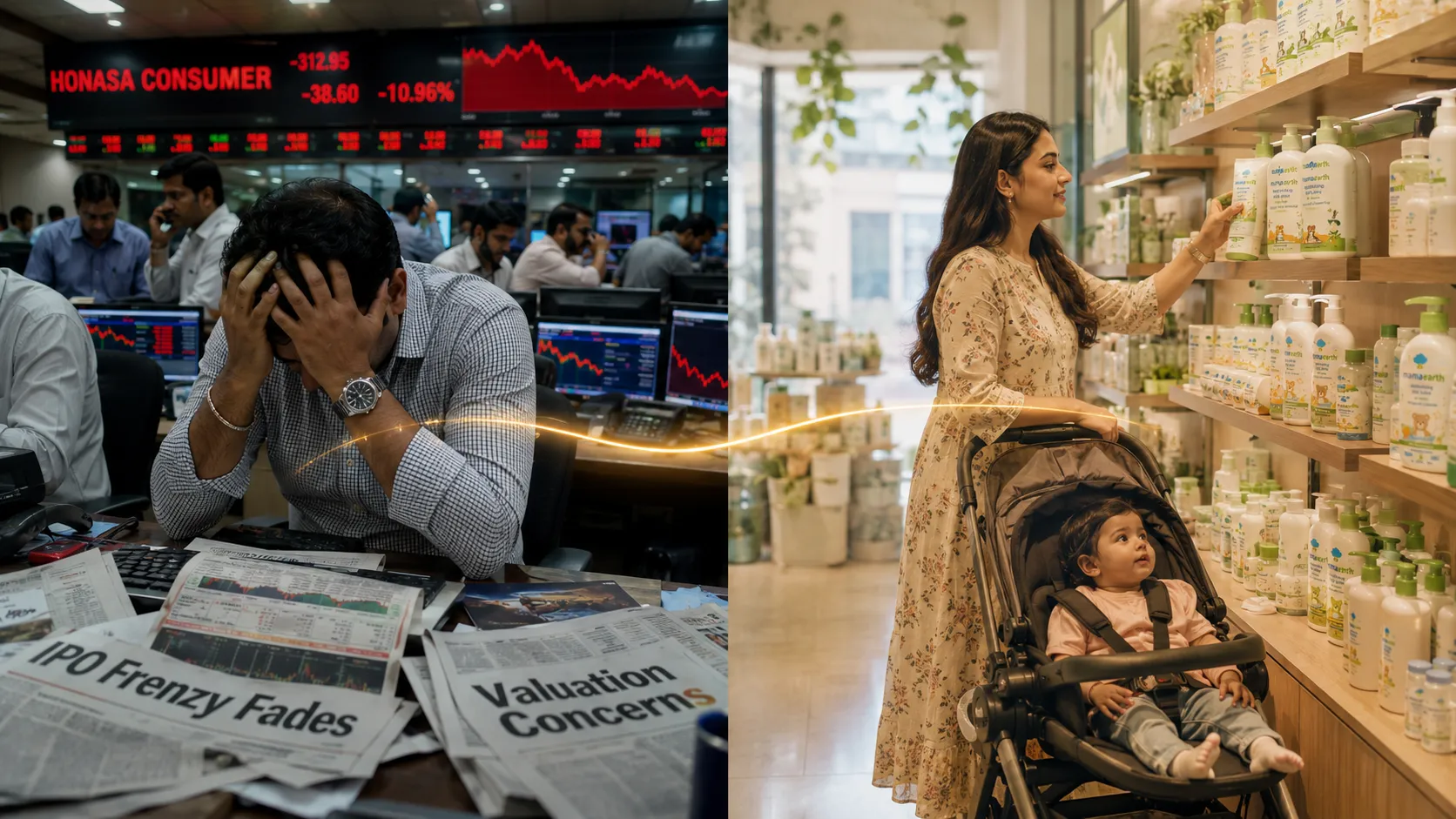
GURUGRAM — May 24, 2026 — In the winter of 2024, Honasa Consumer was the most hated stock on Dalal Street. The parent company of Mamaearth, India's largest digital-first beauty and personal care brand, had listed at a valuation that critics called absurd—a multiple of revenue that seemed to price in a decade of flawless execution. When the stock fell, the critics were vindicated. When it fell further, they were merciless. "IPO Frenzy Fades," read one headline. "Valuation Without Substance," read another. The company was a poster child for everything that had gone wrong with Indian startup IPOs: too much hype, too little profit, too much optimism baked into a share price that had nowhere to go but down.
On May 20, 2026, Honasa Consumer published its Q4 and full-year FY26 results. The numbers were not good. They were extraordinary. Net profit for the March quarter surged 178 percent year-on-year to ₹69.4 crore—the highest quarterly profit in the company's history. Revenue from operations rose to ₹657 crore, its highest ever. Mamaearth, the core brand that skeptics had written off as a pandemic-era fad, posted double-digit year-on-year growth. The board declared the company's first-ever maiden dividend of 50 paise per share. And the stock, which had languished below its IPO price for months, surged to a 52-week high of ₹397.65 on the BSE. "It's a great quarter, after a long time," said Jefferies equity analyst Vivek Maheshwari, who raised his target price on the stock to ₹565—a 42 percent premium to the 52-week high.
The skeptics went quiet. The numbers spoke.
The Crash That Tested Everything
The Honasa Consumer IPO in November 2023 was one of the most anticipated listings in Indian startup history. The company, founded in 2016 by Varun Alagh and Ghazal Alagh, had built Mamaearth into a ₹1,000 crore revenue brand by selling toxin-free, natural-ingredient baby care, skincare, and hair care products directly to millennial and Gen Z consumers. It had expanded into a house of brands—The Derma Co., Aqualogica, Dr. Sheth's, BBlunt—each targeting a different segment of the beauty and personal care market. It had raised over $200 million from investors including Sequoia Capital, Sofina, and Fireside Ventures. And it had achieved something that almost no Indian D2C brand had managed: profitability.
The IPO was priced at ₹324 per share, valuing the company at approximately ₹10,500 crore. The listing pop was modest—the stock opened at ₹330 and briefly touched ₹350—but within weeks, the cracks began to show. Analysts questioned the valuation multiple, which was significantly higher than established FMCG peers. Competitors pointed out that Mamaearth's revenue growth had slowed from the triple-digit rates of its early years. Short-sellers circled. The stock began a long, grinding decline that would eventually take it below ₹250—a 23 percent discount to the IPO price—and keep it there for months.
The criticism was not entirely unfounded. Honasa's revenue growth had decelerated. Its portfolio of acquired brands was still loss-making. Its dependence on digital channels—while a strength during the pandemic—looked like a vulnerability as customer acquisition costs rose and digital advertising became more expensive. The market's verdict was brutal, but it was not irrational. The company had promised growth and profitability. It was delivering neither at a pace that justified its valuation.
What the market missed was what was happening inside the company. Varun and Ghazal Alagh had spent the post-IPO period doing something that founders of overhyped startups rarely do: they had gone quiet. They did not give interviews defending the stock. They did not publish blog posts attacking the short-sellers. They did not host investor days to pump the valuation. They disappeared into the business—cutting costs, improving margins, expanding offline distribution, and focusing relentlessly on the core brands that generated the most revenue and the highest loyalty. The silence was strategic. The work was real.
The House of Brands Strategy
To understand Honasa Consumer, one must understand its structure—a structure that is more complex, and more deliberate, than a single-brand D2C play.
Mamaearth remains the flagship, contributing the largest share of revenue and profit. Launched in 2016 by the Alaghs after they became parents and discovered that baby care products marketed as "safe" often contained toxins and irritants, the brand was built on a simple, powerful thesis: millennial parents wanted natural, toxin-free products for their children, and they were willing to pay a premium for a brand they trusted. The thesis worked. Mamaearth became one of India's fastest-growing D2C brands, expanding from baby care into skincare, hair care, and body care, and building a customer base that now numbers in the tens of millions.
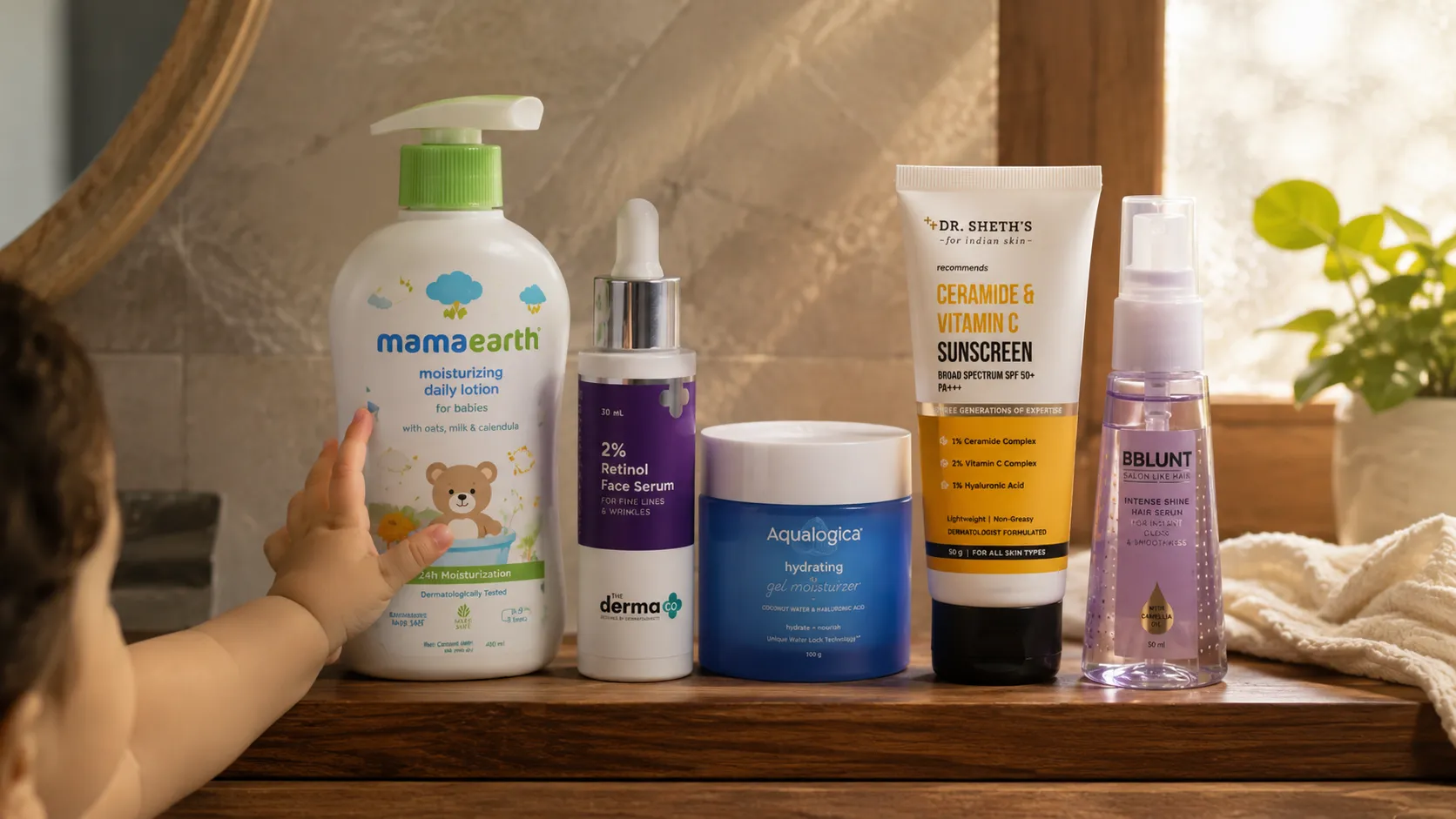
But Honasa Consumer is not just Mamaearth. The company has built or acquired a portfolio of brands, each targeting a distinct segment of the beauty and personal care market. The Derma Co., launched in 2020, sells active-ingredient-based skincare—retinol serums, salicylic acid cleansers, peptide moisturisers—positioned as affordable, accessible alternatives to expensive dermatological brands. Aqualogica, launched in 2022, targets hydration-focused skincare with a product line built around hyaluronic acid and water-based formulations. Dr. Sheth's, acquired in 2022, is a dermatologist-founded brand that bridges the gap between clinical efficacy and daily skincare. BBlunt, acquired in 2022, is a professional hair care and styling brand founded by celebrity hairstylist Sapna Bhavnani.
The house-of-brands strategy is not unique to Honasa. It is the same approach that built Unilever, Procter & Gamble, and L'Oréal—companies that own dozens of brands, each with its own identity, customer base, and growth trajectory, all supported by a shared back-end infrastructure of supply chain, distribution, and corporate functions. The difference is that Honasa is attempting to build this structure from scratch, in the digital era, with brands that were born online and are only now expanding into physical retail. The ambition is enormous. The execution risk is correspondingly high.
The Offline Pivot
The most significant strategic shift Honasa made in the post-IPO period was not a product launch or a brand acquisition. It was a distribution decision.
For the first five years of its existence, Mamaearth was an overwhelmingly digital brand. It sold through its own website, through Amazon and Flipkart, and through a growing network of social media influencers who promoted its products to their followers. The digital-first model was capital-efficient, data-rich, and perfectly suited to the pandemic era, when millions of Indian consumers were stuck at home and shopping online.
But India is not an online market. Even today, more than 90 percent of retail sales in India happen through physical stores—kiranas, pharmacies, supermarkets, beauty retailers. A brand that is not on those shelves is invisible to the vast majority of Indian consumers. The Alaghs understood this. Beginning in 2023, they began investing heavily in offline distribution—building relationships with large-format retailers like Reliance Retail, Wellness Forever, and Apollo Pharmacy, and placing Mamaearth products in tens of thousands of physical touchpoints across the country.
The offline pivot was expensive. It required hiring sales teams, building distribution networks, managing inventory across thousands of retail locations, and competing for shelf space against established FMCG giants with decades of retailer relationships. It also put pressure on margins, as offline distribution carries higher costs than online direct-to-consumer sales. For several quarters, the costs of the offline expansion weighed on Honasa's profitability, contributing to the stock's decline.
But the pivot is now paying off. Offline revenue has grown faster than online for multiple consecutive quarters. The brand presence in physical stores has increased brand awareness among consumers who do not discover products through Instagram or YouTube. And the omnichannel model—where a customer might discover Mamaearth online, try it in a store, and then reorder through the website—has begun to generate the kind of compounding loyalty that single-channel brands cannot replicate. "Our offline expansion has been a key driver of growth," Varun Alagh said. "We are now present in over 1.8 lakh FMCG retail touchpoints across India, and we continue to deepen our distribution in both urban and rural markets."
The Numbers That Silenced the Skeptics
The Q4 FY26 results were the moment the market stopped doubting and started paying attention.
Net profit of ₹69.4 crore—a 178 percent year-on-year surge—was not just a record. It was a statement. Revenue of ₹657 crore was the highest in the company's history. Mamaearth, the brand that skeptics had dismissed as a fading fad, posted double-digit year-on-year growth. The company's full-year FY26 revenue crossed ₹2,300 crore, with a net profit of approximately ₹190 crore—a dramatic turnaround from the losses and near-breakeven quarters that had defined the immediate post-IPO period.
The board declared a maiden dividend of 50 paise per share—a small amount in absolute terms, but symbolically significant. Dividends are what profitable, mature companies do. By declaring one, Honasa was signalling that it had crossed the threshold from growth-at-all-costs startup to disciplined, cash-generating enterprise.
The stock surged. From levels below ₹250 in early 2025, Honasa Consumer hit a 52-week high of ₹397.65 in May 2026. Jefferies, the global investment bank, raised its target price to ₹565, citing strong execution, improving margins, and the offline expansion as key drivers. CLSA, another major brokerage, noted that the company's cost-cutting measures—including a significant reduction in advertising and promotional spending as a percentage of revenue—had improved profitability without sacrificing growth. "Management has delivered on its promise of profitable growth," the CLSA note read. "The worst is behind the company."
The Ghazal-Varun Partnership
No profile of Honasa Consumer is complete without acknowledging the partnership at its centre. Varun Alagh and Ghazal Alagh are not just co-founders. They are a married couple who built a billion-dollar company while raising a child, navigating the pressures of startup life, and maintaining a relationship that has survived the unique stress of building a business together.
Ghazal, who serves as the company's Chief Innovation Officer, is the creative and product force behind the brands. She is the one who formulates products, tests ingredients, reads customer feedback obsessively, and ensures that every new launch meets the toxin-free, natural-ingredient standard that Mamaearth was built on. She is also the public face of the brand—a frequent presence on social media, a Shark Tank India judge, and one of India's most recognisable female founders.
Varun, who serves as CEO, is the strategist and operator. He is the one who manages investor relations, oversees the supply chain, negotiates retail partnerships, and ensures that the financial engine of the company runs smoothly. He is less visible than Ghazal—he rarely gives interviews, avoids social media, and prefers to let the numbers speak—but his role is no less critical.
The partnership works because each founder occupies a distinct lane. Ghazal does not try to run the supply chain. Varun does not try to formulate products. They trust each other's judgment in their respective domains, and that trust has allowed them to move faster, argue less, and execute more consistently than many startup founding teams. "We have clear boundaries," Ghazal told a business magazine. "Varun handles the business. I handle the brand. We don't step on each other's toes."
What This Signals
The Honasa Consumer comeback is not primarily a story about quarterly results. It is a story about the maturation of Indian D2C brands—and about what happens when a company stops chasing growth at any cost and starts building a sustainable, profitable enterprise.
For years, the Indian startup ecosystem was defined by a single metric: growth. Revenue growth, user growth, GMV growth—anything that could be plotted on an upward-sloping chart was celebrated, while profitability was treated as a problem for another day. The Honasa IPO, and the stock's subsequent crash, was the market's verdict on that model. Investors were no longer willing to pay premium multiples for growth without profit. The era of free capital was over.
Honasa's response was not to complain about the market. It was to become the kind of company the market wanted to value. The cost-cutting, the offline expansion, the focus on core brands, the margin improvement, the dividend—each of these was a step toward financial maturity. The Q4 FY26 results were the evidence that the steps were working.
The broader implication is that Indian D2C brands can be profitable at scale. The skepticism that greeted Honasa's IPO—that D2C was a niche phenomenon, that digital brands could never compete with FMCG giants, that the valuation multiples were unjustifiable—has been partially answered by the company's results. Not fully answered, perhaps; the stock is still below its IPO price on a fully diluted basis, and the company must sustain its profitability for multiple quarters before the market fully prices in the turnaround. But the trajectory is unmistakable.
Varun and Ghazal Alagh are no longer the overhyped founders of an overvalued IPO. They are the operators of a ₹2,300 crore consumer goods company that just posted its highest-ever quarterly profit, declared its first dividend, and hit a 52-week high. The critics who wrote them off have gone quiet. The numbers are doing the talking. The comeback is complete—and the next chapter is being written, one quarter at a time.


