The ₹10 Bottle That Changed Everything
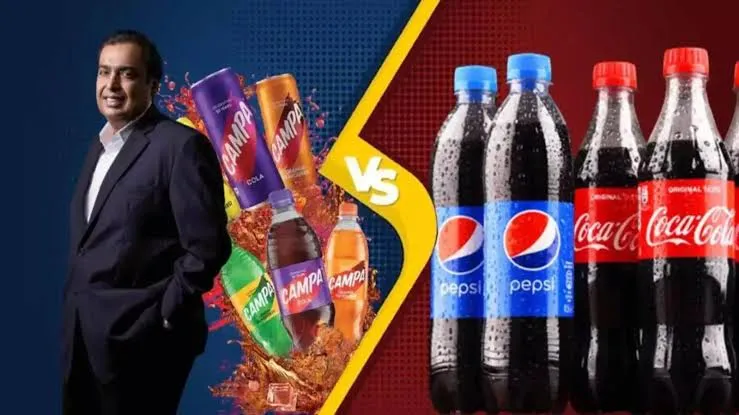
Imagine walking into a kirana store on a sweltering summer afternoon. You reach for a cold Coke. Then you see it—a bottle of Campa Cola, priced at exactly half of what the American giants charge. ₹10. Same taste. Same fizz. Half the price.
You pause. You think. And for the first time in three decades, you don't automatically reach for the familiar red or blue label.
That moment of hesitation is exactly what Mukesh Ambani was counting on. And it has triggered the most dramatic shake-up in India's beverage industry since Coca-Cola re-entered the country in 1993.
June 23, 2026, finds the Indian beverage market at a fascinating crossroads. The two American giants who have dominated for three decades are facing a challenge unlike anything they've ever encountered. And the battle is being fought not just on TV screens and billboards—but inside millions of refrigerators across India's smallest towns and villages.
Chapter 1: The New Math of Market Share
Let's start with the numbers that tell the story of a market in flux.
According to TAM AdEx data, Coca-Cola India had taken the top spot in beverage advertising by March 2026 with a 36% share, while Hindustan Unilever dropped to 21% and PepsiCo held third place at 15%. The shift marks a significant change from 2024, when Hindustan Unilever led with a 24% share, followed by Coca-Cola India at 16% and PepsiCo at 15%.
But the advertising numbers tell only part of the story. The real drama is unfolding on the ground.
According to a case study analysis, the Indian beverage market operates as an oligopoly:
Coca-Cola India: Market leader with approximately 42% share, led by its powerhouse brand Thums Up, followed by Sprite and Coca-Cola
PepsiCo India: Second place with roughly 28% share, driven by Pepsi, Mountain Dew, and 7Up
Reliance Consumer (Campa): The fastest-growing challenger, aiming for 10-15% market share by 2026 through aggressive pricing
"Overall industry is growing, there is Campa in the market, they are growing the volumes in the market, and even Coke is growing," said Ravi Jaipuria, chairman of Varun Beverages Limited—PepsiCo's largest bottler in India. "We do not know if we are growing faster, but definitely market is growing at a huge pace" .
That admission from PepsiCo's own bottling partner is telling. When the competition is so intense that even the dominant players acknowledge the challenger's impact, you know the market is in flux.
Chapter 2: The Campa Cola Disruption – A Jio Moment for Beverages
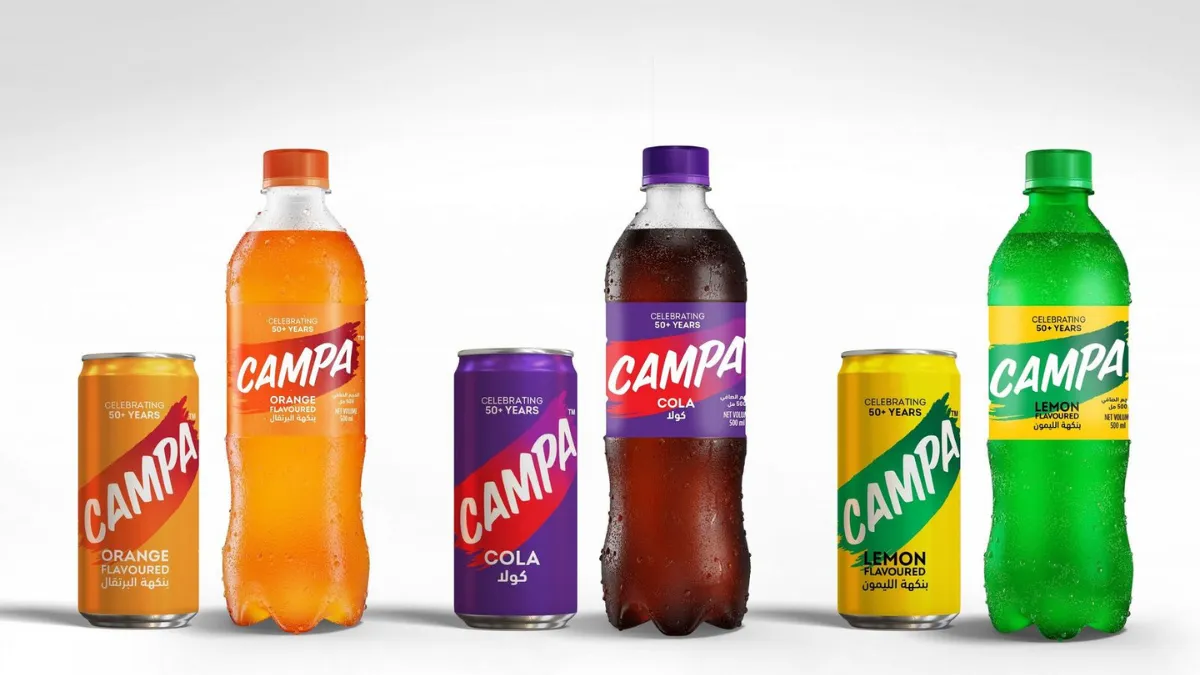
To understand the current battle, you have to go back to 2022. That's when Reliance Consumer Products relaunched Campa Cola—a legacy brand that had been dormant for decades.
The strategy was straight out of the Jio playbook: undercut the competition on price, build massive distribution, and leverage Reliance's vast retail network.
It worked. Spectacularly.
By FY26, Campa had achieved gross sales of over ₹4,700 crore, making it India's fourth-largest carbonated soft drinks brand with double-digit market share in key markets. The Reliance FMCG division closed the financial year 2025-26 with total revenues of ₹22,000 crore—a two-fold (100%) growth over the previous year. The beverage category alone—including Campa, packaged drinking water, and functional drinks—generated revenues of over ₹6,000 crore.
"We are now servicing the Indian market through 5,000+ distributors and about 3 million outlets," said Ashutosh Goyal, who leads Reliance's FMCG vertical.
"This is the first time Coca-Cola and PepsiCo are being challenged in India - a market they have dominated since the early 1990s" .
Chapter 3: The Fridge Wars – Where the Real Battle Is Being Won
But the most fascinating front in this war isn't on TV or in advertising. It's inside millions of small retail outlets across India.
India's cola war between Reliance's Campa Cola, Coca-Cola, and PepsiCo is unexpectedly boosting sales of commercial refrigerators. The three giants are aggressively installing visi-coolers—glass-door display units that act as marketing and distribution tools—in kirana stores across the country.
"Every brand wants to put this, whether you are a Coke or a Pepsi," said Arvind Singhal, chairman at consultancy The Knowledge Company.
The scale is staggering. Varun Beverages, Campa, and Coca-Cola are collectively adding about half a million chilling units annually, with retail outlets independently purchasing another 400,000-500,000 coolers on their own. Together, that's nearly a million new refrigeration points entering the Indian market every year.
"Whoever does a good go-to-market and whoever can expand his distribution will win the game," Jaipuria said.
In India's sweltering heat, especially across smaller towns and villages, coolers are central to distribution strategy. Unlike large supermarkets in developed markets, these grocery stores lack the space and capital for refrigeration, making a brand's cooler essential retail infrastructure. The brand that controls the fridge controls the consumer's choice.
Chapter 4: PepsiCo's Counter-Strike – The ₹60 Energy Drink Gambit
While the cola war rages, PepsiCo is diversifying its attack.
On June 2, 2026, PepsiCo launched its premium energy drink brand 'Adrenaline Rush' in the Indian market. Priced at ₹60, it sits above its existing energy drink Sting (₹20), creating a portfolio spanning from ₹20 to ₹60 price points.
The strategy is clear: capture the growing mass-premium segment while Gen Z consumers increasingly seek products that support focus, performance, and ambition.
"The energy drinks category in India continues to see strong growth, and we believe there is significant headroom for further expansion," said Nitin Bhandari, Vice President and General Manager — Beverages at PepsiCo India.
The India energy drinks market is valued at USD 0.82 billion in 2026 and is growing at a CAGR of roughly 2-6%, helped by rising disposable incomes, rapid urbanization, and an increasing need for quick-energy solutions among young working professionals.
Adrenaline Rush is supported by a digital-first campaign targeting Gen Z consumers, built around the proposition 'A-Rush, A-Game On' . The campaign uses photography and parkour as cultural touchpoints, reflecting Gen Z interests through creator-led content, social media conversations, and internet culture.
"With Adrenaline Rush, we want to create a brand that is truly designed for the new generation," said Diksha Bajaj, category lead – energy drinks at PepsiCo India.
Chapter 5: Coca-Cola's Masterstroke – The $10 Billion India IPO
While PepsiCo fights on the product front, Coca-Cola is playing a different game entirely.
On June 2, 2026, Coca-Cola announced it is exploring the listing of Hindustan Coca-Cola Holdings Pvt Ltd (HCCH)—the parent entity of its Indian bottling arm HCCB—in 2027 on the BSE and NSE.
The proposed IPO is expected to raise over $1 billion and establish a total enterprise valuation for HCCH of more than $10 billion. Coca-Cola has appointed Rothschild & Co as its lead advisor.
This is not just an IPO. It's a strategic pivot.
The move is the crown jewel in Coca-Cola's global strategy to transform into a high-margin, asset-light powerhouse. By separating its capital-intensive bottling infrastructure from its brand and high-margin syrup business, Coca-Cola is creating a blueprint for structural margin expansion.
"Initial preparations are underway for a potential listing on the Bombay Stock Exchange and National Stock Exchange of India," the company said in a statement.
The groundwork was laid with the July 2025 deal that brought the Jubilant Bhartia Group on board as a 40% stakeholder in HCCH. The potential listing will complete the refranchising of HCCH.
For investors, the opportunity is significant. Varun Beverages, PepsiCo's key bottling partner, trades at a steep trailing P/E ratio of roughly 57x and commands a price-to-sales multiple of approximately 8x. By contrast, the proposed $10 billion IPO valuation for HCCH pegs it at a far more conservative 7.5x fiscal 2025 sales. This discrepancy represents a significant valuation gap.
Chapter 6: The Consumer Shift – What Indians Actually Want
Amid all this corporate maneuvering, one question remains: what do Indian consumers actually want?
The answer is more complex than you might think.
The Indian beverage market is evolving in several directions simultaneously:
Classic Colas (Coke, Pepsi, Thums Up) still dominate, but their growth is slowing
Clear Limes and Fruit Sodas (Sprite, 7Up, Limca) are gaining ground
Spiced and Ethnic Drinks (Lahori Zeera, Jeera Masala, Sosyo) are capturing the digestive/spiced soda segment
Health and Wellness (Paper Boat, zero-calorie options) are the fastest-growing segment
Coca-Cola Zero Sugar grew 14% globally in 2025 and is being extended across formats in India, responding to a clear and accelerating consumer shift toward low-calorie options across demographic groups.
A sharp surge in demand for Diet Coke emptied retail and online shelves across parts of India this summer, catching Coca-Cola's largest bottling partner, SLMG Beverages, off guard. The company has since corrected its inventory and is now preparing for sustained growth in the zero-calorie beverages segment.
"Short-term volume softness often masks the underlying shift," said Abhishek Gupta, VP of customer development at Coca-Cola India.
Chapter 7: The Financial Reality – Who's Winning the Money Game?
Let's look at the hard numbers.
Coca-Cola India clocked annual revenue of ₹5,170 crore (approximately $526 million) in FY25. The company delivered robust Q1 2026 results, showing 10% organic revenue growth and exceptional operating margins of 35%. India was among the key markets driving global volume growth, with the company posting a 12% rise in net revenue to $12.5 billion.
PepsiCo India doesn't disclose standalone financials, but Varun Beverages—its key bottling partner—provides a window into the business. Revenue from operations during Q1 2026 increased 18.1% year-on-year to ₹6,574.2 crore. Consolidated sales volume rose 16.3% to 36.3 crore cases. Net profit rose 36% to 2.52 billion rupees in the December quarter.
Campa Cola achieved gross sales of over ₹4,700 crore in FY26.
The growth is real—and it's being driven by an expanding market rather than just redistribution. "There is definitely an uptick. Overall industry is growing," Jaipuria said.
Chapter 8: The Sustainability Play
Both giants are also increasingly focusing on sustainability and social impact—understanding that today's consumers, especially younger ones, care about more than just taste.
PepsiCo India announced on June 9, 2026, an initiative to support 1.1 lakh rural women under the Lakhpati Didi Yojana in Haryana, helping Self-Help Group women move towards sustainable annual household incomes of more than ₹1 lakh.
The company also revised its exclusive bottling arrangement with Varun Beverages Limited, signing a new agreement that extends their partnership to 2049.
Chapter 9: The Road Ahead – What Comes Next?
The Indian beverage market is at an inflection point. Here's what to watch in the coming months:
More Fridge Wars: The battle for refrigerators will intensify. With nearly a million new cooling units entering the market annually, the brand that controls the most fridges controls the most choices.
Premiumization: PepsiCo's Adrenaline Rush launch signals a move toward premium products. Expect Coca-Cola to respond with its own premium offerings.
Health and Wellness: Zero-calorie and low-calorie options will continue to grow. Diet Coke's supply crunch is a signal of things to come.
The IPO Effect: Coca-Cola's HCCH IPO, expected in 2027, will unlock significant value and could reshape the competitive landscape.
Regional Response: Coca-Cola and PepsiCo are considering cheaper soft drinks for regional markets to counter Campa's aggressive pricing.
The Final Verdict: The Cola Wars Are Just Getting Started
June 23, 2026, finds India's billion-dollar beverage industry in the midst of its most dramatic transformation in three decades.
Coca-Cola is pivoting to an asset-light model, preparing a $10 billion IPO that could unlock massive shareholder value. PepsiCo is diversifying into premium energy drinks, targeting Gen Z with digital-first campaigns. And Reliance's Campa Cola has disrupted the market with a ₹10 bottle and 3 million retail outlets.
"Whoever does a good go-to-market and whoever can expand his distribution will win the game," Jaipuria said.
The battle isn't just about cola anymore. It's about fridges, distribution, premiumization, health trends, and the evolving tastes of 1.4 billion consumers.
One thing is certain: the days of the Coke-Pepsi duopoly are over. The cola wars of 2026 are a three-way fight—and the consumer is the ultimate winner.
"Overall industry is growing. There is Campa in the market, they are growing the volumes in the market, and even Coke is growing." – Ravi Jaipuria, Chairman, Varun Beverages
"This is the first time Coca-Cola and PepsiCo are being challenged in India - a market they have dominated since the early 1990s." – Economic Times
KEY DATA SNAPSHOT (2025-2026)
Metric | Coca-Cola India | PepsiCo India (VBL) | Campa Cola (RCPL) |
|---|---|---|---|
Market Share | ~42% | ~28% | 10-15% (target) |
Annual Revenue | ₹5,170 crore | ₹6,574 crore (Q1 2026) | ₹4,700+ crore |
Key Brands | Thums Up, Sprite, Coke | Pepsi, Mountain Dew, 7Up | Campa Cola, Campa Lemon |
Recent Move | HCCH IPO (2027) | Adrenaline Rush launch | 3M+ retail outlets |


