The 22‑million‑strong online youth movement that has rattled Narendra Modi's government has finally taken to the streets — and its 30‑year‑old founder just flew back from America to lead the protest.
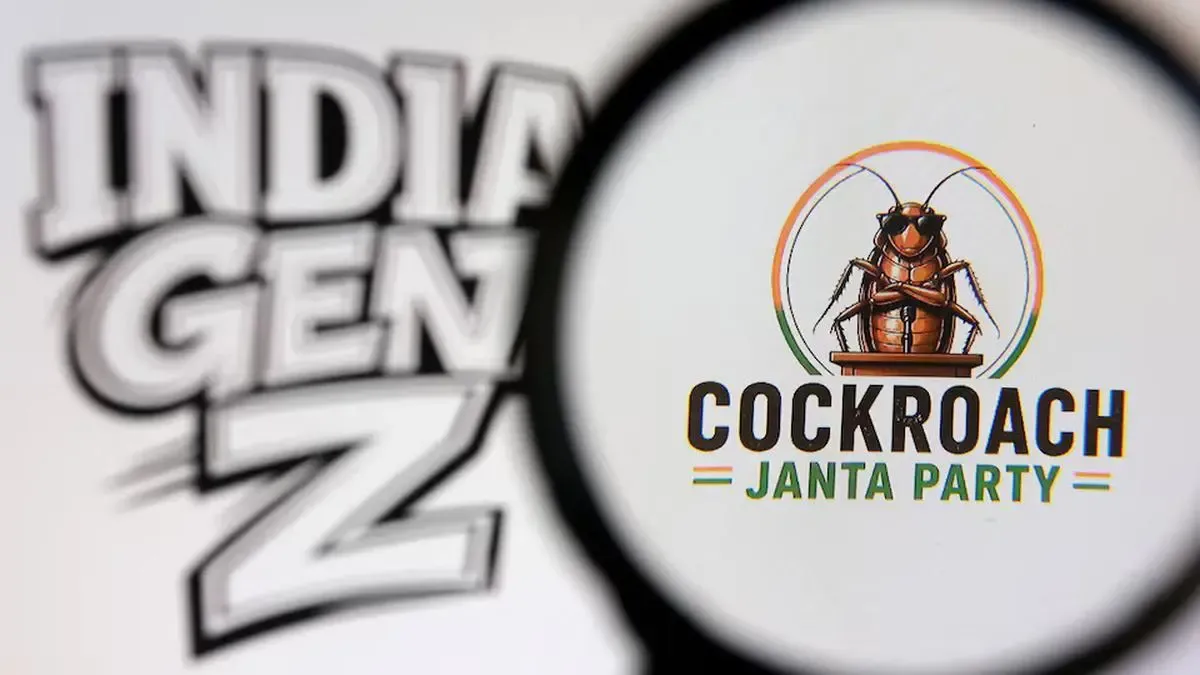
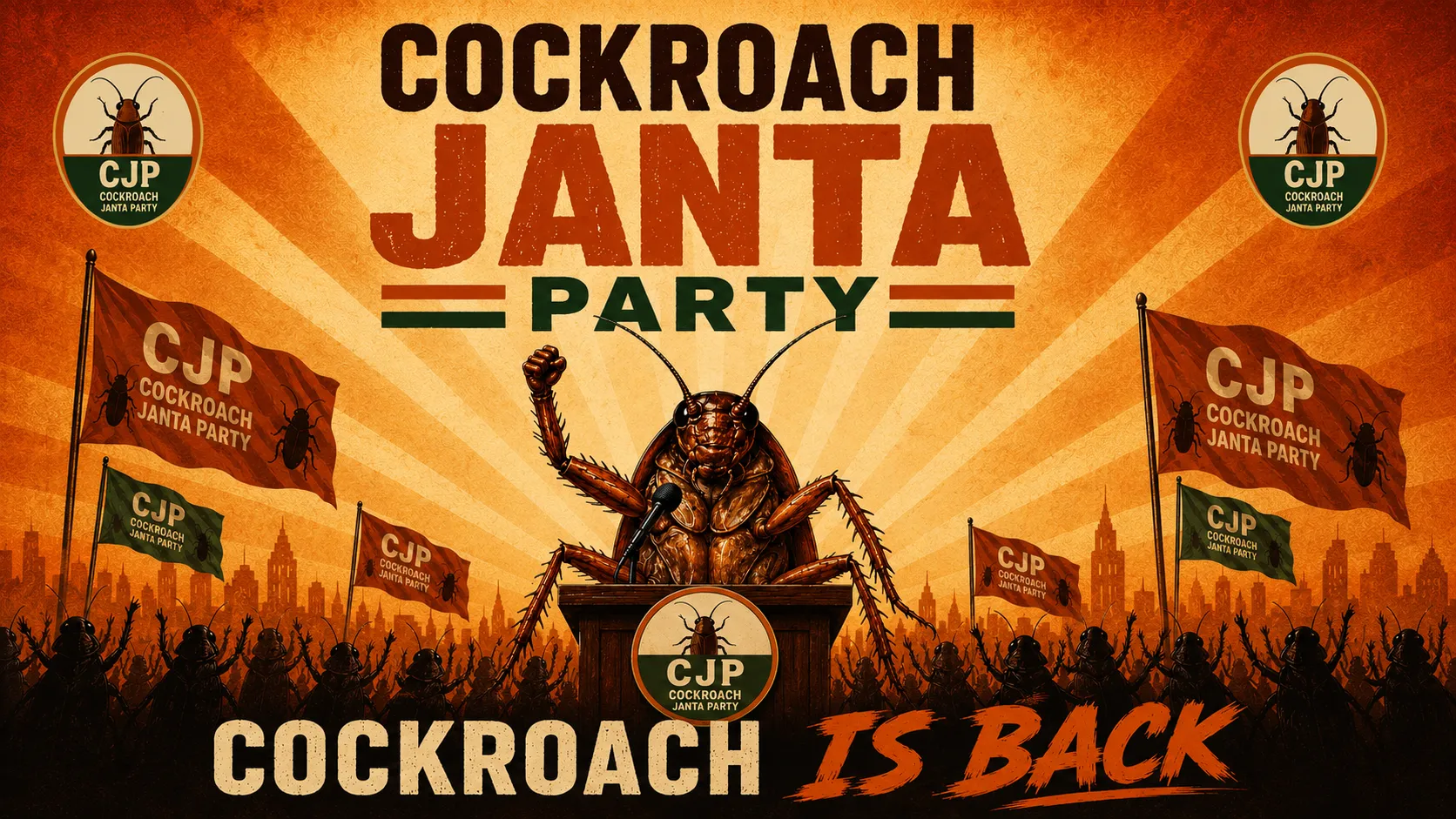
They call themselves the Cockroach Janta Party — the insect that refuses to die, no matter how many times you try to squash it.
The name is deliberately jarring. It is meant to offend. It is meant to be remembered. And it is meant to send a message: we are everywhere, we are hard to kill, and we are not going away.
Amassing roughly 22 million Instagram followers since its launch in mid‑May, the Cockroach Janta Party is the largest online expression of dissent against Prime Minister Narendra Modi's 12‑year rule. It is fueled by persistently high youth unemployment — the urban youth jobless rate hit nearly 14 percent in April — and recurring leaks of examination papers that have derailed the careers of millions of students.
For weeks, the movement existed only on screens. Memes. Reels. Angry comment threads. Hashtags that trended for hours before being buried. Then, on Saturday, June 6, the movement's 30‑year‑old founder arrived in New Delhi after two years in the United States. His family and friends feared he could be arrested on arrival.
Instead, he walked out of the airport, raised his hand to a crowd of cheering supporters, and said: "The cockroaches have come home."
The Man Behind the Movement
Abhijeet Dipke is not a politician. He is not a student leader. He is not a social worker. By training, he is a software engineer. By profession, until recently, he was a product manager at a mid‑sized tech company in San Francisco.
But Dipke, who grew up in a small town in Maharashtra, never stopped watching Indian news. He watched the exam paper leaks — first in Rajasthan, then in Uttar Pradesh, then in Bihar. He watched students protest, and he watched those protests fade. He watched the government promise action, and he watched nothing change.
In May 2026, he launched the Cockroach Janta Party on Instagram. The first post was a photograph of a cockroach crawling across a copy of the Indian Constitution, with the caption: "We are small. We are many. We are hard to crush. Join us."
Within 48 hours, the account had 2 million followers. Within a week, 8 million. Within a month, 22 million.
"The youth of this country have been treated like cockroaches for too long," Dipke told a crowd of several thousand at Jantar Mantar on Sunday, June 14. "Squashed by an education system that doesn't educate. Squashed by an economy that doesn't employ. Squashed by a government that doesn't listen. We are taking the name back. We are the cockroaches. And we are taking over."
Why 22 Million People Are Angry
The numbers behind the anger are staggering.
India has nearly 400 million people aged 15‑29 — the largest youth population in the world. Generating non‑farm jobs for them is the single biggest challenge facing the Indian economy, despite rapid GDP growth. The urban youth jobless rate was nearly 14 percent in April. Many educated young people are stuck in low‑paid or insecure jobs that do not match their skills.
The recurring paper leaks — most recently in Rajasthan and Uttar Pradesh — have become a symbol of a system that, in the eyes of millions, has failed them. In May 2026, the Rajasthan Public Service Commission exam was cancelled after the paper was leaked hours before the test. An estimated 500,000 students had their careers disrupted. Similar leaks have occurred in Uttar Pradesh, Madhya Pradesh, and Bihar over the past 18 months.
"We study for years," said a 24‑year‑old engineering graduate who travelled from Lucknow to Delhi for the protest. "Our parents spend their life savings on coaching. And then some guy with a phone camera leaks the paper, and the exam is cancelled, and we have to start over. How many times can we start over?"
The government has taken steps — arresting dozens of alleged leak facilitators, introducing new security protocols, promising tougher penalties. But for every leak that is caught, another seems to emerge. The opposition has called for the resignation of Education Minister Dharmendra Pradhan, who has defended the government's record while acknowledging the "deep distress" among students.
From Screens to Streets
The transition from online movement to street protest was never guaranteed. Many digital‑first movements — in India and around the world — have fizzled when asked to produce bodies on the ground.
The Cockroach Janta Party did not fizzle.
On Saturday, June 6, the day Dipke arrived in Delhi, several thousand people gathered near the airport, waving phones with the party's logo — a stylised cockroach — displayed on their screens. By Sunday, the crowd at Jantar Mantar had swelled to an estimated 15,000‑20,000. By Monday, June 15, the day of this reporting, police had barricaded roads leading to the protest site, and the crowd had been contained but not dispersed.
"This is a peaceful movement for the youth of the nation," said Ashutosh Ranka, the group's spokesperson. "We are not here to break anything. We are here to be heard."
The government has not been entirely passive. The Cockroach Janta Party's X account was blocked in India last week — a move the party has challenged in a Delhi court. Senior cabinet minister Kiren Rijiju has accused the group of seeking followers from arch‑enemy Pakistan and the "anti‑India gang," though he has provided no evidence for the claim.
Dipke's response was characteristically sharp: "If we were taking money from Pakistan, we wouldn't be protesting in Delhi. We'd be in Islamabad."
The Modi Government's Challenge
For the Bharatiya Janata Party and Prime Minister Modi, the Cockroach Janta Party presents a difficult problem.
The government has legitimate achievements to point to. The economy is growing at 6‑7 percent. Infrastructure is being built at an unprecedented pace. Digital public infrastructure has transformed everything from payments to healthcare. India's global standing has never been higher.
But none of those achievements put food on the table for a 24‑year‑old who has failed three competitive exams because of paper leaks. None of them create a job for a 27‑year‑old engineering graduate working as a delivery driver for a quick‑commerce app.
"The BJP has traditionally relied on two things to win youth support: Modi's personal appeal and the promise of development," said a political analyst based in Delhi. "But after 12 years, Modi's appeal has faded for a generation that barely remembers pre‑Modi India. And development, for them, isn't a highway or a metro line. It's a job. A fair exam. A future."
Political analysts say the group's popularity has begun to dent Modi's image, despite his party's recent victories in key state elections, as wider frustration grows over rising fuel prices and gas shortages brought by the Iran war. The war, which has pushed petrol and diesel prices to record highs, has added economic pain to the existing frustration over unemployment and exams.
"When petrol hits ₹120 a litre, nobody cares about GDP growth," the analyst said. "They care about how they're going to fill their tank."
What the Cockroach Party Wants
The movement's demands are still evolving, but three have emerged as central.
First, a complete overhaul of the examination system, including a single, national, technology‑secured testing framework that would make paper leaks impossible. Second, a clear timeline for filling government job vacancies — currently estimated at over 1 million — across central and state departments. Third, a youth employment guarantee program, modelled on the rural employment guarantee scheme, that would provide paid work for unemployed graduates.
"The government has been promising exam reforms for years," Ranka said. "We want a law. We want a timeline. We want accountability."
The government has not responded directly to the demands. Education Minister Pradhan has said he is "aware of the concerns" and that reforms are "under consideration." But no legislation has been introduced. No timeline has been announced.
Dipke, for his part, has said the movement will continue "until the last cockroach is heard."
The Risks Ahead
The Cockroach Janta Party's rise has not been without controversy — or risk.
The government's blocking of the party's X account is a significant escalation. It suggests that the administration views the movement not as a legitimate expression of youth discontent, but as a potential law‑and‑order threat. If the government decides to crack down more broadly — arresting leaders, blocking Instagram, declaring the party an unlawful association — the movement could be driven underground or dispersed by force.
There is also the risk of co‑option. Established opposition parties — the Congress, the Samajwadi Party, the Trinamool Congress — have all eyed the Cockroach Janta Party's following with envy. Some have reached out to Dipke, offering alliances, funding, and political protection. Dipke has so far refused, insisting that the movement is "not left, not right, not Congress, not BJP — just youth."
But staying independent is difficult. Movements that reject alliances often find themselves isolated. And isolated movements are easier to crush.
"There's a reason most youth movements in India have been absorbed by political parties," the political analyst said. "Parties have money, lawyers, media connections, and protection. The Cockroach Janta Party has none of those things. They have 22 million Instagram followers. That's powerful. But is it powerful enough to survive what's coming?"
The Bottom Line
Abhijeet Dipke flew back from America because he believed something was possible. He believed that 22 million angry young people could be organised into a political force. He believed that a movement named after an insect could shake the foundations of the world's largest democracy.
He may be right. Or he may be naive.
But on a hot June afternoon in Delhi, standing behind a police barricade with thousands of others, it is hard to dismiss the Cockroach Janta Party as a passing trend. The anger is real. The numbers are real. And for the first time in a decade, a generation that has only ever known Modi's rule is beginning to ask: what comes next?
The cockroaches have come home. And they are not leaving until someone answers.