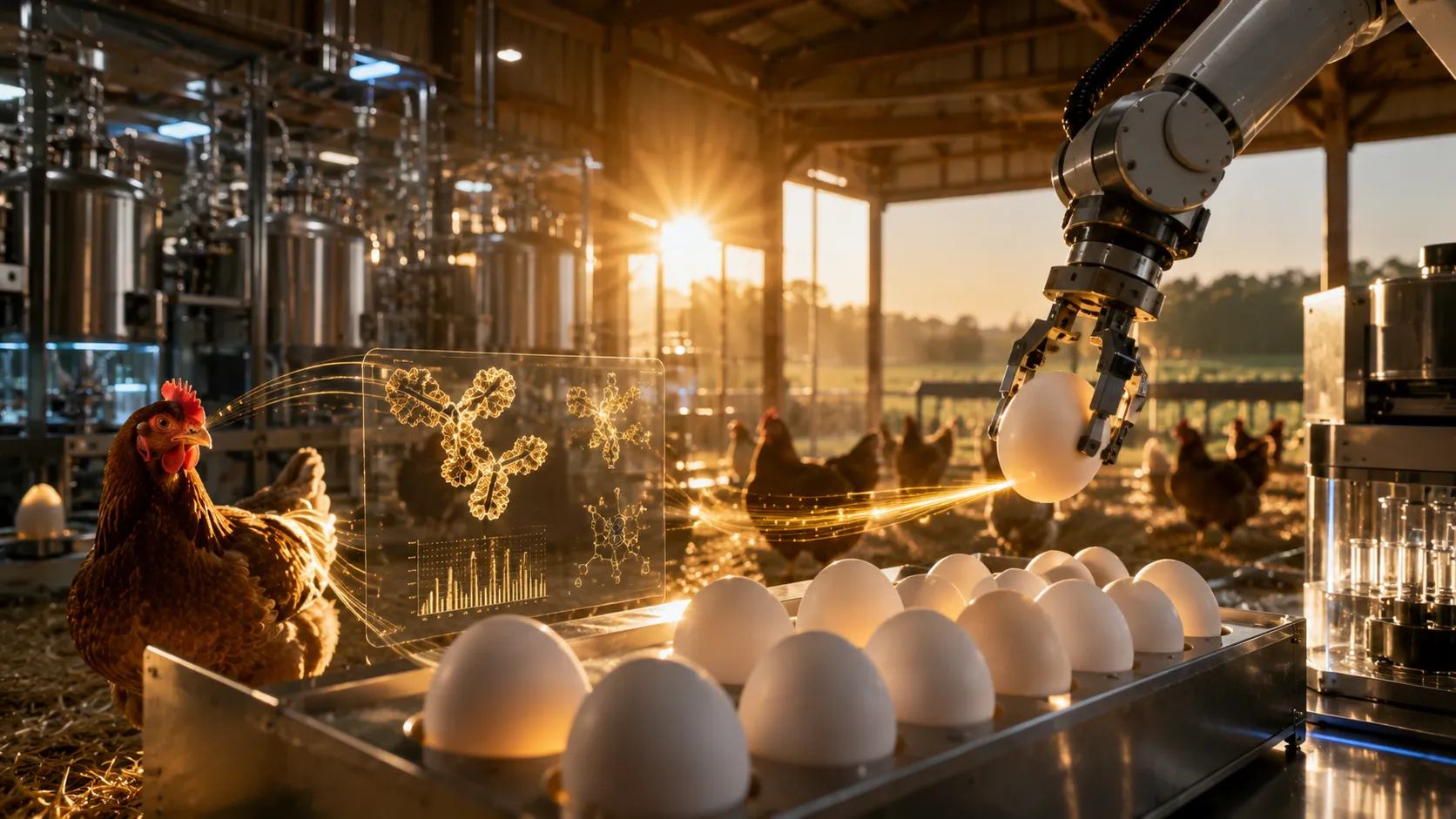
The Chicken, the Egg, and the $11M Bet to End $1,000-a-Gram Medicine: How Two Outsiders Are Rewiring Biomanufacturing from a Davis Farm
DAVIS, CALIF. — May 20, 2026 — Sam Levin is an evolutionary biologist. He thinks in geological time. He has spent his career studying how nature solves problems — how a bird's immune system packages antibodies into the sterile, self-contained universe of an egg; how natural selection, over hundreds of millions of years, has built protein factories that make the stainless-steel tanks of modern pharmaceutical plants look like crude stone tools by comparison. His co-founder, Dimi Kellari, is an aerospace engineer who spent four years building autonomous vehicle technology before concluding, with the clarity of a systems thinker, that the most consequential frontier was not in space or on the road, but inside a hen.
It was Kellari who asked the question that would become Neion Bio. The two were introduced through a mutual connection in early 2024. Kellari had been fixated on a structural inefficiency that, once seen, cannot be unseen: artificial intelligence was dramatically reducing the cost and time required to discover new protein-based drugs, and yet the way those proteins were manufactured — in vast, sterile, billion-dollar bioreactors filled with Chinese hamster ovary cells — had not fundamentally changed in decades. "Why," Kellari asked Levin, "are we still making our most important medicines in hamster cells?"
Levin did not have a good answer. Nobody did. The industry had settled on CHO cells not because they were the most efficient platform, but because they were one of the few cell types scientists could engineer forty years ago — a historical accident that had calcified into an industry-wide standard. The result was a manufacturing process that was expensive to build, slow to scale, and completely misaligned with the accelerating pace of drug discovery. "AI is dramatically reducing the cost and time to design new proteins," Levin told The Scientist, "and yet the way we manufacture these proteins is decades old, and increasingly the bottleneck to medical breakthroughs reaching patients." He paused. "We are reinventing biomanufacturing to make medicines affordable and accessible to everyone."
In March 2026, Neion Bio emerged from stealth with an $11 million seed round led by Caffeinated Capital, with participation from Basis Set Ventures and Haystack VC — and a co-development and supply agreement with an undisclosed major global pharmaceutical company. The company's platform, called Raptor™, does not build a better bioreactor. It replaces the bioreactor entirely with what Levin calls "nature's most prolific protein factory: the chicken egg."
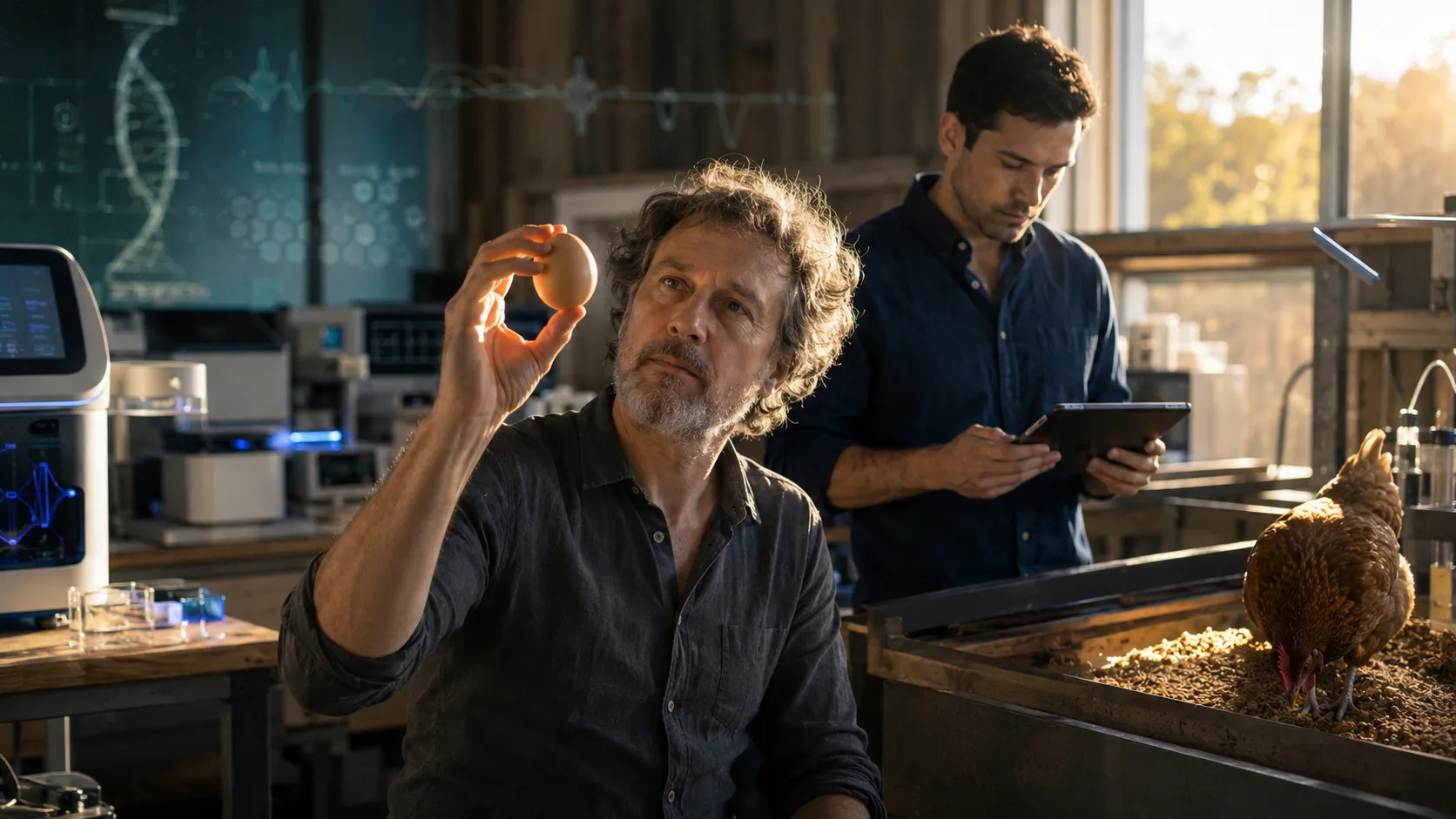
The 200-Million-Year-Old Bioreactor
To understand what Neion Bio has built, it helps to understand what a chicken egg actually is. An egg is not a simple food product. It is a self-contained, naturally sterile, protein-packaging and preservation system that has been optimized by evolution for hundreds of millions of years. The egg white alone holds roughly six grams of protein, protected from bacterial contamination by physical barriers and antimicrobial enzymes, stabilized for weeks at ambient temperature, and produced at a marginal cost of essentially zero — a hen will lay one a day regardless of whether anyone is paying her. The egg is, in Levin's framing, a molecular factory that the biopharma industry has never seriously tried to use.
The neglect, he argues, is a symptom of a deeper structural failure. The dominant manufacturing platform for biologics is Chinese hamster ovary cells, a choice that traces back to a mid-century laboratory accident rather than any deliberate engineering logic. Once the industry committed to CHO cells, an entire infrastructure of suppliers, regulatory protocols, and institutional knowledge was built around them, creating what Levin calls a "calcified standard" — a technology that survives not because it is optimal, but because it is embedded.
The consequences are staggering. Facilities required to house CHO cell bioreactors often cost hundreds of millions or even billions of dollars, and the resulting biological products can cost up to thousands of dollars per gram to produce. The industry pours a staggering amount of money into keeping the system functional — sterile environments, temperature controls, nutrient feeds, disposable plastic consumables — and the resulting cost structure makes biologic drugs, which are among the most effective treatments for cancer, autoimmune disorders, and metabolic conditions, inaccessible to large portions of the global population.
Neion Bio's Raptor™ platform is built to address that bottleneck. At its core is precision engineering of avian primordial germ cells — the embryonic progenitors of eggs and sperm — which the company edits to carry therapeutic genes before introducing them into developing embryos. The resulting hens express recombinant proteins directly in their egg whites at concentrations that Levin says change the economics of biologics manufacturing. A single chicken farm, small enough to fit within a standard laboratory, could theoretically produce the global supply of a blockbuster biologic like Humira. "We essentially farm medicines," Levin said.
The numbers are startling. Levin estimates that fewer than 4,000 hens would be sufficient to meet global demand for a blockbuster antibody like Humira — at roughly one-hundredth the operating cost of an equivalent CHO cell facility. The cost of producing a gram of therapeutic protein, which can range from $100 to over $1,000 in CHO-based systems, could fall to less than $10. The timeline from engineering to production, using the company's somatic delivery approach that employs viral vectors to shuttle therapeutic genes into the protein-producing glands of adult hens, could collapse from months to weeks. "We produce 1,000,000 liters of antibody per day for less than $10 a gram," the company's statement reads. "Nature's design, refined for over 200 million years, is better than anything we've built."
The Team
The composition of Neion Bio's founding team tells a story about the kind of problem the company is solving. Levin is an evolutionary biologist — a background that is almost unheard of in biotech founding teams, which are typically dominated by molecular biologists, chemists, and clinicians. His intellectual frame is deliberately unorthodox. Synthetic biology, he argues, has spent fifty years trying to tame biology, stripping away its complexity in pursuit of control. The more powerful move is to harness what evolution has already built.
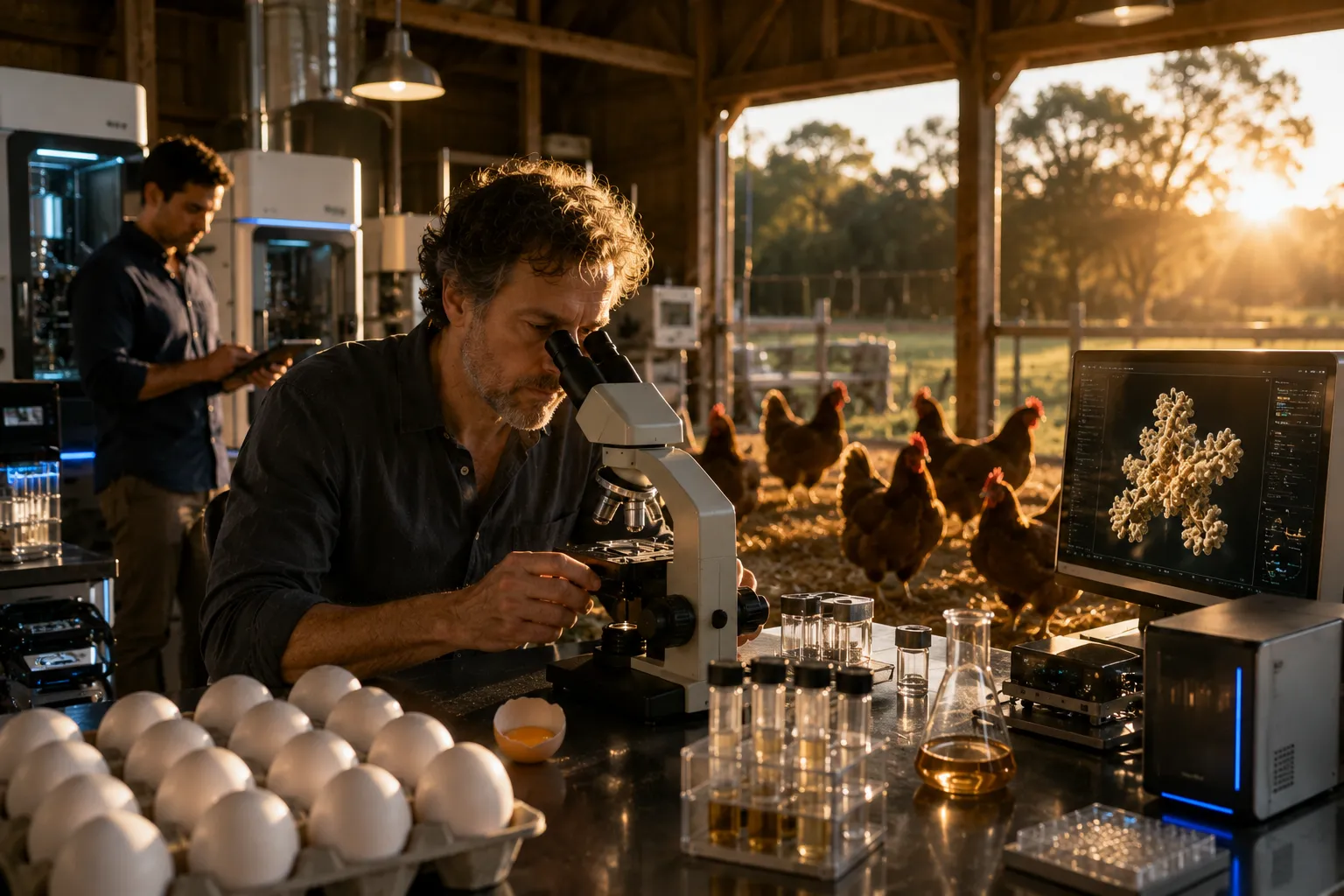
Kellari, the CEO, came from aerospace engineering and autonomous vehicles — a background that is also unusual in biotech. He spent four years building complex, research-intensive systems at scale, and the transferable skill, he realized, was not domain knowledge but systems thinking: the ability to see a bottleneck, identify the simplest possible solution, and execute against it. "We spent a ton of time questioning why we make proteins in giant steel tanks and CHO cells," Levin said. "How else could we do this? What would the ideal bioprocess look like?" The answer, when they found it, had been sitting in plain sight for 200 million years.
The broader team includes Chief Scientific Officer Sven Bocklandt, a precision genome engineering specialist who serves as the platform's scientific architect, and President of Commercial Operations Ming Li, an industry veteran with two decades of experience across biopharma strategy and capital markets. The combination — evolutionary biology, systems engineering, genome editing, and biopharma commercialization — is unusual and deliberate. Neion is not a science project. It is a manufacturing company that happens to use biology as its infrastructure.
The company's first commercial deal covers the co-development and supply of three monoclonal antibodies, structured around upfront payments, milestones, and downstream profit participation. The partner is a major global pharmaceutical company that Neion has declined to name, citing confidentiality provisions. The initial focus on biosimilars reflects a calculated bet on regulatory momentum: as clinical requirements for biosimilar approval continue to ease, the space is poised for a significant wave of investment, and Neion's platform offers the cost and complexity advantage that could make new entrants viable.
The Geopolitics of the Egg
Neion Bio's emergence comes at a moment when the fragility of global pharmaceutical supply chains has become impossible to ignore. The COVID-19 pandemic exposed the vulnerability of concentrated manufacturing: when the bioreactors were in one country and the raw materials in another, a single disruption could cascade across the entire global supply of life-saving drugs. The same dynamic has played out, with less public attention, across the biologic drug landscape for decades.
The company's platform offers a structural solution. A chicken farm can be established almost anywhere — in a standard laboratory, in a rural agricultural zone, in a developing country with limited infrastructure. It does not require the billion-dollar capital expenditure of a CHO cell facility. It does not depend on fragile, geographically concentrated supply chains. It is, in the company's framing, resilient to shocks and capable of being onshored in the United States or deployed in regions that currently have no access to biologic drug manufacturing. "We are reinventing biomanufacturing to make medicines affordable and accessible to everyone," Levin said, "in a system that is resilient to shocks and can be onshored in the US."
The strategic implications are significant. The U.S. government has made pharmaceutical supply chain resilience a national security priority, allocating billions in funding through the CHIPS Act-inspired Biomanufacturing Executive Order and the Department of Defense's bioindustrial manufacturing programs. A platform that can produce therapeutic proteins at a fraction of the cost and capital intensity of traditional methods, anywhere in the world, with no dependence on foreign suppliers, aligns directly with that priority. Neion Bio is not yet a defense contractor. But the logic of its platform points in that direction.
The economics are equally powerful for commercial applications. The global biologics market is projected to exceed $700 billion by 2030. The manufacturing bottleneck that Neion Bio addresses is the single largest cost driver in that market. If the company's platform can deliver even a fraction of its claimed cost advantages — and the first commercial deal with a major pharmaceutical company suggests it can — the economic implications are difficult to overstate.
What This Signals
Neion Bio is a manufacturing company, not a drug discovery company. It will not develop new medicines. It will make existing medicines dramatically cheaper, more accessible, and more resilient to supply chain disruptions. That distinction — infrastructure, not innovation — is the key to understanding why the company's $11 million seed round, its commercial partnership with a major pharmaceutical company, and its emergence from stealth have drawn attention from investors who rarely bet on early-stage biotech.
The signal is about the bottleneck. AI is compressing drug discovery timelines. Proteins that once took a decade to design can now be computationally generated in weeks. But the manufacturing infrastructure required to produce those proteins at scale has not kept pace. "As AI accelerates the pace of drug discovery, the manufacturing bottleneck is only becoming more acute," Basis Set Ventures wrote in its announcement of the seed investment. "As AI compresses drug discovery timelines and biologics continue to grow market share, the companies that can produce therapeutic proteins faster, cheaper and more resiliently will reshape the industry. Neion is building that infrastructure."
The chicken egg, as a manufacturing platform, has been hiding in plain sight for 200 million years. The industry that could have used it never looked. The biologists who understood it never had the engineering mindset to commercialize it. The engineers who could have commercialized it were busy building rockets. It took an evolutionary biologist who thinks in geological time, an aerospace engineer who abandoned autonomous vehicles, and a single, irreducible question — why are we still making medicines in hamster cells? — to see what was always there.
The hens are laying. The eggs contain medicine. The billion-dollar bioreactor has competition from a barn.


