The Capital's Reel Revenge: After Decades of Neglect, Delhi Is Finally Getting a ₹2,500 Crore Film City. Can It Compete with Mumbai and Hyderabad?
DELHI — May 30, 2026 — For more than forty years, the Indian film industry has been defined by a simple geographic binary: Mumbai for Bollywood, Hyderabad and Chennai for the South. Delhi, the national capital, the seat of government, the city that gave Indian cinema some of its most iconic locations—India Gate, the Qutub Minar, the bustling lanes of Chandni Chowk—has never been a production hub. The city has produced actors, directors, writers, and producers, but they have all, eventually, migrated to Mumbai. The capital's film infrastructure has been, for decades, a shambolic collection of decaying government studios and private facilities that were too small, too outdated, and too bureaucratically entangled to compete with the integrated production ecosystems of the western and southern states. Delhi was where films were set. It was never where films were made.
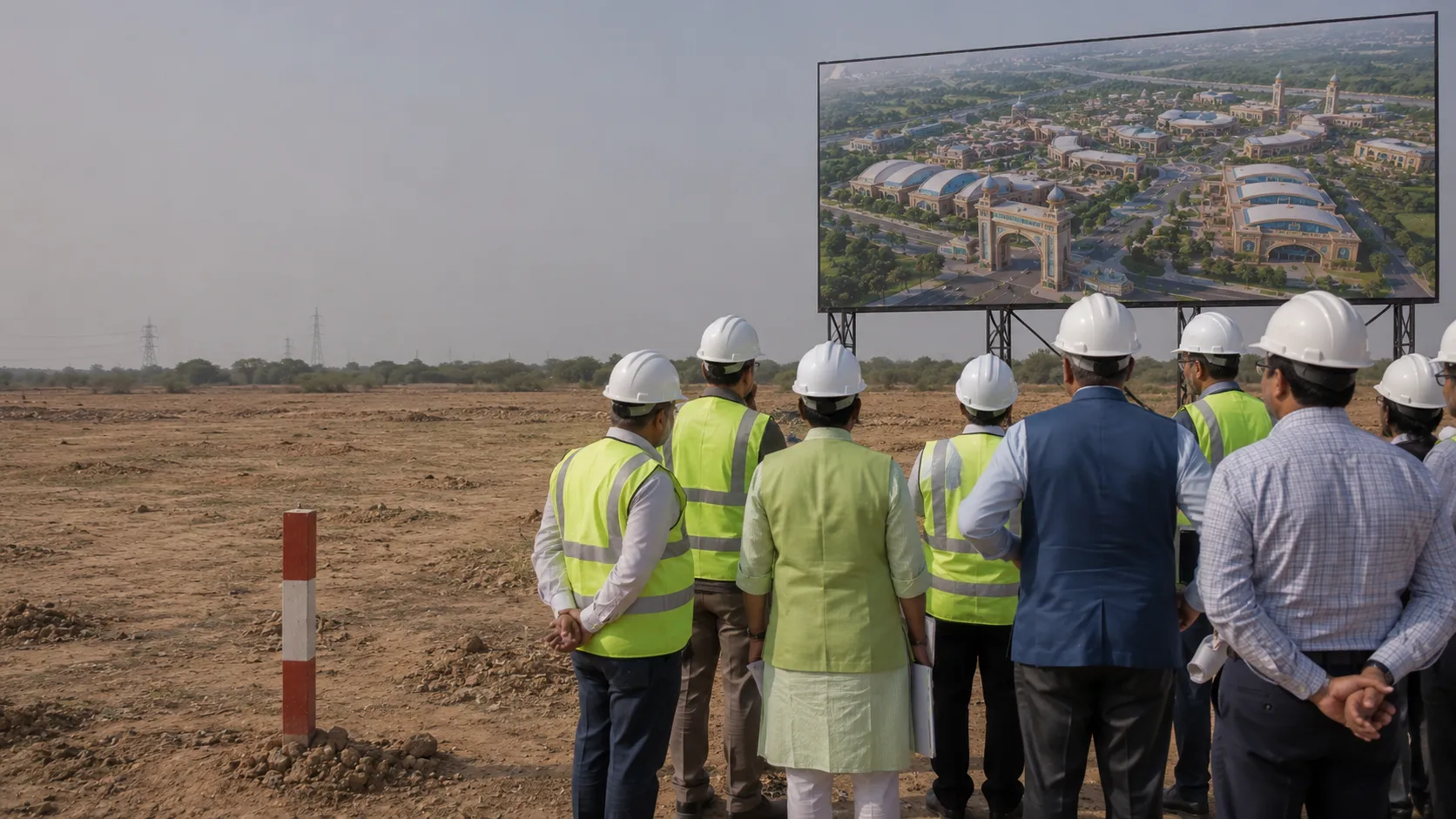
That is about to change. On May 28, 2026, the Delhi Development Authority and the Ministry of Information and Broadcasting jointly announced the final approval for the Delhi Film City—a ₹2,500 crore, 500‑acre integrated media production complex that will be built in Narela, on the northern outskirts of the capital. The project, which has been under discussion for over a decade and which has survived three changes of government, multiple legal challenges, and the accumulated scepticism of an industry that had stopped believing it would ever happen, is now scheduled to break ground in September 2026. The first phase—soundstages, post‑production facilities, and a backlot—is expected to be operational by 2029. The full complex, which will include a film institute, a media museum, a virtual‑production stage, and a dedicated digital‑content hub, is targeted for completion by 2032. The question that now hangs over the project—and over the city that has waited decades for it—is whether Delhi can build a production ecosystem that competes with the entrenched incumbents of Mumbai and Hyderabad, or whether the Film City will become another grand Indian infrastructure project: magnificent on paper, disappointing in reality.
The Infrastructure Gap
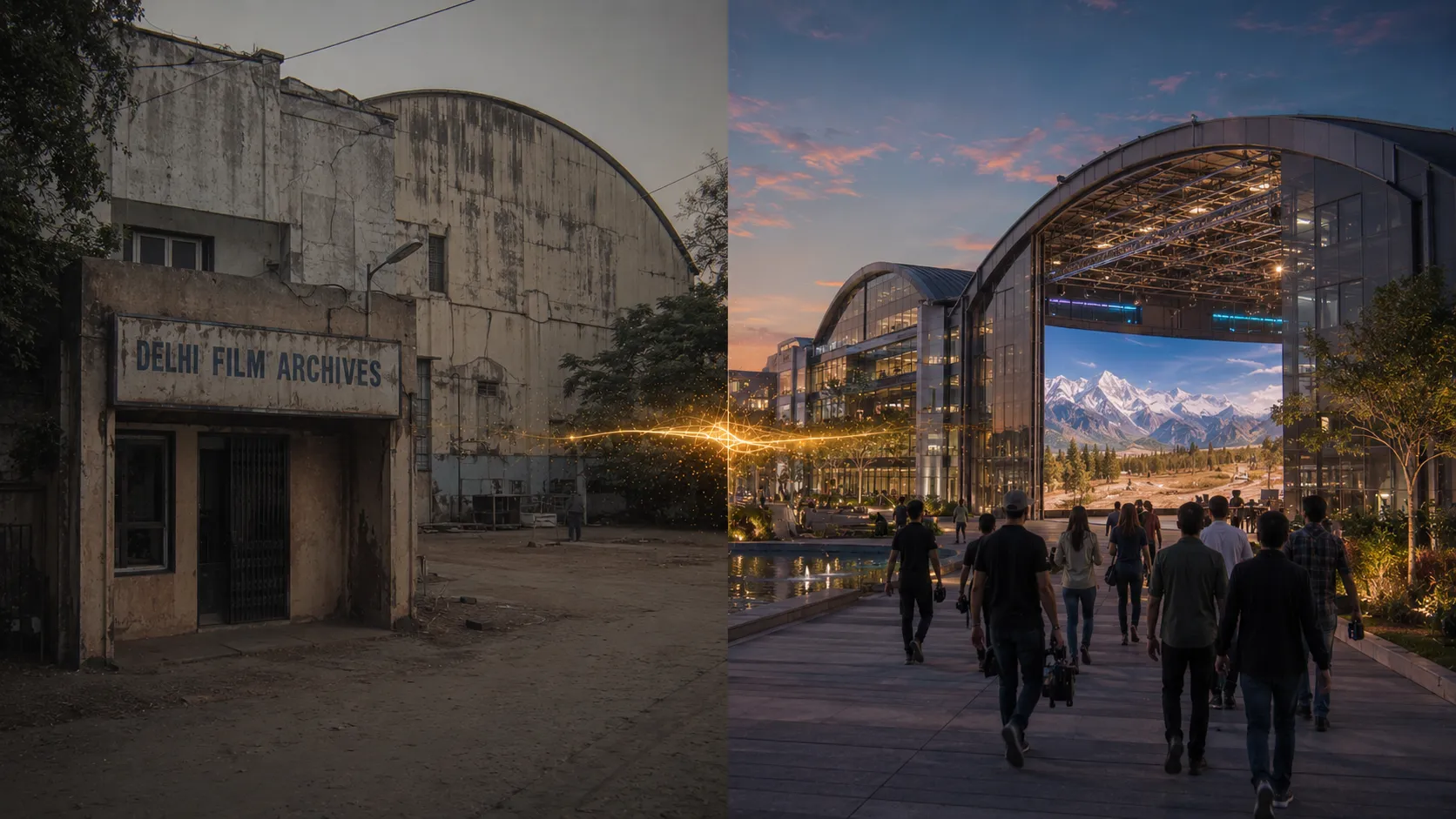
The most important variable in Delhi's decades‑long failure to build a film industry is infrastructure. The city has always had the ingredients—the talent pool of the National School of Drama and the Film and Television Institute of India's Delhi campus, the locations that range from Mughal monuments to modernist government buildings, the capital's concentration of wealth and political power. But the production infrastructure that transforms those ingredients into a working film industry—the soundstages, the post‑production facilities, the equipment rental houses, the skilled crews—has been almost entirely absent. The filmmaker who wanted to shoot in Delhi had to bring their own infrastructure from Mumbai, or make do with the handful of small, privately owned studios that could handle modest productions but were incapable of supporting the scale of a major feature film.
The Delhi Film City is designed to close that infrastructure gap. The first phase of the project, which will consume approximately ₹1,200 crore of the total budget, includes ten soundstages of varying sizes, a virtual‑production stage equipped with LED‑volume technology comparable to the facilities that are being built by the major studios in Mumbai and Hyderabad, a post‑production complex with colour‑grading suites, sound‑mixing theatres, and VFX workstations, and a 50‑acre backlot that can be configured for a variety of exterior shooting requirements. The second phase, which will be developed as demand materialises, will add additional soundstages, a film institute in partnership with a major international film school, a media museum, and a dedicated digital‑content hub designed to serve the streaming platforms that are increasingly commissioning original content.
The infrastructure that the Film City will provide is essential, but it is not sufficient. The Mumbai film industry was not built by a government project. It was built by decades of private investment, by the organic clustering of talent and capital, by the network effects that develop when a critical mass of production activity is concentrated in a single geography. The Delhi Film City can provide the physical infrastructure, but it cannot provide the ecosystem—the agents, the casting directors, the financiers, the guilds, the restaurants where deals are struck, the informal networks that make a film industry function. The ecosystem must be built over time, and it must be built primarily by the private sector. The government can provide the foundation. It cannot build the house.
The Political Calculus
The Delhi Film City is, in one sense, an infrastructure project. In another sense, it is a political statement. The project has been championed by the current government as a symbol of Delhi's cultural and economic ambitions—a way of demonstrating that the capital is not merely a seat of political power, but a centre of creative and commercial energy. The political incentives that have driven the project's approval are the same incentives that have driven similar projects in other states—the Telangana government's support for the Ramoji Film City expansion, the Maharashtra government's investment in the Film City complex in Goregaon, the Karnataka government's incentives for the Bengaluru animation and VFX industry. The film industry is, for state governments, a source of employment, a source of soft power, and a source of the kind of high‑profile, media‑friendly investment that generates positive coverage and political returns.
The political calculus also creates a risk. The government that approves a ₹2,500 crore infrastructure project is a government that will want to control how that project is used. The Delhi Film City will be managed by a special‑purpose vehicle that is jointly controlled by the DDA and the Ministry of Information and Broadcasting—a governance structure that is designed to ensure accountability, but that also creates the potential for the kind of bureaucratic interference that has historically driven creative industries away from government‑controlled spaces. The filmmaker who wants to shoot in the Delhi Film City will be dealing, ultimately, with a government entity—and the government entity will have its own priorities, its own timelines, and its own tolerance for the kind of unpredictable, occasionally transgressive content that the film industry produces. The balance between public accountability and creative freedom will be the single most important variable in the Film City's success, and it is a balance that no Indian government project has ever managed to strike perfectly.
The Streaming Opportunity
The most significant structural shift that makes the Delhi Film City viable is the rise of the streaming platforms. The Indian film industry of the 1990s and 2000s was a theatrical industry, and the theatrical industry was concentrated in Mumbai because Mumbai was where the studios, the stars, and the distributors were located. The streaming industry of the 2020s is a different animal. The streaming platform that commissions an original series does not care where the series is produced, as long as the production meets its quality standards and its budget constraints. The platform is indifferent to geography—and the producer who can offer a lower‑cost, equally capable production base in Delhi can compete for the platform's business on price and convenience.
The streaming opportunity is particularly significant for the mid‑budget, content‑driven productions that constitute the fastest‑growing segment of the Indian entertainment market. The ₹50 crore series that is shot in Delhi, using the Film City's soundstages and the city's locations, can be produced at a cost that is 15 to 25 percent lower than the same series shot in Mumbai—a function of lower real‑estate costs, lower crew wages, and the absence of the congestion and logistical complexity that make Mumbai production expensive. The streaming platform that is looking to maximise the return on its content budget will, over time, gravitate toward the production bases that offer the best combination of quality and cost. The Delhi Film City, if it can deliver on its infrastructure promises and avoid the bureaucratic traps that have ensnared previous government projects, can be that production base.
The streaming platforms have also created a demand for content that is set in Delhi—the political thrillers, the historical dramas, the urban comedies that use the capital's specific geography as a narrative asset. The platform that commissions a series about Delhi wants the series to look like Delhi—not like a Mumbai backlot dressed to approximate the capital, but like the actual city, shot on location, with the texture and specificity that only real locations can provide. The Film City, located within the National Capital Region and connected to the city's locations by a rapidly improving transport infrastructure, can serve as the production base for those location‑intensive shoots—providing the soundstages and post‑production facilities that the location shoot requires, without the expense and logistical complexity of basing the production in Mumbai and flying the crew to Delhi for the location work.
The Competition
The Delhi Film City is not entering an empty market. It is entering a market that is already served by two of the most developed film‑production ecosystems in Asia—Mumbai and Hyderabad—and by a growing number of state‑backed production infrastructure projects in other Indian states. The Ramoji Film City in Hyderabad, which is the largest integrated film‑studio complex in the world, has been operating for over three decades and has a depth of infrastructure, a breadth of services, and a network of vendors and crews that no new entrant can match. The Film City in Mumbai's Goregaon, which is operated by the Maharashtra government and which is currently undergoing a major expansion, has the advantage of proximity to the Bollywood ecosystem—the stars, the studios, the financiers, and the creative talent that are concentrated in the city. The Delhi Film City will have to compete with these incumbents on price, on quality, on convenience, and on the intangible but essential quality of being a place where filmmakers want to work.
The competitive landscape is also being reshaped by the emergence of virtual production—the LED‑volume technology that allows filmmakers to shoot against photorealistic digital backgrounds, reducing the need for location shoots and for the kind of large, physical backlots that the Delhi Film City is planning to build. The virtual‑production stage that is included in the first phase of the Film City is a recognition of this shift, but it is also a gamble—a bet that the technology will not advance so rapidly that the physical infrastructure the Film City is building becomes obsolete before it is completed. The filmmaker who can shoot a Delhi‑set series on a virtual‑production stage in Mumbai, with the same visual fidelity as a location shoot in Delhi, may not need to travel to Delhi at all. The competition between physical and virtual production is just beginning, and the outcome will determine the value of every film‑production infrastructure project in the world.
What This Signals
The Delhi Film City is not primarily a story about infrastructure. It is a story about the structural transformation of the Indian film industry—a shift from a model in which production was concentrated in a single city to a model in which production is being distributed across multiple states, driven by the same forces that are reshaping every other dimension of the industry: the rise of streaming, the decentralisation of talent, and the competition among state governments to attract the investment, the employment, and the cultural prestige that the film industry provides.
The Film City will not, on its own, create a Delhi film industry. The infrastructure is necessary but not sufficient. The industry will require the private sector—the producers, the studios, the streaming platforms—to commit their capital, their projects, and their people to the city. That commitment will take years to build, and it will require the Film City's management to demonstrate, project by project, that the facility can deliver on its promises—that the soundstages work, that the post‑production suites are state‑of‑the‑art, that the bureaucratic processes are efficient and transparent. The Film City is a bet on Delhi's future as a production hub, and the bet will not be resolved for a decade or more. The ground has not yet been broken. The ₹2,500 crore is still a line item in a government budget. The film industry is watching, sceptical but hopeful, and the capital's reel revenge—if it comes—will be a long time in the making.


