The Cannes Disruption: How Punjabi, Malayalam, and Kannada Cinema Stormed the World's Most Prestigious Film Festival—Without a Single Palme d'Or Contender
CANNES, FRANCE — May 28, 2026 — The 79th Cannes Film Festival closed its doors five days ago, and for the first time in recent memory, India did not send a single film to compete for the Palme d'Or. The official selection—curated by festival director Thierry Frémaux and his team—was dominated by Pedro Almodóvar, Asghar Farhadi, and James Gray. The Indian contingent that had, in previous years, carried the hopes of a billion-strong film industry into the Competition section was absent. And yet, by the time the final credits rolled on the Croisette, something remarkable had happened. India had sent its largest and most diverse delegation of regional-language films in the festival's history—Punjabi, Malayalam, Kannada, Gujarati, and Hindi projects spanning the Marché du Film, Critics' Week, La Cinef, Cannes Classics, and the official market—and had demonstrated, more convincingly than any Palme d'Or victory could have, that the future of Indian cinema on the global stage belongs not to Bollywood, but to the regions that Bollywood has spent decades treating as its commercial hinterlands.
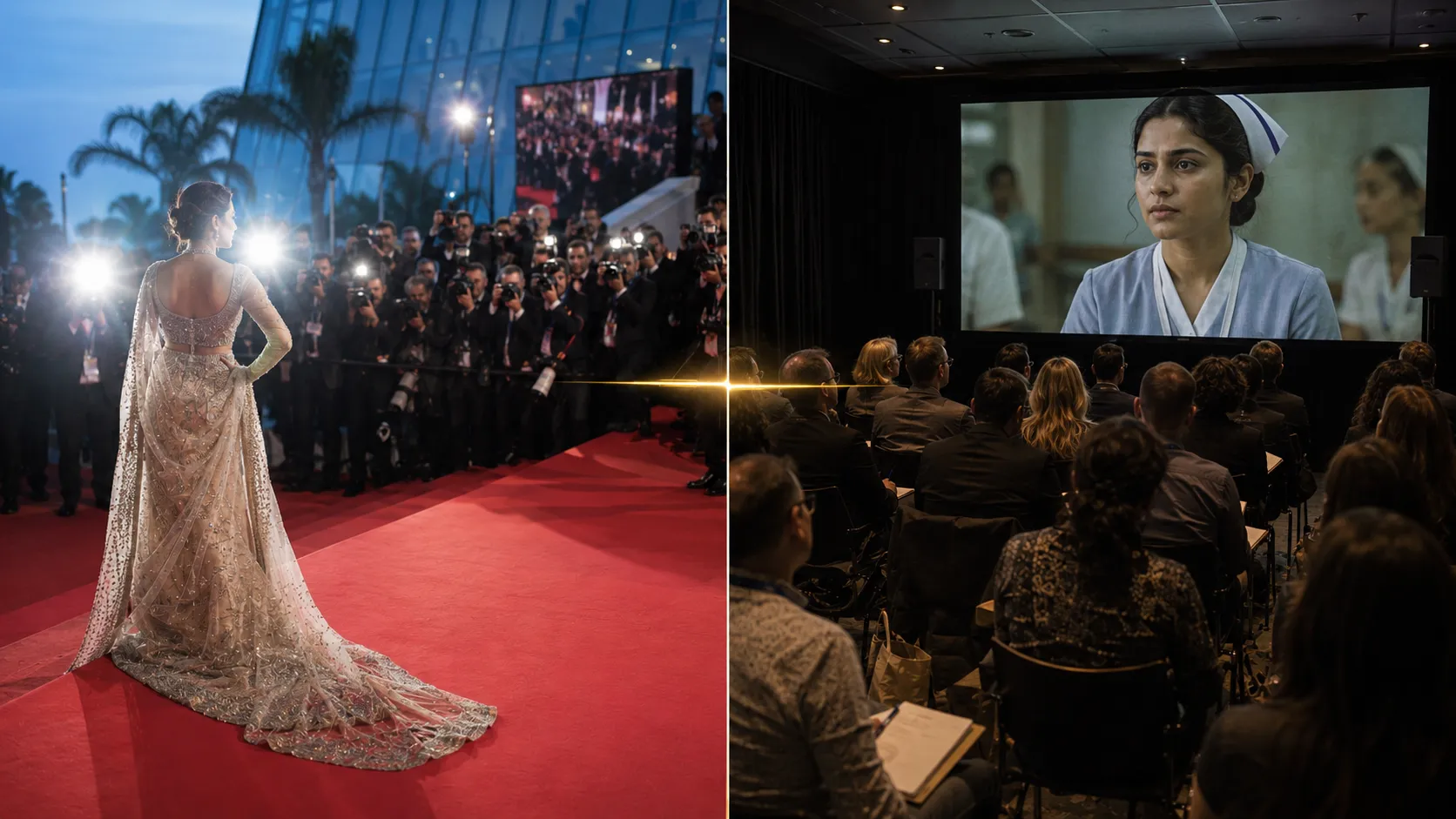
The numbers tell the story. At least ten Indian films were screened across various sections of the festival, which ran from May 12 to May 23. Amarjit Singh Saron's Punjabi-language Chardikala, starring Ammy Virk and Roopi Gill, premiered at the Marché du Film, following the story of a nurse whose quiet life unravels after she is falsely accused in a major case. Chidambaram's Malayalam-language Balan: The Boy—the follow-up to his global breakout Manjummel Boys, written by Romancham scribe Jithu Madhavan—was presented at the film market, centring on a young boy grappling with abandonment, emotional instability, and survival in a harsh social setting. FTII student Mehar Malhotra's Punjabi short Shadows of the Moonless Night was selected for the prestigious La Cinef section, which focuses exclusively on emerging filmmakers from film schools around the world. John Abraham's 1986 Malayalam experimental classic Amma Ariyan was restored in 4K and screened in the Cannes Classics section, a recognition reserved for the most significant works of cinema history. And Karen Kshiti Suvarna's debut feature September 21, which tracks an elderly Alzheimer's patient during the Covid-19 pandemic, celebrated its world premiere at the Palais Theatre on May 16—the youngest Indian filmmaker at the festival, at just 23 years old.
The Regional Surge
The most significant dimension of India's Cannes presence in 2026 was not the number of films—ten screenings across various sections represents a substantial increase from previous years, but is not, in itself, unprecedented. It was the linguistic diversity of the films that were selected. Of the ten Indian projects at Cannes this year, only two—Gudgudi, casting director Mukesh Chhabra's debut production, and September 21—were in Hindi. The remaining eight were in Punjabi (Chardikala, Shadows of the Moonless Night), Malayalam (Balan: The Boy, Amma Ariyan), Kannada (the documentary Spirit of the Wildflower, about India's first legal mahua distillery), and Gujarati (Laalo–Krishna Sada Sahaayate, described by its promoters as the "Most Divine Blockbuster Gujarati Film Ever"). For a festival that has historically associated Indian cinema with the Hindi-language productions of Mumbai, this was a quiet but unmistakable recalibration.
The reasons for the regional surge are structural, not accidental. The Indian film industries that operate outside the Hindi-language mainstream—Punjabi, Malayalam, Tamil, Telugu, Kannada, Gujarati, Marathi, Bengali—have been producing some of the most critically acclaimed and commercially successful films in the country for years, but their international visibility has been limited by distribution networks that were designed for Bollywood and by festival programmers who were unfamiliar with the regional landscape. That is changing. The success of films like Manjummel Boys (Malayalam, 2024), Kantara (Kannada, 2022), RRR (Telugu, 2022), and The Kashmir Files (Hindi, but produced outside the studio system) has demonstrated to international buyers and festival programmers that the most compelling Indian cinema is often being made far from the Mumbai studios that have historically dominated the conversation. The Cannes selection of 2026 is the institutional recognition of that reality.
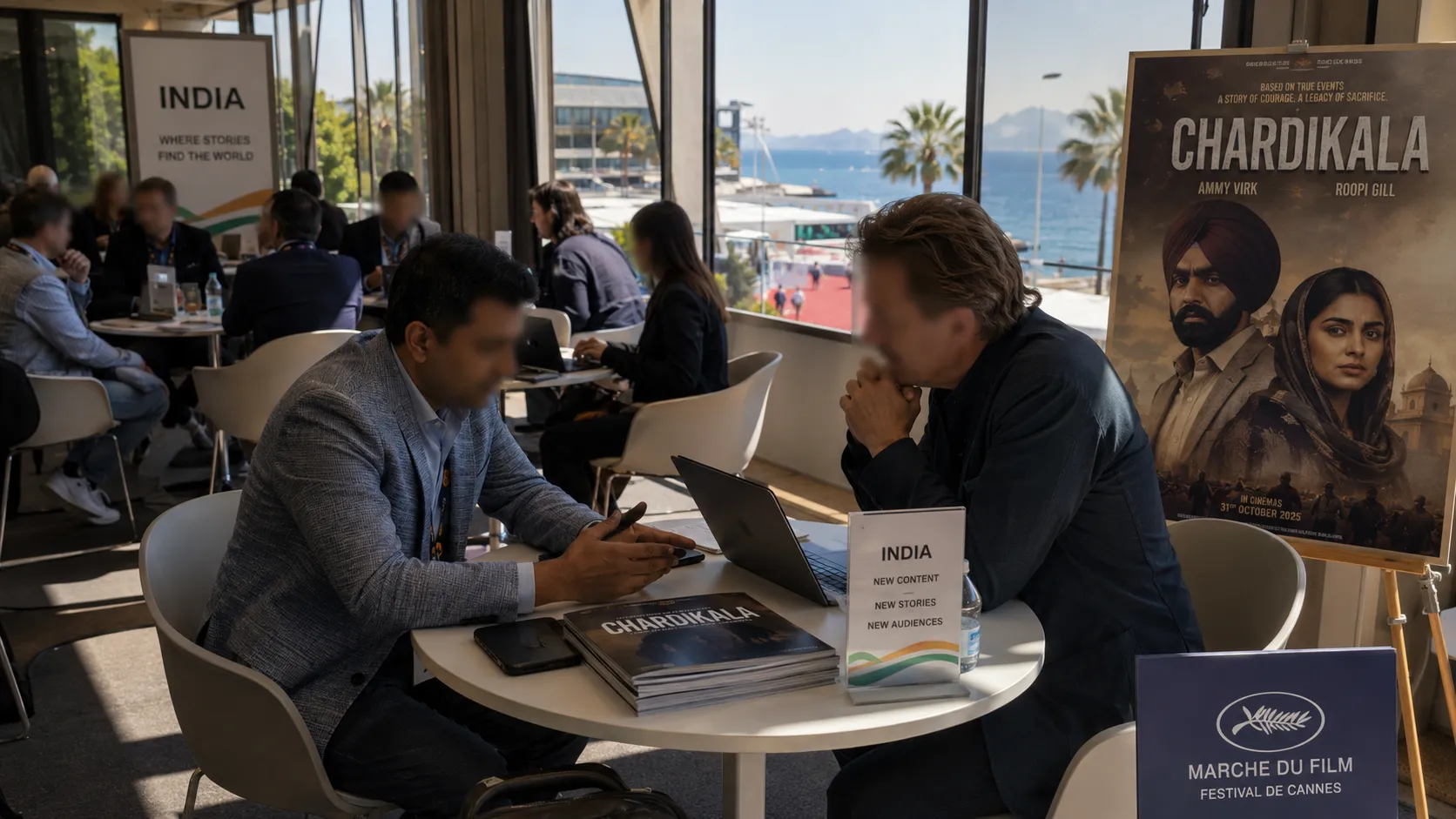
The Punjabi presence was particularly striking. Chardikala, which follows a nurse falsely accused and struggling with loneliness before she begins helping families in crisis, is a film rooted in the specific cultural and social landscape of contemporary Punjab. It is not an export designed for the diaspora. It is a Punjabi film, in the Punjabi language, about Punjabi life—and it was selected for the world's most prestigious film market, where it attracted attention from international distributors who had never previously acquired a Punjabi-language film. The film's theatrical release is scheduled for May 29, immediately following its Cannes showcase—a commercial strategy that uses the festival not as an endpoint, but as a launchpad. The same logic applies to Balan: The Boy, Chidambaram's follow-up to Manjummel Boys, which was one of the most talked-about Malayalam films in recent memory. The director's presence at Cannes—just two years after his previous film became a global sensation on streaming platforms—is a signal that Malayalam cinema's international moment is not a one-off phenomenon, but a sustained trajectory.
The La Cinef selection of Shadows of the Moonless Night is, in some ways, the most significant of all. La Cinef is the section of Cannes dedicated to student and emerging filmmakers from the world's most prestigious film schools. The selection of an FTII (Film and Television Institute of India) student's work—a 24-minute Punjabi short about a night-shift factory worker facing crushing financial and psychological isolation—places India's oldest and most respected film school in direct dialogue with the institutions that have produced the world's most celebrated filmmakers. "The film follows Rajan, a night-shift factory worker burdened by financial pressure, overcrowded living conditions and emotional isolation," India Today reported. "As exhaustion and sleeplessness consume him, his psychological state slowly begins to collapse." The description is a reminder that the most powerful storytelling at Cannes this year did not require a ₹300 crore budget or a superstar lead. It required a student, a camera, and a story that needed to be told.
The presence of the Gujarati film Laalo–Krishna Sada Sahaayate was notable primarily because Gujarati cinema has historically been almost entirely absent from the international festival circuit. The Gujarati film industry is one of the largest regional industries in India by volume, but its output has been dominated by commercial comedies, family dramas, and devotional films that rarely travel beyond the state's borders. The selection of Laalo—described as a "Divine Blockbuster" with "strong cultural and spiritual themes linked to Lord Krishna"—at the Cannes Market represents a significant departure, and suggests that festival programmers are beginning to recognise the cultural and commercial significance of India's regional cinema beyond the industries—Malayalam, Tamil, Bengali—that have historically dominated the festival conversation.
The Payal Kapadia Factor
The most symbolic figure at Cannes 2026 was not a star walking the red carpet. It was a filmmaker sitting in a jury chair. Payal Kapadia, whose All We Imagine as Light won the Grand Prix at Cannes in 2024—the first Indian film to win a major prize at the festival in three decades—returned to the Croisette not as a competitor, but as the head of the Critics' Week jury. Critics' Week is the parallel section of Cannes that focuses exclusively on first and second features by emerging directors, and Kapadia's appointment as its president—a role previously held by filmmakers like Bernardo Bertolucci, Wong Kar-wai, and Alejandro González Iñárritu—was a recognition both of her own achievement and of Indian cinema's growing institutional influence at the festival.
Kapadia's presence at Cannes—as a juror, not a supplicant—represents a structural shift in the relationship between Indian cinema and the global festival circuit. For decades, Indian filmmakers attended Cannes as outsiders hoping to be noticed—arriving with films that had been made on shoestring budgets, competing for the attention of programmers who were unfamiliar with their work, and returning home with memories and little else. Kapadia broke that pattern. Her Grand Prix victory demonstrated that an Indian film—a Malayalam-Hindi feature about nurses in Mumbai, made by a graduate of the FTII—could compete with, and defeat, the best films in the world. Her appointment as Critics' Week president demonstrated that the festival establishment was willing to entrust its most important platform for emerging talent to an Indian filmmaker. The shift is not merely symbolic. It is institutional, and it will outlast any single festival.
The critics' jury that Kapadia led this year evaluated a slate of first and second features from around the world, and her presence at the head of that jury ensured that the perspective of an Indian filmmaker—specifically, a filmmaker who has navigated the transition from independent cinema to international recognition—was embedded in the festival's decision-making apparatus. The filmmakers whose work she championed will carry her influence forward, and the programmers who selected her for the role will be more likely to consider Indian filmmakers for similar positions in the future. The pipeline that Kapadia has opened is not just for her own films. It is for the generation of Indian filmmakers who will follow her—and the Cannes selection of 2026, with its unprecedented regional diversity, is the first evidence that the pipeline is working.
The Market Dimension
The most commercially significant dimension of Cannes is not the red carpet or the awards. It is the Marché du Film—the sprawling film market that runs alongside the festival and that is, by transaction volume, the largest film market in the world. More than 12,000 industry professionals attend the Marché each year, representing distributors, sales agents, streaming platforms, and television networks from every continent. For an Indian film, a screening at the Marché is not a ceremonial honour. It is a commercial opportunity: the chance to be seen by buyers who can acquire the film for territories around the world, and who can provide the distribution infrastructure that no Indian producer can build alone.
The Indian presence at the Marché this year was more commercially focused than in previous years. Chardikala, Balan: The Boy, and Laalo were all screened at the market, and each of them attracted attention from international buyers. The financial stakes are significant: a Punjabi film that secures distribution in the United Kingdom, Canada, and Australia—the three largest Punjabi diaspora markets—can generate substantial returns from territories that are entirely disconnected from the Indian box office. A Malayalam film that secures distribution in the Middle East and Southeast Asia—where the Malayali diaspora is large and culturally engaged—can similarly expand its commercial reach beyond what the domestic market alone can provide. The Marché is where these deals are seeded, and the Indian films that screened there this year have returned with contacts, commitments, and the beginning of relationships that will take years to fully mature.
The market presence also reflects a broader commercial maturity in the Indian regional film industries. The producers of Chardikala did not arrive at Cannes hoping to attract attention. They arrived with a film that was already scheduled for theatrical release on May 29, immediately following its festival showcase. The Cannes screening was not an endpoint but a marketing tool—a way of generating international visibility and critical attention that would amplify the film's domestic release. The strategy is borrowed from the Hollywood playbook, where a festival premiere is a standard component of a film's commercial rollout. Its adoption by a Punjabi producer represents a significant evolution in how Indian regional cinema thinks about the global market. The festival is no longer a distant, aspirational destination. It is an integrated component of a film's commercial strategy—and the films that use it effectively will capture a disproportionate share of the international revenue that the domestic market cannot provide.
The Lakadbaggha 2 Precedent
The most commercially innovative Indian project at Cannes this year was not a regional film, but a cross-border co-production that points toward a new model for Indian cinema's global ambitions. Lakadbaggha 2: The Monkey Business, the sequel to the 2023 action film Lakadbaggha, premiered at the Marché du Film—but unlike the other Indian films at the market, this one was not merely seeking distribution. It was presenting itself as a case study in international co-production.
The first Lakadbaggha, directed by Victor Mukherjee and starring Anshuman Jha, was a modest action drama about Kolkata's animal-loving vigilante, Arjun Bakshi. The sequel takes the character across borders—into the forests of West Java, Indonesia, where he confronts a brutal underground wildlife trafficking network and fights to protect the endangered North Sulawesi Yaki Monkey. The film is structured as an India-Indonesia co-production—the first of its kind—and features a pan-Asian cast that reflects the geography of its story. It is not an Indian film that happens to be set in Indonesia. It is an Indian-Indonesian film, conceived from the ground up as a cross-border project, and its premiere at Cannes represents the first step in what its producers hope will become a new model for Indian action cinema: stories that are rooted in Indian character and Indian sensibility, but that are set in international locations, with international casts, financed through international partnerships, and distributed to international audiences.
The co-production model is not new to global cinema. French producers have been co-financing films with partners across Europe, Africa, and Asia for decades. Korean producers have used co-production treaties to expand their films' reach into China, Japan, and Southeast Asia. But Indian cinema has historically been resistant to the model, preferring to finance its films entirely within the domestic market and to treat international distribution as an afterthought. Lakadbaggha 2 represents a departure from that tradition, and its Cannes premiere is a test of whether the international market is ready for Indian films that are designed for it from the ground up. The test results are not yet in—the film has not yet secured international distribution—but the conversation it has started is likely to continue long after the festival has ended.
The Payal Kapadia Effect on FTII and India's Film Schools
The most enduring legacy of India's Cannes presence in 2026 may not be any single film, but the institutional pipeline that has begun to connect India's film schools to the world's most prestigious festival. Payal Kapadia's Grand Prix victory in 2024 was, in retrospect, the moment the pipeline opened. Her subsequent appointment as Critics' Week jury president—announced just weeks before the festival—reinforced the signal. And the selection of Mehar Malhotra's Shadows of the Moonless Night for La Cinef, just two years later, is the first evidence that the pipeline is producing results.
The FTII, where both Kapadia and Malhotra trained, has long been India's most prestigious film school. Its alumni include some of the most celebrated filmmakers in Indian cinema history—from Adoor Gopalakrishnan to Mani Kaul to Kumar Shahani—but its international profile has historically been limited. The Cannes recognition of the past two years is changing that. The FTII is now being discussed in the same context as La Fémis in Paris, the National Film and Television School in London, and the Tisch School of the Arts in New York—institutions whose students and alumni regularly feature in the most prestigious sections of the world's most important festivals. The comparison is not yet fully earned, but it is no longer absurd. The institution that produced Kapadia and Malhotra is now on the radar of festival programmers, international producers, and the global film press in a way that it was not five years ago. The films that emerge from that institution over the next decade will benefit from the visibility that Kapadia and Malhotra have created.
The impact extends beyond the FTII. The Satyajit Ray Film and Television Institute in Kolkata, the Whistling Woods International in Mumbai, and the growing network of state-funded film schools across India are all now operating in an environment where the path from a student film to a Cannes premiere is no longer theoretical. It has been walked. The students who enrol in these institutions today have seen what Kapadia achieved, and they have seen what Malhotra is now attempting—a 24-minute Punjabi short, made on a student budget, selected for the same festival that premieres the latest films from Pedro Almodóvar and Asghar Farhadi. The aspiration that these students carry into their work is being shaped by a sense of possibility that did not exist when Kapadia was a student herself. The films they make over the next decade will be the true measure of whether India's Cannes moment is a fleeting phenomenon or a permanent transformation.
What This Signals
The Cannes 2026 story is not primarily about a film festival. It is about the structural reorganisation of Indian cinema's relationship with the global film industry—and about the regional-language filmmakers who are leading that reorganisation.
For decades, the global perception of Indian cinema was defined by Bollywood: the song-and-dance spectacles of Mumbai, the star-driven melodramas, the colourful, chaotic, commercially potent but critically disregarded productions that dominated the Indian box office and shaped the world's understanding of what Indian cinema was. That perception was never accurate—Indian cinema has always been far more diverse, far more regionally varied, and far more artistically ambitious than the Bollywood stereotype suggested—but it was persistent, and it limited the opportunities available to Indian filmmakers who were working outside the Hindi-language mainstream. The Cannes selection of 2026 is the clearest evidence yet that the perception is changing. The films that represented India at the world's most prestigious festival this year were not the blockbusters of Mumbai. They were the stories of Punjab, Kerala, Karnataka, and Gujarat—regional narratives, told in regional languages, rooted in regional cultures, and selected by international programmers who are finally beginning to understand that the most interesting Indian cinema is being made far from the studios that historically dominated the global conversation.
The transformation is not complete. India still does not have a film in the Competition section of Cannes—the main event, the Palme d'Or race, the section that confers the highest level of institutional prestige. The films that were screened this year were in the parallel sections, the market, the student showcase. They were the first steps on a journey whose destination has not yet been reached. But the journey is unmistakably underway. The regional filmmakers who are walking it—Amarjit Singh Saron in Punjab, Chidambaram in Kerala, Mehar Malhotra at the FTII—are building a new pipeline between India's film industries and the global festival circuit. The pipeline is still under construction, but it is already carrying traffic. And the films that travel through it over the next decade will determine whether the Cannes moment of 2026 is remembered as a curiosity or as the beginning of a permanent transformation in how the world sees Indian cinema—and how Indian cinema sees itself.


