The Bottle That Broke Bollywood: How One Star's Year-Long Quest to Launch a Tequila Brand Exposed Every Structural Barrier Keeping Indian Celebrities Out of the $55 Billion Liquor Market
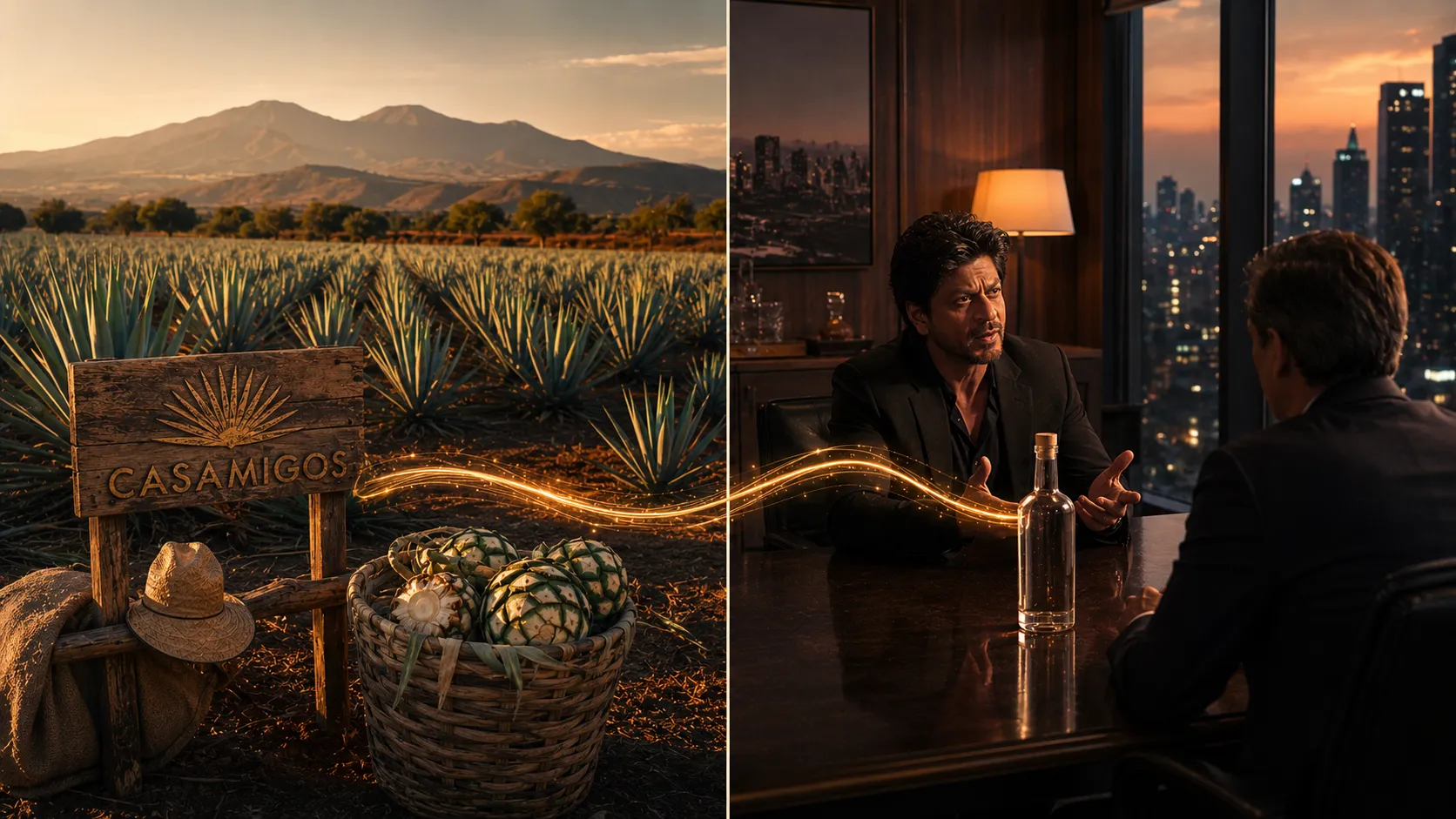
MUMBAI — May 29, 2026 — On a Thursday morning in January 2026, a Bollywood actor whose last three films had together grossed over ₹1,200 crore sat across a table from the managing director of one of India's largest spirits companies and made his pitch. He wanted to launch a tequila brand. Not an endorsement deal. A brand. His own capital. His own name on the label. His own equity in the company. He had been studying the Casamigos playbook for months—George Clooney, Rande Gerber, Mike Meldman, the four‑year build, the billion‑dollar exit—and he believed he could replicate it in India. The spirits executive listened politely, nodded at the appropriate moments, and then asked three questions that the actor had not anticipated.
"Where will you manufacture the tequila? Tequila can only be made in Mexico, from blue agave, in the state of Jalisco. Do you have a Mexican partner? Do you have a Mexican distillery? Do you have a Mexican supply chain?"
The actor did not. He had assumed—reasonably, from the perspective of someone who had spent his career in an industry where anything can be produced, outsourced, or licensed—that the manufacturing could be arranged. The spirits executive explained, with the patience of someone who has had this conversation many times, that the Indian regulatory environment made it virtually impossible to import bulk tequila, bottle it locally, and sell it under a celebrity‑owned brand. The import duties on bottled spirits were prohibitive. The state‑level excise regimes were a labyrinth. The distribution networks were controlled by a handful of large players who had no interest in helping a Bollywood star build a competing brand. The celebrity who wanted to launch a spirits company in India was not merely entering a regulated market. He was entering a fortress, and the fortress was designed to keep him out.
The actor left the meeting shaken. He had spent his entire career in an industry where his name could open any door. Now he was discovering that the door to the spirits industry was not merely closed. It was locked, bolted, and guarded by men who had spent decades ensuring that no outsider—no matter how famous—could turn the handle.
"The Indian spirits industry is the most protected market in the country. It is protected by regulation, by distribution, by excise, by the accumulated power of the incumbents. A Bollywood star who wants to launch a spirits brand is not competing with other brands. He is competing with a system that was designed, over decades, to make his entry impossible." — Alcoholic‑beverage industry consultant, speaking anonymously to TIGI
The Regulatory Fortress
The Indian spirits industry is not merely regulated. It is architecturally hostile to new entrants, and the hostility is not accidental. It is the product of a regulatory framework that has been built, over decades, to protect the interests of the incumbents: the large, politically connected spirits companies that control the vast majority of the production capacity, the distribution networks, and the retail relationships in every state in the country.
The regulatory fortress has three concentric walls. The first is import duty. The Indian government imposes a customs duty of 150 percent on imported spirits—a rate that makes it economically impossible to import a finished product, bottle it under a celebrity brand, and sell it at a price that any Indian consumer would pay. The Casamigos model—produce in Mexico, bottle in Mexico, export to the United States—works because the U.S. import duty on tequila is negligible. The same model, applied to India, would produce a bottle of celebrity‑branded tequila that costs ₹8,000 to ₹12,000—roughly ten times the price of the premium Indian spirits that the mass‑affluent consumer is willing to pay. The import‑duty wall is not a barrier. It is a ban, and it applies to every celebrity who has ever dreamed of launching a spirits brand in India.
The second wall is the state‑level excise regime. Liquor in India is regulated by the states, not by the Centre, and each state has its own excise rates, its own distribution rules, its own labelling requirements, and its own retail restrictions. The celebrity who wants to sell a spirits brand in Maharashtra must navigate a different regulatory environment than the celebrity who wants to sell in Delhi, or Karnataka, or West Bengal. The compliance costs are enormous. The administrative complexity is paralyzing. And the incumbents—who have spent decades building the relationships, the licences, and the infrastructure required to operate across multiple states—have a structural advantage that no newcomer can match.
The third wall is the distribution network. The Indian spirits market is controlled by a small number of large distributors who have exclusive relationships with the major producers and who have no incentive to help a celebrity launch a competing brand. The celebrity who walks into a distributor's office with a bottle of their own tequila is not greeted as a potential partner. They are greeted as a threat, and the distributor's response—polite, professional, and absolute—is to decline. The distribution wall is the most formidable of the three, because it is not regulatory. It is commercial, and it cannot be dismantled by a change in government policy. It can only be dismantled by a celebrity who is willing to spend years, and tens of crores of capital, building their own distribution network from scratch—an investment that almost no celebrity has been willing to make.
The three walls together form a regulatory fortress that has kept the Indian celebrity spirits shelf empty for decades—and that shows no sign of weakening. The Diageo‑United Spirits combination, the Pernod Ricard India franchise, the Radico Khaitan and Allied Blenders duopoly—these are the companies that control the Indian spirits market, and they have done so by mastering the regulatory environment that the celebrity who wants to enter their market must navigate. The Casamigos model is not transferable to India, because the regulatory environment that made Casamigos possible does not exist in India. The celebrity who understands this will abandon their spirits ambitions and return to the endorsement model that the fortress was designed to preserve. The celebrity who does not will spend years, and a small fortune, learning what the incumbents already know: that the fortress is impenetrable.
The Endorsement Trap
The regulatory fortress is the reason that the Indian celebrity liquor shelf is empty, but it is not the only reason. The second reason is the endorsement trap—the structural incentive that encourages Bollywood stars to license their names to existing brands rather than build their own.
The Bollywood endorsement market is among the most lucrative in the world. The top stars earn between ₹5 crore and ₹15 crore per endorsement deal per year—a figure that, cumulated across a dozen brands, can exceed ₹100 crore annually. The endorsement model is lower‑risk and higher‑return in the short term than the entrepreneurial model. The star who endorses a whisky brand for ₹10 crore a year earns that money regardless of whether the brand's sales increase. The star who builds their own whisky brand invests their own capital, assumes the risk of failure, and waits years for a return. The incentives, in the Indian context, favour endorsement over entrepreneurship, and the celebrities who have chosen the latter—Akshay Kumar with his vegan protein, Hrithik Roshan with HRX, Virat Kohli with One8—are the exceptions that prove the rule. The vast majority of Indian celebrities have chosen the endorsement model, and the choice has been rational: the returns are guaranteed, the risk is minimal, and the regulatory barriers to building an entrepreneurial brand are prohibitive.
The endorsement trap is self‑reinforcing. The star who endorses a spirits brand is, in effect, lending their credibility to that brand—and the brand, in return, pays them a fee that is calibrated to the value of their endorsement. The star who builds their own spirits brand is not lending their credibility. They are investing it, and the return on that investment is uncertain. The more stars choose the endorsement model, the more the market for celebrity endorsements grows—and the larger the fee that the next star can command. The feedback loop is powerful, and it has produced a celebrity economy in which the most famous people in the country are among the most risk‑averse entrepreneurs in the world. The endorsement trap is not a prison, but it is comfortable, and the stars who are caught in it have little incentive to escape.
The Pernod Experiment
The most instructive example of the endorsement‑versus‑entrepreneurship dilemma in the Indian spirits industry is the Pernod Ricard experiment—a partnership that the French spirits conglomerate has been quietly developing with several Bollywood stars over the past two years, and that represents the closest thing to a Casamigos‑style venture that the Indian market has produced.
Pernod Ricard, which is the second‑largest spirits company in India by market share, has been exploring a model in which Bollywood stars would co‑create spirits brands with the company—contributing not just their name and their promotional efforts, but a share of the capital and a share of the equity. The model is not identical to the Casamigos blueprint—the star would not own the brand outright, and the manufacturing would be handled by Pernod Ricard's existing infrastructure—but it is closer to genuine entrepreneurship than the traditional endorsement deal. The Pernod experiment is significant because it represents the first time that a major Indian spirits company has been willing to offer a celebrity an equity stake in a brand, rather than merely a fee for their endorsement. The experiment is still in its early stages, and no brand has yet been launched, but the conversations are underway—and the stars who are participating in them are the ones who have recognised that the traditional endorsement model is being disrupted by the same forces that disrupted the film industry.
The Pernod experiment also reveals the limits of the co‑creation model. The star who partners with Pernod Ricard is not building their own company. They are building a brand within Pernod Ricard's portfolio, and the brand's value—and the star's share of that value—is determined by Pernod Ricard's strategic priorities, not by the star's entrepreneurial ambition. The star who wants to build a billion‑dollar exit on the Casamigos model cannot do so within the Pernod Ricard structure, because the exit—the sale of the brand to a larger spirits company—is not available when the brand is already owned by a larger spirits company. The co‑creation model is a compromise: the star gets equity, but they sacrifice independence. The trade‑off is rational for the stars who are willing to accept it, but it is not the Casamigos dream. The dream remains, for now, out of reach.
The Next Frontier
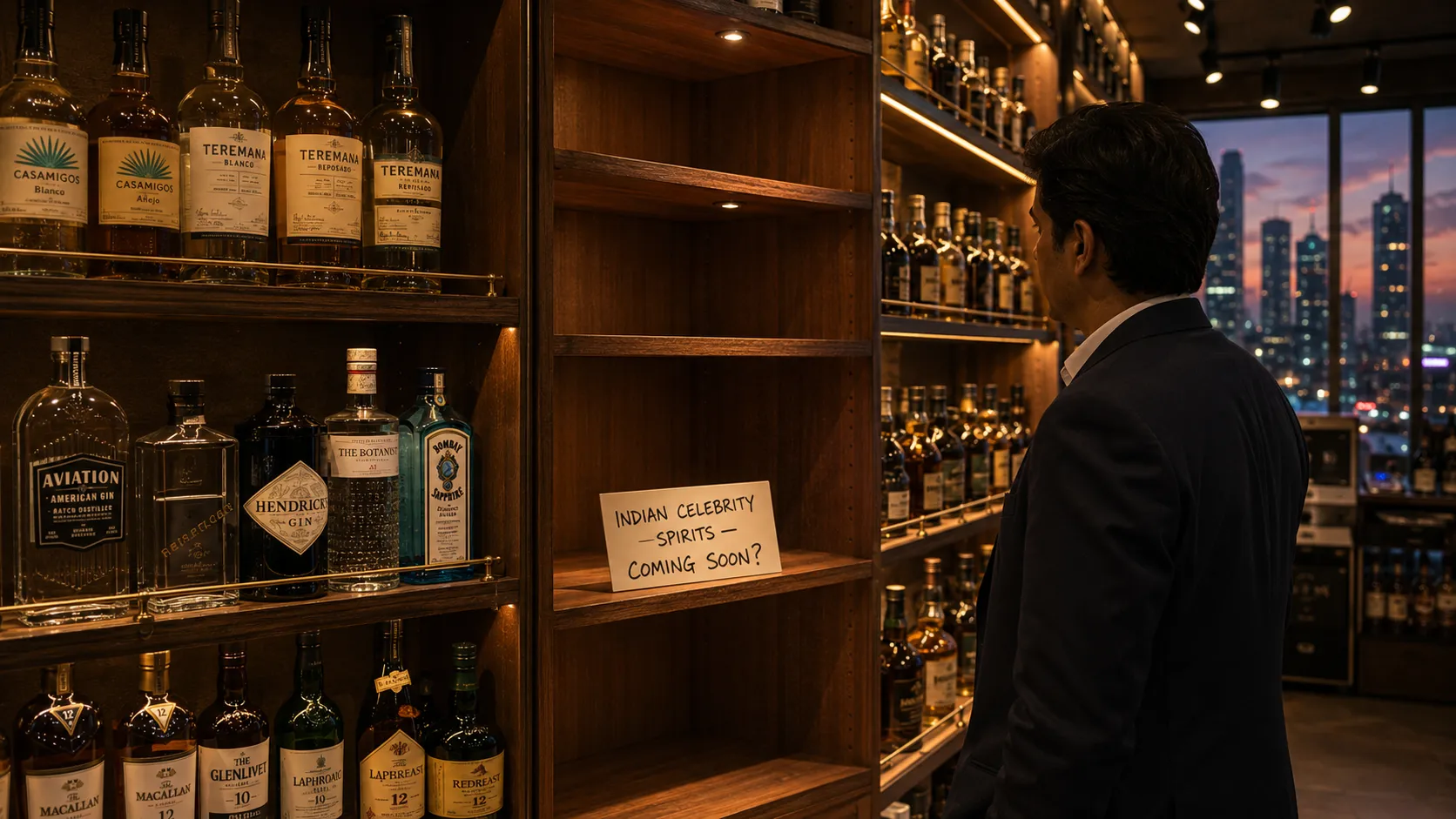
The Indian celebrity spirits shelf is empty, but it will not remain empty forever. The structural forces that have kept it empty—the regulatory fortress, the endorsement trap, the distribution wall—are beginning to weaken, and the celebrities who are positioning themselves to exploit that weakness are the ones who will build the first generation of Indian celebrity‑backed spirits brands.
The most significant development on the horizon is the gradual liberalisation of the Indian spirits market. The central government has been under pressure from international trade partners to reduce the 150 percent import duty on spirits—a reduction that would make it economically viable to import premium products, bottle them under celebrity brands, and sell them at prices that the Indian consumer can afford. The liberalisation is not imminent, but it is being discussed, and the celebrities who are preparing for it—building relationships with Mexican distillers, scouting distribution partners, developing brand concepts—will have a first‑mover advantage when the regulatory environment shifts. The liquor shelf of 2036 will not be empty. It will be crowded with celebrity‑backed brands—tequilas, whiskies, gins, rums—that were launched in the narrow window between the liberalisation of the import regime and the saturation of the market. The stars who launch their brands in that window will own a category that the previous generation could only endorse.
The second major development is the emergence of the Indian craft spirits movement—the small, independent distilleries that are producing premium gins, rums, and whiskies for a growing audience of discerning consumers. The craft spirits movement has created a supply of high‑quality, domestically produced spirits that can serve as the foundation for celebrity‑backed brands—a supply that did not exist a decade ago. The celebrity who wants to launch a gin brand today can partner with a craft distillery in Goa or Bengaluru, rather than attempting to import from London or Amsterdam. The celebrity who wants to launch a whisky brand can partner with an independent distiller in Himachal Pradesh or Rajasthan. The craft spirits movement is the domestic supply chain that the Indian celebrity spirits market has always lacked, and its emergence is the single most important enabler of the next generation of celebrity‑backed brands.
The third major development is the generational shift in celebrity entrepreneurship. The younger generation of Bollywood stars—the Ranveer Singhs, the Ranbir Kapoors, the Allu Arjuns—have grown up in an era when the Casamigos model is visible and aspirational, and they have the entrepreneurial instinct that their predecessors lacked. The older generation—the SRKs, the Salmans, the Aamirs—built their wealth through film fees and endorsements. The younger generation is building through equity: stakes in startups, investments in IP, and, increasingly, their own consumer brands. The generational shift is structural, and it will accelerate as the younger stars accumulate the capital, the confidence, and the regulatory knowledge required to build spirits brands that compete with the incumbents. The shelf is empty today. It will not be empty in a decade. The stars who fill it will be the ones who have learned from the Bollywood actor who sat across from the spirits executive in January 2026, and who understood, earlier than their peers, that the fortress is not impenetrable. It is simply waiting for someone with the patience, the capital, and the entrepreneurial conviction to find the door.


