The Billion-Dollar Hangover: Why George Clooney and Dwayne Johnson Built ₹10,000 Crore Liquor Empires—And Why No Bollywood Star Has Come Close
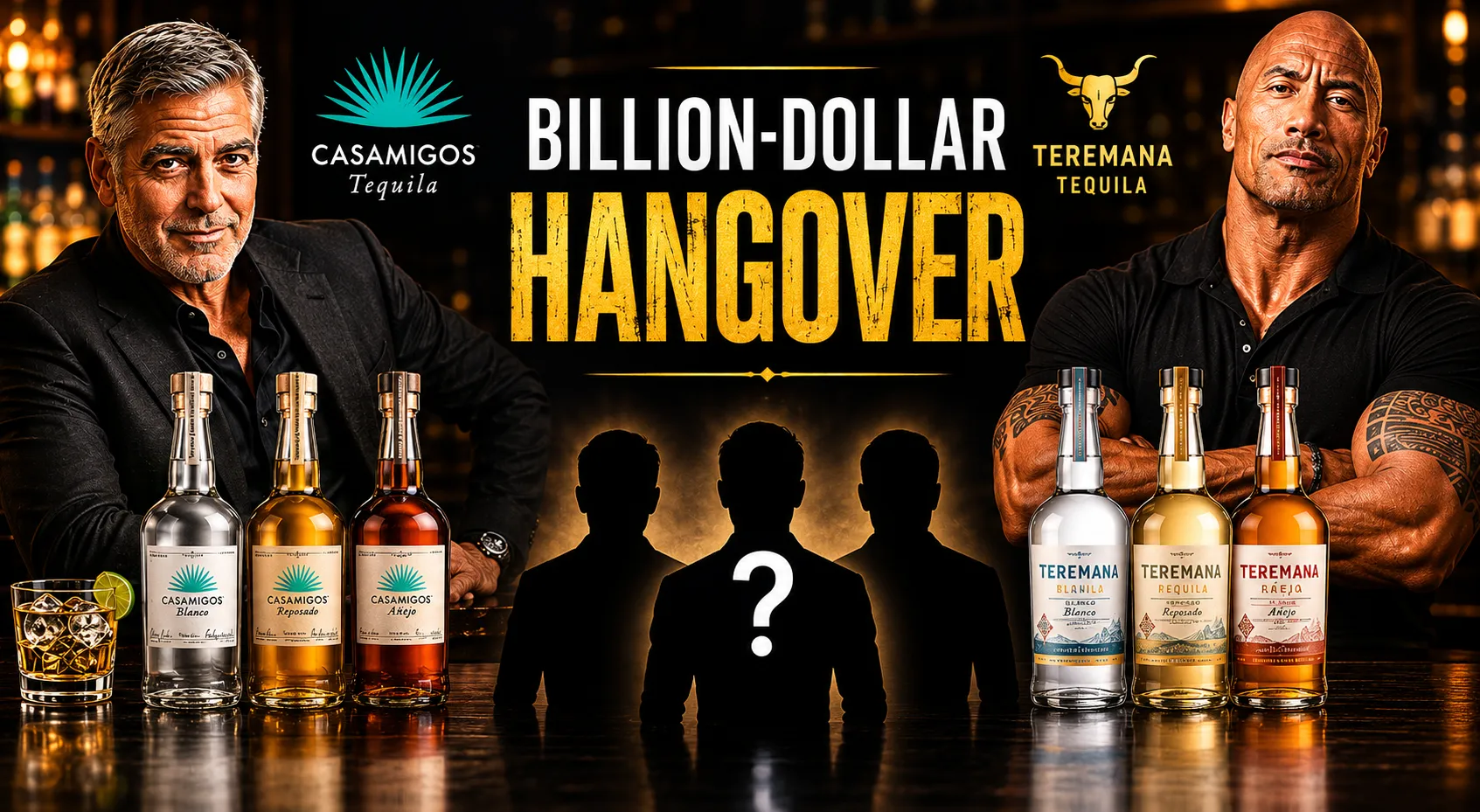
MUMBAI — May 29, 2026 — In June 2017, George Clooney sold the tequila company he had co-founded four years earlier to the British spirits conglomerate Diageo for $1 billion. The deal—$700 million upfront, another $300 million in earn-outs—was not the largest celebrity exit in history, but it was the most consequential. It demonstrated, to an entire generation of famous people, that a celebrity's name on a bottle could be worth more than their name on a poster. It launched a gold rush that has since produced Dwayne Johnson's Teremana (valued at over $3 billion), Ryan Reynolds' Aviation Gin (sold for $610 million), and a wave of celebrity-backed spirits that has reshaped the global liquor industry. And it raised a question that, nine years later, the Indian film industry has still not answered: if George Clooney can build a billion-dollar tequila brand, why can't Shah Rukh Khan?
The question is not rhetorical. It is the central puzzle of the Indian celebrity economy—an economy in which the most famous people in the country endorse everything from soft drinks to real estate but have almost entirely failed to build consumer-product businesses of their own. The Indian liquor market is one of the largest in the world, valued at approximately $55 billion and growing at a compound annual rate of nearly 7 percent. The premium segment—the single malts, the craft gins, the small-batch rums—is expanding faster than the market as a whole, driven by the same demographic forces that have fuelled the premiumisation of every other consumer category in India. And yet, the celebrity-backed spirits brand—the tequila founded by the movie star, the whisky co-owned by the cricketer, the gin launched by the singer—is a category that does not exist in India. It is a vacuum. And the vacuum is the story.
The Casamigos Blueprint
To understand why the Indian celebrity liquor shelf is empty, one must first understand how the Hollywood shelf got so full. The Casamigos story is the blueprint, and its details are worth revisiting because they reveal a model of celebrity entrepreneurship that is fundamentally different from the Indian approach.
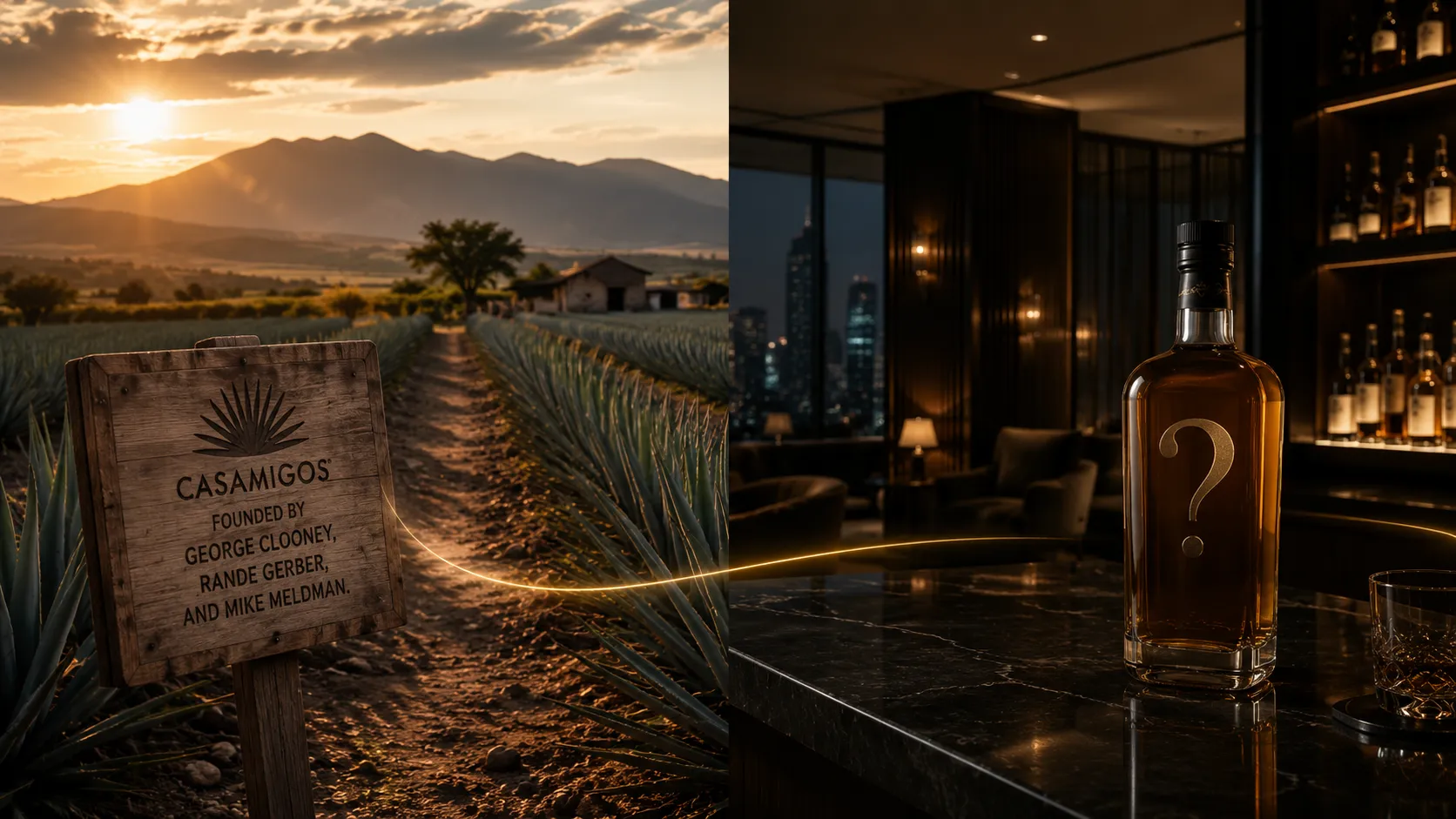
In 2013, George Clooney, the restaurateur Rande Gerber, and the real‑estate developer Mike Meldman were drinking tequila at Clooney's house in Cabo San Lucas when they decided, the way wealthy friends often decide such things, to make their own. They spent two years and $600,000 of their own money developing the product—working with a master distiller in Jalisco, tasting hundreds of samples, refining the flavour profile until they had something they genuinely believed was better than what was available on the market. They did not license their names to an existing brand. They did not sign an endorsement contract. They built a company, invested their own capital, and retained ownership of the product they created.
When Diageo acquired Casamigos in 2017, the valuation—$1 billion for a brand that had sold approximately 120,000 cases in its most recent year—was a multiple of revenue that would have been considered absurd for any non‑celebrity spirits brand. The multiple was a function of the Clooney premium: the belief, validated by the market, that a brand associated with one of the most famous and trusted people on Earth could command a price that no amount of conventional marketing could justify. But the premium was not purchased cheaply. Clooney, Gerber, and Meldman had spent four years building the brand, developing the product, and establishing the distribution relationships that made it a credible acquisition target. They had treated Casamigos not as an endorsement deal, but as a business. The distinction—endorsement versus entrepreneurship—is the thread that connects every successful Hollywood celebrity spirits exit, from Ryan Reynolds' Aviation Gin to Dwayne Johnson's Teremana. And it is the thread that is largely absent from the Indian celebrity economy.
Teremana, Dwayne Johnson's tequila brand, is the most valuable celebrity‑backed spirits brand in the world, with an estimated valuation exceeding $3 billion. Johnson launched the brand in 2020 with a similar blueprint to Casamigos: he invested his own capital, developed the product himself, and built the brand around his personal ethos—"the tequila of the people"—rather than simply licensing his name. The brand sold approximately 1.2 million cases in 2024, a figure that makes it one of the fastest‑growing spirits brands in history. Johnson's social‑media reach—over 400 million followers across platforms—gave Teremana a marketing engine that no traditional spirits company could replicate. But the reach was not the product. The product was the product. And the product was good enough that customers who had never heard of Dwayne Johnson bought it anyway. The brand's repeat purchase rate, which is the single most important metric in the spirits industry, is among the highest in the category. The celebrity was the marketing. The quality was the business. The combination produced a valuation that no Indian celebrity has ever approached.
Aviation Gin, which Ryan Reynolds co‑founded in 2018 and sold to Diageo in 2020 for $610 million, followed the same playbook with a twist. Reynolds did not merely invest in the brand and promote it to his followers. He embedded himself in its creative direction, writing the advertisements, filming the commercials, and using his comedic persona—the same persona that had made Deadpool a global phenomenon—to give Aviation a brand identity that no conventional spirits company could replicate. When Diageo acquired Aviation, it was acquiring not just a gin brand, but a creative platform that Reynolds had built and that he continued to operate after the acquisition. The model was not endorsement. It was co‑creation—the celebrity as entrepreneur, creative director, and brand architect, rather than the celebrity as paid spokesperson.
The three exits—Casamigos ($1 billion), Aviation Gin ($610 million), and the implied valuation of Teremana (over $3 billion)—have together created over $4.6 billion in celebrity wealth from spirits brands alone. The figure does not include the dozens of smaller celebrity‑backed spirits that have launched in their wake: Kendall Jenner's 818 Tequila, Mark Wahlberg's Flecha Azul, Matthew McConaughey's Wild Turkey Longbranch. The celebrity spirits market is now so crowded that it has become a cliché. But the cliché obscures a structural truth: the celebrities who have succeeded in spirits are the ones who have treated the business as a business—who have invested their own capital, developed their own products, and built their own brands. The celebrities who have failed—and there are many—are the ones who have treated it as an endorsement deal. The difference is not about fame. It is about ownership. And ownership, in the Indian celebrity economy, is the variable that is almost entirely missing.
The Indian Shelf That Stays Empty
The Indian liquor market is, by any measure, one of the most attractive in the world. It is the third‑largest spirits market globally by volume, the largest whisky market by a substantial margin, and one of the fastest‑growing markets for premium and super‑premium spirits. The Indian consumer is trading up—from country liquor to Indian‑Made Foreign Liquor, from IMFL to imported brands, from mass‑market whisky to single malts and craft gins—with a velocity that has attracted the attention of every major global spirits conglomerate. Diageo, Pernod Ricard, and Beam Suntory have all invested heavily in the Indian market, building local production facilities, acquiring Indian brands, and positioning themselves for the long‑term secular growth that the market's demographics promise.
And yet, the celebrity‑backed spirits brand—the tequila founded by the movie star, the whisky co‑owned by the cricketer, the gin launched by the singer—remains a category that does not exist. There is no Indian equivalent of Casamigos. No Indian equivalent of Teremana. No Indian equivalent of Aviation Gin. The shelf is empty. The question is why.
The first reason is regulatory. The Indian liquor industry is among the most heavily regulated in the world, with a patchwork of state‑level excise regimes, advertising bans, distribution restrictions, and labelling requirements that make it extraordinarily difficult to launch a new brand at scale. The celebrity who wants to launch a spirits brand in India must navigate a regulatory environment that is designed, in many states, to protect the existing distribution networks and to discourage new entrants. The barriers are not insurmountable—the global spirits conglomerates have navigated them for decades—but they are substantial, and they have discouraged the kind of entrepreneurial entry that has fuelled the Hollywood spirits boom.
The second reason is cultural. The Indian celebrity economy is built on endorsement, not entrepreneurship. The star who can earn ₹5 crore for a day's work filming a soft‑drink commercial has little incentive to invest that same amount of money and several years of their time in building a spirits brand that may or may not succeed. The endorsement model is lower‑risk and higher‑return in the short term, and the short term is what the Indian celebrity economy rewards. The star who signs ten endorsement deals in a year has diversified their income across multiple brands and multiple industries, and they have done so without ever putting their own capital at risk. The star who builds a spirits company has concentrated their risk in a single venture that will take years to mature. The incentives, in the Indian context, favour the former. The results reflect the incentives.
The third reason is structural. The Indian spirits industry is dominated by a small number of large players—United Spirits (Diageo), Pernod Ricard India, Allied Blenders, Radico Khaitan—who control the vast majority of the production capacity, the distribution networks, and the retail relationships. The celebrity who wants to launch a spirits brand in India must either partner with one of these incumbents or build an entirely new supply chain from scratch. The partnership route is the only viable option for most celebrities, and it fundamentally changes the economics of the venture. The celebrity who partners with an existing spirits company is, in effect, licensing their name to that company—an endorsement deal by another name. The celebrity who builds their own supply chain is attempting something that almost no one in India has done successfully, and the barriers to entry—the capital requirements, the regulatory complexity, the distribution challenges—are formidable enough to discourage all but the most determined entrepreneurs.
The combined effect of these three forces—regulatory, cultural, and structural—is a celebrity economy in which the spirits shelf is empty not because the opportunity is absent, but because the infrastructure required to seize it does not yet exist. The Bollywood star who wants to build a billion‑dollar tequila brand cannot do so in India, because tequila cannot be made in India. The star who wants to build a whisky brand must either acquire an existing distillery—a capital‑intensive proposition that few celebrities are willing to finance—or partner with an existing producer, which transforms the venture from an entrepreneurial enterprise into an endorsement deal by another name. The star who wants to build a gin brand faces a market that is growing but still tiny by comparison with the whisky and rum categories that dominate Indian spirits consumption. The structural constraints are real, and they have produced the outcome that the Indian celebrity spirits shelf reflects: a handful of endorsement deals, a few vanity projects, and a vacuum where the entrepreneurial ventures should be.
SRK, Salman, and the Endorsement Trap
The most instructive examples of the Indian celebrity liquor dilemma are not the successes—there are none at scale—but the near‑misses. Shah Rukh Khan, the most commercially powerful star in the history of Hindi cinema, has endorsed dozens of products over his career but has never launched a consumer brand of his own. His production company, Red Chillies Entertainment, is a successful film studio with a valuable VFX division, but it is a service business—it produces films and visual effects for clients—rather than an intellectual‑property company. SRK's brand is among the most valuable in India, but the brand has been monetised almost entirely through endorsement contracts and film fees. The star who could, in theory, launch a spirits brand that would command the same premium that George Clooney's name commands on a tequila bottle has chosen, for reasons that are entirely rational in the Indian context, to monetise his fame through the endorsement model instead.
Salman Khan's trajectory is similarly illustrative. The star's business ventures—his production house, his charitable foundation, his real‑estate investments—are substantial, but none of them are consumer‑product businesses of the kind that have made Hollywood celebrities billionaires. Salman's Being Human clothing line, which is operated as a charitable venture, is the closest he has come to building a consumer brand, but it is a brand built on philanthropy rather than on product quality, and its commercial returns are modest by comparison with the endorsement contracts that constitute the bulk of his non‑film income. The pattern is consistent: the Indian star monetises their fame through endorsements, not through entrepreneurship. The model is rational in the short term. The results are visible in the long term: a shelf that remains empty, and a category that remains unclaimed.
The contrast with the cricketers is instructive. Virat Kohli, the most famous cricketer in the world, has built a portfolio of consumer brands—One8 (athleisure), WROGN (fashion), and a growing number of investments in health, fitness, and nutrition startups—that is closer to the Hollywood celebrity entrepreneurship model than anything the film stars have attempted. Kohli's brands are not merely endorsement contracts. He is an equity holder, a creative partner, and an active participant in the businesses he backs. The model is not identical to the Casamigos blueprint—Kohli's brands span multiple categories rather than a single, concentrated bet on spirits—but it shares the same underlying philosophy: the celebrity as entrepreneur, not merely as spokesperson. The cricketers, who have shorter careers and a more urgent need to build businesses that will outlast their playing days, have been more entrepreneurial than the film stars, whose careers are longer and whose endorsement income is more reliable. The difference is structural, and it explains why the spirits shelf remains empty: the people with the most valuable brands in India have the least incentive to risk them on a new venture. The people who could fill the shelf are the people who have the least reason to try.
The Category That Will Not Stay Empty Forever
The Indian celebrity spirits shelf is empty, but it will not remain so indefinitely. The structural forces that have kept it empty—the regulatory barriers, the cultural preference for endorsement over entrepreneurship, the dominance of the large spirits conglomerates—are beginning to weaken. The Indian consumer is trading up, the premium spirits segment is growing, and the global success of the celebrity‑backed spirits model is becoming impossible to ignore. The star who launches a genuinely high‑quality, genuinely entrepreneur‑led spirits brand in India will have a first‑mover advantage that the Hollywood celebrities never enjoyed: an empty shelf, a massive market, and a consumer base that is increasingly willing to pay for premium products that carry a trusted name.
The most likely entrants are not the established stars—the SRKs, the Salmans, the Aamirs—but the next generation. The Ranveer Singhs, the Ranbir Kapoors, the Allu Arjuns—stars who have grown up in an era when the Casamigos model is visible and aspirational, and who have the entrepreneurial instinct that their predecessors lacked. Ranveer Singh's brand portfolio—which already includes endorsements for Ajmal Perfumes, Jindal Stainless, and a growing number of consumer products—is the closest thing in Bollywood to a Hollywood‑style celebrity‑entrepreneurship strategy. Ranbir Kapoor's investment in DNEG India, the visual‑effects studio, suggests a willingness to put capital at risk in a venture that extends beyond a traditional endorsement. The next generation of stars is more entrepreneurial, more global in its outlook, and more aware of the opportunities that the celebrity‑backed consumer‑product model creates. The shelf will not be empty forever. The question is who will fill it first, and whether the brand they build will follow the Casamigos blueprint—genuine entrepreneurial commitment, genuine product quality, genuine brand‑building—or whether it will be another endorsement deal disguised as a venture. The answer will determine whether the Indian celebrity spirits shelf becomes a billion‑dollar category or remains a vacuum. The market is waiting. The stars are watching. The shelf is empty. For now.


