The Bharat Borrowers: How 88% Credit Demand from Non‑Metros Is Reshaping India's Fintech Future
The Hook: The ₹12,500 Loan That Changed Everything
Meet Ramesh, a small‑town mobile repair shop owner in a Tier‑3 city. He has never owned a credit card. He has no ITR filings. His only digital footprint is three years of UPI transactions — payments for spare parts, receipts from customers, mobile recharges and utility bills.
In 2026, that UPI history was enough.
A fintech lender used Ramesh's transaction data to approve a ₹12,500 loan in under eight minutes. The money was deposited directly into his account. He used it to buy inventory before the festive season. He repaid in three months. His credit score, previously non‑existent, is now on the bureau.
Ramesh is not an exception. He is the prototype of India's new credit economy — where 88% of credit demand now originates outside metro cities, where the average digital loan ticket size is ₹12,500, and where 70% of borrowers come from Tier‑2 and Tier‑3 cities.
The Number That Explains Everything: 88% and ₹12,000 Crore
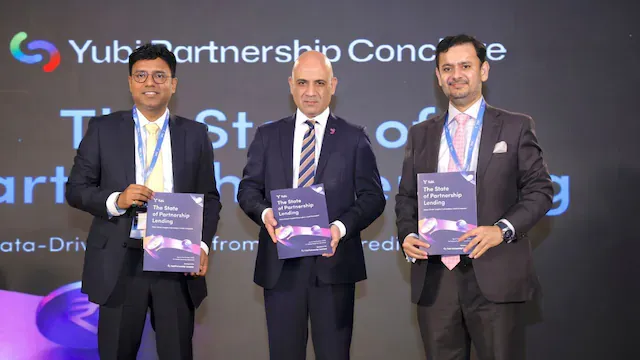
According to Yubi Group's Partnership Lending Report 2026, the shift is decisive: 88% of credit demand during April–December 2025 was driven from beyond metropolitan centres. The platform facilitated the disbursal of more than 10 lakh loans amounting to over ₹12,000 crore, supported by over 2 crore end‑to‑end transactions.
The Yubi report also reveals that credit lines, consumer loans and SME lending together account for nearly 73% of total disbursed value, indicating strong demand for everyday consumption credit and working capital liquidity. The average ticket size of approximately ₹1.2 lakh points to sustained activity in retail and MSME segments rather than concentrated, high‑value exposures.
Credit on UPI: The Rail That Reaches Where Cards Never Could
What changed? The answer is Credit on UPI.
The card‑based credit system served roughly the top decile of credit‑eligible India — salaried professionals in metros with established credit histories. Credit on UPI sits on a rail that has already gone four layers deeper, into Tier‑3 towns, gig workers, small merchants and first‑jobbers who never qualified for a card.
The RBI's regulatory framework for Credit on UPI, finalised in 2025 and fully operational in 2026, allows banks and NBFCs to extend pre‑sanctioned credit lines through UPI applications. The customer does not need a new app, a new card or a new interface. They just use UPI as they always have — but now they have the option to pay later.
For lenders, the data is transformative. Traditional credit underwriting relies on bureau scores, income proof and collateral — all of which are scarce in Bharat. Alternative data — UPI transaction patterns, mobile top‑ups, utility payments — can now be used to approve micro‑loans in minutes. Fintechs like Mysa are already leveraging this approach, targeting a $100 billion digital lending surge where alternative underwriting crushes collateral dependency.
The Fintech Playbook: Mysa, MobiKwik and the NBFC Pivot
Mysa: The $3.4 Million Alternative Credit Engine
In January 2026, Bengaluru‑based Mysa raised $3.4 million in pre‑Series A funding led by Blume Ventures and Piper Serica. The platform uses alternative data — UPI patterns, mobile top‑ups and utility payments — to approve micro‑loans for gig workers, small traders and rural entrepreneurs bypassed by traditional banks.
Mysa's playbook is simple but powerful: reach the unbanked through their digital footprints, not their paper trails. The platform is already processing $183 million in annualised transaction volume and targeting the $500 billion credit gap in India's MSME sector.
MobiKwik: The NBFC Lending for Bharat
In April 2026, digital payments major MobiKwik received RBI approval for an NBFC licence, setting up a dedicated lending arm. The NBFC will primarily target customers in Tier‑2 and Tier‑3 cities, continuing the company's shift from wallet services to full‑stack financial services including UPI payments, credit products (ZIP EMI) and investment solutions.
MobiKwik's move reflects a broader trend: established fintechs are pivoting aggressively toward Bharat lending, recognising that the next 100 million credit users will not come from Mumbai or Delhi.
The Infrastructure: From 40% Online to 79% Disbursements
The shift toward Bharat lending is not a one‑off. Multiple data points confirm the structural change.
79% of fintech‑led loan disbursements now come from Tier‑2 and Tier‑3 cities.
58% of digital loan users are first‑time borrowers — people who have never taken a formal loan before.
Digital lending platforms now cover more than 4,000 pin codes, reaching deep into Tier‑2 and Tier‑3 cities where traditional banks have no presence.
Average turnaround time from application to disbursement has reduced by nearly 90%, enabling real‑time credit decisions.
The combination of UPI infrastructure, alternative data underwriting and smartphone penetration has created a flywheel effect: more usage generates more data, which generates better underwriting, which enables more lending, which drives more usage.
The Global Indian Takeaway
For the diaspora, the Bharat lending boom offers three opportunities.
First, invest in lending tech. Mysa's pre‑Series A, Yubi's platform scale and the upcoming rounds of other fintech lenders are accessible to accredited investors via syndicates. The segment is still early, and valuations are reasonable.
Second, partner as a lender or risk capital provider. Indian fintech lenders need wholesale funding partners and credit enhancement vehicles. Diaspora‑managed funds can provide this capital — earning fixed income returns while supporting financial inclusion.
Third, advise on underwriting models. Alternative data underwriting is still maturing. Diaspora professionals with experience at US fintech lenders (Kabbage, Affirm, Upstart) or credit bureaus can provide valuable advisory services — earning equity or consulting fees.
The Final Word
The ₹12,500 loan to a mobile repair shop owner in a Tier‑3 city is not philanthropy. It is the foundation of a new credit economy.
With 88% of credit demand now outside metros, with 58% of digital borrowers first‑time users, and with Credit on UPI reaching layers of society that cards never could, the message is clear: Bharat is not just adopting digital payments. Bharat is borrowing.
The fintech startups that succeed will be those that understand that credit in Bharat is not about platinum cards and airport lounges. It is about a shopkeeper buying inventory before Diwali, a gig worker covering a medical emergency, a farmer paying for seeds before the monsoon.
That is not a niche. That is the future of Indian finance.


