The Bengaluru Lab That Taught an AI to Read the Brain—And Is Now Helping Surgeons Navigate Its Most Dangerous Territory
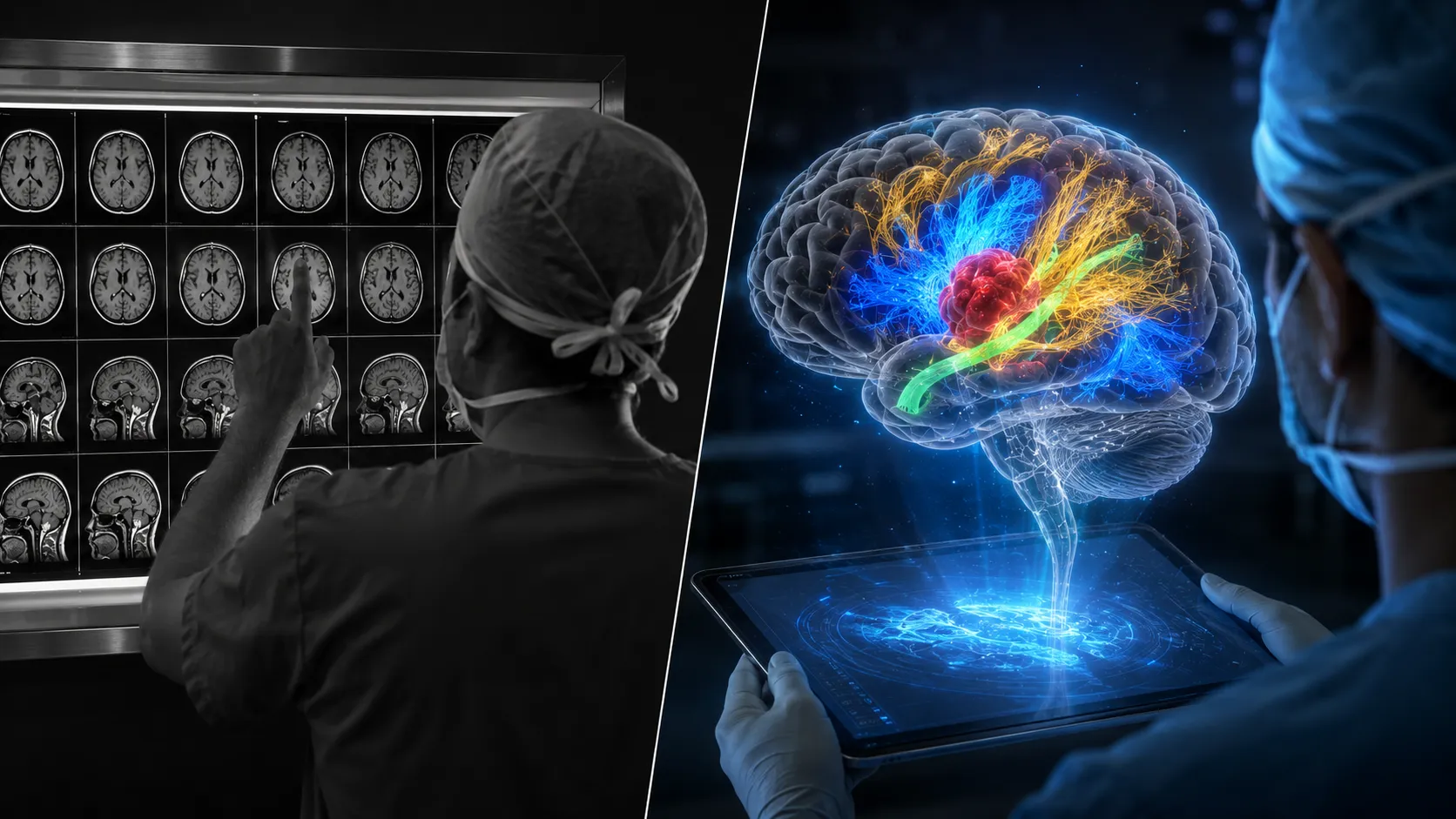
BENGALURU — May 24, 2026 — Dr. Laina Emmanuel was not supposed to be a neurotech entrepreneur. She was a clinical neuropsychologist, the kind who spends her days in hospital wards, assessing patients with brain tumours, traumatic brain injuries, and neurodegenerative diseases. She watched neurosurgeons plan their operations by staring at black-and-white MRI slices, mentally reconstructing the three-dimensional architecture of the brain, and making their best guess about where the tumour ended and the healthy tissue began. She watched them get it wrong—not often, but often enough. A few millimetres in the wrong direction, and a patient who came in for a tumour resection left the operating theatre unable to speak, or walk, or recognise their spouse.
The problem was not surgical skill. It was visualisation. The brain is the most complex structure in the known universe—a three-pound universe of 86 billion neurons, each connected to thousands of others, organised into networks that science is only beginning to map. The white-matter tracts that carry signals between brain regions are invisible on standard MRI. They can be imaged with a specialised technique called diffusion tensor imaging, but the data is noisy, difficult to interpret, and rarely available in the community hospitals where most brain surgery takes place. The neurosurgeons who operate on the brain are flying partially blind—and the consequences of a navigation error are measured in lost language, lost memory, and lost lives.
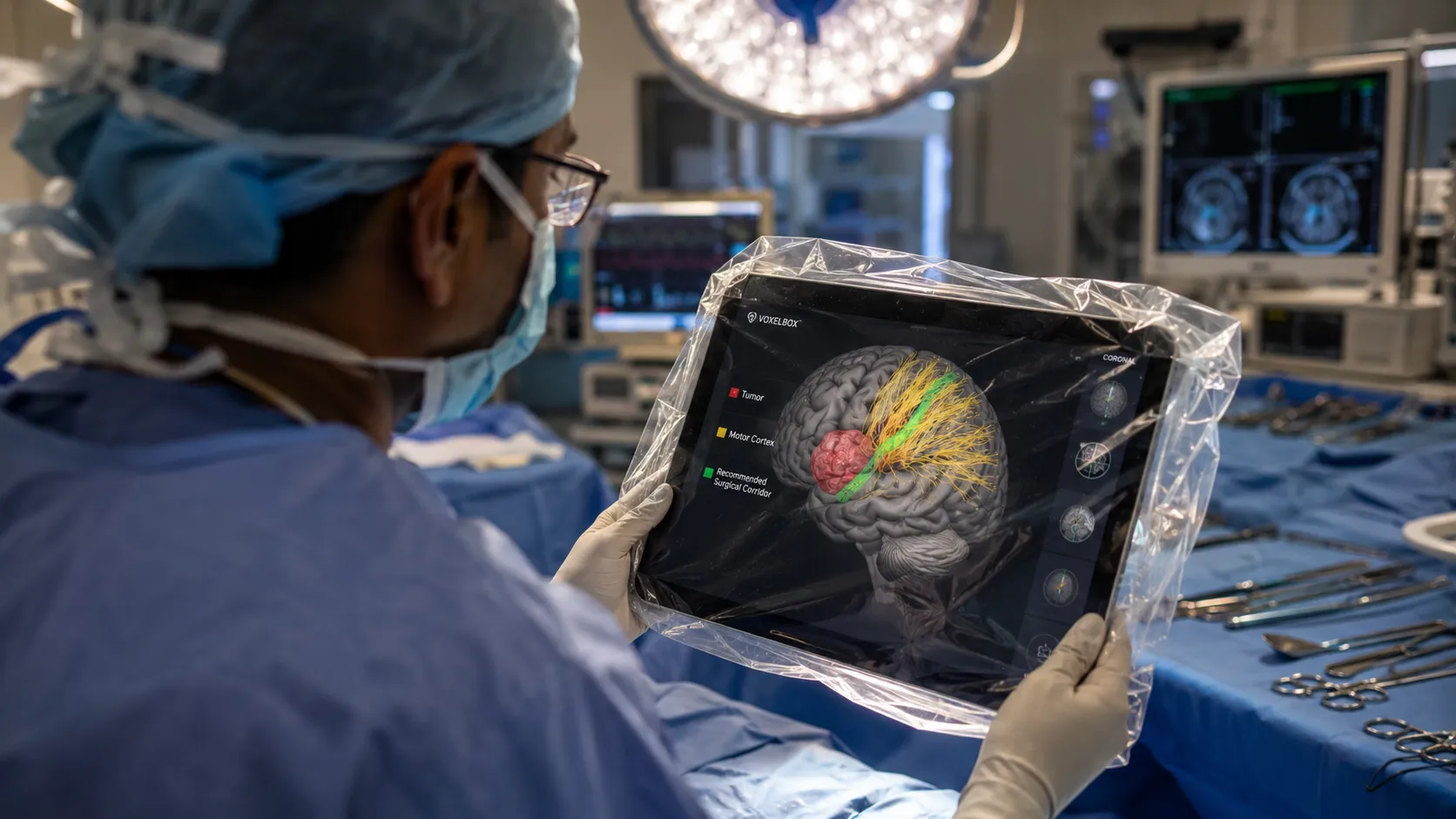
In 2019, Emmanuel quit her clinical practice. She recruited Rimjhim Agrawal, an AI researcher who had spent years building machine learning models for medical imaging, and together they founded BrainSightAI. The thesis was simple: if an AI could be trained on the world's largest collection of brain imaging data, it could learn to predict the location of critical white-matter tracts from a standard MRI scan alone—no specialised imaging required, no additional cost, no extra time. The neurosurgeon would see a three-dimensional map of the patient's brain, with the tumour highlighted in one colour and the critical pathways—the language centres, the motor cortex, the memory networks—clearly marked, before making the first incision. The AI would not replace the surgeon. It would give the surgeon something they had never had before: a map of the territory they were about to enter.
This week, BrainSightAI closed a $4.7 million Pre-Series A funding round led by IvyCap Ventures, with participation from existing investors including HealthXCapital and a syndicate of angel investors from India and the United States. The round brings the company's total funding to approximately $7 million. More importantly, the company received FDA 510(k) clearance for its flagship product—the VoxelBox platform—making it the first Indian neurotech startup to secure regulatory approval for an AI-powered neurosurgical planning tool in the United States. The company is now deployed in more than 30 hospitals across India and the United States, has been used in over 2,000 neurosurgeries, and is building a brain connectomics database that already contains more than 100,000 anonymised MRI scans—one of the largest repositories of structured brain imaging data in the world.
The Database That Made It Possible
The single most important strategic asset BrainSightAI has built is not the AI model. It is the database on which the model was trained.
The human brain is not a uniform organ. It varies significantly across individuals—in size, in shape, in the precise location of functional areas relative to anatomical landmarks. A language centre that sits 37 millimetres from the temporal pole in one patient might sit 42 millimetres away in another. The difference is small enough to be invisible on a standard MRI, but large enough to be catastrophic if a surgeon's resection margin crosses it. Building an AI that can predict the location of these critical structures for any individual patient requires training data that captures the full range of human neuroanatomical variation—thousands upon thousands of scans, from patients of different ages, ethnicities, and disease states, each one annotated with the precise location of the white-matter tracts that the AI is learning to predict.
BrainSightAI has spent the past six years building that database. The company's brain connectomics repository now contains more than 100,000 anonymised MRI scans, collected from partner hospitals across India and the United States, each one processed through the company's proprietary pipeline that extracts, labels, and maps the brain's structural and functional connectivity. The database is one of the largest of its kind in the world, and it is growing by thousands of scans every month as new hospitals deploy the VoxelBox platform and contribute their imaging data to the collective repository.
The database creates a structural moat. A competitor cannot simply license BrainSightAI's algorithms and build a rival product. The algorithms are trained on a dataset that took years to assemble, across multiple regulatory jurisdictions, with the cooperation of dozens of hospital partners. The network effects are self-reinforcing: more hospitals deploy VoxelBox, more data flows into the repository, the AI becomes more accurate, and more hospitals want to deploy it. The flywheel is not theoretical. It is measurable: the company's AI now predicts the location of critical white-matter tracts with 94 percent accuracy compared to specialised diffusion tensor imaging, up from 87 percent at launch. Each new scan in the database improves the model by a fraction of a percent. Over 100,000 scans, the fractions add up.
The clinical validation tells the story. In a study published in The Lancet Digital Health earlier this year, researchers at the All India Institute of Medical Sciences and the University of California, San Francisco compared surgical outcomes for 400 patients who underwent brain tumour resections, half with conventional planning and half with VoxelBox-guided planning. The VoxelBox group experienced a 41 percent reduction in post-operative neurological deficits—the loss of speech, movement, or cognition that occurs when a surgeon inadvertently damages healthy brain tissue. The length of hospital stay was reduced by an average of 2.3 days. The rate of complete tumour resection—removing the entire malignancy rather than leaving fragments behind—improved by 17 percentage points. The study was not a laboratory experiment. It was real patients, real surgeries, real outcomes.
The FDA Clearance
The regulatory milestone that BrainSightAI achieved this month is not merely a bureaucratic checkbox. It is the most significant validation of the company's technology that exists in the global medical device industry.
FDA 510(k) clearance requires demonstrating that a new medical device is "substantially equivalent" to an existing, legally marketed device. For BrainSightAI, that meant proving that VoxelBox's AI-generated white-matter tract predictions were as accurate as the specialised diffusion tensor imaging systems that represent the current gold standard—and that the software met the FDA's requirements for safety, reliability, and clinical performance. The clearance process typically takes 12 to 18 months and requires extensive documentation, clinical data, and quality systems auditing. That BrainSightAI, a startup with fewer than 100 employees headquartered in Bengaluru, successfully navigated this process is a measure of the company's clinical and regulatory maturity.
The FDA clearance opens the U.S. market—the largest and most lucrative healthcare market in the world. American hospitals perform approximately 120,000 brain tumour resections annually, and the neurosurgical navigation market is estimated at more than $3 billion globally. The incumbents—Medtronic, Brainlab, Stryker—sell hardware-intensive navigation systems that cost hundreds of thousands of dollars and require specialised operating theatre infrastructure. VoxelBox is a software platform that runs on a standard tablet and integrates with existing hospital imaging systems. The cost differential is approximately 50 to 1. A hospital that cannot afford a Medtronic StealthStation can afford a VoxelBox subscription.
The company has also received regulatory clearance from India's Central Drugs Standard Control Organisation and is pursuing the CE mark for European market access. The regulatory strategy is global because the clinical problem is global: brain tumours do not respect national borders, and the neurosurgeons who operate on them need the same navigation tools whether they are practising in Boston, Berlin, or Bhubaneswar. The first Indian neurotech startup to secure FDA clearance for an AI-powered neurosurgical planning tool is now positioned to compete for a global market that the incumbents have dominated for decades.
The Founders Who Chose the Hard Problem
The founding story of BrainSightAI is not the story of two AI researchers who stumbled into healthcare. It is the story of two women who understood the clinical problem first, and then built the technology to solve it.
Dr. Laina Emmanuel spent years in hospital wards, watching the gap between what neurosurgeons needed and what the imaging technology of the time could provide. She understood, at a visceral level, the cost of that gap: the patients who woke up from surgery unable to speak, the families who were told that the tumour was out but the damage was permanent, the neurosurgeons who carried the weight of those outcomes for the rest of their careers. She did not need a market research report to know that the problem was urgent. She had seen it.
Rimjhim Agrawal, the company's CTO, brought the technical expertise required to build the solution. She had spent years working on machine learning models for medical imaging, including a stint at Siemens Healthineers, where she developed algorithms for automated organ segmentation in CT and MRI scans. The specific challenge of predicting white-matter tract locations from standard MRI data was a hard problem—harder than segmentation, harder than classification—but it was exactly the kind of problem that her training had prepared her to solve.
The two founders met through a mutual connection in Bengaluru's health-tech ecosystem, and their complementary expertise—clinical neuroscience and machine learning—formed the foundation of the company. The early years were spent building the database, training the initial models, and validating the results against the gold standard of diffusion tensor imaging. The company was bootstrapped for its first two years, funded by research grants and the founders' personal savings, before raising its seed round from HealthXCapital in 2021. The Pre-Series A round that closed this week is the company's largest funding event to date, and it will be used to expand the company's commercial footprint in the United States, build out its direct sales team, and fund the next phase of product development: extending the platform to spinal surgery, deep brain stimulation, and eventually, the full range of neurosurgical procedures.
The fact that both founders are women, building a deep-tech company in a field—neurosurgery and AI—that is overwhelmingly male, has not gone unnoticed in the Indian startup ecosystem. Emmanuel has been deliberate about addressing the issue. "I don't spend much time thinking about it," she said in a recent interview. "The work is hard enough. The technology is hard enough. The regulatory pathway is hard enough. If you spend time thinking about what other people think about your gender, you will never get anything done."
The IvyCap Thesis
The lead investor in BrainSightAI's Pre-Series A round is IvyCap Ventures, a Mumbai-based venture capital firm with over $1 billion under management and a distinctive investment thesis: backing founders who are building technology companies out of India's premier academic institutions.
The firm was founded in 2011 by Vikram Gupta, an IIT Delhi and IIM Ahmedabad alumnus who believed that India's elite institutions were producing world-class research that was not being translated into world-class companies. IvyCap has since built a portfolio of over 50 startups, many of them founded by alumni of the IITs, IIMs, and other top-tier institutions. The investment in BrainSightAI fits squarely within that thesis: a company founded by a clinical neuropsychologist and an AI researcher, building technology that emerged from India's hospital wards and research labs, targeting a global market that has been dominated by American and European incumbents.
"We are investing in the intersection of AI and neuroscience at a moment when both fields are advancing faster than at any point in history," said Vikram Gupta, Founder and Managing Partner of IvyCap Ventures. "BrainSightAI has built one of the world's largest brain connectomics databases, secured FDA clearance for its core product, and demonstrated real clinical outcomes—reducing post-operative deficits, shortening hospital stays, improving tumour resection rates. That is not a promise. That is evidence. The evidence is what convinced us."
The broader context is a global neurotechnology market that is attracting capital at a rate that has no precedent. The U.S. BRAIN Initiative, launched in 2013, has poured billions of dollars into neuroscience research. The Human Brain Project in Europe has built a digital infrastructure for brain research. China's Brainnetome project is mapping the brain's functional architecture with unprecedented precision. The startups that are building the clinical applications of this research—BrainSightAI in neurosurgery, Neuralink in brain-computer interfaces, Synchron in implantable devices—are attracting valuations that reflect the scale of the opportunity.
BrainSightAI's valuation has not been disclosed, but the $4.7 million Pre-Series A round suggests a valuation in the $30-40 million range—modest by Silicon Valley standards, but significant for an Indian health-tech company with a product that is already in clinical use and an FDA clearance that opens the world's largest healthcare market. The company is not yet profitable, but the unit economics of a software-based medical device are attractive: high gross margins, low marginal cost of deployment, and a subscription-based revenue model that generates recurring revenue from each hospital that adopts the platform.
The Connectomics Flywheel
The most ambitious dimension of BrainSightAI's strategy is not the surgical planning platform. It is the database that the platform is building.
The brain connectomics repository that now contains more than 100,000 anonymised MRI scans is not just a training dataset for the company's AI models. It is a foundation for an entirely new kind of neuroscience—one that is based on large-scale data rather than small-sample studies, that can detect patterns invisible to the human eye, and that can generate insights about brain structure and function that no single institution, no matter how well-funded, could produce on its own.
The company has been deliberate about building the database with a specific clinical purpose—predicting white-matter tract locations for neurosurgical planning—but the data has applications that extend well beyond that initial use case. Researchers at partner institutions are using the database to study brain ageing, to identify early biomarkers of neurodegenerative disease, and to understand how brain connectivity varies across populations. The company has not yet monetised these secondary applications, but the strategic value of the database will compound over time, as it grows larger, as the AI models trained on it become more sophisticated, and as the insights generated from it find their way into clinical practice.
The flywheel is not theoretical. More hospitals deploy VoxelBox, more data flows into the repository, the AI becomes more accurate, the clinical evidence becomes stronger, more hospitals want to deploy VoxelBox. At some point, the database itself becomes a product—a platform for drug discovery, for clinical trial design, for the kind of population-level neuroscience that the research community has been trying to build for decades. The company is not there yet. But the foundation is being laid, scan by scan, hospital by hospital, and the competitive advantage it creates will be difficult for any rival to replicate.
The Road Ahead
BrainSightAI is at an inflection point. The FDA clearance opens the U.S. market. The Pre-Series A funding provides the capital to pursue it. The clinical evidence is strong, the technology is validated, and the addressable market—120,000 brain tumour resections annually in the United States alone—is large enough to support a substantial business.
But the company is still small. It has deployed its platform in more than 30 hospitals, but the U.S. market has more than 6,000 hospitals, and the sales cycle for a neurosurgical planning tool is long, complex, and relationship-intensive. The incumbents—Medtronic, Brainlab, Stryker—have sales forces that have been building relationships with neurosurgeons for decades. Breaking into that market will require more than clinical evidence. It will require direct sales capability, key opinion leader engagement, and the patience to navigate hospital procurement processes that can take years.
The company is also navigating a complex reimbursement landscape. In the United States, hospitals are reimbursed for surgical procedures, not for the software tools used to plan them. Convincing hospitals to pay for VoxelBox—either as a direct purchase or as a subscription—requires demonstrating that the platform reduces costs elsewhere: shorter surgeries, shorter hospital stays, fewer readmissions for post-operative complications. The clinical evidence supports that case, but translating clinical evidence into a reimbursement argument is a skill that most startups do not possess. BrainSightAI is building a health economics and outcomes research capability to make that case.
The platform's expansion into spinal surgery, deep brain stimulation, and other neurosurgical procedures will take time and capital. Each new application requires additional training data, additional validation studies, and additional regulatory clearances. The company cannot pursue all of them simultaneously. It must prioritise, sequence its investments, and maintain the focus that has brought it this far.
The 2,000 neurosurgeries that VoxelBox has guided so far are a fraction of the 120,000 that happen annually in the United States alone. The 100,000 scans in the database are a fraction of the tens of millions that could eventually be incorporated. The technology is proven. The market is open. The capital is in place. The map that BrainSightAI has built—the three-dimensional model of the brain, with its critical pathways clearly marked, its tumours highlighted in red, its safe corridors traced in green—is now available to neurosurgeons in America. The question is how many of them will use it.


